

P0603 on 2015-2020 Nissan Rogue: ECM Backup Circuit Fault Causes and Fixes
On a 2015-2020 Nissan Rogue, code P0603 almost always points to a power supply issue to the Engine Control Module (ECM). The most likely cause is a weak or failing battery, or loose/corroded terminals. Before replacing any parts, fully charge and test the battery. A replacement battery typically costs between $150 and $300.
- P0603 on a Nissan Rogue is almost always a power supply problem, not a bad computer.
- The very first step is to test your battery and clean the terminals. This solves the problem in most cases.
- Do not replace the ECM unless all other possibilities (battery, alternator, cables, fuses) have been thoroughly checked and ruled out.
- Nissan has a specific procedure for this code outlined in TSB NTB16-018D, which should be followed to avoid misdiagnosis.
What's Unique About the 2015-2020 Nissan ROGUE

Nissan is well-aware of this issue on the Rogue and many other models, having released multiple Technical Service Bulletins (TSBs) for the P0603 code. The TSBs emphasize that the code is often a result of a simple low battery voltage condition rather than a faulty ECM. The official Nissan procedure outlined in TSB NTB16-018D involves first confirming battery voltage is stable and above 11 volts, erasing the DTC, and then performing a specific sequence of ten key cycles (ignition ON for 1+ sec, OFF for 10+ sec) to see if the code returns as a '1st trip DTC'. This process is designed to prevent unnecessary parts replacement by confirming the fault is persistent and not just a one-time voltage drop.
Diagnostic Flowchart

Tap your situation to follow the diagnostic path that matches what you're seeing on this vehicle.
Symptoms You May Notice

- Check Engine Light is on
- Rough or unstable idle
- Hesitation during acceleration
- Reduced fuel economy
- Engine is hard to start or stalls intermittently
- Erratic transmission shifting
- Inability to pass smog tests due to readiness monitors not setting.
- Other warning lights (ABS, Traction Control) may illuminate.
- Replacing the ECM immediately. The root cause is far more likely to be a simple power supply issue like a weak battery or dirty terminals, which is what Nissan TSBs recommend checking first.
- Replacing the battery but not checking the alternator. If the alternator is not charging correctly, a new battery will soon be drained and the P0603 code will return.
Most Likely Causes

- Weak or Failing Battery 🔴 High Probability Nissan TSBs NTB16-018D and NTB21-027 directly state that P0603 is often the result of low battery voltage, a discharged battery, or starting the engine after the vehicle has sat for an extended period. The ECM's Keep Alive Memory is highly sensitive to voltage drops during startup.
How to confirm: Use a multimeter to test the battery. A healthy battery should read about 12.6 volts with the engine off and 13.7-14.7 volts with the engine running. Many auto parts stores offer free battery testing, which includes a load test to check its cranking capacity.
Typical fix: Replace the battery. It is often recommended to use an Enhanced Flooded Battery (EFB) or an Absorbent Glass Mat (AGM) battery, as they handle the high electronic load of modern vehicles better.
Est. part cost: $150-$300 - Loose or Corroded Battery Terminals/Cables 🔴 High Probability Corrosion or a loose connection can interrupt the constant power supply to the ECM, which is a primary trigger for this code. The official Nissan TSB advises checking that battery cables are clean and tight as a preliminary step. This also includes checking the main engine and body ground connections.
How to confirm: Visually inspect the battery terminals for white or blue-green powder (corrosion). Wiggle the cable clamps to ensure they are tight and do not move. Follow the negative cable to the chassis and the positive cable to the fuse box to check for corrosion or looseness at all connection points.
Typical fix: Clean the terminals, cable ends, and chassis ground points with a wire brush and baking soda solution. Apply dielectric grease to prevent future corrosion. Tighten all clamps and bolts securely.
Est. part cost: $5-$15 for a terminal cleaning kit - Faulty Charging System (Alternator) 🟡 Medium Probability If the alternator is not adequately recharging the battery, the system voltage can drop low enough during operation or startup to trigger a KAM error. A failing alternator can also produce irregular voltage that disrupts the ECM.
How to confirm: With the engine running, test the battery voltage. If it's below 13.5 volts, the alternator may be failing to charge the battery properly. If the voltage is excessively high (over 15V), the voltage regulator may be faulty, which can also damage electronics.
Typical fix: Replace the alternator.
Est. part cost: $250-$500 - Blown Fuse for ECM/PCM ⚪ Low Probability The Keep Alive Memory circuit is protected by a fuse. While not a common failure point, a blown fuse will cut power and instantly trigger P0603. This can sometimes happen as a result of a short circuit elsewhere, such as a failing alternator.
How to confirm: Locate the fuse box(es) using the owner's manual. Find the fuse labeled for the ECM or PCM and visually inspect it to see if the internal wire is broken. Use a multimeter to test for continuity across the fuse.
Typical fix: Replace the blown fuse with a new one of the same amperage. If the fuse blows again, a short circuit in the wiring must be diagnosed.
Est. part cost: $1-$5
Rare But Worth Checking
- Faulty Engine Control Module (ECM): This is rarely the cause. An owner complaint to the NHTSA mentioned a dealer recommending an ECM replacement for P0603, but all power supply issues should be exhaustively ruled out first. The ECM should only be considered if all battery, charging, and wiring checks pass the specific TSB diagnostic procedure.
- Aftermarket Performance Tuner: Aftermarket engine tuning devices that modify the ECM's software can sometimes cause this code to appear. If you have one installed, removing it and returning the ECM to its stock programming may resolve the issue.
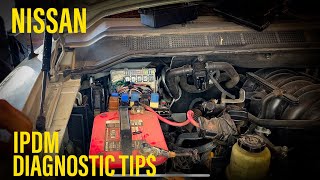
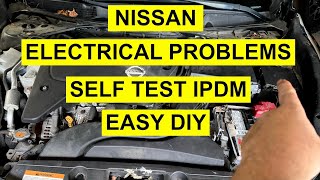
- Faulty Intelligent Power Distribution Module (IPDM): The IPDM controls power distribution to many components, including the ECM. A failure within this module can interrupt the keep-alive power. One owner of a related Nissan platform experienced a persistent P0603 that was ultimately traced to a bad IPDM after an electrical short.
- Water Damage to ECM or Wiring: Water intrusion into the passenger compartment or engine bay can corrode connectors or damage the ECM itself, leading to a variety of electrical faults, including P0603.
Diagnosis Steps
- Check for other stored trouble codes with an OBD-II scanner. Note any communication (U-codes) or other ECM-related codes.
- Visually inspect the battery terminals for corrosion and ensure the cable clamps are tight. Check the main ground strap from the battery to the chassis for integrity.
- Using a multimeter, check the battery voltage with the engine off. It should be at least 12.6V. A reading below 12.4V suggests the battery is discharged or failing.
- Start the engine and measure the voltage again. It should be between 13.7V and 14.7V, indicating a healthy alternator.
- If battery voltage is low, charge the battery fully and clear the code. See if it returns. If it does, the battery is likely weak and needs replacement. A simple replacement may not be enough; one owner on a forum reported the code returned after 15 minutes of driving with a new battery, indicating a deeper charging or wiring issue.
- Inspect the main fuses related to the ECM/PCM in the vehicle's fuse box, particularly in the IPDM.
- Follow the procedure in Nissan TSB NTB16-018D: ensure battery voltage is over 11V, erase the DTC, turn the ignition ON for at least 1 second, then OFF for at least 10 seconds. Repeat this key cycle ten times. Check if P0603 has returned as a '1st trip DTC'.
- If the code does not return after the TSB procedure, the issue was likely a temporary voltage drop. If it does return, further diagnosis of the ECM power and ground circuits is needed, as outlined in the factory service manual.
- If all power and ground sources are confirmed good and the code persists, the issue may be with the ECM itself, which would require professional diagnosis.
Parts You'll Likely Need
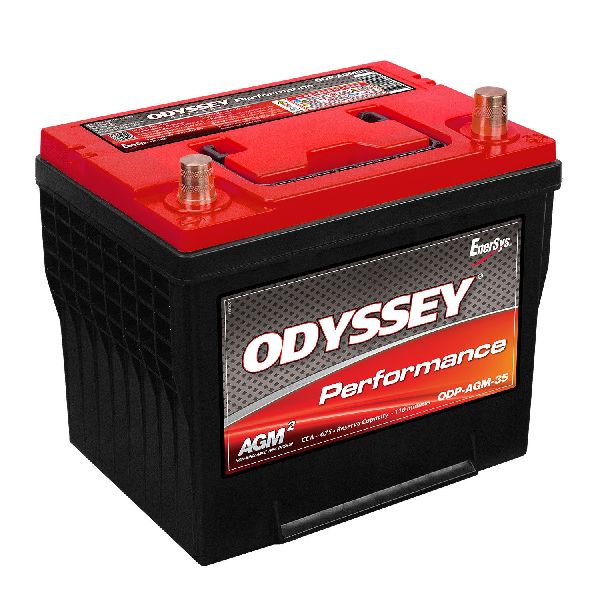
- Vehicle Battery
(OEM #Varies, refer to dealer. Common group sizes are 35, 47/H5, 48/H6. EFB or AGM type recommended.)— This is the most frequent cause. The ECM's keep-alive memory is very sensitive to low voltage, which a weak or old battery can easily cause.
Trusted brands: Interstate, DieHard, Duralast (e.g., 35-EFB, 35-AGM), Bosch
OEM price range: $200-$350
Aftermarket price range: $150-$300 - Battery Terminal Cleaner — Corroded terminals are a common and simple-to-fix cause of interrupted power to the ECM.
Aftermarket price range: $5-$15
Related Codes That Often Appear With This One
- P062F — Nissan TSB NTB21-027 notes that P0603 can appear alongside P062F (Internal Control Module EEPROM Error) when the vehicle is started with low battery voltage after sitting for an extended time.
- U1000 — This code indicates a CAN communication circuit malfunction. It often appears alongside other codes like P0603 when a low battery voltage event causes widespread electrical glitches and communication errors between modules.
Technical Service Bulletins (TSBs) & Recalls
- NTB16-018D: MIL ON WITH P0603 STORED FOR ECM BACK UP CIRCUIT
- NTB16-018c: MIL ON WITH P0603 STORED FOR ECM BACK UP CIRCUIT
- NTB16018: IF YOU CONFIRM The MIL is "ON" with DTC P0603 (ECM BACK UP/CIRCUIT)
- NTB21-027: MIL ON WITH DTC P062F AND/OR P0603 STORED
Platform-Specific Known Issues
- Nissan has issued multiple Technical Service Bulletins (TSBs) including NTB16-018D, NTB16-018c, and NTB16018 regarding P0603 on the Rogue and other models. The primary instruction is to confirm battery voltage is 11 volts or higher before proceeding with further diagnostics, as low voltage is a very common trigger.
- An owner of a 2017 Rogue filed a complaint with the NHTSA (ODI #11506603) after a dealer diagnosed code P0603 and recommended replacing the ECM.
- A Reddit user with a 2018 Rogue reported the P0603 code returned shortly after replacing a battery that tested at only 3% capacity. This highlights that even with a new battery, underlying charging system or wiring issues must be verified.
Mechanic-Grade Diagnostic Values
- ECM Backup Power Supply Voltage — expected: 11 - 14 V. Failure: Voltage below 11V with ignition ON, engine off.
- ECM Power Supply (Ignition ON) — expected: 11 - 14 V (Battery Voltage). Failure: 0V or significantly less than battery voltage at the specified ECM connector pin.
- ECM Ground Circuit Resistance — expected: Less than 1.0 Ohm between the ECM ground pin and a clean chassis ground.. Failure: High resistance (greater than 1.0 Ohm) indicates a poor ground connection.
Hidden / Shadow Codes Worth Checking
- 1st trip DTC: This is not a separate code but a status for P0603. It means the ECM has detected the fault once. If the fault is detected on a second consecutive drive cycle, the Check Engine Light will illuminate. The TSB procedure specifically checks if the code returns as a '1st trip DTC' to confirm a hard fault. (see via Professional scan tools like Nissan's CONSULT can display the '1st trip' status.)
Scan Tool Commands That Help
- Nissan CONSULT: DTC & SRT Confirmation > Erase DTCs — This is the first step in the official TSB diagnostic procedure to clear the code before performing the ignition cycle test.
- Nissan CONSULT: Work Support > Battery Voltage — To monitor the live battery voltage as seen by the vehicle's modules. This can help identify intermittent voltage drops that might trigger P0603.
- Nissan CONSULT or compatible tool: IPDM Auto Active Test — If the IPDM is suspected as a rare cause, this self-test can be run to check its functions by cycling outputs like lights, wipers, and the A/C clutch. A failure to run the test can point to a bad IPDM.
Wiring & Ground Locations
- IPDM E/R (Intelligent Power Distribution Module Engine Room) — Located in the engine compartment, typically next to the battery under a black plastic cover.. The IPDM houses the fuses and relays that control the power supply to the ECM. A fault within the IPDM can interrupt the keep-alive power.
- ECM (Engine Control Module) — Located behind the passenger side instrument lower panel (glove box area).. This is the module setting the code. Its power and ground connections must be verified. Water intrusion from a clogged sunroof drain or windshield leak can sometimes reach this area.
- Main Engine/Body Grounds — Key ground points are located from the battery negative terminal to the chassis, from the engine block/intake manifold to the firewall, and under the dashboard near the fuse box.. A loose or corroded ground is a common cause of intermittent electrical issues, including the power loss to the ECM that triggers P0603. A poor ground can cause a voltage drop even if the battery and alternator are good.
Real Owner Repair Stories
- YouTube user 'Car Hospital' (Nissan Pathfinder (similar platform and electrical architecture)) — Check Engine Light with P0603, reduced power and acceleration.
❌ Tried (didn't work) Checking all fuses in the IPDM and fuse box., Testing various body grounds in the engine room.
✅ What actually fixed it Found a loose ground wire under the steering column near the interior fuse box. The owner had previously had the dashboard removed, and this ground was not properly re-secured. Tightening the ground bolt resolved the P0603 code and restored power. - YouTube user 'Louie diy' (General Nissan (demonstrated on a Rogue)) — P0603 code present after disconnecting the battery.
✅ What actually fixed it Performed a 'hard reset' of the system. This involved disconnecting the negative battery terminal, then using a jumper wire to connect the disconnected negative cable to the still-connected positive cable for several minutes. This drains all residual power from the modules. After reconnecting the battery, the code was gone. Note: This is a common unofficial procedure to clear stubborn codes but should be done with caution.
OEM Part Supersession History
23703-4BA1A→23703-4BA1B— Part revision or update by the manufacturer.
Heads up: Part 23703-4BA1B is listed for 2017-2020 Rogues with the 2.5L engine. A replacement ECM must be programmed by a dealer or a qualified technician with Nissan-compatible tools (like CONSULT) to function with the vehicle's immobilizer system.
Model Year Variations Within This Range
- 2017-2020 (with Hybrid option): Hybrid models (2.0L MR20DD engine) use a different ECM (e.g., P/N 23703-5HA0A) than the standard 2.5L QR25DE models. While the P0603 cause is likely similar (voltage-related), the part itself is not interchangeable.
- 2014-2020: The IPDM part number may vary based on the vehicle's country of manufacture (Japan - VIN starts 'JN8', USA - '5N1', Korea - 'KNM'). It is critical to match the part number exactly if replacing the IPDM.
Helpful Videos






Used OEM Parts in Stock

New Aftermarket Parts Available


The information in this article is provided for general reference and educational purposes only. Vehicle specifications, procedures, and part compatibility can vary by production date, trim level, and region. Always consult your vehicle's factory service manual and verify part numbers before purchasing or performing repairs. Safety-critical components such as airbags, seat belts, and braking systems should be installed by a qualified professional.
- Nissan ROGUE:
- 🎬 Helpful Videos
- 🛍️ Shop This Part
- What's Unique About the 2015-2020 Nissan ROGUE
- Diagnostic Flowchart
- Symptoms You May Notice
- Most Likely Causes
- Rare But Worth Checking
- Diagnosis Steps
- Parts You'll Likely Need
- Related Codes That Often Appear With This One
- Technical Service Bulletins (TSBs) & Recalls
- Platform-Specific Known Issues
- Mechanic-Grade Diagnostic Values
- Hidden / Shadow Codes Worth Checking
- Scan Tool Commands That Help
- Wiring & Ground Locations
- Real Owner Repair Stories
- OEM Part Supersession History
- Model Year Variations Within This Range
- 🎟️ Get 5% Off