

P0603 on 2007-2014 GMC Yukon XL: Keep Alive Memory (KAM) Error Explained
This code usually means the vehicle's computer lost power, most often due to a recent battery replacement, jump-start, or a failing battery. Before replacing any expensive parts, check the battery, its connections, and critical ground straps, as these are the most common culprits on these trucks.
- P0603 is most often a harmless code triggered by a battery disconnection or replacement.
- Always check the battery's health and terminal connections first; this is the simplest and most common fix.
- Do not rush to replace the PCM or TCM unless all power supply issues have been ruled out.
- If the code returns and is accompanied by other module codes (e.g., P0601, P0604), refer to GM's TSBs as it may indicate a genuine module fault requiring professional diagnosis.
What's Unique About the 2007-2014 Gmc YUKON XL
On the GMT900 platform, which includes the 2007-2014 Yukon XL, a P0603 code is very commonly a temporary, non-critical code that appears after the battery has been disconnected or has died. However, due to the platform's known sensitivity to grounding issues, a recurring P0603 can also be an early indicator of a corroded or loose ground strap, particularly the main engine and body grounds. Furthermore, GM has issued Technical Service Bulletins (TSBs) indicating that this code, especially when found in the Transmission Control Module (TCM), can point to a more specific module problem that requires dealer-level diagnostics. [PIP4653E, 05-06-04-060A]
Diagnostic Flowchart
Tap your situation to follow the diagnostic path that matches what you're seeing on this vehicle.
Generation note: The 2007-2014 GMC Yukon XL belongs entirely to the third generation (GMT900 platform). The information in this guide is specific to this generation and its known electrical and grounding characteristics.
Symptoms You May Notice
- Check Engine Light is on.
- No noticeable symptoms, other than the stored code.
- Rough idle or engine hesitation.
- Difficulty starting the engine.
- Erratic or harsh transmission shifting.
- Reduced fuel economy.
- ABS or Traction Control light may illuminate in some cases.
- Replacing the PCM or TCM without first thoroughly testing the battery, battery connections, charging system, and especially the main engine/body ground points. A simple power supply or grounding issue is far more common than module failure.
Most Likely Causes
- Recent Battery Disconnection or Replacement 🔴 High Probability Any interruption of power to the control modules will erase the Keep Alive Memory, triggering this code as a normal side effect. It's an informational code in this context.
How to confirm: Ask yourself if the battery was recently disconnected, replaced, or jump-started. If so, this is the almost certain cause.
Typical fix: Clear the code with an OBD-II scanner. The code should not return after a few drive cycles if the power supply is stable. The vehicle will relearn adaptive strategies as you drive.
Est. part cost: $0 - Weak or Failing Battery 🔴 High Probability
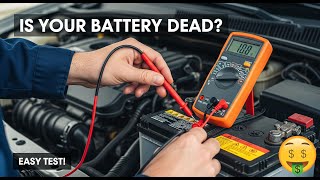
How to confirm: Test the battery voltage with a multimeter. 🎬 Watch: How to test your battery and alternator with a multimeter. A healthy battery should read about 12.6 volts with the engine off and 13.5-14.5 volts when running. A battery that drops below 12.4V at rest is sulfating and losing capacity. Many auto parts stores will perform a free load test, which is a more definitive way to confirm a weak battery.
Typical fix: Replace the vehicle battery.
Est. part cost: $150-$300 - Loose or Corroded Battery Terminals/Cables 🟡 Medium Probability
How to confirm: Visually inspect the battery terminals for white or blue-green corrosion. Physically check if the cable clamps are tight and cannot be moved by hand. Pay close attention to the integrity of the cable ends themselves.
Typical fix: Clean the terminals and cable ends with a wire brush and baking soda solution. Ensure a tight, secure connection.
Est. part cost: $1-$10 - Poor Ground Connections 🟡 Medium Probability The GMT900 platform is known for having issues with ground straps corroding or becoming loose over time, causing intermittent electrical problems. A poor ground can cause a momentary voltage drop to the PCM, triggering a P0603 without a truly bad battery.
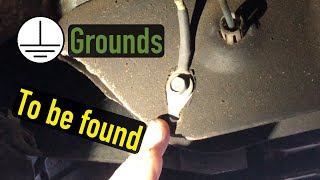
How to confirm: Inspect the main ground points. Key locations on a GMT900 include 🎬 Watch: How to find and identify all 5.3L V8 wiring grounds. the ground strap from the passenger cylinder head to the firewall (G104), the ground on the front of the engine block (G103), and the main battery-to-chassis ground. A voltage drop test between the battery negative post and the chassis/engine block should show less than 0.1 volts.
Typical fix: Remove, clean, and securely re-attach the ground straps. In cases of heavy corrosion, the strap itself may need to be replaced (e.g., GM Part 19434466 for an engine ground strap).
Est. part cost: $10-$40 - Aftermarket Engine/Transmission Tuner ⚪ Low Probability Using a handheld programmer to alter engine or transmission settings and then returning to the stock tune can sometimes leave this code behind as a digital footprint.
How to confirm: The code appears after using a performance tuner. The vehicle may operate normally.
Typical fix: Ensure the vehicle is correctly returned to its factory tune. The code may need to be cleared with a scanner. In some cases, it may persist as a harmless artifact of the tuning process, which some owners choose to ignore if no symptoms are present.
Est. part cost: $0
Rare But Worth Checking
- Faulty Powertrain Control Module (PCM) or Transmission Control Module (TCM): While rare, the module itself can fail. The provided NHTSA TSBs (PIP4653E, 05-06-04-060A) specifically mention that P0603 can be a sign of a module fault, often in conjunction with other codes like P0601, P0604, or P1621. This requires professional diagnosis and confirmation that all power and ground circuits to the module are perfect before condemning the module.
- Charging System Malfunction: A faulty alternator can provide inconsistent voltage (spikes or drops), causing the KAM to be lost. This should be checked if the battery and connections are good but the code returns.
- Blown Fuse or Wiring Issue: The circuit that provides constant power to the module's memory could have a blown fuse or a wiring fault. This can include issues in the wiring harness under the driver's or passenger's sill plates, as noted in some GM diagnostic procedures for communication issues.
Diagnosis Steps
- Check if the battery was recently disconnected or the vehicle was jump-started. If yes, clear the code and drive the vehicle for several key cycles. If it doesn't return, the issue is resolved.
- If the code returns, perform a comprehensive battery health test. Use a multimeter to check voltage (~12.6V off, ~14V running). A load test at an auto parts store is highly recommended to rule out a weak battery.
- Thoroughly inspect the battery terminals and the main chassis ground connections for any signs of corrosion, looseness, or damage.
- Inspect critical GMT900 ground points. Check the engine-to-firewall strap (G104) and the engine block ground (G103) for corrosion and tightness. Clean and tighten as necessary.
- Test the charging system. Ensure the alternator is providing a steady voltage without spikes or drops while the engine is running.
- If an aftermarket performance tuner has been used, return the vehicle to its stock calibration and clear the codes.
- If all the above steps check out and the code persists, especially with other module-related codes (like P0601, P0604), the issue may be with the PCM or TCM itself. This would require professional diagnosis, potentially involving checking power and ground pins at the module connector before considering module replacement.
Parts You'll Likely Need
- Battery
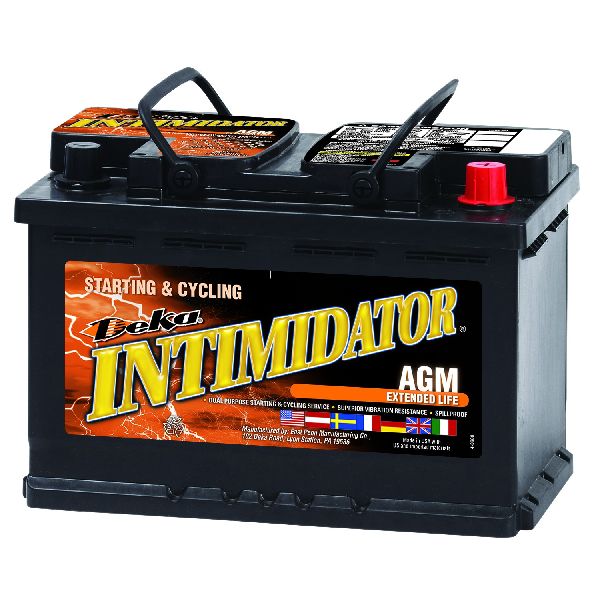
(OEM #ACDelco Gold 94RAGM (Group Size 94R, common for these models))— A weak or failing battery is the most frequent cause of a P0603 code by interrupting the constant power required for Keep Alive Memory.
Trusted brands: ACDelco, DieHard, EverStart
OEM price range: $200-$350
Aftermarket price range: $150-$300
Related Codes That Often Appear With This One
- P0601 — This indicates an Internal Control Module Memory Check Sum Error. Both codes point to a potential issue within the control module itself, as noted in TSBs #PIP4653E and #05-06-04-060A.
- P0604 — This code means Internal Control Module Random Access Memory (RAM) Error. Like P0603, it relates to memory function within the module and is cited in the same TSBs. [PIP4653E, 05-06-04-060A]
- P1621 — This GM-specific code relates to Control Module Long Term Memory Performance. It often appears with other module memory codes as mentioned in TSBs #PIP4653E and #05-06-04-060A.
Technical Service Bulletins (TSBs) & Recalls
- PIP4653E: Addresses DTCs P0601, P0603, P0604, P062F or P1621 in the Transmission Control Module.
- 05-06-04-060A: Informs that several control module DTCs, including P0603, can be shared in multiple modules.
Platform-Specific Known Issues
- TSB #PIP4653E: TCM Specific Fault: This bulletin notes that P0603, along with codes like P0601, P0604, P062F, or P1621, may be stored in the Transmission Control Module (TCM). It advises technicians that if these codes are present, they should follow specific diagnostic flowcharts to determine if the TCM has an internal fault and needs replacement, rather than assuming it's just a power-loss event. [PIP4653E]
- TSB #05-06-04-060A: Informational Bulletin on Module Codes: This informational bulletin alerts technicians that P0603 and several other internal control module DTCs can be set by various different control modules on the vehicle. It stresses the importance of identifying *which* module set the code before starting diagnosis, as the fix may involve replacing a specific module if all external wiring and power sources are confirmed to be good.
- GMT900 Grounding Problems: Owners on forums frequently trace intermittent electrical issues, including a returning P0603, to corroded or loose grounds even after a battery is replaced. The main engine-to-firewall and battery-to-chassis grounds are common failure points that can cause a momentary power loss to control modules under load.
Mechanic-Grade Diagnostic Values
- Battery Voltage (Engine Off) — expected: ~12.6 Volts or higher. Failure: A reading below 12.4V indicates a discharged or failing battery.
- Charging System Voltage (Engine Running at Idle) — expected: ~13.5 - 14.5 Volts. Failure: Voltage that is too low, too high, or fluctuates indicates a problem with the alternator or voltage regulator.
- PCM Keep Alive Memory (KAM) Power Pin Voltage — expected: Constant Battery Voltage (12V+). Failure: 0V or fluctuating voltage indicates a wiring issue, blown fuse, or problem with the underhood fuse block.
- Ground Circuit Voltage Drop — expected: < 0.1 Volts. Failure: A reading higher than 0.1V between the negative battery post and the engine block or chassis indicates high resistance in the ground path.
Scan Tool Commands That Help
- GDS2 / Tech2 or equivalent professional scanner: PCM/TCM Relearn Procedure — After a battery has been replaced or disconnected for a long period, or after a module replacement, to reset adaptive memory and potentially clear a persistent P0603.
- GDS2 / Tech2: Module Reprogramming/Flashing — Used as a potential fix if the module's software is corrupted, which can be a cause of a P0603 code. This is typically a dealer-level repair.
Wiring & Ground Locations
- E38 ECM / PCM — Typically located in the engine bay, on the driver's side, near the firewall or inner fender.. This is the primary engine computer. Its constant power feed is what maintains the Keep Alive Memory. The key power feed is Pin 20 (RD/WH wire) in the X1 connector.
- TCM (T42 / 4L60E) — On models with the 4-speed automatic (typically 2007-2008), the TCM is an external module located under the hood on the passenger side, near the firewall and HVAC blower motor..
- TCM (T43 / 6L80) — On models with the 6-speed automatic (typically 2009-2014), the TCM is an internal component (TEHCM) bolted to the valve body inside the transmission oil pan..
- G104 — On the rear of the driver's side (left) cylinder head. This is the engine-side attachment for the main engine-to-body ground strap..
- G108 — On the firewall in the driver's side rear corner of the engine compartment. This is the body-side attachment for the main engine-to-body ground strap coming from G104..
- G103 — On the engine block, driver's side, down low near the oil pan. This is a critical ground for the ECM/TCM..
- Underhood Fuse Block — Located in the engine compartment on the driver's side.. This block contains the fuses that supply constant power to the PCM and TCM for their Keep Alive Memory functions. Internal corrosion in this fuse block can cause intermittent power loss.
Real Owner Repair Stories
- GMTNation forum user (GM Truck/SUV (GMT platform)) — Persistent, difficult-to-diagnose electrical issues.
❌ Tried (didn't work) Taking the vehicle to two different auto shops, both of which checked the main battery ground and reported it was 'good'., The owner personally cleaned multiple other ground points on the chassis and under the driver's door.
✅ What actually fixed it The owner ultimately found the main battery-to-body ground connection (G106 in that context) was severely corroded with 'solid rust' under the bolt, despite having been visually inspected by professionals. Cleaning this main ground point down to bare metal resolved the issue.
Model Year Variations Within This Range
- 2007-2009 (approx.): Models equipped with the 4-speed (4L60E) automatic transmission use an external Transmission Control Module (TCM), type T42. It is located on the passenger side of the engine bay near the firewall. A P0603 set by the TCM on these models points to this external module or its wiring.
- 2009-2014 (approx.): Models equipped with the 6-speed (6L80) automatic transmission use an internal TCM (part of the TEHCM), type T43. This module is located inside the transmission oil pan, bolted to the valve body. Diagnosing a P0603 from the TCM on these models requires dropping the pan for any physical inspection or replacement of the module.
Helpful Videos


We Have This Part in Stock



The information in this article is provided for general reference and educational purposes only. Vehicle specifications, procedures, and part compatibility can vary by production date, trim level, and region. Always consult your vehicle's factory service manual and verify part numbers before purchasing or performing repairs. Safety-critical components such as airbags, seat belts, and braking systems should be installed by a qualified professional.
- Gmc YUKON XL:
- 🎬 Helpful Videos
- 🛍️ Shop This Part
- What's Unique About the 2007-2014 Gmc YUKON XL
- Diagnostic Flowchart
- Symptoms You May Notice
- Most Likely Causes
- Rare But Worth Checking
- Diagnosis Steps
- Parts You'll Likely Need
- Related Codes That Often Appear With This One
- Technical Service Bulletins (TSBs) & Recalls
- Platform-Specific Known Issues
- Mechanic-Grade Diagnostic Values
- Scan Tool Commands That Help
- Wiring & Ground Locations
- Real Owner Repair Stories
- Model Year Variations Within This Range
- 🎟️ Get 5% Off