

P0603 on 2007-2014 Chevrolet Suburban: Keep Alive Memory (KAM) Error Causes & Fixes
On a 2007-2014 Suburban, P0603 almost always points to a power supply issue. Before suspecting an expensive computer failure, check for a weak battery, loose or corroded terminals, or a failing alternator. A new battery often resolves the issue for under $250.
- P0603 is a memory error code, almost always triggered by a power supply problem.
- Do not assume you need a new computer. Always start by testing the battery and its connections.
- A healthy charging system is crucial; ensure the alternator provides a steady voltage between 13.7V and 14.7V.
- On this Suburban, the code can originate from the transmission module, so pay attention to shifting behavior.
- If you recently disconnected the battery, the code is likely a normal consequence and can be cleared.
What's Unique About the 2007-2014 Chevrolet SUBURBAN
While P0603 is a generic code, its presentation on the 2007-2014 (GMT900) Suburban has a specific nuance highlighted by General Motors. A Technical Service Bulletin (TSB #PIP4653E) points out that this code can be stored in the Transmission Control Module (TCM), not just the main engine computer. This means that in addition to a check engine light, you might notice shifting irregularities if the TCM is the module losing its adaptive memory. Another bulletin, #05-06-04-060A, emphasizes that DTCs like P0603 are not module-specific and can appear on any controller, so a technician must first identify the source module before attempting repairs.
🎬 Watch: Understanding the Keep Alive Memory (KAM) error and common fixes.Diagnostic Flowchart
Tap your situation to follow the diagnostic path that matches what you're seeing on this vehicle.
Symptoms You May Notice
- Check Engine Light is on
- Vehicle may not show any noticeable symptoms
- Erratic or harsh transmission shifting
- Slight decrease in fuel economy
- Engine may hesitate or idle roughly as it relearns settings after startup
- Difficulty starting the engine
- ABS or Traction Control light may illuminate in some cases
- Replacing the PCM or TCM immediately. This code is most often caused by a simple power supply issue, and replacing the computer is an expensive and usually unnecessary first step.
Most Likely Causes
- Weak or Failing Battery 🔴 High Probability Large vehicles with many electronic modules are sensitive to battery voltage. An aging battery may not provide the stable voltage required to maintain the Keep Alive Memory when the engine is off. This is the most common fix reported by owners in forums.
How to confirm: Test the battery voltage with a multimeter. A healthy battery should read about 12.6 volts with the engine off and 13.7 to 14.7 volts with the engine running. Many auto parts stores will test your battery for free.
Typical fix: Replace the battery.
Est. part cost: $150-$250 - Loose or Corroded Battery Terminals/Cables 🟡 Medium Probability Over time, battery terminals can develop corrosion, and connections can loosen due to vibration, interrupting the constant power supply to the modules. This is a simple but frequently overlooked cause.
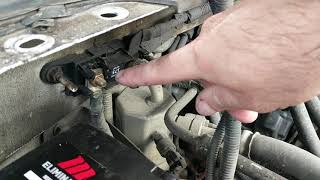
How to confirm: Visually inspect the battery terminals for white or greenish buildup. Ensure the cable clamps are tight and cannot be moved by hand. Don't forget to check the ground connection to the chassis.
Typical fix: Clean the terminals and cable ends with a wire brush and battery terminal cleaner. Tighten the clamps securely.
Est. part cost: $5-$15 - Failing Alternator 🟡 Medium Probability If the alternator is not charging the battery properly, the battery's voltage can drop low enough to trigger the KAM error, even if the battery itself is new.
How to confirm: With the engine running, test the battery voltage. If it's below 13.5 volts, the alternator is likely not charging sufficiently. You may also notice dimming headlights or other electrical issues.
Typical fix: Replace the alternator.
Est. part cost: $200-$450 - Recent Battery Disconnect or Jump-Start ⚪ Low Probability Intentionally disconnecting the battery will erase the Keep Alive Memory, which can cause the P0603 code to set on the next drive cycle. It's the module reporting that the memory was lost.
How to confirm: If the code appeared immediately after the battery was replaced, disconnected for service, or jump-started, this is the likely cause.
Typical fix: Clear the code with a scanner. If there are no other underlying issues, it should not return after a few drive cycles.
Est. part cost: $0
Rare But Worth Checking
- Aftermarket Performance Tuner: If you have an aftermarket programmer or 'chip' installed, it can sometimes interfere with the PCM's memory functions or trigger this code during the flashing process. Try removing the tuner and returning the vehicle to its stock programming to see if the code disappears.
- Faulty Powertrain or Transmission Control Module (PCM/TCM): This is the least likely cause. Before condemning an expensive control module, all power and ground circuits must be thoroughly tested and confirmed to be working perfectly. A module should only be replaced after all other possibilities have been exhausted.
- Poor Engine or Chassis Ground Strap: Owners have reported that a corroded or broken ground strap between the engine/body and the frame can cause intermittent voltage issues to the control modules, triggering a P0603. Visually inspect the braided ground straps for corrosion or breakage, especially near the firewall and engine block.
Diagnosis Steps
- Check for other DTCs: Use an OBD-II scanner to see if any other codes are present. Note which module (ECM, TCM, etc.) has stored the P0603 code.
- Inspect the Battery: Visually inspect the battery and its terminals for corrosion, swelling, or damage. Clean any corrosion found.
- Test Battery Voltage: With the engine off, use a multimeter to check battery voltage. It should be ~12.6V.
- Test the Charging System: Start the engine and measure the voltage at the battery terminals. It should be between 13.7V and 14.7V. If not, the alternator may be faulty.
- Verify Connections: Ensure battery cables are tight. Trace the main power and ground wires from the battery to the chassis and engine block, ensuring they are clean and secure. Pay special attention to the main chassis ground straps.
- Consider Recent History: Ask if the battery has been recently disconnected, replaced, or jump-started. If so, clear the code and see if it returns.
- Remove Aftermarket Devices: If a performance tuner is installed, remove it and flash the vehicle back to the stock tune.
- Clear Codes and Test Drive: Clear the P0603 code and drive the vehicle for 15-20 minutes to see if it returns. If it does, a more in-depth diagnosis of the specific module's power and ground circuits may be needed.
Parts You'll Likely Need
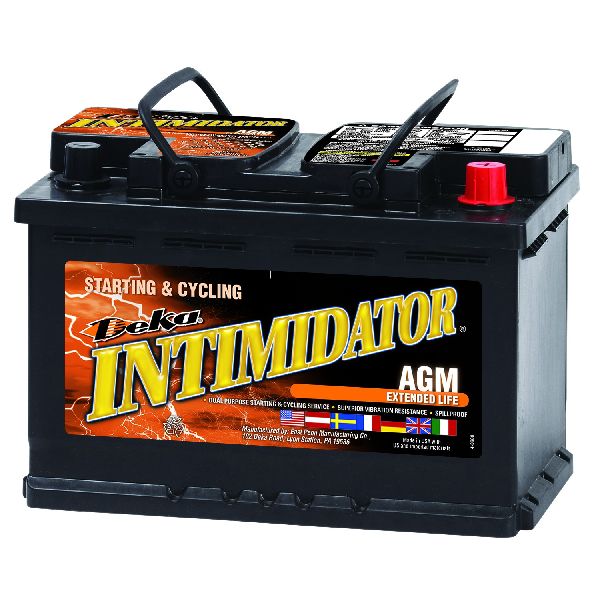
- Vehicle Battery
(OEM #ACDelco 48AGM (GM Part #88864541))— A weak or failing battery is the most common cause for the loss of Keep Alive Memory. The GMT900 platform commonly uses a Group 48 (H6) battery.
Trusted brands: ACDelco, DieHard, Interstate
OEM price range: $220-$300
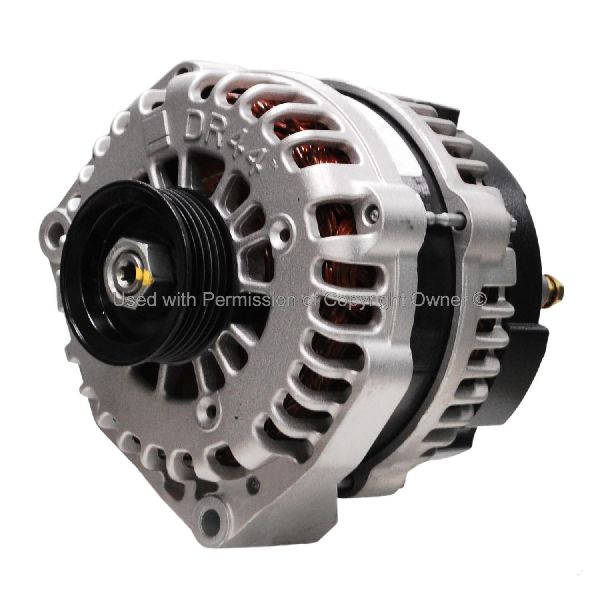
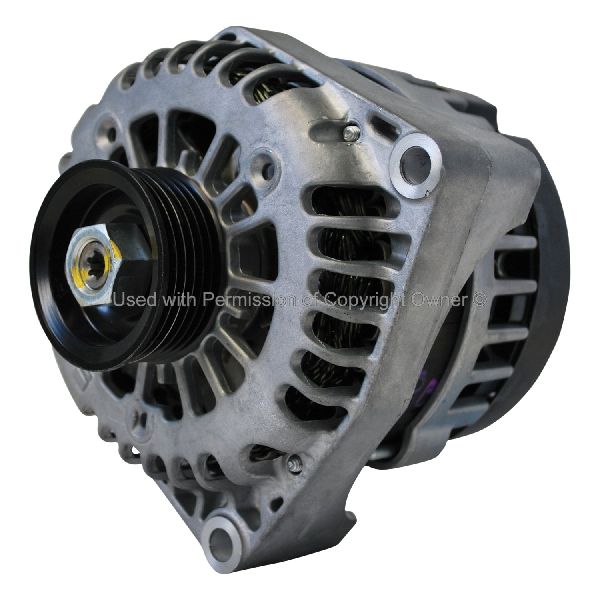
Aftermarket price range: $180-$260 - Alternator
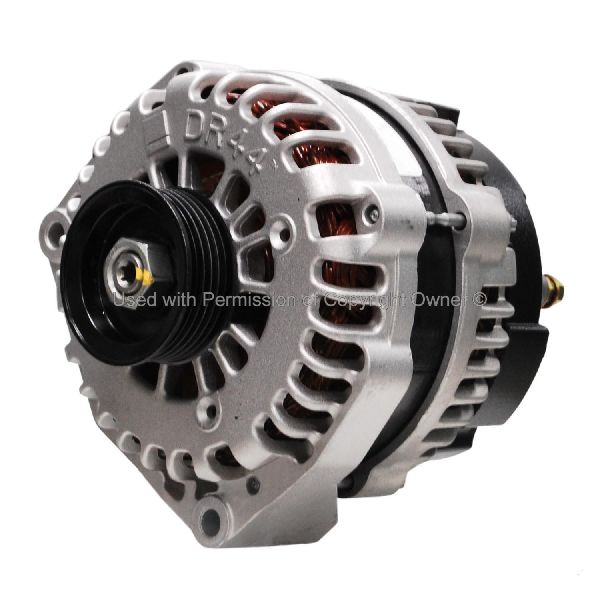
(OEM #ACDelco 334-2742A (Remanufactured Gold))— A faulty alternator fails to properly charge the battery, leading to low system voltage that triggers the P0603 code. The 145-160 Amp version is common.
Trusted brands: ACDelco, Bosch, Denso
OEM price range: $300-$500
Aftermarket price range: $200-$450
Related Codes That Often Appear With This One
- P0601, P0602, P0604, P0606 — These are all internal control module error codes. Seeing them together strongly suggests either a major power/ground issue or a failing control module. [Bulletin #05-06-04-060A]
Technical Service Bulletins (TSBs) & Recalls
- PIP4653E: Notes that DTCs P0601, P0603, P0604, P062F or P1621 may be stored in the Transmission Control Module (TCM).
- 05-06-04-060A: Informs technicians that several control module DTCs, including P0603, can be shared in multiple modules and that the source module must be identified before diagnosis.
Platform-Specific Known Issues
- A Technical Service Bulletin (TSB #PIP4653E) notes that on these vehicles, DTC P0603 can be stored in the Transmission Control Module (TCM), which may be accompanied by other TCM-specific codes.
- Another bulletin (TSB #05-06-04-060A) confirms that P0603 is part of a family of control module codes that can be shared across different modules on the vehicle's data network, making it critical to identify the source module.
- Owner forums frequently cite that simply replacing an old battery resolves the code, even if the battery still seems to start the truck fine. The sensitive electronics require a very stable voltage source that an aging battery can't provide.
Mechanic-Grade Diagnostic Values
- Parasitic Current Draw — expected: < 50 milliamps (mA) after all modules go to sleep (approx. 10-30 minutes).. Failure: A sustained reading above 50 mA indicates a component is not shutting down and is draining the battery, which can cause a P0603 on startup.
- Ground Point Voltage Drop — expected: < 0.1 Volts (100 millivolts) when measured from the ground point to the negative battery terminal.. Failure: A reading higher than 100 mV indicates high resistance in the ground circuit, which can interrupt stable power to a module and trigger a KAM error.
- ECM Constant Power at Connector — expected: Battery voltage (~12.6V) should be present at all times on Pin 20 (RD/WH wire) of the E38 ECM's X1 connector.. Failure: No voltage or fluctuating voltage indicates a problem in the wiring or fuse block between the battery and the ECM, directly causing KAM loss.
Scan Tool Commands That Help
- GM Tech2 / GDS2 / J2534 Pass-Thru: Service Programming System (SPS) - Reprogram ECM/TCM — This is used to update the module's software to the latest calibration from GM's TIS2Web service or to program a replacement module. It can resolve software glitches that may cause a P0603 code.
- GM Tech2: Crankshaft Position Variation Relearn — This procedure may be required after reprogramming the ECM. If the engine throws a P1336 or P0315 code after a flash, this relearn procedure must be performed.
Wiring & Ground Locations
- G101 — Lower front of the engine block.. This ground point is reported to serve both the Engine Control Module (ECM) and the Transmission Control Module (TCM). High resistance here can starve both modules of a stable ground reference.
- G103 — On the front of the passenger side (right) cylinder head.. This is a primary engine ground. A poor connection here can cause unstable voltage across multiple engine systems and sensors, potentially leading to a KAM error in the ECM.
- G104 — On the rear of the driver's side (left) cylinder head, often connected via a strap to the firewall ground G108.. This is a critical engine-to-body ground. A documented failure involves the wire breaking inside the ring terminal, causing intermittent power loss to modules only when the engine torques, which is very difficult to diagnose visually.
- Underhood Fuse Block (UBEC) — Driver's side of the engine bay.. The constant power feed for the ECM's Keep Alive Memory runs through this fuse block. Corrosion on the internal bus bars or on the harness connectors on the underside can cause an intermittent power loss to the ECM, triggering P0603.
Real Owner Repair Stories
- YouTube channel 'WillPowered Garage' (2007-2014 Tahoe/Suburban Platform) — Intermittent stalling, especially when shifting into reverse, with communication codes U0100 and U0101 stored.
❌ Tried (didn't work) Initial diagnosis focused on oil pressure issues, which was incorrect.
✅ What actually fixed it The root cause was a broken ground wire at the G104 location (rear of driver's side cylinder head). One of the smaller wires had broken all its strands inside the ring terminal lug. The connection was intermittent and would fail when the engine torqued, explaining the stalling. This type of hidden damage is a perfect example of a failure that causes intermittent module power loss, which would also trigger a P0603.
Helpful Videos


Used OEM Parts in Stock


New Aftermarket Parts Available


The information in this article is provided for general reference and educational purposes only. Vehicle specifications, procedures, and part compatibility can vary by production date, trim level, and region. Always consult your vehicle's factory service manual and verify part numbers before purchasing or performing repairs. Safety-critical components such as airbags, seat belts, and braking systems should be installed by a qualified professional.
- Chevrolet SUBURBAN:
- 🎬 Helpful Videos
- 🛍️ Shop This Part
- What's Unique About the 2007-2014 Chevrolet SUBURBAN
- Diagnostic Flowchart
- Symptoms You May Notice
- Most Likely Causes
- Rare But Worth Checking
- Diagnosis Steps
- Parts You'll Likely Need
- Related Codes That Often Appear With This One
- Technical Service Bulletins (TSBs) & Recalls
- Platform-Specific Known Issues
- Mechanic-Grade Diagnostic Values
- Scan Tool Commands That Help
- Wiring & Ground Locations
- Real Owner Repair Stories
- 🎟️ Get 5% Off