

P0603 on 2007-2014 Chevrolet Corvette: Keep Alive Memory (KAM) Error Fixes
Code P0603 on a Corvette almost always points to a power supply problem. Before suspecting the computer, check for a weak battery, loose terminals, or bad ground connections. A new battery is the most common fix, costing around $150-$250. The car's sensitive electronics often manifest this code even if the battery seems to test 'good'.
- P0603 on a Corvette is overwhelmingly caused by a power supply issue, not a bad computer.
- Always test the battery and check terminal connections before considering more complex repairs.
- If the code appeared after a battery change, simply clearing the code and driving may resolve the issue.
- Be aware that this code can originate from the Transmission Control Module (TCM), potentially affecting shifting, as noted in GM service bulletins.
What's Unique About the 2007-2014 Chevrolet CORVETTE
On the C6 and early C7 Corvette, this code is frequently just a sign of a weak or recently disconnected battery. The car's complex electronics are notoriously sensitive to voltage drops, and a battery that can't maintain a steady charge above 12.4V at rest is a prime suspect. The rear-mounted battery means longer cable runs, making the system more susceptible to voltage drops from corroded terminals or poor grounds. Notably, GM Technical Service Bulletin (TSB) #PIP4653E specifically mentions that P0603 can be stored in the Transmission Control Module (TCM), potentially affecting shifting behavior. This highlights the need to verify which module set the code before starting a diagnosis.
🎬 Watch: A quick breakdown of what the P0603 code means.Diagnostic Flowchart
Tap your situation to follow the diagnostic path that matches what you're seeing on this vehicle.
Generation note: This range covers the end of the C6 generation (2007-2013) and the first year of the C7 generation (2014). While the code's meaning is the same, the electronics and module locations differ. However, the primary causes related to battery and power supply are common to both generations, with many documented cases on C6 models.
Symptoms You May Notice
- Check Engine Light is on
- Rough or unstable idle
- Hesitation during acceleration
- Poor fuel economy
- Erratic or harsh transmission shifting
- Engine may be hard to start or stall intermittently
- "Service Active Handling," "Service Traction System," or "Reduced Engine Power" messages on the Driver Information Center (DIC)
- Replacing the PCM or TCM without first thoroughly testing the battery and charging system. A simple power supply issue is far more common and cheaper to fix.
- Trusting a simple battery load test. Many Corvette owners report that only a new, fully-charged battery solved their P0603 and other electrical gremlins, even when the old battery tested 'good'.
Most Likely Causes
- Weak or Failing Battery 🔴 High Probability Corvette electronics are extremely sensitive to low voltage. A battery that can't hold a proper charge (ideally above 12.4V when off) will cause modules to lose their Keep Alive Memory. This is true even for batteries that pass a simple load test at an auto parts store.
How to confirm: Test the battery voltage with a multimeter. A healthy, fully charged battery should read approximately 12.6 volts with the engine off and 13.7-14.7 volts when running. Many auto parts stores offer free battery testing, but be aware that a battery can still be the cause even if it passes.
Typical fix: Replace the battery with a high-quality AGM battery.
Est. part cost: $150-$250 - Loose or Corroded Battery Terminals/Cables and Grounds 🟡 Medium Probability The battery in a C6 Corvette is located in the rear, involving long cable runs. Key ground points are known to corrode, especially those under the battery tray and on the frame rails behind the headlights. 🎬 See this guide on locating and cleaning C6 ground wires.
How to confirm: Visually inspect the battery terminals for corrosion. Physically try to wiggle the terminal clamps. Follow the main ground cables from the battery and engine block to the chassis. On a C6, remove the battery and inspect the ground points on the frame underneath.
Typical fix: Disconnect the battery, remove the ground connections, clean all contact surfaces (frame and terminal) with a wire brush or sandpaper until shiny, and re-tighten securely.
Est. part cost: $5-$15 - Recent Battery Disconnect or Jump Start 🟡 Medium Probability
How to confirm: If the code appeared immediately after the battery was replaced, disconnected for service, or after a jump start, this is the likely cause.
Typical fix: Clear the code with an OBD-II scanner. Drive the vehicle for several drive cycles (a mix of city/highway driving) to allow the modules to relearn. If the code does not return, no further action is needed.
Est. part cost: $0 - Failing Alternator ⚪ Low Probability
How to confirm: With the engine running, check the battery voltage. If it's below 13.5 volts or fluctuating wildly, the alternator is likely not charging the battery properly. The ECM controls alternator output, so a low reading can also be a symptom of other electrical issues.
Typical fix: Replace the alternator.
Est. part cost: $200-$450
Rare But Worth Checking
- Faulty Powertrain or Transmission Control Module (PCM/TCM): This is a rare cause. TSB #PIP4653E notes that internal module faults can cause this code, but all power and ground issues must be ruled out first. The TSB recommends using a scan tool to see if the code was set in the TCM, and if so, reprogramming the module as a first step before replacement. A faulty TCM is more likely if transmission symptoms are severe.
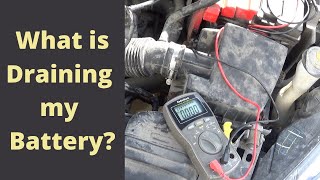
- Parasitic Battery Drain: An aftermarket accessory (like a radio or amplifier) or a failing stock module can fail to shut down properly, draining the battery overnight. This leads to low voltage on startup, triggering P0603. Diagnosing this requires a multimeter set to measure amperage (current draw) with the vehicle off. A normal draw for a C6 after all modules go to sleep (about 20 minutes) is around 20-25mA; a reading of 200mA or higher indicates a significant problem.
Diagnosis Steps
- Read the Codes: Use an advanced OBD-II scanner (like a Tech 2 or equivalent) to confirm P0603 is present and determine *which module* set the code (ECM or TCM). Note any other codes.
- Inspect the Battery & Terminals: Visually inspect the battery terminals for corrosion and ensure the cable clamps are tight.
- Test Battery Voltage: With the engine off, use a multimeter to check the battery voltage. It should be at least 12.4V. If it's lower, fully charge the battery and re-test. If it won't hold a charge above 12.4V after resting, it needs replacement, regardless of what a parts store tester says.
- Test the Charging System: Start the engine. The multimeter should read between 13.7V and 14.7V at the battery terminals.
- Check Main Grounds: Disconnect the battery. Inspect and clean the main ground points. On a C6, this includes the grounds under the battery tray, on the frame rails behind the headlights, and the engine-to-chassis strap near the starter.
- Check for Parasitic Draw: If the battery seems to drain overnight, perform a parasitic draw test with a multimeter to find the circuit causing the drain. 🎬 Watch: How to perform a parasitic draw test with a multimeter. A common culprit is an aftermarket radio. After letting the car sit for 20 minutes for modules to go to sleep, a normal draw is 20-25mA. A draw over 50mA is considered excessive and needs to be traced.
- Clear and Monitor: If a simple issue like a loose terminal was found and fixed, clear the code. Drive the car for several drive cycles to see if the code returns.
- Advanced Diagnostics: If the power supply is perfect and the code returns (especially if it's in the TCM), the issue may be with the module itself. Per TSB #PIP4653E, the next step is reprogramming the module before considering replacement.
Parts You'll Likely Need
- AGM Battery
(OEM #ACDelco 94RAGM (or Group Size 94R/H7, 48/H6))— The most frequent cause of P0603 is a weak or failing battery that can no longer provide stable voltage to maintain the control modules' keep-alive memory. AGM (Absorbed Glass Mat) batteries are recommended for their durability and performance in these vehicles.
Trusted brands: ACDelco Gold, Optima, Odyssey
OEM price range: $200-$300
Aftermarket price range: $180-$280 - Transmission Control Module (TCM)
(OEM #24234180 (for 2005 models), Varies by year. Look for hardware code 24226863 on early C6s.)— In the rare event the code is consistently set by the TCM and is not resolved by power/ground fixes or reprogramming, the module itself may be faulty. The TCM is often integrated into a unit called the TEHCM inside the transmission.
Trusted brands: ACDelco (OEM), Dorman (Remanufactured), Sonnax (Remanufactured)
OEM price range: $500-$900
Aftermarket price range: $250-$500 (Remanufactured)
Related Codes That Often Appear With This One
- P0601 — Indicates an Internal Control Module Memory Check Sum Error. Often appears with other module communication codes when a power supply issue is present.
- P0604 — Indicates an Internal Control Module Random Access Memory (RAM) Error. Like P0603, this points to a memory-related fault within a control module, often triggered by voltage problems.
- P062F — Indicates an Internal Control Module EEPROM Error. This is another module memory-related code that is cited alongside P0603 in GM TSBs.
Technical Service Bulletins (TSBs) & Recalls
- PIP4653E: Mentions that DTCs P0601, P0603, P0604, P062F or P1621 can be stored in the Transmission Control Module (TCM) and provides diagnostic guidance, including reprogramming the TCM before replacement. It lists a wide range of GM vehicles, including the Corvette, Camaro, and Cadillac XLR.
- 05-06-04-060A: An informational bulletin noting that control module DTCs like P0603 can be shared across multiple modules.
Platform-Specific Known Issues
- Corvette electrical systems are known to be sensitive, and a failing battery can cause a wide range of seemingly unrelated electronic issues and trouble codes, including 'Service Active Handling' and other DIC warnings.
- TSB #PIP4653E specifically calls out that P0603 can be set in the Transmission Control Module (TCM) on these vehicles, which may require reprogramming by a dealer or qualified shop with a Tech 2 or equivalent scan tool.
- The ground points on the C6, particularly the ones under the battery tray and on the frame rails, are common failure points due to corrosion.
Mechanic-Grade Diagnostic Values
- Parasitic Current Draw — expected: 15-25 Milliamps (mA) after all modules go to sleep (approx. 20 minutes).. Failure: A draw consistently above 50mA indicates a parasitic drain that can cause low battery voltage and trigger P0603. Some owners report draws as high as 200mA or more, which points to a significant issue.
- Battery Voltage (Engine Off, Rested) — expected: 12.4V - 12.6V.. Failure: A rested voltage below 12.4V indicates a battery that is not fully charged or is failing to hold a charge, a primary cause of P0603.
- Charging System Voltage (Engine Running) — expected: 13.7V - 14.7V.. Failure: Voltage below 13.5V or fluctuating erratically suggests a failing alternator unable to maintain battery charge and power the modules correctly.
Scan Tool Commands That Help
- GM Tech 2 / GDS2: Reprogram Control Module — Used after confirming power and grounds are good but the P0603 code persists. TSB #PIP4653E suggests reprogramming the TCM as a step before replacement. This requires a TIS2Web subscription to download the latest calibration file.
- GM Tech 2 / GDS2: Clear All DTCs — After performing a repair (e.g., replacing the battery, cleaning grounds), all codes should be cleared. This is also the first step after a battery disconnect to see if the P0603 was simply a result of the power interruption.
- GM Tech 2 / GDS2: Idle Learn / TDC Offset Relearn — After reprogramming a module or if the KAM has been lost, performing a relearn procedure can help the PCM re-establish baseline parameters for idle and engine timing more quickly.
Wiring & Ground Locations
- G101 / G102 — In the engine compartment, on the top of the frame rails behind each headlight assembly.. These are primary forward chassis grounds. Corrosion here can cause a host of electrical issues, including intermittent power to modules.
- G105 / G106 / G107 — On the engine block, typically near the starter motor area.. These provide the main engine-to-chassis ground path. A loose or corroded connection here can cause significant voltage drops during cranking and running.
- Grounds under Battery Tray (C6) — Located on the frame directly underneath the battery tray in the rear of the car. Requires removing the battery and its tray to access.. This is a notoriously problematic ground point. Battery acid leaks or moisture can cause severe corrosion, leading to a poor ground connection for the rear-mounted electronics and contributing directly to P0603.
- G302 — Behind the passenger side B-pillar interior trim panel.. This is an interior body ground. While less likely to be the primary cause, it can contribute to electrical gremlins if loose or corroded.
- ECM Connector C1 (Pin 19) — On the Engine Control Module (ECM), located in the passenger side front wheel well on a C6.. Pin 19 on the C1 connector is a switched +12V power supply to the PCM. Verifying stable voltage here is a key step in advanced diagnostics to rule out wiring issues between the fuse block and the module.
Real Owner Repair Stories
- CorvetteForum Member (2007 C6 Corvette) — Parasitic battery drain of 1.7 amps (1700 mA).
❌ Tried (didn't work) Pulling every fuse in both the under-hood and passenger floor fuse boxes did not stop the drain.
✅ What actually fixed it The user traced the issue to a fault *before* the fuse block. Another user with a similar high-draw issue (950 mA) traced it to the REAR/FOG/ALDL/TOP SWITCH 10amp fuse circuit, suggesting a fault in one of those components was keeping a module awake. - CorvetteForum Member (2006 C6 Corvette) — Battery draining quickly, even when using a battery tender.
❌ Tried (didn't work) Using a Battery Tender Plus, which showed a green (fully charged) light, but the battery would not hold a charge.
✅ What actually fixed it The battery had a bad cell and was replaced under warranty at the dealership. The owner notes that even a good battery tender can give a false 'good' reading on a battery with an internal fault.
Model Year Variations Within This Range
- 2005-2007 vs 2008-2013: The 2008 model year introduced the 6.2L LS3 engine, replacing the 6.0L LS2. This came with a revised T56 to TR6060 manual transmission, improved steering feel, and a different interior center console. While P0603 is common to all, the specific ECM and its software calibrations are different.
- 2005 vs 2006-2013 (Automatic Transmission): The 2005 C6 with the A4 automatic transmission had its Transmission Control Module (TCM) located externally in the passenger front fender well, behind the ECM. From 2006 onwards, with the introduction of the A6 (6L80) automatic, the TCM was integrated into the valve body inside the transmission pan, as a single unit called a TEHCM (Transmission Electro-Hydraulic Control Module). This is critical for diagnosis, as a suspected TCM fault on a 2007 model requires dropping the transmission pan, whereas on a 2005 it's an external module swap.
Helpful Videos


We Have This Part in Stock




The information in this article is provided for general reference and educational purposes only. Vehicle specifications, procedures, and part compatibility can vary by production date, trim level, and region. Always consult your vehicle's factory service manual and verify part numbers before purchasing or performing repairs. Safety-critical components such as airbags, seat belts, and braking systems should be installed by a qualified professional.
- Chevrolet CORVETTE:
- 🎬 Helpful Videos
- 🛍️ Shop This Part
- What's Unique About the 2007-2014 Chevrolet CORVETTE
- Diagnostic Flowchart
- Symptoms You May Notice
- Most Likely Causes
- Rare But Worth Checking
- Diagnosis Steps
- Parts You'll Likely Need
- Related Codes That Often Appear With This One
- Technical Service Bulletins (TSBs) & Recalls
- Platform-Specific Known Issues
- Mechanic-Grade Diagnostic Values
- Scan Tool Commands That Help
- Wiring & Ground Locations
- Real Owner Repair Stories
- Model Year Variations Within This Range
- 🎟️ Get 5% Off