

P0603 on 2007-2014 Cadillac Escalade: Keep Alive Memory (KAM) Error Causes and Fixes
On a 2007-2014 Escalade, P0603 almost always points to a weak battery, a recent battery disconnection, or corroded terminals. Before replacing any major components, test the battery and charging system, as this is the most likely and cheapest fix. The code indicates a loss of stored adaptive data, not necessarily a failed computer.
- P0603 on a 2007-2014 Escalade is most commonly caused by a simple power supply issue.
- Always test the battery, terminals, and charging system before considering module replacement.
- The code is often an informational side-effect of battery disconnection or replacement and may not indicate a current fault.
- Aftermarket tuners are a known cause of this specific code.
What's Unique About the 2007-2014 Cadillac ESCALADE
On this generation of Cadillac Escalade and its GMT900 platform mates, the P0603 code is very common and often doesn't indicate a failed part. It frequently appears after the battery has been disconnected for service or when the battery is old and weak. GM has issued Technical Service Bulletins (TSBs) that are informational, guiding technicians on how to interpret this code, which suggests it's often a side effect of power interruption rather than a primary component failure. 🎬 Watch: Understanding the P0603 code and how to fix it. [Bulletin #PIP4653E, Bulletin #05-06-04-060A]
Diagnostic Flowchart
Tap your situation to follow the diagnostic path that matches what you're seeing on this vehicle.
Symptoms You May Notice
- Check Engine Light is on.
- Transmission may shift erratically or harshly.
- Rough or unstable idle.
- Difficulty starting the engine or prolonged cranking.
- Reduced fuel economy.
- ABS or Traction Control lights may illuminate.
- Radio presets and other memory-related settings are lost.
- Replacing the PCM or TCM without first thoroughly testing the battery and charging system. This is an expensive mistake, as the issue is most often related to the power supply.
Most Likely Causes
- Weak or Failing Battery 🔴 High Probability These vehicles have a high electrical demand from numerous onboard modules, which can expose a weak battery, especially during engine cranking when voltage can drop significantly, causing the KAM to reset.
How to confirm: Use a multimeter to check the battery voltage with the engine off (should be ~12.6V). A reading below 12.4V indicates a need for charging and testing. Perform a load test to check its health. Most auto parts stores can do this for free.
Typical fix: Replace the vehicle's battery.
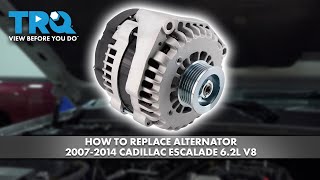
Est. part cost: $150-$300 - Recent Battery Disconnection 🔴 High Probability Disconnecting the battery for any service (like an alternator replacement mentioned by an owner) will erase the Keep Alive Memory and set this code. It's an expected outcome and not a fault.
How to confirm: Confirm if the battery was recently disconnected or replaced. The code will appear on the next drive cycle.
Typical fix: Clear the code with an OBD-II scanner. The code should not return if the power supply is stable. The vehicle will relearn adaptive values as it is driven.
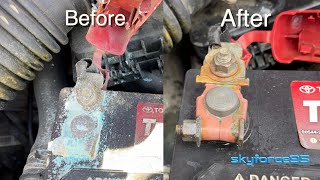
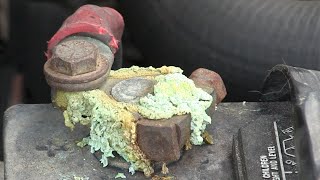
Est. part cost: $0 - Loose or Corroded Battery Terminals/Cables 🟡 Medium Probability Vibration and time can lead to loose connections, while battery acid can cause corrosion, both of which interrupt the constant power supply required by the modules to maintain KAM.
How to confirm: Visually inspect the battery terminals for white or blue-green corrosion. Physically try to twist the terminals to check for tightness. Also check the main ground connection to the chassis and engine block.
Typical fix: Clean the terminals and cable ends with a wire brush and baking soda solution. Tighten all connections securely.
Est. part cost: $1-$10 - Failing Alternator/Charging System Issue ⚪ Low Probability If the alternator isn't adequately recharging the battery, the battery's voltage will drop, leading to KAM errors. This can happen intermittently before the alternator fails completely.
How to confirm: With the engine running, use a multimeter to check the voltage at the battery terminals. It should be between 13.5V and 14.5V. A reading outside this range indicates a charging system problem.
Typical fix: Replace the alternator.
Est. part cost: $200-$500
Rare But Worth Checking
- Faulty Powertrain Control Module (PCM) or Transmission Control Module (TCM): This is rare. Before condemning the module, exhaust all other possibilities. This code by itself seldom means the module is bad. It's more likely if seen with other internal module fault codes like P0601 or P0604. [Bulletin #PIP4653E, Bulletin #05-06-04-060A]
- Blown Fuse or Wiring Issue: A blown fuse for the PCM/TCM or a break in the power/ground wire to the module can cause this code. This requires more in-depth electrical diagnosis, tracing the specific Keep Alive Power (KAPWR) circuit.
- Aftermarket Performance Tuner: Installing an aftermarket performance chip or tuner can sometimes interfere with the PCM's memory functions and trigger a P0603 code. This has been noted by owners using devices like DiabloSport Predator. If you have a tuner installed, this could be the cause.
Diagnosis Steps
- Check if the battery has been recently disconnected or if an aftermarket tuner is installed. If yes, clear the code, remove the tuner if applicable, and drive the vehicle to see if it returns.
- Inspect the battery terminals and main power/ground cables for corrosion and ensure they are tight. Clean and tighten as needed.
- Test the battery. Check the static voltage (should be ~12.6V) and perform a load test to confirm its health, even if it's relatively new.
- Test the charging system. With the engine running, check the voltage at the battery. It should be approximately 13.5-14.5V.
- If the battery and charging system are good, check for any blown fuses related to the PCM or TCM constant power circuits. Check both under-hood and interior fuse panels.
- If the code persists, inspect the power and ground wiring to the PCM/TCM for any damage or loose connections. Pay special attention to the main engine and body grounds (G103, G104, G108). Look for signs of water intrusion near the module.
- If all wiring and power sources are confirmed to be good, the issue may be with the control module itself, but this is the least likely cause and should be the last step.
Parts You'll Likely Need
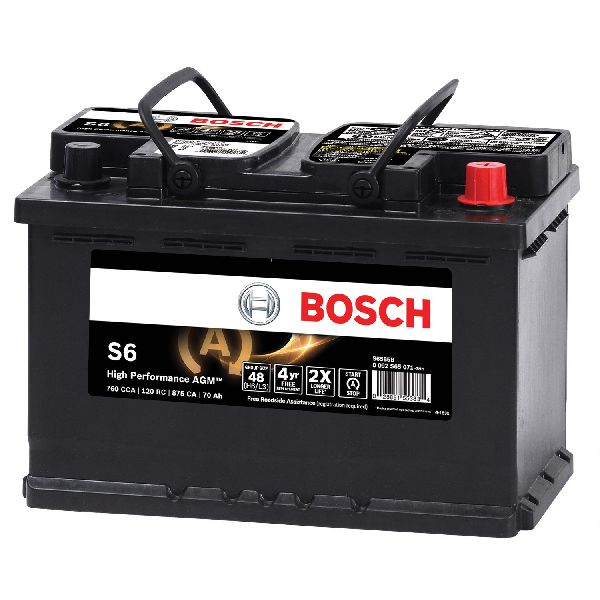
- Vehicle Battery
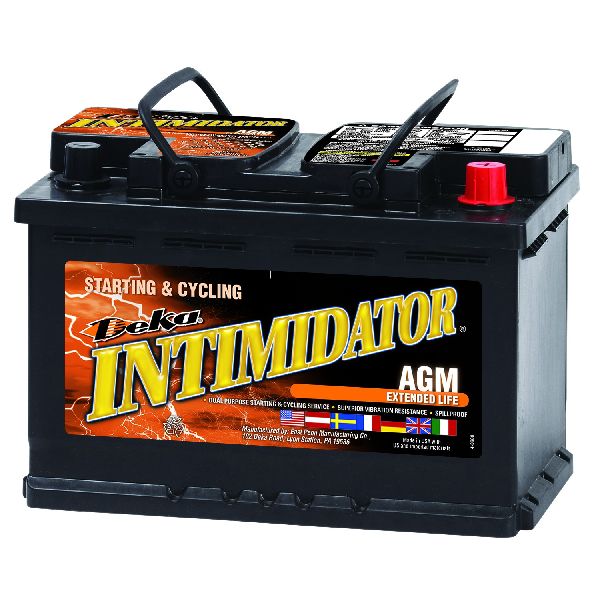
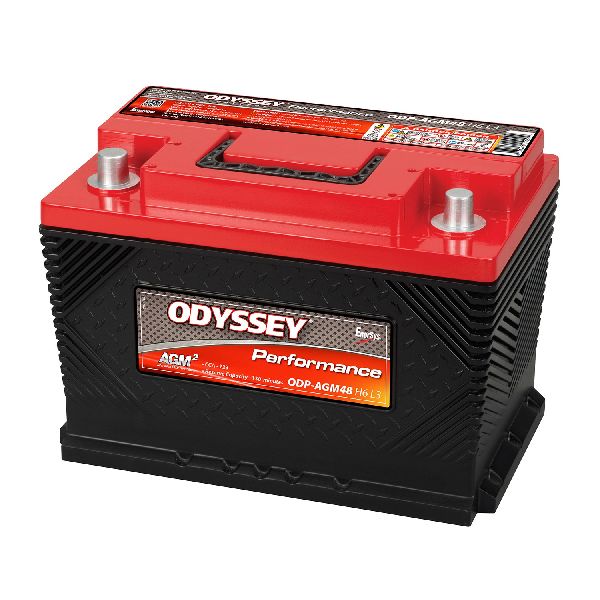
(OEM #ACDelco Gold 48AGM (or equivalent Group 48/H6 battery))— A weak or failing battery is the most frequent cause of a P0603 code on this vehicle. Due to high electrical loads, an AGM (Absorbent Glass Mat) battery is recommended.
Trusted brands: ACDelco, DieHard, Interstate, Deka
OEM price range: $250-$350
Aftermarket price range: $180-$280
Related Codes That Often Appear With This One
- P0601 — Indicates an Internal Control Module Memory Check Sum Error, a more serious internal module fault.
- P0604 — Indicates an Internal Control Module Random Access Memory (RAM) Error, also pointing to an internal module issue.
- P1621 — A GM-specific code related to Control Module Long Term Memory Performance, often grouped with P0603 in GM service literature.
Technical Service Bulletins (TSBs) & Recalls
- PIP4653E: Information on Malfunction Indicator Lamp with various TCM codes, including P0603.
- 05-06-04-060A: Informational bulletin regarding multiple control module DTCs, including P0603, often caused by low voltage.
Platform-Specific Known Issues
- NHTSA TSB #PIP4653E notes that P0603 can be stored in the Transmission Control Module (TCM) along with other codes, requiring technicians to verify which module set the code.
- NHTSA TSB #05-06-04-060A is an informational bulletin explaining that codes like P0603 can be set in multiple modules and provides diagnostic guidance, reinforcing that it's often related to power interruptions or low voltage conditions and not necessarily a faulty module.
Mechanic-Grade Diagnostic Values
- TCM/TEHCM Power Supply Voltage — expected: 11V to 14V (with key on). Failure: 0V or significantly low voltage points to a blown fuse or open wire.
- TCM/TEHCM Ground Circuit Resistance — expected: Below 1.0 Ω. Failure: High resistance (OL) indicates a corroded, loose, or broken ground connection.
- Alternator Output Voltage — expected: 13.5V to 14.5V (with engine running). Failure: Voltage outside this range indicates a fault in the charging system.
Scan Tool Commands That Help
- Tech 2 / GDS2: Verify DTC Location — Per TSB PIP4653E, before reprogramming any module for P0603-related codes, the technician must use the scan tool to confirm which module (ECM, FPCM, or TCM) actually set the code.
Wiring & Ground Locations
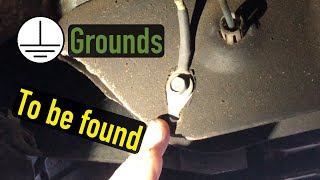
- G103 — On the front of the passenger side (right) cylinder head.. This is a primary engine ground. A poor connection here can cause various module communication and power issues.
- G104 — On the left rear corner of the engine, mounted to the driver's side (left) cylinder head.. Another critical engine ground. The ECM/TCM rely on solid engine grounds for stable operation.
- G108 — A ground strap located at the left rear corner of the engine compartment, above the power brake booster, connecting to the back of the left cylinder head.. This strap grounds the engine block to the chassis/firewall. Corrosion or breakage here is a common cause of intermittent electrical problems.
- G110 — On the front driver's side of the engine block.. Specifically cited as a known problem area for module memory and communication codes on this platform.
- ECM Location — Left side of the engine compartment.. Knowing the physical location is necessary for inspecting its connectors and nearby wiring for damage or water intrusion.
Real Owner Repair Stories
- Reddit user, r/AskMechanics (Vehicle unspecified, but demonstrates a universal cause.) — P0603 code, no-start condition, smell of fuel.
❌ Tried (didn't work) Jumping the blown 120A main fuse temporarily allowed the car to start and run, but the jumper wire then melted and the car would not restart.
✅ What actually fixed it The root cause was a major electrical short that occurred during an alternator replacement when the battery was not disconnected, blowing the 120A main fuse. The final fix advised by others was to trace the wiring from the battery to the ECM for melted wires or a blown secondary fuse (e.g., a 15A ECM fuse) caused by the short. - Reddit user, r/AskMechanics (2015 Infiniti Q50 3.7) — Check Engine Light with P0603, which later became a 'pending code'.
❌ Tried (didn't work) Initially just clearing the code.
✅ What actually fixed it The negative battery terminal was loose. After removing both terminals and re-tightening them securely, the Check Engine Light cleared, resolving the issue. This highlights that the simplest physical check is often the correct fix.
OEM Part Supersession History
Multiple, including 12597121, 12612384, 12625455→12633238, 12656929 (for 2014 models)— Standard hardware revisions and updates by GM for the E38 ECM family.
Heads up: While many E38 service numbers are physically interchangeable, the internal software (Operating System and Slave OS) is often model-year specific. A module from a 2009 truck may not work in a 2007 model without being professionally reflashed with the correct year's calibration using a tool like a Tech 2. Mismatched software can 'brick' the ECM.
Model Year Variations Within This Range
- 2008 vs. 2009: The E38 ECM hardware (service number) and internal calibration changed between model years. For example, many 2009 GM trucks received a new throttle body, which required a different calibration in the ECM than the 2008 models. This makes direct swapping of used ECMs between different years risky without proper reprogramming.
Helpful Videos

Used OEM Parts in Stock
New Aftermarket Parts Available


The information in this article is provided for general reference and educational purposes only. Vehicle specifications, procedures, and part compatibility can vary by production date, trim level, and region. Always consult your vehicle's factory service manual and verify part numbers before purchasing or performing repairs. Safety-critical components such as airbags, seat belts, and braking systems should be installed by a qualified professional.
- Cadillac ESCALADE:
- 🎬 Helpful Videos
- 🛍️ Shop This Part
- What's Unique About the 2007-2014 Cadillac ESCALADE
- Diagnostic Flowchart
- Symptoms You May Notice
- Most Likely Causes
- Rare But Worth Checking
- Diagnosis Steps
- Parts You'll Likely Need
- Related Codes That Often Appear With This One
- Technical Service Bulletins (TSBs) & Recalls
- Platform-Specific Known Issues
- Mechanic-Grade Diagnostic Values
- Scan Tool Commands That Help
- Wiring & Ground Locations
- Real Owner Repair Stories
- OEM Part Supersession History
- Model Year Variations Within This Range
- 🎟️ Get 5% Off