

P0603 on 2012-2015 Buick Verano: Keep Alive Memory (KAM) Error Causes and Fixes
On a 2012-2015 Buick Verano, code P0603 almost always indicates a power supply problem, not a bad computer. It's most often triggered by a recent battery replacement, a weak battery, or loose/corroded terminals. Before replacing any expensive parts, test the battery and clean the terminals. This issue is common on its platform-mate, the Chevrolet Cruze.
- P0603 is a power-related code. Do not assume the ECM or TCM has failed.
- The number one diagnostic step is to test the battery and charging system thoroughly.
- Clean and tighten battery terminals as a first step, as it's a common, no-cost fix.
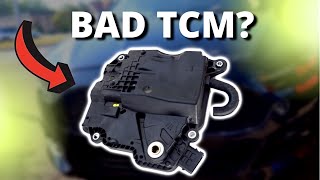
- Be aware this code can be set in the Transmission Control Module (TCM) and cause shifting problems, as confirmed by a GM TSB.
- If you recently disconnected or replaced the battery, this code is normal. Clear it and see if it returns.
What's Unique About the 2012-2015 Buick VERANO
On the Buick Verano and similar GM platforms like the Chevy Cruze, P0603 is not just a generic code. GM has issued Technical Service Bulletins (TSBs) acknowledging that this code can be set in multiple modules, specifically including the Transmission Control Module (TCM). This means a simple power interruption from a weak battery could cause noticeable transmission issues, like rough shifting, which might be misdiagnosed as a major transmission failure. The code is often just a record of a power loss event, not a faulty part. Additionally, these vehicles often use a Regulated Voltage Control (RVC) system that can lower charging voltage to save fuel, potentially leading to undercharged batteries and a higher likelihood of this code appearing.
Diagnostic Flowchart
Tap your situation to follow the diagnostic path that matches what you're seeing on this vehicle.
Symptoms You May Notice
- Check Engine Light is on.
- Erratic or harsh transmission shifting.
- Rough engine idle.
- Engine may hesitate or stumble.
- Slightly reduced fuel economy.
- Slow or delayed engine cranking.
- Blinking 'D' (Drive) light on the shifter.
- Replacing the Engine Control Module (ECM) or Transmission Control Module (TCM) without first thoroughly testing the battery, cleaning the terminals, and verifying the alternator's output.
Most Likely Causes
- Recent Battery Disconnection or Replacement 🔴 High Probability Any interruption of battery power, even for service, will erase the Keep Alive Memory and set this code. This is a normal occurrence after battery service.
How to confirm: Ask the driver if the battery was recently disconnected, replaced, or if the vehicle was jump-started. If so, this is the most likely cause.
Typical fix: Clear the code with an OBD-II scanner. The code should not return if the power supply is stable. The vehicle's modules will relearn adaptive settings over the next several drive cycles.
Est. part cost: $0 - Weak or Failing Battery 🔴 High Probability The Verano uses a Regulated Voltage Control (RVC) system to improve fuel economy, which may run the charging system at a lower voltage (e.g., 12.5-13.1V) when it determines the battery is sufficiently charged. This strategy, especially with frequent short trips, can lead to an undercharged battery that fails prematurely. A weak battery can then drop below the required voltage during engine cranking, causing modules to reset and trigger P0603.
How to confirm: Test the battery voltage with a multimeter. It should be ~12.6V with the engine off and may fluctuate between 12.5V and 14.7V while running due to the RVC system. A definitive test requires a carbon pile load tester. Many auto parts stores offer this for free.
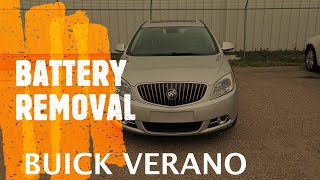
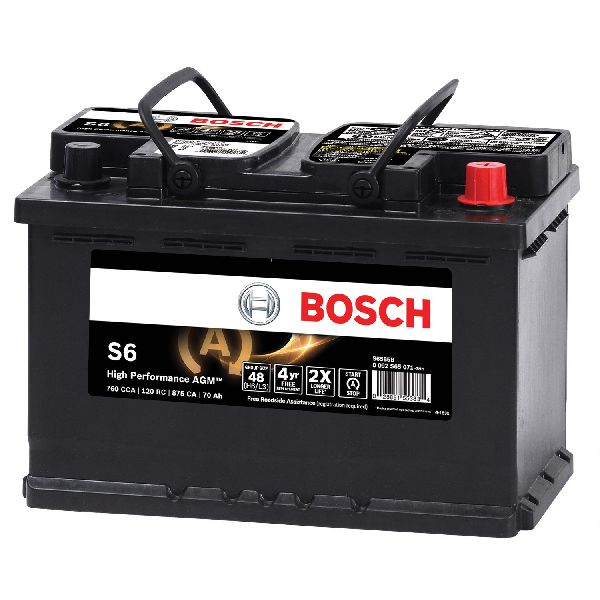
Typical fix: Replace the vehicle's battery, preferably with an AGM (Absorbed Glass Mat) type 🎬 Watch: How to replace the battery on a Buick Verano, which is more resilient to the deep cycling the RVC system can cause.
Est. part cost: $150-$280 - Loose or Corroded Battery Terminals/Grounds 🟡 Medium Probability Corrosion is a common issue on all vehicles and creates resistance, leading to intermittent power loss to the control modules, which is the direct trigger for P0603.
How to confirm: Visually inspect the battery terminals for white or greenish buildup. Physically attempt to twist the terminals; they should not move. Also, check the main chassis ground strap for tightness and corrosion.
Typical fix: Disconnect the battery (negative first), clean the terminals and posts with a wire brush or terminal cleaning tool, and reconnect securely (positive first).
Est. part cost: $5-$15 - Failing Alternator ⚪ Low Probability An alternator that provides unstable or insufficient voltage will fail to charge the battery properly, leading to low voltage conditions that trigger P0603.
How to confirm: With the engine running, check the battery voltage. If it's consistently below 12.5V or fluctuating wildly, the alternator is likely faulty. Many auto parts stores offer free alternator testing.
Typical fix: Replace the alternator.
Est. part cost: $200-$450
Rare But Worth Checking
- Faulty Control Module (ECM or TCM): While rare, if the code returns instantly after being cleared and the entire power and charging system is verified to be in perfect condition, the module's internal memory may have failed. TSB #PIP4653E notes that a TCM reprogram may be needed, and in some cases, module replacement is the only fix.
- Aftermarket Performance Tuner: Aftermarket engine programmers that modify the factory software can sometimes cause conflicts or power interruptions that lead to a P0603 code.
- Parasitic Electrical Draw: A component that fails to 'sleep' can drain the battery overnight, causing a low voltage condition on startup that triggers P0603. This can be difficult to diagnose and requires a systematic parasitic draw test.
Diagnosis Steps
- Query the driver: Ask if the battery has been recently replaced, disconnected, or jump-started. If yes, clear the code and drive the vehicle to see if it returns.
- Inspect the Battery: Check for loose connections and signs of corrosion on the battery terminals and main ground points. Clean and tighten as necessary.
- Test the Battery and Charging System: Use a multimeter to test the battery voltage. With the engine off, it should be ~12.6V. With the engine running, it should be ~13.7-14.7V, but may dip lower (to ~12.5V) if the RVC system is active. A voltage drop below 10V during cranking is a strong indicator of a bad battery. Perform a load test for a definitive result.
- Check Fuses: Inspect the fuses related to the ECM, BCM, and TCM power supply in the vehicle's fuse boxes (engine bay and interior).
- Scan for Module Specifics: Use a scan tool that can identify WHICH module set the code (ECM or TCM). TSB #PIP4653E notes that if P0603 is set *only* in the TCM, and power/grounds are good, a TCM reprogram may be required.
- Check for Parasitic Draw: If the battery repeatedly dies, perform a parasitic draw test. Connect a multimeter in series with the negative battery cable. Wait for all modules to go to sleep (can take up to 2 hours). A normal draw is under 50mA. If higher, pull fuses one by one to isolate the draining circuit.
- Consider Module Failure: If all power and ground circuits are confirmed good, the battery is new, and the code immediately returns after clearing, the issue may be an internal fault in the ECM or TCM, requiring professional diagnosis or replacement.
Parts You'll Likely Need
- Battery
(OEM #ACDelco Gold 47AGM (GM Part #88866318))— A weak or failing battery is the most frequent cause of the voltage drop that triggers a P0603 code on the Verano. An AGM battery is recommended due to its durability with modern charging systems.
Trusted brands: ACDelco, DieHard, Duralast
OEM price range: $200-$300
Aftermarket price range: $150-$250 - Battery Terminal Cleaner — This inexpensive tool is essential for correcting poor connections caused by corrosion, a common cause of intermittent power loss.
OEM price range: $5-$15
Aftermarket price range: $5-$15
Related Codes That Often Appear With This One
- P0601 — This is an Internal Control Module Memory Check Sum Error. Both P0601 and P0603 are related to module integrity and are mentioned together in GM TSBs.
- P0604 — This code indicates an Internal Control Module Random Access Memory (RAM) Error. Like P0603, it points to a memory issue within a control module and is cited in the same TSBs.
Technical Service Bulletins (TSBs) & Recalls
- 05-06-04-060A: Information on control module DTCs (P0601, P0602, P0603, etc.) that can be shared in multiple modules.
- PIP4653E: Notes that DTCs like P0603 may be stored in the Transmission Control Module (TCM) and cause shifting issues, potentially requiring a TCM reprogram.
Platform-Specific Known Issues
- TSB #PIP4653E specifically notes that P0603 (and other codes) may be found stored in the Transmission Control Module (TCM), potentially causing shifting concerns. The bulletin provides a diagnostic path: if the code is isolated to the TCM and power/grounds are verified as good, the next step is to reprogram the module.
- TSB #05-06-04-060A is an informational bulletin confirming that P0603 is one of several codes related to internal module functions that can be shared across multiple modules, emphasizing the need to diagnose which module set the code before replacing parts.
Mechanic-Grade Diagnostic Values
- Battery Voltage, Engine Off — expected: ~12.6 Volts. Failure: A reading below 12.4V indicates a weak or discharged battery that can trigger a P0603.
- Charging System Voltage, Engine Running — expected: 13.5V - 14.7V (may dip to ~12.5V with RVC system active). Failure: Consistently below 13.2V or above 14.8V suggests a faulty alternator or regulator.
- Parasitic Draw — expected: < 50mA (after all modules go to sleep, up to 2 hours). Failure: A draw higher than 50mA indicates a component is not shutting down, draining the battery and causing low voltage on startup.
Scan Tool Commands That Help
- GDS2 (Global Diagnostic System 2): TCM Programming/Software Update — As per TSB #PIP4653E, if P0603 is isolated to the TCM and all power/ground circuits are verified good, a software update is the next diagnostic step before module replacement. An updated calibration may correct intermittent hard shifts, especially when cold.
Wiring & Ground Locations
- G112 — On top of the transmission case, typically secured by a bellhousing bolt.. This is a primary ground for the Transmission Control Module (TCM). A loose or corroded connection here directly interrupts the TCM's power supply, which can cause P0603 and erratic shifting.
- Engine Wire Harness at ECM/TCM Bracket — In the driver's side wheel well area, the main engine harness can rub against the metal bracket holding the ECM/TCM.. A known chafe point can wear through the insulation of wires providing power or ground to the control modules. This can cause intermittent shorts or opens, triggering a P0603 and other unpredictable electrical issues.
- Negative Battery Cable — Connects the negative battery post to the chassis and engine block.. The factory negative battery cable on some GM vehicles of this era can develop high internal resistance, even if the terminals look clean. This creates a voltage drop that can starve modules of power during high-load events like engine cranking, triggering P0603.
Real Owner Repair Stories
- CruzeTalk Forum (platform-mate) (2012 Chevrolet Cruze 1.4T) — Check engine light with P0603, intermittent rough idle, and occasional hard shifting.
❌ Tried (didn't work) Replaced battery, Cleaned all visible ground connections, Checked alternator output (was normal)
✅ What actually fixed it Replacing the negative battery cable. The original cable had developed high internal resistance, causing a voltage drop under load that wasn't visible with a simple multimeter test at rest. The new cable resolved the voltage drop and the P0603 code did not return.
Helpful Videos

We Have This Part in Stock



The information in this article is provided for general reference and educational purposes only. Vehicle specifications, procedures, and part compatibility can vary by production date, trim level, and region. Always consult your vehicle's factory service manual and verify part numbers before purchasing or performing repairs. Safety-critical components such as airbags, seat belts, and braking systems should be installed by a qualified professional.
- Buick VERANO:
- 🎬 Helpful Videos
- 🛍️ Shop This Part
- What's Unique About the 2012-2015 Buick VERANO
- Diagnostic Flowchart
- Symptoms You May Notice
- Most Likely Causes
- Rare But Worth Checking
- Diagnosis Steps
- Parts You'll Likely Need
- Related Codes That Often Appear With This One
- Technical Service Bulletins (TSBs) & Recalls
- Platform-Specific Known Issues
- Mechanic-Grade Diagnostic Values
- Scan Tool Commands That Help
- Wiring & Ground Locations
- Real Owner Repair Stories
- 🎟️ Get 5% Off