

P0602 on 2007-2014 GMC Acadia: Control Module Programming Error Guide
P0602 on a GMC Acadia means the Engine or Transmission Control Module has a software error. The most common fix is reprogramming the module, which requires a professional scan tool. Before condemning the module, check for a weak battery or poor electrical connections, as voltage instability is a known trigger on this platform.
- P0602 is a serious code indicating a software problem in a critical control module like the ECM or TCM.
- This is not a DIY-friendly repair; it requires professional diagnostic tools for reprogramming.
- Always check the battery, connections, and charging system first, as voltage issues are a very common cause of this code on Lambda platform vehicles.
- If clearing the code from the transmission module, follow the TSB 21-NA-106 procedure of letting the vehicle sit with the ignition off and key fob far away for at least 10 minutes.
- If a module is replaced, it MUST be programmed to your vehicle's VIN to function correctly. A security relearn will also be necessary.
What's Unique About the 2007-2014 Gmc ACADIA
On the first-generation GMC Acadia and its Lambda platform siblings (Enclave, Traverse, Outlook), electrical issues are not uncommon. A critical piece of information for this vehicle is found in GM Technical Service Bulletin (TSB) #21-NA-106. It notes that code P0602, particularly when related to the Transmission Control Module (TCM), may appear not to clear after a reset. This is caused by the module not being allowed to fully 'sleep.' The correct procedure requires turning the ignition off, removing the key fob at least 10 feet away from the vehicle, and waiting a minimum of 10 minutes for a proper reset. Additionally, these vehicles can suffer from poor terminal tension in the underhood fuse block, which can interrupt power to the ECM and corrupt its programming, setting a P0602 code.
Diagnostic Flowchart
Tap your situation to follow the diagnostic path that matches what you're seeing on this vehicle.
Symptoms You May Notice
- Check Engine Light is on
- Vehicle will not start, or has a hard start condition
- Engine stalls or idles roughly
- Reduced engine power and poor acceleration (Limp Mode)
- Harsh or erratic automatic transmission shifting
- Decreased fuel economy
- Instrument cluster may behave erratically or display error messages
- Replacing the ECM/PCM without first verifying battery health and charging system output. A simple voltage issue can often trigger this code.
- Assuming a new or used replacement module is 'plug-and-play'. Nearly all module replacements on this platform require VIN-specific programming to function.
Most Likely Causes
- Control Module Not Programmed or Incorrectly Programmed 🔴 High Probability This is the direct definition of the code, often occurring after a module has been replaced with a new or used unit that wasn't flashed with the vehicle's specific VIN and calibration files. 🎬 Watch: Professional VIN programming for a replacement GMC control module. Many replacement modules are sold blank and must be programmed upon installation.
How to confirm: Use a professional-grade scan tool to access the module's information. Verify if the VIN stored in the module matches the vehicle's VIN. If it's blank or mismatched, it requires programming.
Typical fix: Reprogram the module using a GM-specific diagnostic tool (like a Tech 2 or MDI with SPS/Techline Connect software). Some vendors sell pre-programmed modules that may only require a security relearn procedure. 🎬 See this walkthrough for replacing the ECM and performing a relearn.
Est. part cost: $0 (if reprogramming is successful) - Weak Battery or Faulty Charging System 🟡 Medium Probability Low voltage or voltage spikes during startup or operation can interrupt communication and cause data corruption within control modules, leading to programming errors. This is a frequent issue on Lambda platform vehicles, where a failing battery can cause a host of seemingly unrelated electronic gremlins.
How to confirm: Test the battery voltage with a multimeter (should be ~12.6V with engine off). Perform a load test on the battery. Test the alternator output (should be ~13.7-14.7V with engine running).
Typical fix: Replace the weak battery or repair/replace the faulty alternator. Ensure all battery connections are clean and tight.
Est. part cost: $150-$400 - Faulty Engine Control Module (ECM) or Transmission Control Module (TCM) 🟡 Medium Probability Internal hardware failure of the module's memory (EEPROM) or processor can prevent it from retaining its programming, even after a successful flash. This can be caused by age, heat cycles, or voltage spikes.
How to confirm: If the module has correct and stable power/ground and it repeatedly fails to accept or retain programming, it is considered faulty.
Typical fix: Replace the faulty module and program the new one to the vehicle. The TCM is located inside the transmission on the valve body, while the ECM is in the engine bay.
Est. part cost: $300-$800 - Poor Power or Ground Connection to the Module ⚪ Low Probability The Lambda platform has several key grounding points on the engine block, firewall, and chassis frame rails that can become corroded or loose over time, causing intermittent voltage drops to the control modules. Specifically, grounds G101 (frame rail) and G113 (engine-to-transmission stud) are critical for the ECM/TCM.
How to confirm: Visually inspect and perform a voltage drop test on the ECM/TCM power and ground circuits. Check the main engine-to-chassis ground strap and specific ground points like G101 and G113.
Typical fix: Disassemble, clean, and tighten the corroded/loose ground connections. Apply dielectric grease to prevent future corrosion.
Est. part cost: $0-$50
Rare But Worth Checking
- Aftermarket Performance Tune/Programmer:
- Damaged Underhood Fuse Block:
Diagnosis Steps
- Check and record any other stored DTCs, paying close attention to any U-series (communication) or P16xx/P06xx (power/module) codes.
- Inspect the battery terminals for corrosion and tightness. Test the battery's state of charge and perform a load test. Test the charging system's output under load.
- Inspect all visible power and ground connections to the ECM and on the chassis, especially grounds G101 (frame rail) and G113 (engine-to-transmission stud).
- Using a professional scan tool, attempt to communicate with the control module. Check the stored VIN and software calibration data.
- If communication is possible, attempt to clear the codes. Per TSB 21-NA-106, if the code is in the TCM, turn the ignition off, remove the key/fob at least 10 feet away, lock the doors, and wait at least 10 minutes for the module to 'sleep' before checking if the code returns.
- If the code persists, attempt to reprogram the module with the latest GM-certified software. A stable power supply (battery maintainer) is critical during this process to prevent failure.
- If reprogramming fails or is not possible, inspect the underhood fuse block. Disconnect the battery, remove the block, and check terminal 51 of the X3 connector for arcing or damage, per TSB 19-NA-276.
- If all wiring, grounds, and power feeds are confirmed good and reprogramming fails, the control module is likely faulty and requires replacement. The new module will also need to be programmed to the vehicle.
Parts You'll Likely Need
- Engine Control Module (ECM/PCM)
(OEM #12617230, 12633842, 19300014 (ACDelco E38 type, check specific VIN for exact match))— If reprogramming fails, the module itself has an internal fault and is the root cause of the P0602 code.
Trusted brands: ACDelco (OEM), Cardone, Dorman
OEM price range: $400-$800
Aftermarket price range: $250-$500 - Transmission Control Module (TCM)
(OEM #24261875, 24275870, 24275868 (ACDelco T43 type, located inside transmission))— If the P0602 code is specific to the transmission and reprogramming fails, the TCM has likely failed. This is common on the 6T70/6T75 transmission.
Trusted brands: ACDelco (OEM), Dorman, NTK
OEM price range: $600-$900
Aftermarket price range: $250-$500
Related Codes That Often Appear With This One
- P0601 — This code indicates an 'Internal Control Module Memory Check Sum Error,' which is another type of internal module fault often seen with programming errors.
- U0100 — This code means 'Lost Communication With ECM/PCM.' If the ECM has a severe internal or programming fault, it may stop communicating on the CAN bus entirely.
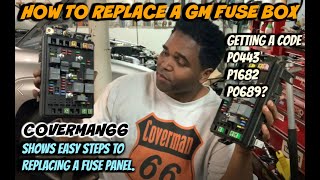
- P1682 — This code indicates an 'Ignition 1 Switch Circuit 2' fault and, along with P0689, points directly to a power supply issue to the ECM, often caused by a faulty terminal in the underhood fuse block.
Technical Service Bulletins (TSBs) & Recalls
- 05-06-04-060A: An informational bulletin for technicians regarding various control module DTCs, including P0602, that can be set in multiple modules. It clarifies that these are internal software/hardware faults.
- 21-NA-106: Informs technicians that codes like P0602 may not appear to clear from the TCM if the module is not allowed to fully 'sleep' after a reset attempt.
- 19-NA-276: Details a condition on 2013-2017 models where poor terminal tension at pin 51 of the underhood fuse block can cause stalling and set ECM power-related codes P1682 and P0689, which can lead to programming corruption (P0602).
Platform-Specific Known Issues
- Voltage Stability During Programming: GM service information strongly emphasizes the need for a stable battery voltage during any programming event. Any fluctuation or drop in voltage can interrupt the process, corrupting the module and potentially rendering it useless. Professional shops use a dedicated programming power supply, not a simple battery charger, to ensure stability.
- Key Ground Locations: On the Lambda platform, problematic grounds can cause intermittent module issues. Key locations to check include G101 on the left frame rail, G113 at the engine-to-transmission stud, and G110 on the right cylinder head. A poor ground can cause voltage drops that mimic module failure.
Mechanic-Grade Diagnostic Values
- ECM (E38) Ignition 1 Voltage — expected: ~12V+ with key in ON position. Failure: Voltage is significantly lower than battery voltage or is absent.
- ECM (E38) Battery Positive Voltage — expected: ~12V+ at all times. Failure: Voltage is significantly lower than battery voltage or is absent.
- Alternator Output Voltage — expected: 13.7 - 14.7 Volts with engine running. Failure: Voltage below 13.7V or above 14.7V indicates a charging system fault that can cause module instability.
Scan Tool Commands That Help
- GM MDI/Tech2/J2534 Passthrough: Service Programming System (SPS) — This is the required function to either reprogram an existing module with updated software or to program a brand new (blank) module with the vehicle's specific VIN and calibration files.
- GM MDI/Tech2/J2534 Passthrough: Replace and Reprogram Control Module — This specific SPS option must be used when a new, unprogrammed ECM or TCM is installed in the vehicle.
Wiring & Ground Locations
- G101 — Left side of the engine compartment, on the left frame rail.. This is a primary ground point for both the Engine Control Module (ECM) and Transmission Control Module (TCM). A poor connection here can cause intermittent power loss and communication errors.
- G113 — On the left side of the engine, at the engine-to-transmission mounting stud.. This is a major powertrain ground. Corrosion or a loose connection here can affect multiple engine and transmission systems, leading to erratic behavior and module faults.
- G110 — Right front of the engine, mounted to the cylinder head.. Provides a key grounding point for engine-mounted components; ensuring it is clean and tight is part of a thorough ground inspection.
- X50A Fuse Block, Connector X3, Pin 51 — Underneath the main underhood fuse block assembly.. This specific terminal provides ignition voltage to the ECM. Poor tension can cause arcing and power interruptions, leading to programming corruption (P0602) and other power-related codes like P1682 and P0689.
Real Owner Repair Stories
- YouTube video from 's&t garage' (2014 GMC Acadia) — Intermittent stalling, Check Engine Light with codes P0689 and P1682.
❌ Tried (didn't work) Initial inspection of fuse block top-side connections.
✅ What actually fixed it The underhood fuse box was removed and inspected, revealing arcing and damage on terminal 51 underneath. The entire fuse box and the corresponding wire terminal were replaced to resolve the power supply issue to the ECM. - YouTube video from 'Keyworld Auto Diagnostics' (2007 GMC Acadia) — Multiple electrical issues after a previous incorrect repair attempt.
❌ Tried (didn't work) An incorrect person had previously worked on the ECU.
✅ What actually fixed it The vehicle had suffered water damage to the interior fuse box and BCM due to a leaking windshield seal. The BCM and interior fuse box were replaced and the new TCM was programmed, which resolved the issues.
"I Checked Everything" — The Actual Cause
- A technician may attempt to reprogram the ECM multiple times to fix a P0602, only to have it fail or return. The standard diagnostic path points to a bad ECM. However, the actual cause can be an unstable power supply from the underhood fuse block, specifically a poor connection at terminal 51 of the X3 connector. The ECM is not faulty, but its programming gets corrupted by the intermittent power loss. The fix is to repair the fuse block connection, not just replace the ECM.
Model Year Variations Within This Range
- 2007-2008 vs 2009-2014: The engine was updated in 2009 from the port-injected 3.6L V6 (LY7) to the direct-injected 3.6L V6 (LLT). While both may use an E38-type ECM, the specific part number and required programming are different. A module for an LY7 will not work on an LLT and vice-versa.
- 2013-2014 (and later): The 2013 model year marked a significant facelift. A GM TSB regarding a known power supply issue at the underhood fuse block (pin 51) specifically covers model years 2013-2017, suggesting this failure mode is more common on post-facelift models.
Helpful Videos

Used OEM Parts in Stock
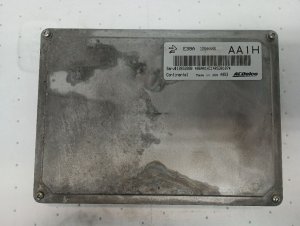

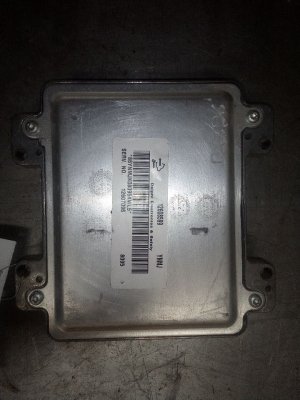

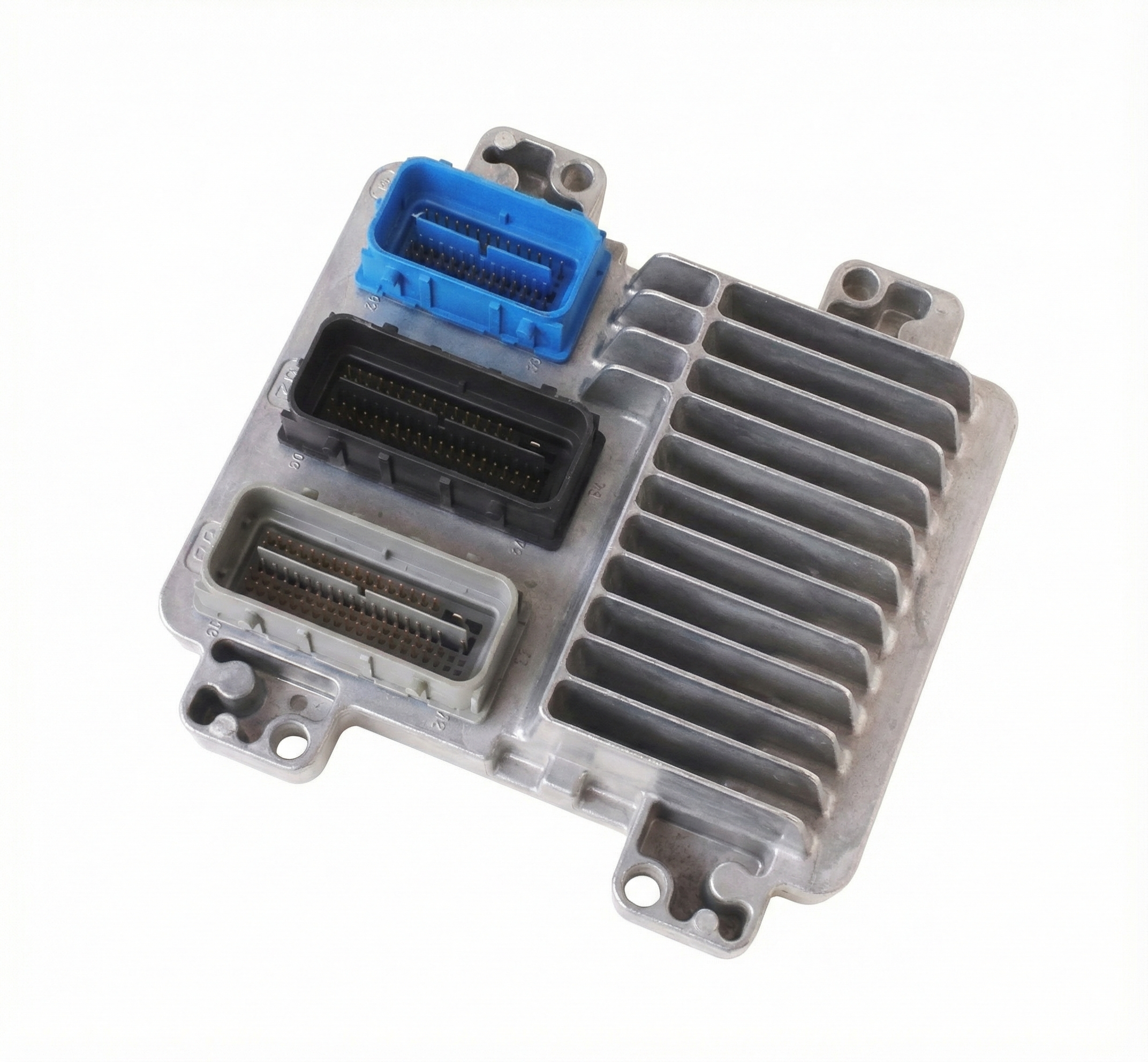

New Aftermarket Parts Available




The information in this article is provided for general reference and educational purposes only. Vehicle specifications, procedures, and part compatibility can vary by production date, trim level, and region. Always consult your vehicle's factory service manual and verify part numbers before purchasing or performing repairs. Safety-critical components such as airbags, seat belts, and braking systems should be installed by a qualified professional.
- Gmc ACADIA:
- 🎬 Helpful Videos
- 🛍️ Shop This Part
- What's Unique About the 2007-2014 Gmc ACADIA
- Diagnostic Flowchart
- Symptoms You May Notice
- Most Likely Causes
- Rare But Worth Checking
- Diagnosis Steps
- Parts You'll Likely Need
- Related Codes That Often Appear With This One
- Technical Service Bulletins (TSBs) & Recalls
- Platform-Specific Known Issues
- Mechanic-Grade Diagnostic Values
- Scan Tool Commands That Help
- Wiring & Ground Locations
- Real Owner Repair Stories
- "I Checked Everything" — The Actual Cause
- Model Year Variations Within This Range
- 🎟️ Get 5% Off