

P0602 on 2007-2014 Chevrolet Impala: Control Module Programming Error Guide
P0602 on a Chevy Impala means the Engine Control Module (ECM) has a programming error. This is not a DIY fix. The most common solution is having a professional shop or dealer reprogram the existing ECM or program a replacement one, which can cost between $200 and $600. This often happens after an ECM is replaced without being programmed to the car's VIN or if a programming attempt is interrupted by power loss.
- P0602 indicates a software/programming error within the Engine Control Module (ECM).
- This is not a DIY-friendly repair. It requires specialized tools and software subscriptions to reprogram the module.
- The most common fix is reprogramming the existing ECM. If that fails, the ECM must be replaced and the new unit programmed.
- Do not drive the vehicle, as it may stall or fail to start, posing a safety hazard.
- Always check for stable battery voltage and good power/ground connections to the ECM before condemning the module.
What's Unique About the 2007-2014 Chevrolet IMPALA
For this generation of Impala and other GM vehicles built on the W-body platform, the various electronic modules are deeply interconnected. A programming error in the main ECM can cause communication failures across the vehicle's network, leading to a host of seemingly unrelated symptoms. GM issued a Technical Service Bulletin (TSB #05-06-04-060A) acknowledging that P0602 and a family of similar codes (P0601, P0603, etc.) can appear in multiple modules, highlighting the sensitive nature of the control module software on these platforms. This platform's reliance on proper module communication means a P0602 is a critical fault that can disable the vehicle entirely.
Diagnostic Flowchart
Tap your situation to follow the diagnostic path that matches what you're seeing on this vehicle.
Generation note: This range covers the end of the 9th generation (2007-2013) and the first year of the 10th generation (2014). The 9th generation is built on the GM W-body platform. The 2014 model year is split; GM sold the older 9th-gen body style as the 'Impala Limited' alongside the all-new 10th-gen Impala (on the Epsilon II platform). While the code's meaning is the same, the specific ECM part numbers (e.g., E38, E67 for W-body vs. E39 for Epsilon II), locations, and programming procedures differ significantly between these two distinct generations.
Symptoms You May Notice
- Check Engine Light is on
- Vehicle will not start (no-crank)
- Engine may stall or idle roughly
- Reduced engine power or 'limp mode'
- Harsh or erratic automatic transmission shifting
- Decreased fuel economy
- Service Stabilitrak message on dash
- Replacing other components like fuel injectors or ignition coils without first addressing the module programming error. The P0602 code is a primary fault in the vehicle's main computer, and any other codes for engine performance are likely a symptom of it, not the cause.
Most Likely Causes
- ECM/PCM was replaced but not programmed 🔴 High Probability Modern ECMs are not 'plug-and-play'. They must be programmed with the vehicle's VIN and specific software configuration to function with other modules like the BCM and TCM. Used or remanufactured modules are often sold in a blank state.
How to confirm: Confirm with the vehicle's service history if the ECM was recently replaced. A professional scan tool will show a blank or mismatched VIN in the module. A Reddit user with a 2014 Impala Limited experienced a no-crank and a P0633 (Immobilizer key not programmed) code after a PCM replacement, which points directly to this issue.
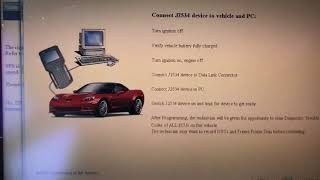
Typical fix: The ECM must be programmed by a dealer or qualified shop using a pass-thru device and GM's Service Programming System (SPS). This process writes the VIN and vehicle-specific calibration files to the module.
Est. part cost: $0 (if module is good) - Failed or interrupted ECM/PCM programming attempt 🟡 Medium Probability A drop in battery voltage or a lost connection during the flashing process can corrupt the module's software. It is critical to use a stable battery charger or power supply rated for programming (providing consistent voltage) during this procedure.
How to confirm: This is usually known from recent repair attempts. The module will be unresponsive or continuously show the P0602 code after a failed flash.
Typical fix: Attempt to reprogram the module again with a stable power supply connected to the vehicle's battery. If it fails repeatedly, the module may be 'bricked' and require replacement.
Est. part cost: $0 - Defective Engine Control Module (ECM) ⚪ Low Probability Internal memory or processor faults can prevent the ECM from loading or verifying its own software. This can be caused by age, heat, or voltage spikes from events like improper jump-starting.
How to confirm: If reprogramming fails multiple times and all power/ground connections to the ECM are verified as good, the module itself is condemned. A technician on the ScannerDanner forum was hesitant to condemn a 2012 Impala ECM even with related codes, suggesting wiring harness checks first, highlighting the need for thorough diagnosis.
Typical fix: Replace the ECM with a new or remanufactured unit, followed by programming it to the vehicle. 🎬 Watch: How to replace the ECM and access the clips.
Est. part cost: $250-$500 - Poor power or ground connection to the ECM ⚪ Low Probability Corrosion or loose connections at the battery, fuse box, or ECM ground straps can cause intermittent voltage drops, leading to module errors, especially during high-load events like cranking.
How to confirm: Perform a voltage drop test on the ECM's power and ground circuits. Inspect all related wiring and connectors for damage or corrosion. A Reddit thread discusses how a no-start with a P0602 could still be related to basic connection issues between the battery and starter. 🎬 Watch: Troubleshooting a Chevy Impala no-start with no codes.
Typical fix: Clean or repair the faulty wiring, terminals, or ground connections.
Est. part cost: $5-$50
Rare But Worth Checking
- Open or high resistance in CAN bus wiring:
Diagnosis Steps
- Verify the P0602 code is present using a professional OBD-II scan tool capable of reading manufacturer-specific codes.
- Check for any other control module codes (P0601, P0603, P0633 etc.) as noted in TSB #05-06-04-060A.
- Attempt to communicate with the Engine Control Module (ECM). If there is no communication, check ECM power, ground, and communication enable circuits. A ScannerDanner forum post details a 2010 Impala with intermittent no-comms with the ECM/TCM, pointing to potential tool or wiring issues.
- If communication is possible, use the scan tool to check the VIN stored in the ECM. If it is blank, shows 'FFFFFFFF', or does not match the vehicle's VIN, it needs to be programmed.
- Connect a battery maintainer designed for programming to ensure stable voltage (typically 13.5V-14.8V). A simple battery charger is not sufficient.
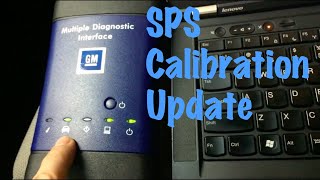
- Using a GM MDI, Tech 2, or a J2534 pass-thru tool with a subscription to GM's Service Programming System (SPS), attempt to reprogram the ECM.
- If programming completes successfully, clear all codes. Perform the crankshaft position variation relearn procedure (if required) and an anti-theft relearn (Passlock). Then, perform a test drive to see if P0602 returns.
- If programming fails, re-check all connections and power/ground circuits. If everything is correct and programming still fails, the ECM is likely faulty and needs to be replaced.
Parts You'll Likely Need
- Engine Control Module (ECM/PCM)
(OEM #Varies by year/engine. Ex: 12651993, 12639986 for 2012 3.6L. Interchangeable numbers include 12616889, 12637106, 12642665, 12651994.)— This is the part that stores the programming. If it cannot be reprogrammed or has an internal hardware failure, it must be replaced. Part numbers are VIN-specific and must be programmed upon installation.
Trusted brands: ACDelco (OEM), Cardone (Remanufactured), Flagship One / Flashmasters (Pre-programmed)
OEM price range: $400-$600
Aftermarket price range: $190-$500
Related Codes That Often Appear With This One
- P0601 — Indicates an internal memory checksum error in the control module. Often seen with P0602, pointing towards an internal ECM fault.
- P0603 — Indicates a Keep Alive Memory (KAM) error, often related to power loss to the module, which could be the root cause of the programming corruption.
- P0604 — Indicates a Random Access Memory (RAM) error within the module.
- P0606 — Indicates a major internal processor fault in the ECM/PCM, strongly suggesting module replacement is needed.
- P0633 — Indicates the immobilizer key is not programmed. This is a very common code to see alongside P0602 after an unprogrammed ECM has been installed.
Technical Service Bulletins (TSBs) & Recalls
- 05-06-04-060A: Communicates Information to technicians on control module Diagnostic Trouble Code(s) (DTC)(s) P0601, P0602, P0603, P0604, P0606, P062F, P06F3, P1621 which can be shared in multiple modules.
Platform-Specific Known Issues
- Per TSB #05-06-04-060A, this code is part of a group of informational DTCs related to control module programming and internal errors that can be set across multiple modules
Mechanic-Grade Diagnostic Values
- Battery Voltage During Programming/Flashing — expected: Stable voltage between 13.5V and 14.8V.. Failure: Voltage dropping below 12.6V can interrupt the process and corrupt the module's memory.
- CAN Bus Voltage (at DLC Pin 6 & 14) — expected: Approximately 2.5V on each line (CAN High and CAN Low) with the key on, engine off.. Failure: Voltages that are stuck high (5V), low (0V), or do not mirror each other indicate a bus wiring short or a faulty module.
- ECM Ground Circuit Voltage Drop — expected: Less than 100mV (0.1V) between the ECM ground pin at the connector and the negative battery terminal.. Failure: Voltage readings higher than 100mV indicate high resistance in the ground circuit, which can cause module errors.
Scan Tool Commands That Help
- Tech 2, GM MDI, or J2534 Pass-Thru Device: Service Programming System (SPS) — This is the primary function required to flash a new or used ECM with the correct VIN-specific calibration file from GM's servers. It is the definitive fix for a P0602 caused by a blank or incorrectly programmed module.
- Professional Scan Tool (GDS2, Tech2, Autel, etc.): Crankshaft Position Variation Relearn (CASE Learn) — This procedure must be performed after replacing or reprogramming the ECM. It allows the new ECM to learn the minor variations of the crankshaft reluctor wheel to ensure accurate misfire detection. Failure to perform this will often set a P0315 or P1336 code and can cause rough running. The procedure typically involves revving the engine to a specific RPM (e.g., 4000 RPM) as prompted by the scan tool.
- No Tool Required (Manual Procedure): Passlock Security Relearn (30-Minute Procedure) — Use this after installing a new or reprogrammed ECM if the engine cranks but will not start, and the 'Security' light is on. This procedure synchronizes the replacement ECM with the vehicle's existing anti-theft system (Passlock sensor in the ignition cylinder). The steps are: 1. Turn key to ON, try to start (it will stall), and leave key in RUN. 2. Wait ~10 minutes for the Security light to turn off. 3. Turn key OFF for 10 seconds. 4. Repeat steps 1-3 two more times for a total of 3 cycles. The vehicle should start on the next attempt.
Wiring & Ground Locations
- G102 — Near the battery, mounted to the right strut tower area in the engine bay.. This is a primary engine bay ground point. Corrosion or a loose connection here can affect the power supply and grounding for multiple components, including the ECM.
- G111 — On a transmission-to-engine bolt. For non-5.3L engines, it's typically above the starter; for 5.3L engines, it's below the starter.. This is a critical ground for the powertrain. High resistance at this point can directly cause intermittent ECM power loss and trigger programming or communication errors.
- G301 — Located inside the cabin, below the driver's door opening, near the rear of the left 'A' pillar.. This ground serves various interior and body modules. While less likely to be the primary cause for an ECM code, a fault here could cause communication issues on the CAN bus that might be misinterpreted.
- ECM Connectors (C1/C2) — The ECM is typically located in the engine bay, often near the air filter housing. It has large multi-pin connectors (e.g., C1 and C2).. The ECM receives its main power and ground through specific pins on these connectors (e.g., Pin 60 on C1 is a common ground). Verifying voltage and ground directly at these pins is the most accurate way to rule out wiring issues.
OEM Part Supersession History
Varies (e.g., E38 from a 2008 Impala)→Varies (e.g., calibration for a 2008 Corvette)— Hardware Re-purposing
Heads up: The same base ECM hardware (like the E38) was used across many different GM vehicles. A used ECM from an Impala can be physically installed in a Corvette, but it will not work correctly. It requires a full re-flash using GM's Service Programming System (SPS) to overwrite all calibration segments and turn it into a 'Corvette E38'. A standard tune flash will not work, as it doesn't overwrite all necessary segments.N/A→12651994 (ACDelco)— Standard replacement part for 2014 Impala Limited.
Heads up: This part number is specific to the 2014 Impala 'Limited' (the older W-body style). It is not compatible with the all-new 2014 Impala (Epsilon II platform), which uses a different ECM (e.g., part number 12657776 for the 3.6L).
Model Year Variations Within This Range
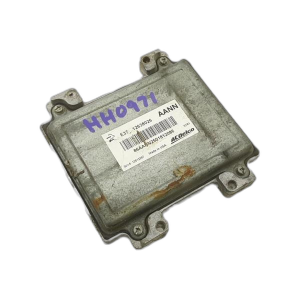
- 2007-2011: Within the 9th generation (W-body), GM used both the E38 and E67 ECMs, particularly with V6 engines. The visual key is the number of connectors on the ECM: the E38 has two large harness connectors, while the E67 has three. An engine with advanced features like Displacement on Demand (DOD) and Variable Valve Timing (VVT), such as the 3.9L LZG V6, might have an E67 even if parts catalogs suggest an E38. A visual inspection is necessary to confirm which module is in the vehicle before ordering a replacement.
Helpful Videos


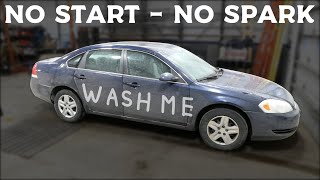
We Have This Part in Stock




The information in this article is provided for general reference and educational purposes only. Vehicle specifications, procedures, and part compatibility can vary by production date, trim level, and region. Always consult your vehicle's factory service manual and verify part numbers before purchasing or performing repairs. Safety-critical components such as airbags, seat belts, and braking systems should be installed by a qualified professional.
- Chevrolet IMPALA:
- 🎬 Helpful Videos
- 🛍️ Shop This Part
- What's Unique About the 2007-2014 Chevrolet IMPALA
- Diagnostic Flowchart
- Symptoms You May Notice
- Most Likely Causes
- Rare But Worth Checking
- Diagnosis Steps
- Parts You'll Likely Need
- Related Codes That Often Appear With This One
- Technical Service Bulletins (TSBs) & Recalls
- Platform-Specific Known Issues
- Mechanic-Grade Diagnostic Values
- Scan Tool Commands That Help
- Wiring & Ground Locations
- OEM Part Supersession History
- Model Year Variations Within This Range
- 🎟️ Get 5% Off