

P0602 on 2007-2014 Chevrolet Equinox: Control Module Programming Error Guide
P0602 on a Chevrolet Equinox means the Engine Control Module (ECM) is not programmed. This is common after an ECM replacement or a failed software update. The fix requires professional reprogramming of the ECM, and if that fails, the ECM must be replaced. On 2.4L models, this is often the result of internal ECM failure caused by oil wicking up the wiring harness from leaking VVT solenoids.
- P0602 means the Engine Control Module (ECM) needs to be programmed. This is not a sensor or mechanical issue.
- This repair is not DIY-friendly. It requires expensive, specialized tools to reprogram the module.
- On 2010-2014 Equinox models, check the ECM connectors for oil. If oil is present, the leaking sensor/solenoid must also be replaced to prevent repeat failure.
- The most common fix is having a dealership or qualified shop program (or reprogram) the ECM. If that fails, the ECM itself needs to be replaced and then programmed.
What's Unique About the 2007-2014 Chevrolet EQUINOX
The 2007-2014 Equinox spans two generations, with the second-gen models (2010-2014), especially those with the 2.4L Ecotec engine, being known for specific ECM failure patterns that can lead to programming errors. A unique and catastrophic issue is engine oil leaking from the camshaft position actuator solenoids (VVT solenoids) and traveling via capillary action up the wiring harness directly into the ECM's J1/J2 connectors. This oil saturates the internal circuit board, causing shorts and driver failure. Additionally, the ECM's location on the engine block exposes it to extreme heat and vibration, which can cause internal components to fail over time, necessitating replacement and reprogramming.
Diagnostic Flowchart
Tap your situation to follow the diagnostic path that matches what you're seeing on this vehicle.
Generation note: This range covers the end of the first generation (2007-2009) and the beginning of the second generation (2010-2014). While the code's meaning is the same, the second-generation models with the 2.4L engine are particularly noted for ECM failures due to issues like oil intrusion into the wiring harness from leaking VVT solenoids. The first generation is less prone to this specific failure mode but can still suffer from general ECM hardware failure or programming corruption.
Symptoms You May Notice
- Check Engine Light is on
- Engine will not start (no-crank or cranks but won't fire)
- Engine stalls or idles roughly
- "Engine Power is Reduced" message o 🎬 Watch: Common causes and fixes for the reduced power message.n the dash
- "Service StabiliTrak" message on the dash
- Harsh or erratic automatic transmission shifting
- No communication with the scan tool
- Check Engine Light does not illuminate at all when the key is turned to the 'ON' position
- Replacing sensors like crankshaft or camshaft position sensors. While a bad ECM can cause symptoms related to these sensors, P0602 specifically points to an internal module or programming problem, not the sensors themselves.
- Replacing only the VVT solenoids when VVT codes are present with P0602. If oil has already reached the ECM, replacing the solenoids alone will not fix the damaged computer.
Most Likely Causes
- Engine Control Module (ECM) was replaced but not programmed 🔴 High Probability When an ECM is replaced, it is 'blank' and must be programmed with the vehicle's VIN and specific software to function. This is a required step for any ECM replacement on this platform.
How to confirm: Verify if the ECM was recently replaced. Use a professional scan tool to check the VIN stored in the ECM; if it's blank, incorrect, or shows garbage characters, it needs programming.
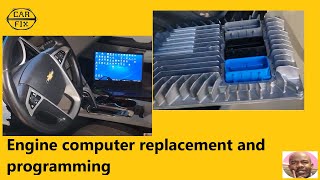
Typical fix: Program the ECM using a GM-compliant J2534 interface (like a GM MDI 2) and a subscription to their Service Programming System (SPS). 🎬 Watch: A professional guide to ECM replacement and SPS2 programming. This is typically done by a dealer or a qualified independent shop for a fee often ranging from $150-$250.
Est. part cost: $0 (if programming is the only need) - Internal ECM failure 🔴 High Probability On 2nd-gen Equinox models (2010+) with the 2.4L engine, oil commonly leaks from camshaft position actuator solenoids. This oil wicks up the wiring harness and contaminates the ECM's internal circuit board, causing shorts. This is the most notorious failure pattern for this specific vehicle.
How to confirm: Unplug the two large ECM connectors (J1/J2) and inspect the pins and connector cavities for any signs of engine oil. If oil is present, the ECM is almost certainly compromised. If programming fails repeatedly with good power/ground, the module is also likely faulty. This is often accompanied by VVT codes (P0010, P0011, P0013, P0014) or communication codes like U0100.
Typical fix: Replace the Engine Control Module. The source of the oil leak (e.g., both intake and exhaust VVT solenoids) MUST be repaired first 🎬 See this walkthrough on replacing the timing control solenoids., and the harness cleaned thoroughly with contact cleaner, or the new ECM will also fail. The new ECM will require programming.
Est. part cost: $250-$600 - Failed ECM programming attempt 🟡 Medium Probability Programming can be interrupted by a weak battery, poor cable connections, or software glitches, leaving the ECM in a non-functional, unprogrammed state. GM TSBs and programming guides repeatedly stress the importance of a stable voltage supply (at least 12.5V) during programming.
How to confirm: The code appears immediately after a programming attempt. The vehicle may be completely unresponsive or 'bricked'.
Typical fix: Re-attempt the programming procedure, ensuring a stable power supply (GM recommends a specific programming support tool, not a battery charger) to the vehicle and a solid, wired connection with the programming tool.
Est. part cost: $0 - Poor power or ground connection to the ECM ⚪ Low Probability Corroded or loose ground straps and battery terminals can cause voltage drops, especially during the high-demand process of programming or even normal operation, corrupting the module's memory or preventing communication. Some GM bulletins point to specific communication circuit splices under the sill plates as potential failure points.
How to confirm: Check battery voltage (should be >12.4V) and test the integrity of the main ECM power and ground circuits using a multimeter. Load test the circuits if possible. Look for corrosion at the battery terminals, fuse box, and main grounding points on the chassis and engine block.
Typical fix: Clean or tighten battery terminals, ground straps, and check the ECM-related fuses and relays. Repair any damaged wiring, paying close attention to known problem areas like under-sill splices.
Est. part cost: $5-$50
Diagnosis Steps
- Verify the code: Use an OBD-II scanner to confirm that P0602 is present. Note any other codes, especially 'U' (communication) codes or VVT codes (P001x).
- Check vehicle history: Determine if the ECM or battery was recently replaced or disconnected. A new, unprogrammed ECM is a very common reason for this code.
- Inspect ECM connectors for Oil: This is a critical step for the 2.4L engine. Unplug the two large ECM electrical connectors and carefully inspect the pins and the harness side for any film or pooling of engine oil. If oil is found, the ECM is compromised and the source of the leak must be found.
- Verify Power and Ground: Check that the ECM has stable battery voltage (above 12.4V engine off, 13.5-14.5V running) and a solid ground connection. A weak battery or bad ground can interrupt programming and cause this code. Check ECM ground resistance to the battery negative terminal; it should be less than 1.0 Ohm.
- Attempt Reprogramming: Using a GM-approved programming tool (like an MDI/MDI2 and a GDS2/SPS subscription), attempt to program the ECM with the correct VIN-specific calibration. This is a professional-level step. Ensure a stable voltage supply of at least 12.5V is maintained during the entire process.
- Evaluate Programming Results: If programming is successful but the code returns immediately, the ECM is internally faulty. If the programming fails to start or complete, and power/grounds are confirmed good, the ECM needs to be replaced.
- Replace the ECM and Address Root Cause: If the ECM is confirmed faulty, replace it. If oil contamination was the cause, you MUST also replace the leaking components (typically both camshaft position actuator solenoids) and clean the harness connectors before installing the new ECM. The new module will also require programming (return to Step 5).
Parts You'll Likely Need
- Engine Control Module (ECM)
(OEM #12655476, 12633238, 12648906 (part numbers vary by year and calibration; always verify with VIN))— This code is most often caused by a faulty, failed, or unprogrammed ECM. Replacement is the only fix if reprogramming fails or if it has been damaged by oil intrusion.
Trusted brands: ACDelco (OEM), Cardone (Remanufactured), Standard Motor Products
OEM price range: $400-$600
Aftermarket price range: $250-$450 - Camshaft Position Actuator Solenoid (VVT Solenoid)
(OEM #Intake: 12655420, Exhaust: 12655421 (for 2.4L))— On 2.4L engines, these are the primary source of the oil leak that wicks up the harness and destroys the ECM. They must be replaced to prevent repeat failure of the new ECM.
Trusted brands: ACDelco (OEM/GM Genuine), Dorman, Standard Motor Products
OEM price range: $40-$60 each
Aftermarket price range: $25-$50 each
Related Codes That Often Appear With This One
- U0100 — This code means 'Lost Communication with ECM.' It often appears with P0602 when the ECM has failed internally or is unprogrammed, preventing it from communicating on the vehicle's network.
- P0601, P0603, P0604 — These are all internal control module memory or processor error codes. They are related to P0602 and point toward a faulty ECM. GM TSB #05-06-04-060A groups these codes together as internal module failures.
- P0010, P0011, P0013, P0014 — These are Camshaft Position Actuator circuit codes. On the 2.4L Equinox, these codes are a strong indicator that the ECM's internal VVT drivers have been fried, either by heat/vibration or by oil contamination from leaking VVT solenoids.
Technical Service Bulletins (TSBs) & Recalls
- 05-06-04-060A: An informational bulletin for technicians about various control module diagnostic trouble codes (P0601, P0602, P0603, P0604, etc.), confirming this is a recognized internal failure type.
- Multiple GM programming bulletins (e.g., 20-NA-047, 20-NA-219) implicitly stress the cause of programming failures by repeatedly warning technicians to use a stable voltage supply and a wired connection, as interruptions can cause codes like P0602.
Platform-Specific Known Issues
- On 2010-2014 models with the 2.4L engine, leaking VVT solenoids or oil pressure sensors can cause oil to travel up the wiring harness and contaminate the ECM, leading to failure. This is a widely documented and notorious issue for this platform.
- GM issued an informational bulletin (#05-06-04-060A) for technicians regarding a group of control module DTCs including P0602, indicating it's a known type of fault across multiple modules and vehicles.
- The 2.4L Ecotec engine in this generation also had significant issues with high oil consumption, which could lead to low oil levels and potentially exacerbate other engine problems, though not directly causing P0602.
Mechanic-Grade Diagnostic Values
- VVT Solenoid Internal Resistance (2.4L Engine) — expected: 8 to 13 Ohms. Failure: A reading outside this range, or a reading that fluctuates wildly when wiggling the connector, indicates a bad solenoid.
- ECM Ground Circuit Resistance — expected: Under 1.0 Ohm. Failure: Higher resistance from the ECM connector ground pin to the negative battery terminal indicates a poor ground connection.
- Battery Voltage During Programming — expected: 12.5V or higher, stable. Failure: Any voltage drop, spike, or fluctuation below 12.5V can interrupt programming and cause errors like P0602.
- ECM Power Supply (Key On, Engine Off) — expected: Battery Positive Voltage (~12.4V+). Failure: No voltage or low voltage at the specified pins indicates a wiring, fuse, or relay issue.
Hidden / Shadow Codes Worth Checking
- E4399 / E4403: These are not vehicle DTCs, but error codes displayed by the GM Service Programming System (SPS) software during a failed programming event. They indicate a severe error, typically from loss of communication. (see via Visible on the technician's computer screen running GM SPS software when a programming attempt fails.)
Scan Tool Commands That Help
- GM SPS (Service Programming System): Prepare Control Module for Removal — This function should be used on the OLD module before removing it, if communication is still possible. It saves certain vehicle-specific data that can be transferred to the new module.
- GM SPS (Service Programming System): Replace and Program ECU — This is the standard function used to program a new, blank ECM. It is also used to re-attempt programming after a failure (like an E4399/E4403 error) to overwrite potentially corrupt data.
- GDS2 / Tech 2: Establish Communication — After a failed programming attempt, a technician must first use the diagnostic tool (GDS2/Tech2) to confirm that communication with the 'bricked' module can be re-established before attempting to reprogram it with SPS.
Wiring & Ground Locations
- ECM Connectors (2.4L) — On the front of the engine block, below the intake manifold.. These are the connectors (often designated X1 and X2) that must be inspected for oil contamination wicked from the VVT solenoids. The pins for power and ground must be checked here.
- ECM Ground (G112) — On a stud on the engine block, under the alternator and above the A/C compressor on the 2.4L engine.. This is a primary ground point for the ECM. A loose or corroded connection here can cause low voltage, erratic operation, and programming failures. The resistance from the ECM connector pin to this point (and to the battery) should be verified.
- ECM Power Pin (X1 Connector) — Pin 20 (Red/White wire) on the X1 connector is a common battery positive voltage supply pin.. This pin must have full battery voltage at all times. A loss of voltage here will prevent the ECM from operating or programming correctly.
- ECM Ignition Voltage Pin (X1 Connector) — Pin 19 (Pink wire) on the X1 connector is a common ignition 1 voltage supply.. This pin must have voltage when the key is in the ON or RUN position. Loss of this signal will prevent the ECM from powering up.
Model Year Variations Within This Range
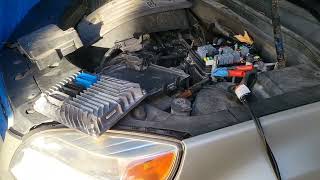
- 2010-2014: The second-generation Equinox uses an ECM (ACDelco E39/E39A) that is mounted directly to the 2.4L engine block, making it highly susceptible to damage from heat, vibration, and oil leaks from the VVT solenoids—the primary unique failure point for this platform.
- 2007-2009: The first-generation Equinox has different ECM hardware and is less known for the specific oil-wicking failure mode seen in the later 2.4L engines. P0602 on these models is more likely due to generic hardware failure or a botched programming attempt.
Helpful Videos


Used OEM Parts in Stock


New Aftermarket Parts Available


The information in this article is provided for general reference and educational purposes only. Vehicle specifications, procedures, and part compatibility can vary by production date, trim level, and region. Always consult your vehicle's factory service manual and verify part numbers before purchasing or performing repairs. Safety-critical components such as airbags, seat belts, and braking systems should be installed by a qualified professional.
- Chevrolet EQUINOX:
- 🎬 Helpful Videos
- 🛍️ Shop This Part
- What's Unique About the 2007-2014 Chevrolet EQUINOX
- Diagnostic Flowchart
- Symptoms You May Notice
- Most Likely Causes
- Diagnosis Steps
- Parts You'll Likely Need
- Related Codes That Often Appear With This One
- Technical Service Bulletins (TSBs) & Recalls
- Platform-Specific Known Issues
- Mechanic-Grade Diagnostic Values
- Hidden / Shadow Codes Worth Checking
- Scan Tool Commands That Help
- Wiring & Ground Locations
- Model Year Variations Within This Range
- 🎟️ Get 5% Off