

P0602 on 2007-2014 Buick LaCrosse: Control Module Programming Error Guide
This code means a critical control module, like the Engine (ECM) or Transmission (TCM) module, has a software error. The most common fix is reprogramming the module at a dealer or qualified shop. It is not a DIY-friendly repair.
- P0602 is a software error in a major control module, not a simple part failure.
- This is not a DIY repair. It requires expensive, specialized tools and software subscriptions from GM to reprogram the module.
- The most likely solution is reprogramming the existing module. If that fails, the module itself needs to be replaced and the new one programmed.
- Before any expensive replacements, ensure the vehicle's battery and charging system are healthy, as low voltage can cause this code.
- Never install a used ECM or TCM without expecting to have it professionally reprogrammed for your vehicle's VIN.
What's Unique About the 2007-2014 Buick LACROSSE
The 2007-2014 LaCrosse spans two distinct generations (2007-2009 on the W-body platform and 2010-2014 on the Epsilon II platform), both featuring complex, networked electronics. The second-generation models, in particular, often feature a Transmission Electro-Hydraulic Control Module (TEHCM) where the TCM is integrated with the valve body inside the transmission, making it prone to heat-related failures that can manifest as programming errors. The TSB #05-06-04-060A issued by GM specifically notes that codes like P0602 can be set by multiple different modules, highlighting the interconnected nature of the vehicle's systems. A programming error in one module can easily cause communication issues and symptoms in others. This code often appears after a module has been replaced without proper GM-specific programming, or if a programming attempt was interrupted.
Diagnostic Flowchart
Tap your situation to follow the diagnostic path that matches what you're seeing on this vehicle.
Generation note: This range covers the end of the first generation (2007-2009) and the start of the second (2010-2014). While the code's meaning is the same, the specific module locations and programming procedures differ. The second-generation models have more integrated and complex electronic systems, potentially involving more modules in the diagnostic process. For example, the 2nd-gen often uses an integrated TEHCM inside the transmission, whereas the 1st-gen has a separate TCM.
Symptoms You May Notice
- Check Engine Light is on
- Vehicle may not start or may stall unexpectedly
- Harsh, erratic, or delayed transmission shifting
- Vehicle stuck in 'limp mode' (won't shift past a certain gear)
- Reduced engine performance and poor acceleration
- Decreased fuel economy
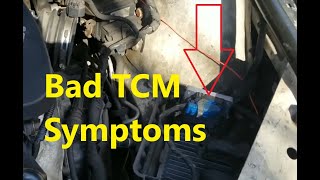
- "Service Stabilitrak" or other warnings on the driver information center 🎬 Watch: Common symptoms of a failing Transmission Control Module
- Replacing sensors or other components when the root cause is module programming.
- Assuming a used control module from another vehicle will work without being reprogrammed ('plug and play').
- Replacing a TEHCM for a P0602 code when the actual cause was a failed reprogramming attempt due to an unstable power supply.
Most Likely Causes
- Improper or Incomplete Module Programming 🔴 High Probability Replacing a major control module (ECM, TCM, BCM) with a new or used unit requires VIN-specific programming. This code is frequently triggered when a module is installed without this critical step, or if a programming attempt fails or is interrupted. Programming can fail due to an unstable internet connection or, more commonly, unstable vehicle voltage. GM bulletins explicitly warn against using a standard battery charger and require a stable programming power supply to prevent voltage spikes or drops that corrupt the module.
How to confirm: A professional scan tool can check the VIN programmed into the module and compare it to the vehicle's actual VIN. It can also check the software calibration version and compare it against the official GM database.
Typical fix: The module must be correctly reprogrammed using GM's Service Programming System (SPS) with a stable voltage supply. In some cases, the programming must be started from scratch.
Est. part cost: $0 (if reprogramming is successful) - Failing Control Module (ECM/TCM/TEHCM) 🟡 Medium Probability Internal components of the control module can fail from heat, vibration, or age. On 2nd-gen models with 6-speed automatic transmissions, the TCM is often a TEHCM located inside the transmission pan, submerged in hot fluid. This constant heat exposure is a known failure point, leading to internal electronic faults that can trigger a P0602.
How to confirm: If reprogramming the module fails repeatedly, or if the module does not communicate at all (often setting U-codes), it is likely faulty. This is a diagnosis of exclusion after ruling out programming and wiring issues.
Typical fix: Replace the faulty control module and program the new one to the vehicle.
Est. part cost: $250-$800 - Low Battery Voltage or Unstable Power Supply ⚪ Low Probability Modern modules are extremely sensitive to voltage. A weak battery, failing alternator, or poor ground connection can cause voltage drops during operation, which can corrupt memory. More critically, simply replacing the battery without using a memory saver device can sometimes cause modules to lose their programming or 'go to sleep,' leading to a no-start condition, as reported by owners of 2011 LaCrosse models.
How to confirm: Test the battery, charging system, and check major power and ground connections to the affected module. Voltage should be stable and above 12.4V with the engine off. Check for electrical chaos after a recent battery replacement.
Typical fix: Replace the weak battery, repair the charging system, or clean/tighten faulty ground straps. A full reprogramming of the affected module may be necessary afterward.
Est. part cost: $150-$500
Rare But Worth Checking
- Aftermarket Performance Tunes: If an aftermarket engine or transmission tune has been loaded, it may not have been written correctly, causing a P0602. Reverting to the stock GM tune can diagnose this. GM Service Bulletin 09-06-04-026X specifically instructs dealers on how to check for non-GM calibrations, which can void the powertrain warranty.
- CAN Bus Wiring Issues: Damage or corrosion on the Controller Area Network (CAN) wiring harness can interrupt communication between modules, which can sometimes be misinterpreted as a programming error within a single module.
Diagnosis Steps
- Connect a professional scan tool capable of communicating with all vehicle modules (not just a basic code reader).
- Scan all modules for DTCs. Note which module is reporting the P0602 and any accompanying codes like P0700 or U-series codes.
- Attempt to retrieve the VIN and software calibration numbers from the suspect module. Verify they are correct for the vehicle.
- Check for evidence of non-GM aftermarket tuning per the procedure in TSB 09-06-04-026X.
- Check battery voltage and the vehicle's charging system performance to ensure a stable power supply. Voltage must be stable and above 12.5V before attempting any programming.
- Inspect the wiring harness and connectors for the affected module for any signs of damage, corrosion, or loose pins.
- CRITICAL: Connect a GM-approved programming support tool or a robust battery maintainer before attempting to reprogram. DO NOT use a standard battery charger.
- Using a GM-approved programming interface (like a Tech 2 or MDI) and a subscription to the Service Programming System (SPS), attempt to reprogram the module with the latest factory calibration.
- If reprogramming fails or the code returns immediately, the control module itself is likely defective and requires replacement.
- After replacement, the new module must be programmed to the vehicle following the same voltage-stabilized procedure.
Parts You'll Likely Need
- Engine Control Module (ECM/PCM)
(OEM #Examples: 12605843 (for 2007 models), 12651994 (for 2011 3.6L), 12637106 (for 2010-11 2.4/3.0L). Part numbers are VIN-specific.)— If reprogramming fails, the ECM itself has likely failed internally and must be replaced. The new unit requires programming.
Trusted brands: ACDelco
OEM price range: $400-$800
Aftermarket price range: $250-$500 - Transmission Control Module (TCM/TEHCM)
(OEM #Examples: 24235754 (T42 TCM for 2007-2009), 24287424 / D144420F (TEHCM for 2012-2016). Part numbers are VIN-specific.)— If the error is specific to the transmission, the TCM may be the cause, especially on 2nd-gen models where the TEHCM is located inside the hot transmission housing. It must be replaced and programmed.
Trusted brands: ACDelco
OEM price range: $300-$700
Aftermarket price range: $200-$450
Related Codes That Often Appear With This One
- P0601 — P0601 indicates an internal memory checksum error, which is a very similar and related fault to a programming error.
- P0700 — If the P0602 is set by the Transmission Control Module (TCM), it will request the ECM to turn on the Check Engine Light by sending a P0700 'Transmission Control System Malfunction' code.
- U0100 / U0101 — These codes indicate 'Lost Communication with ECM' or 'Lost Communication with TCM,' respectively. They often appear when the module in question has failed internally and is no longer active on the CAN bus network, which can be the root cause of the P0602.
Technical Service Bulletins (TSBs) & Recalls
- 05-06-04-060A: An informational bulletin from GM noting that P0602 is one of several control module codes (P0601, P0603, P0604, etc.) that can be shared among multiple modules, indicating a programming or internal fault.
- 09-06-04-026X: Details the procedure for service centers to verify engine and transmission calibrations before performing warranty repairs. It is used to identify non-GM, aftermarket tunes which can cause performance issues, set codes like P0602, and may void the vehicle's powertrain warranty.
Platform-Specific Known Issues
- TEHCM (Transmission Module) Failure in 2nd-Gen Models: On 2010-2014 LaCrosse models with the 6-speed automatic transmission (e.g., 6T70), the Transmission Control Module is part of the Transmission Electro-Hydraulic Control Module (TEHCM), which is mounted inside the transmission. This location subjects the electronics to extreme heat cycles, leading to a high rate of failure. Symptoms include harsh shifting, getting stuck in gear, and throwing codes P0700 and P0602. The fix is to replace the TEHCM, which is a significant labor cost as it requires dropping the transmission pan.
- Extreme Electrical Sensitivity After Battery Replacement: Multiple owners have reported catastrophic-seeming electrical issues immediately after replacing the battery on 2010-2014 LaCrosse models, particularly when a memory-saver device was not used. Symptoms include a completely dead car, no power, key stuck in the ignition, and various control modules failing to 'wake up'. This can sometimes be misinterpreted as a failed PCM or BCM, when it's actually a voltage-related glitch that may require a hard reset or even reprogramming to resolve. This highlights the platform's sensitivity to unstable voltage.
Mechanic-Grade Diagnostic Values
- High-Speed GMLAN Bus Resistance — expected: 60 Ohms (± 5 Ohms). Failure: A reading significantly higher than 60 Ohms indicates an open or high resistance in the bus wiring. A reading below 60 Ohms indicates the two CAN wires are shorted together.
- High-Speed GMLAN Bus Voltage — expected: Both GMLAN High (Pin 6) and GMLAN Low (Pin 14) wires should show a bias voltage of approximately 2.5V when the bus is idle.. Failure: During communication, the High line should toggle up to ~3.5V and the Low line should toggle down to ~1.5V. A wire that is stuck high, low, or at a different voltage indicates a short to power, ground, or an internal module fault.
Hidden / Shadow Codes Worth Checking
- U-Series Communication Codes (e.g., U0100, U0101, U0121): While not 'shadow codes' in the typical sense, a full scan with a dealer-level tool like GDS2 may reveal a pattern of U-codes (Lost Communication) stored in various modules that a basic OBD-II reader won't see. A P0602 in the ECM accompanied by a U0101 (Lost Communication with TCM) in multiple other modules points strongly to a failed TCM or a wiring issue between the ECM and TCM, rather than just an ECM programming fault. (see via GM GDS2 or other professional-grade scan tool with the ability to query all onboard modules individually.)
Scan Tool Commands That Help
- GDS2 (Global Diagnostic System 2): Vehicle DTC Information > Display DTCs — This is the first step to get a complete vehicle health overview. It queries every module on the network for codes, which is critical for seeing if the P0602 is isolated or accompanied by communication codes (U-codes) from other modules.
- GDS2 (Global Diagnostic System 2): Module Diagnostics > [Select Module] > Control Functions — After identifying the suspect module, this function allows you to command outputs directly (e.g., turn on a fuel pump relay, activate a solenoid). If the module fails to perform these bidirectional commands, it strongly suggests an internal module failure, assuming power and grounds are good.
- GM SPS2 (Service Programming System) via Techline Connect: Replace and Program ECU / Program ECU — This is the software required to flash a new calibration to a module. It is used after confirming the module has good power/ground and no physical wiring faults. This is the standard fix for a pure programming corruption and is mandatory when a new module is installed.
Wiring & Ground Locations
- G103 — Located on the left frame rail, sometimes found underneath the Starter Generator Control Module (SGCM) bracket.. This is a critical ground point. A poor connection at G103 is a known cause of intermittent no-start/stall conditions, loss of communication with the ECM and TCM, and a host of seemingly unrelated codes. It can cause system voltage to drop to ~7.5V, which is insufficient for proper module operation and can mimic a module failure.
- G101 / G107 — G101 is typically at the left front of the engine on the lower block. G107 is often on the chassis frame rail nearby.. These are primary ground points for the Engine Control Module (ECM) and Transmission Control Module (TCM). High resistance or a loose connection at these points can cause erratic module behavior, data corruption, and trigger programming error codes like P0602.
- DLC (Data Link Connector) Pins 6 & 14 — Under the driver's side dashboard.. Pin 6 is the GMLAN High (+) wire and Pin 14 is the GMLAN Low (-) wire. These are the main diagnostic points for testing the integrity of the entire high-speed communication network that connects the major control modules. All network resistance and voltage tests start here.
Real Owner Repair Stories
- Chevy HHR Network forum user 'superdow' (Chevy HHR (GM platform with similar electrical architecture)) — Intermittent security light, gauges not working, engine misfire, and a 'no communications' trouble code.
❌ Tried (didn't work) Adding a supplementary ground wire to the TCM (provided a temporary fix)., Checking other grounds., Disconnecting and reconnecting the battery.
✅ What actually fixed it The problem was permanently resolved by replacing the ECM/PCM with a properly reflashed unit. After replacement, the security light went out immediately and all functions returned to normal.
OEM Part Supersession History
24287424→24041960— Part update or revision by the manufacturer.
Heads up: This is a TEHCM (Control Solenoid and Valve Assembly with TCM) for 2nd generation LaCrosse models. Always verify the correct part number with the vehicle's VIN before ordering, as multiple versions exist.
Model Year Variations Within This Range
- 2007-2012 vs 2013-2014: The primary factory diagnostic tool differs. First-generation and early second-generation models (up to ~2013) are typically serviced with the Tech2 or a Tech2Win simulator. Later models (2013+) exclusively use the GDS2 (Global Diagnostic System 2) software for all module diagnostics and bidirectional controls.
Helpful Videos
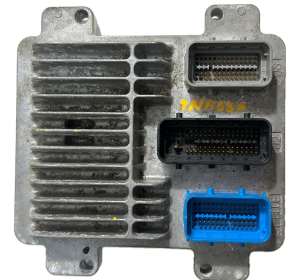
Used OEM Parts in Stock




New Aftermarket Parts Available


The information in this article is provided for general reference and educational purposes only. Vehicle specifications, procedures, and part compatibility can vary by production date, trim level, and region. Always consult your vehicle's factory service manual and verify part numbers before purchasing or performing repairs. Safety-critical components such as airbags, seat belts, and braking systems should be installed by a qualified professional.
- Buick LACROSSE:
- 🎬 Helpful Videos
- 🛍️ Shop This Part
- What's Unique About the 2007-2014 Buick LACROSSE
- Diagnostic Flowchart
- Symptoms You May Notice
- Most Likely Causes
- Rare But Worth Checking
- Diagnosis Steps
- Parts You'll Likely Need
- Related Codes That Often Appear With This One
- Technical Service Bulletins (TSBs) & Recalls
- Platform-Specific Known Issues
- Mechanic-Grade Diagnostic Values
- Hidden / Shadow Codes Worth Checking
- Scan Tool Commands That Help
- Wiring & Ground Locations
- Real Owner Repair Stories
- OEM Part Supersession History
- Model Year Variations Within This Range
- 🎟️ Get 5% Off