

P0601 on 2007-2011 GMC Yukon Denali: Internal Memory Error Causes & Fixes
P0601 on a 2007-2011 GMC Yukon Denali indicates a fatal internal memory error in a control module, most commonly the Engine Control Module (ECM). This is almost always a 'kiss of death' for the module, requiring replacement and programming, a job for a professional. Before replacement, verifying power and ground integrity is critical.
- P0601 is a serious code indicating a fatal error within a control module, usually the ECM but sometimes the TCM.
- Before replacing any expensive modules, always verify the battery, charging system, and all related power and ground connections are in perfect condition.
- On this specific vehicle, the fault could be in the Transmission Control Module (TCM), so proper diagnosis with a professional scan tool to identify the faulting module is crucial.
- This is not a DIY repair for most people. The fix requires replacing the module and programming it to the vehicle's VIN with specialized tools, followed by a VATS relearn procedure.
What's Unique About the 2007-2011 Gmc YUKON DENALI
For the GMT900 platform, which includes the 2007-2011 Yukon Denali, the Engine Control Module is the Delphi/ACDelco E38. GM has issued bulletins acknowledging that P0601 can appear in multiple different control modules, not just the primary engine computer. TSB #PIP4653E is crucial as it highlights that the Transmission Control Module (TCM), an ACDelco T42 module in these vehicles, is a known source for P0601. This can complicate diagnosis if not approached systematically. The core issue remains the same—an internal module failure—but it's important to use a scan tool that can specify *which* module has logged the fault before ordering expensive parts.
Diagnostic Flowchart
Tap your situation to follow the diagnostic path that matches what you're seeing on this vehicle.
Symptoms You May Notice
- Check Engine Light is on
- Engine may crank but not start
- Stalling or dying while driving, sometimes after reaching operating temperature
- Reduced engine power or 'limp mode'
- Stabilitrak and other warning lights may illuminate simultaneously
- Erratic transmission shifting (if the TCM is the cause)
- Failure to pass emissions tests
- OBD-II monitor readiness flags reset every time the ignition is cycled
- Replacing sensors or other components when the control module itself is the root cause.
- Replacing the ECM when the actual fault lies in the TCM.
- Replacing a module without first verifying it has stable power and ground connections.
- Assuming a used module from a junkyard will be plug-and-play. It will not work without professional programming.
Most Likely Causes
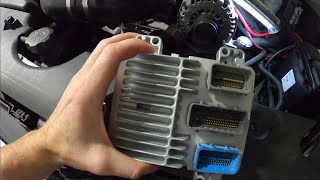
- Failed Engine Control Module (ECM/PCM) 🔴 High Probability The Delphi/ACDelco E38 ECM can fail internally due to age, heat cycles, and electrical stress, leading to a checksum error. This is the most common reason 🎬 See this breakdown of common causes and fixes for P0601. for a P0601 code. Some technicians note that cold solder joints on the main processor can develop over time from heat cycles.
How to confirm: After ruling out all power/ground issues, if a scan tool confirms P0601 is set in the ECM and the module cannot be successfully reprogrammed, it is condemned. A user on the ScannerDanner forum with a 2012 Yukon confirmed replacement of the PCM fixed the issue. Sometimes a burnt electronic smell may be noticeable near the module.
Typical fix: Replace the Engine Control Module and program the new unit to the vehicle's VIN, followed by a VATS relearn procedure.
Est. part cost: $400-$1200 - Failed Transmission Control Module (TCM) 🟡 Medium Probability As noted in TSB #PIP4653E, the T42 TCM is another known module to set this code on this platform. Internal memory corruption can occur similarly to the ECM.
How to confirm: A professional scan tool will indicate that the P0601 code is originating from the TCM, not the ECM. This is a critical diagnostic step.
Typical fix: Replace the Transmission Control Module (located inside the transmission) and program it to the vehicle.
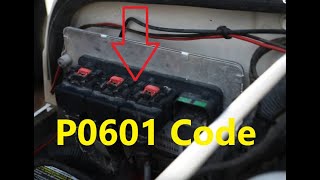
Est. part cost: $300-$900 - Poor Power or Ground Connection ⚪ Low Probability Voltage spikes or drops from a weak battery, failing alternator, or corroded/loose ground straps can corrupt module memory or mimic a module failure. Owners on forums frequently advise checking all major ground connections (engine block to frame, battery to chassis) before replacing modules. A user on a Trailblazer SS forum (similar GM electronics) fixed a P0601 that appeared only when hot by cleaning all ground points. 🎬 Watch: How a Trailblazer SS owner fixed P0601 by cleaning grounds.
How to confirm: Test the battery and charging system (should be 13.5-14.5V when running). Perform a voltage drop test on the main power and ground circuits for the affected module. Physically inspect, clean, and tighten all grounds, especially those on the engine, firewall, and frame.
Typical fix: Clean or replace battery terminals, replace a weak battery, repair the charging system, or clean and tighten all engine/chassis ground connections.
Est. part cost: $20-$300
Rare But Worth Checking
- Corrupted Aftermarket Tune: If the vehicle has been tuned with an aftermarket device (e.g., Diablosport, HP Tuners) and the flash was interrupted or the file was bad, it can corrupt the module's memory and set a P0601 code. A user on a Diablosport forum reported getting a P0601 repeatedly after using a tuner, which was ultimately resolved by replacing the PCM, suggesting the tuning process may have exposed a pre-existing weakness or caused the failure.
- Wiring Harness Damage from Heat: On GMT900 trucks, a user on Tahoe Yukon Forum reported solving persistent, random electrical issues and codes by finding the transmission wiring harness had melted against the exhaust heat shield. While their primary codes were P0700 and U0073, this type of short circuit could potentially cause voltage issues leading to a P0601 in a control module.
Diagnosis Steps
- Verify battery voltage is above 12.4V with the key off and the charging system is working correctly (13.5-14.5V with engine running).
- Using a professional scan tool, confirm which module (ECM, TCM, etc.) is storing the P0601 code. This is the most critical first step.
- Inspect all power and ground connections to the identified module. Check for corrosion, looseness, or damage. Pay special attention to the main battery ground, engine block grounds, and firewall grounds.
- Check all fuses related to the ECM/PCM/TCM. For the TCM, this is often fuse #14 and #19 in the under-hood fuse block.
- If power and grounds are good, a technician will attempt to re-flash the module with the latest factory software. If the re-flash fails or the code immediately returns, the module is faulty.
- Replace the faulty control module.
- Program the new module to the vehicle using specialized equipment. This step is mandatory and cannot be skipped.
- Perform the Vehicle Anti-Theft System (VATS) relearn procedure. This can often be done without special tools by cycling the key in the ignition for three 10-minute intervals.
Parts You'll Likely Need
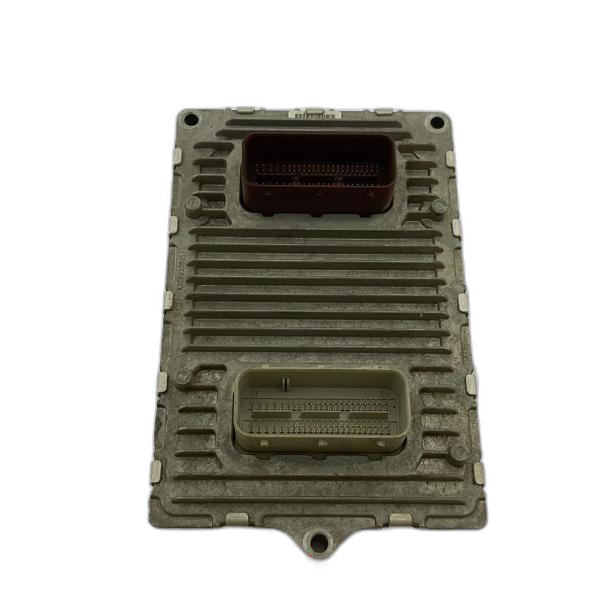
- Engine Control Module (ECM)
(OEM #12612384, 12625455, 12633238 (service numbers vary by year/engine, always verify with VIN))— This is the most common cause for P0601. The internal memory has failed its integrity check. The specific module is the ACDelco E38. 🎬 Watch: A helpful guide on diagnosing internal control module memory errors.
Trusted brands: ACDelco (Remanufactured), FS1, Cardone
OEM price range: $400-$1000
Aftermarket price range: $250-$600 - Transmission Control Module (TCM)
(OEM #24252114, 24235732, 24242391 (service numbers vary, always verify with VIN))— A known, but less common, cause for P0601 on this platform, as cited in GM TSBs. The specific module is the ACDelco T42.
Trusted brands: ACDelco (Remanufactured)
OEM price range: $300-$700
Aftermarket price range: $200-$500
Related Codes That Often Appear With This One
- P0603 — Relates to Keep Alive Memory (KAM) errors, often seen with module power issues. Mentioned in TSB #PIP4653E.
- P0604 — Relates to internal Random Access Memory (RAM) errors, another type of internal module fault. Mentioned in TSB #PIP4653E.
- P062F — Relates to an internal EEPROM error, also an internal module memory fault. Mentioned in TSB #PIP4653E.
- P1621 — A GM-specific code for Control Module Long Term Memory Performance, directly related to internal memory integrity. Mentioned in TSB #PIP4653E.
- P0700 — A generic code requested by the TCM to illuminate the check engine light. If P0601 is stored in the TCM, P0700 will often be present in the ECM.
Technical Service Bulletins (TSBs) & Recalls
- PIP4653E: Provides information on P0601 and other codes being stored in the Transmission Control Module (TCM). Crucial for avoiding misdiagnosis.
- 05-06-04-060A: An informational bulletin regarding various internal control module DTCs, including P0601, noting they can appear in many different modules.
Platform-Specific Known Issues
- GM Technical Service Bulletin #PIP4653E specifically notes that P0601, P0603, P0604, P062F, or P1621 can be stored in the Transmission Control Module (TCM) on these vehicles and stresses the importance of identifying which module set the code before starting repairs.
- GM Technical Service Bulletin #05-06-04-060A is an informational bulletin that acknowledges P0601 and other related codes can be shared across multiple different control modules and is not specific to any single one.
- The ECM on these trucks is typically located in the engine bay on the driver's side, near the firewall or inner fender, making physical access relatively easy.
Mechanic-Grade Diagnostic Values
- ECM Battery Voltage at Connector X1, Pin 20 (RD/WH wire) — expected: Should match battery voltage (12.4V+ with key off). Failure: Voltage below 12V or significantly different from battery voltage indicates a wiring or fuse block issue.
- ECM Ignition Voltage at Connector X1, Pin 19 (PK wire) — expected: Should be battery voltage when the key is in the ON position. Failure: Zero or low voltage indicates an issue with the ignition switch circuit or related fuses.
- Charging System Voltage at Battery Terminals — expected: 13.5V - 14.5V with engine running. Failure: Voltage below 13.5V or above 14.8V can indicate a failing alternator, which can cause voltage spikes or drops that corrupt module memory.
- Voltage Drop on ECM Ground Circuit — expected: Less than 0.2V (200mV). Failure: A reading higher than 0.2V between the ECM ground pin and the negative battery terminal indicates high resistance in the ground path, which must be corrected.
Scan Tool Commands That Help
- GM Tech 2 or J2534 Pass-Thru with TIS2Web/SPS: Service Programming System (SPS) — This is the mandatory function used to load the correct VIN-specific software onto a new or replacement ECM or TCM. The process involves selecting 'Replace and Program ECU'.
- GM Tech 2 or equivalent professional scan tool: Vehicle Theft Deterrent (VTD) Relearn — This procedure is required immediately after installing a new ECM to 'marry' the module to the vehicle's anti-theft system. Without this, the vehicle will not start.
- GM Tech 2 or equivalent professional scan tool: Crankshaft Position (CKP) Variation Relearn — Often required after ECM replacement to calibrate the new module to the specific crankshaft position sensor signal to prevent a P0315 code and ensure accurate misfire detection.
Wiring & Ground Locations
- G101 — Located at the lower front of the engine, on the engine block.. This is a primary ground point for both the Engine Control Module (ECM) and the Transmission Control Module (TCM). High resistance here can cause unpredictable behavior and codes for both modules.
- G103 — Located on the front of the passenger side cylinder head. (Note: Some diagrams place it on the cowl above the brake booster, but vehicle-specific videos confirm the cylinder head location for this platform).. This ground serves multiple components, and ensuring it is clean and tight is a critical step in diagnosing any electronic fault code, including P0601.
- G104 / G108 — G104 is a ground strap on the rear of the driver's side cylinder head. G108 is where that same strap attaches to the firewall/cowl in the rear of the engine compartment.. This engine-to-chassis ground strap is essential for providing a stable ground plane for all vehicle electronics. A loose or corroded connection here can cause widespread electrical issues.
- TCM Fuses — In the main under-hood fuse block on the driver's side.. If P0601 is stored in the TCM, checking fuses #14 and #19 is a primary step before testing wiring or condemning the module.
Real Owner Repair Stories
- YouTube user 'Garage Grunt' (2006 Trailblazer SS (similar GM electronics, uses an E67 ECM)) — Car would run fine until reaching operating temperature (around 170-180°F), then it would shut off and set a P0601 code.
❌ Tried (didn't work) Cleaned the battery terminals., Cleaned main grounding points in the engine bay., Disconnected and reconnected the PCM connectors with dielectric grease.
✅ What actually fixed it The problem was only resolved by replacing the Powertrain Control Module (PCM/ECM). The heat-related failure pointed to an internal component failing on the module's circuit board.
OEM Part Supersession History
Multiple, including 12612384→12633238— GM regularly updates service parts to integrate new materials, fix bugs, or consolidate inventory.
Heads up: While a newer part number may be physically compatible, it must be programmed with the correct software for the vehicle's specific year, engine (L92 vs. L9H), and options (FlexFuel, AFM). Using an ECM from a different year without correct programming will cause issues.
Model Year Variations Within This Range
- 2007-2008: These model years primarily used the 6.2L L92 engine, which was not FlexFuel capable.
- 2009-2011: Starting in 2009, the Yukon Denali switched to the 6.2L L9H engine, which added FlexFuel (E85) capability. This required different fuel injectors and corresponding ECM software. The L94 engine, which added Active Fuel Management (AFM), was also introduced in 2010. The ECM must be programmed for the specific engine and its features.
Helpful Videos
Used OEM Parts in Stock


New Aftermarket Parts Available



The information in this article is provided for general reference and educational purposes only. Vehicle specifications, procedures, and part compatibility can vary by production date, trim level, and region. Always consult your vehicle's factory service manual and verify part numbers before purchasing or performing repairs. Safety-critical components such as airbags, seat belts, and braking systems should be installed by a qualified professional.
- Gmc YUKON DENALI:
- 🎬 Helpful Videos
- 🛍️ Shop This Part
- What's Unique About the 2007-2011 Gmc YUKON DENALI
- Diagnostic Flowchart
- Symptoms You May Notice
- Most Likely Causes
- Rare But Worth Checking
- Diagnosis Steps
- Parts You'll Likely Need
- Related Codes That Often Appear With This One
- Technical Service Bulletins (TSBs) & Recalls
- Platform-Specific Known Issues
- Mechanic-Grade Diagnostic Values
- Scan Tool Commands That Help
- Wiring & Ground Locations
- Real Owner Repair Stories
- OEM Part Supersession History
- Model Year Variations Within This Range
- 🎟️ Get 5% Off