

P0601 on 2007-2011 Chevrolet Express: Internal Control Module Failure Causes and Fixes
P0601 on a 2007-2011 Chevrolet Express almost always indicates a fatal internal error in a control module, usually the Powertrain Control Module (PCM). The only reliable fix is to replace the faulty module and have it professionally programmed. Before replacing the expensive module, it is critical to verify the battery, charging system, and all major ground connections are perfect, as voltage issues can sometimes trigger this code. The repair typically costs between $600 and $1,200.
- P0601 is a critical code indicating the Powertrain Control Module (PCM) has an internal memory failure.
- Do not drive the vehicle, as it can stall without warning, creating a serious safety risk.
- Before replacing the expensive PCM, always verify the battery, alternator, and all major ground connections are in excellent condition.
- Use a professional scan tool to confirm if the code is in the Engine Control Module (ECM/PCM) or the Transmission Control Module (TCM), as either is possible on this van.
- The final repair almost always involves replacing the faulty module and having it professionally programmed to your vehicle's VIN.
What's Unique About the 2007-2011 Chevrolet EXPRESS
On this generation of Chevrolet Express and its GMC Savana twin, a P0601 code can be set by either the Engine Control Module (ECM/PCM) or the Transmission Control Module (TCM). A GM Technical Service Bulletin (TSB PIP4653E) specifically notes that this and other related codes can be stored in the TCM, so it's crucial to use a scan tool that can identify which module is setting the code before replacing the wrong, expensive part. While the ultimate cause is usually a failed module, these work vans are also prone to electrical issues from low batteries or poor grounds that can sometimes trigger module faults. A documented repair on a related GM truck showed broken ground wires near the driver's side motor mount were the true cause of a persistent P0601.
🎬 Watch: Real-world diagnosis of a GM truck stalling with P0601Diagnostic Flowchart
Tap your situation to follow the diagnostic path that matches what you're seeing on this vehicle.
Symptoms You May Notice
- Check Engine Light is on
- Engine may crank but will not start, or starts and immediately stalls
- Sudden or intermittent stalling while driving, especially after warming up
- Reduced engine power or "limp mode"
- Erratic or harsh transmission shifting
- Failure to pass an emissions inspection
- ABS, Traction Control, or 'Service StabiliTrak' lights may illuminate
- Replacing sensors, spark plugs, or fuel system components. These parts will not fix a P0601 code, which is an internal module fault. 🎬 Watch: Understanding the causes and fixes for the P0601 code
- Immediately replacing the PCM without checking if the code was set by the TCM, as warned in TSB PIP4653E.
- Replacing the PCM without first performing a voltage drop test on critical ground circuits and verifying the battery and alternator are in perfect condition.
Most Likely Causes
- Internal PCM/ECM Failure 🔴 High Probability The PCM is the primary cause for a P0601 code. The failure is internal to the module's hardware (e.g., bad solder joint, failed processor) or software, often due to age, heat cycles, or vibration. In some cases, a faint burnt electronic smell may be noticeable near the module.
How to confirm: After verifying battery voltage and all power/ground connections are perfect, the presence of P0601 as the primary code strongly condemns the PCM. A professional scan tool can confirm the fault is originating from the PCM and not another module.
Typical fix: Replace the Powertrain Control Module (PCM) and program the new unit to the vehicle's VIN. Check if the vehicle is under the Federal Emissions Warranty (8 years/80,000 miles), which may cover this part for free.
Est. part cost: $400-$700 - Low Battery Voltage or Charging System Fault ⚪ Low Probability Voltage spikes or drops from a weak battery or failing alternator can corrupt the PCM's memory during startup or operation, triggering a P0601 code. GM TSB #05-06-04-060A specifically mentions that low voltage is a potential cause for these types of codes and that diagnosis should not proceed until the battery and charging system are confirmed good.
How to confirm: Test the battery with a digital load tester to ensure it's healthy (not just checking surface voltage). A resting voltage should be above 12.4V. With the engine running, check the alternator output at the battery terminals; it should be stable between 13.5 and 14.5 volts.
Typical fix: Replace the weak battery or faulty alternator. Clear codes and perform a drive cycle. If P0601 returns, the module was likely damaged permanently by the voltage instability.
Est. part cost: $150-$400 - Poor Power or Ground Connections ⚪ Low Probability Corroded or loose battery terminals, main engine grounds, or PCM-specific grounds can create unstable voltage to the module, leading to memory errors. Work vans like the Express experience significant vibration and are often exposed to harsh conditions, making ground issues more common. Key grounds on the GMT900 platform include G101 (front of engine block) and G104 (rear of driver's side cylinder head).
How to confirm: Visually inspect and physically check all major ground straps from the engine to the chassis and the battery negative cable. Perform a voltage drop test across the main grounds; the reading should be less than 0.2 volts. Inspect the PCM connectors for any signs of corrosion or moisture.
Typical fix: Clean or replace corroded ground straps and battery terminals. Ensure all connections are tight and protected with dielectric grease.
Est. part cost: $20-$50
Rare But Worth Checking
- Internal Transmission Control Module (TCM) Failure: A GM TSB (PIP4653E) highlights that on these vehicles, P0601 can be set by the TCM. A capable scan tool is needed to check which module stored the code. If it's the TCM, it will need replacement and programming instead of the PCM.
- Aftermarket Tuning or Improper Programming: If the PCM was recently reprogrammed or has an aftermarket performance tune, a failed or improper flash can corrupt the memory and cause a P0601 code. Sometimes returning the vehicle to the stock OEM tune can resolve the issue.
Diagnosis Steps
- Scan for all DTCs. Use a scan tool capable of reading codes from all modules (ECM, TCM, BCM).
- Verify which module set the P0601 code. If it is stored in the TCM, focus diagnostics there, per TSB PIP4653E.
- Check Battery Health: Perform a load test on the battery. A voltage reading above 12.4V at rest is a good start, but a load test is essential to confirm its ability to supply adequate amperage.
- Inspect Charging System: With the engine running, measure the voltage at the battery terminals. It should be stable, between 13.5V and 14.5V.
- Inspect All Power and Ground Connections: Check battery terminals for corrosion and tightness. Visually and physically inspect main engine ground straps (e.g., G101, G104) and their connection points on the engine block and chassis for corrosion or looseness. Perform a voltage drop test on the main grounds.
- Check Fuses: Inspect all fuses related to the PCM/ECM and ignition system.
- Attempt a Re-flash (Professional Step): In rare cases where the code is due to software corruption, a dealership or a qualified shop may be able to update or re-flash the module's software using GM's Service Programming System (SPS). If the code returns, the hardware has failed.
- Condemn the Module: If all power and ground inputs are perfect and the code persists (often returning immediately after being cleared), the control module (PCM or TCM) has failed internally and must be replaced.
Parts You'll Likely Need
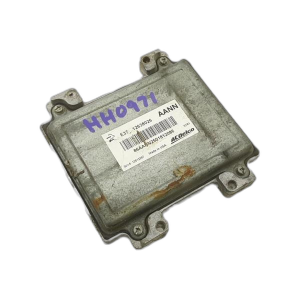
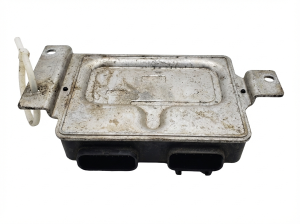
- Powertrain Control Module (PCM/ECM)
(OEM #12606126, 19260753 (for 2007 models); 12633238, 12639269 (for 2011 4.8L models) - Note: Always verify with VIN.)— This is the most common cause of a P0601 code, indicating an irreparable internal hardware or software fault.
Trusted brands: ACDelco (OEM), Cardone (Remanufactured), FS1 (Remanufactured)
OEM price range: $500-$800
Aftermarket price range: $350-$600
Related Codes That Often Appear With This One
- P0602 — Indicates a Control Module Programming Error, often related to the same module failure or a failed reflash attempt.
- P0603 — Indicates a Control Module Keep Alive Memory (KAM) Error, pointing to power supply or internal module issues.
- P0604 — Indicates a Control Module Random Access Memory (RAM) Error, another internal fault.
- P0606 — Indicates a general PCM/ECM Processor Fault, which is a severe internal error often condemning the module.
Technical Service Bulletins (TSBs) & Recalls
- 05-06-04-060A: Information on control module DTCs P0601, P0602, P0603, P0604, P0606, etc., which can be shared in multiple
Platform-Specific Known Issues
- TSB #05-06-04-060A: This informational bulletin from GM addresses several control module DTCs including P0601. It advises technicians that these codes can be set in multiple different modules and emphasizes that basic electrical diagnosis (battery, charging system) must be completed before condemning a module.
- TSB #PIP4653E: This bulletin is critical for this platform. It specifically points out that on many GM trucks and vans from this era, including the Express, DTCs like P0601, P0603, and P0604 can be stored in the Transmission Control Module (TCM). It instructs technicians to verify which module set the code before proceeding with any repairs.
Mechanic-Grade Diagnostic Values
- Battery Voltage (Key On, Engine Off) — expected: 12.4V or higher. Failure: Below 12.4V indicates a weak battery that can cause spurious module codes during startup.
- Alternator Output Voltage (Engine Running) — expected: 13.5V - 14.5V. Failure: Voltage below 13.5V or above 15V points to a charging system fault that can damage modules.
- ECM/PCM Ground Circuit Resistance — expected: < 0.1 Ohms. Failure: Resistance higher than 0.1 Ohms between the ECM ground pin and a clean chassis ground indicates a poor ground, a known cause of module faults.
- ECM/PCM Power Feed Voltage Drop — expected: < 0.5 Volts. Failure: A voltage drop greater than 0.5V under load between the power source and the ECM pin indicates high resistance in the power supply wiring.
Hidden / Shadow Codes Worth Checking
- P0601 with symptom byte 00: This specific sub-code indicates a 'Control Module Read Only Memory (ROM)' failure, which confirms the error is an internal, non-recoverable hardware fault within the module itself. (see via A professional GM-specific scan tool like a Tech2 or software like GDS2 is required to view symptom bytes.)
Scan Tool Commands That Help
- GM GDS2 / Tech2 / J2534 Pass-Thru: Service Programming System (SPS/SPS2) — This function is mandatory when replacing the ECM or TCM. It downloads the correct software and VIN to the new module. An active subscription to ACDelco TDS is required.
- GM GDS2 / Tech2: Vehicle Theft Deterrent Relearn — After programming a replacement ECM, this procedure must be performed to sync the new module with the vehicle's immobilizer system. Failure to do so will result in a no-start condition.
- Professional Scan Tool: Module Communication Test / Request Live Data — Used as a basic check to see if the module is online. If the module fails to respond to a simple data request after power and grounds are verified, it confirms a communication breakdown, often pointing to internal failure.
Wiring & Ground Locations
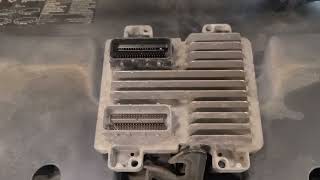
- ECM/PCM Location — Located in the left-hand (driver's side) rear of the engine compartment.. Physical inspection of the module and its connectors for corrosion, water intrusion, or physical damage is a key diagnostic step.
- ECM Connectors — The ECM on this platform (e.g., E38/E67) typically uses multiple large connectors, often designated as C1 (or X1) and C2 (or X2).. Testing for power and ground integrity requires back-probing specific pins at these connectors. A wiring diagram is essential for identifying the correct pins for battery power, ignition power, and grounds.
- Harness Chafe Point (Related Platform) — On related GM trucks with the Duramax engine, the main engine wiring harness is known to chafe near the alternator bracket.. While not specific to the Express gas engines, this highlights a pattern of potential harness issues on GM work trucks. A shorted wire in the harness can mimic complete ECM failure, making a thorough visual inspection of the harness routing critical before condemning the module.
Real Owner Repair Stories
- iATN (International Automotive Technicians Network) (2006 Chevrolet Silverado 1500) — No-start condition, relays click, no check engine light initially, then code P0601 appeared.
❌ Tried (didn't work) The first replacement computer resulted in a no-start. The second replacement computer also did not fix the issue.
✅ What actually fixed it The third replacement computer finally fixed the vehicle. The technician noted that because computers rarely go bad, it's easy to assume the problem is elsewhere after the first replacement fails, but in this case, they received multiple bad replacement parts. - iATN (International Automotive Technicians Network) (2001 Chrysler Sebring 2.7L) — Check engine light with code P0601 immediately after a battery replacement.
❌ Tried (didn't work) Initial diagnosis pointed towards a failed PCM.
✅ What actually fixed it The technician found information about grounding issues causing this code. After removing the battery and cleaning all related ground connections, the code was cleared and did not return.
OEM Part Supersession History
19260753, 12588335, 12604137→12606126— This is the updated service replacement ECM for 2006-2007 GM trucks and vans, often with the 6.6L Duramax but also used in other applications.
Heads up: This part is generally cross-compatible for the specified years, but must be programmed with the vehicle's specific VIN and software calibration.
Model Year Variations Within This Range
- 2007-2011: The 2007 model year was a changeover period for GM trucks and vans. 'Classic' body styles used older Powertrain Control Modules (PCMs), while the 'New Body Style' (NBS) trucks, which share a platform with the Express, moved to a separate Engine Control Module (ECM) and Transmission Control Module (TCM). The Express vans in this range primarily use the Gen IV E38 or E67 ECMs for V8 engines.
- 2009+: Starting in the 2009 model year, GM made internal hardware changes to the E38 and E67 ECMs. Attempting to downgrade a 2009+ ECM with an earlier model year's operating system (software) via programming tools will likely result in permanent corruption of the module.
Helpful Videos


We Have This Part in Stock




The information in this article is provided for general reference and educational purposes only. Vehicle specifications, procedures, and part compatibility can vary by production date, trim level, and region. Always consult your vehicle's factory service manual and verify part numbers before purchasing or performing repairs. Safety-critical components such as airbags, seat belts, and braking systems should be installed by a qualified professional.
- Chevrolet EXPRESS:
- 🎬 Helpful Videos
- 🛍️ Shop This Part
- What's Unique About the 2007-2011 Chevrolet EXPRESS
- Diagnostic Flowchart
- Symptoms You May Notice
- Most Likely Causes
- Rare But Worth Checking
- Diagnosis Steps
- Parts You'll Likely Need
- Related Codes That Often Appear With This One
- Technical Service Bulletins (TSBs) & Recalls
- Platform-Specific Known Issues
- Mechanic-Grade Diagnostic Values
- Hidden / Shadow Codes Worth Checking
- Scan Tool Commands That Help
- Wiring & Ground Locations
- Real Owner Repair Stories
- OEM Part Supersession History
- Model Year Variations Within This Range
- 🎟️ Get 5% Off