

P0601 on 2007-2014 Chevrolet Equinox: Internal Module Failure Causes & Fixes
P0601 on a 2007-2014 Equinox signals a fatal internal memory error in a control module, most commonly the Powertrain Control Module (PCM) or Transmission Control Module (TCM). The fix almost always requires replacing the faulty module and professional programming, a repair costing between $750 and $2,000.
- P0601 is a critical code indicating a fatal memory error in either the PCM or TCM.
- Do not drive the vehicle, as it can stall or behave unpredictably at any time.
- The most important diagnostic step is to use a quality scan tool to determine if the code is stored in the engine (PCM) or transmission (TCM) computer.
- The fix is almost always replacing the faulty module, which requires professional programming. This is not a DIY repair.
- Before replacing an expensive module, always test the battery and charging system and inspect major power/ground connections.
What's Unique About the 2007-2014 Chevrolet EQUINOX
On this generation of Chevrolet Equinox and its platform mates (GMC Terrain, Saturn Vue), P0601 is not exclusively an engine computer (PCM) fault. Manufacturer documents, specifically Technical Service Bulletin #PIP4653E, highlight that this code can also be set by the Transmission Control Module (TCM). A forum post from a 2012 Equinox owner with codes P0700 and P0601 corroborates this, pointing to a likely TCM issue causing shifting problems and slow acceleration. It is crucial to use a scan tool that can identify which module stored the code before replacing any parts, as misdiagnosing a TCM fault as a PCM fault is a common and expensive mistake.
Diagnostic Flowchart
Tap your situation to follow the diagnostic path that matches what you're seeing on this vehicle.
Generation note: This range covers the end of the first generation (2007-2009) and the start of the second generation (2010-2014). The second-gen models, with different engines and the 6T40/6T45 series transmissions, are particularly noted in service data for having P0601 point towards a failure of the TCM. This is because the TCM is integrated with the valve body and solenoids into a single unit called a TEHCM (Transmission Electro-Hydraulic Control Module), which is located inside the transmission pan, constantly exposed to heat and vibration that can degrade the electronics over time.
Symptoms You May Notice
- Check Engine Light is on
- Vehicle may not start or is hard to start
- Engine may stall while driving, sometimes only in stop-and-go traffic
- Harsh or erratic transmission shifting
- Transmission stuck in one gear (limp mode)
- Reduced engine power or slow acceleration
- Flashing gear indicator (P, R, N, D)
- Other warning lights, like ABS or Traction Control, may illuminate
- Replacing the PCM when the code was actually set by the TCM. This is a costly mistake that happens if a technician uses a basic scanner that cannot read TCM-specific codes.
- Replacing sensors or other components to fix drivability issues without first addressing the P0601 code, which indicates the computer itself is the source of the problem.
- Replacing a module without first verifying the battery, alternator, and main ground connections are in perfect condition.
Most Likely Causes
- Failed Powertrain Control Module (PCM/ECM) 🔴 High Probability Internal hardware failure from age, heat cycles, and vibration is the most common cause for this code on any vehicle. The E38 ECM used in some of these models is a known failure point.
How to confirm: After ruling out all other possibilities (power, grounds, TCM), and if a software re-flash doesn't work, the PCM is condemned. A professional scan tool is needed to confirm the code is stored in the PCM and not the TCM.
Typical fix: Replace the PCM and program it to the vehicle. This includes VIN programming and a security relearn procedure.
Est. part cost: $250-$500 - Failed Transmission Control Module (TCM) 🟡 Medium Probability TSB #PIP4653E specifically calls out the TCM as a source for P0601 on vehicles with 6T40/45 transmissions. The TCM's location inside the hot transmission fluid (as a TEHCM) leads to a high-stress environment, causing eventual electronic failure.
How to confirm: Use a scan tool to verify if the P0601 code is stored in the TCM memory. Often, it will be accompanied by a P0700 (Transmission Control System Malfunction) code in the PCM, which acts as a flag pointing to the TCM.
Typical fix: Replace the Transmission Control Module (TEHCM), which is typically part of the control solenoid valve assembly inside the transmission. The new unit must be programmed.
Est. part cost: $225-$600 - Low Battery Voltage or Charging System Fault ⚪ Low Probability GM TSB #05-06-04-060A notes that control module DTCs can be set by voltage issues. While less common as a root cause for a persistent P0601, voltage spikes or drops during cranking can corrupt a module's memory self-test.
How to confirm: Test the battery with a digital load tester and check the alternator output (should be 13.5-14.5 volts when running). Check battery terminals and the main chassis/engine ground connections for corrosion or looseness.
Typical fix: Replace the weak battery, faulty alternator, or clean/tighten electrical connections. Clear codes and see if P0601 returns. This should always be checked before replacing an expensive module.
Est. part cost: $150-$500
Rare But Worth Checking
- Failed Aftermarket Programming: If the vehicle was recently tuned or programmed with non-OEM software, a failed or improper flash can corrupt the module's checksum and set a P0601 code.
- Wiring Harness Damage: While uncommon, damage or corrosion to the wiring providing power or ground to the PCM/TCM can cause voltage fluctuations severe enough to trigger this internal fault. A mechanic on YouTube noted a case where a damaged connector pin was the root cause, not the module itself.
Diagnosis Steps
- Connect a professional scan tool capable of communicating with all modules (PCM, TCM, BCM, etc.).
- Check for any other DTCs. If P0700 is present alongside P0601, the diagnostic focus should immediately shift to the Transmission Control Module (TCM).
- Determine which module has the P0601 code stored. This is the most critical step to avoid misdiagnosis.
- Thoroughly test the battery and charging system. Ensure battery voltage is above 12.4V at rest and the alternator maintains a stable 13.5-14.5V with the engine running.
- Inspect the main power and ground connections to the battery, engine block, and chassis. Look for any signs of corrosion, looseness, or damage. These are known to cause intermittent module issues.
- Visually inspect the wiring harness and connectors at the suspect module (PCM or TCM) for any signs of damage, corrosion, or bent pins.
- If diagnostic software is available, check for any software updates (re-flashes) for the module. This rarely fixes a true P0601 but is a required step before replacement.
- If all external factors (power, grounds, wiring) are confirmed to be good, the module that stored the code is faulty and must be replaced and programmed.
Parts You'll Likely Need
- Powertrain Control Module (PCM)
(OEM #12633238 (ACDelco E38, fits some models, verify by VIN))— This is the primary cause if the code is stored in the engine computer's memory. It is the brain of the engine and its failure causes critical issues.
Trusted brands: ACDelco (GM Genuine), Remanufactured/Reprogrammed units from specialty shops
OEM price range: $250-$500
Aftermarket price range: $200-$400 (plus programming) - Transmission Control Module (TCM/TEHCM)
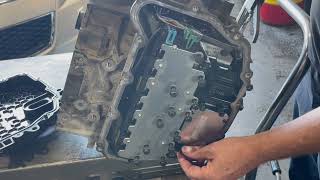
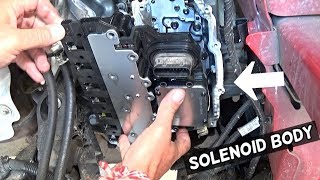
(OEM #24256861 (ACDelco, fits many 6T40/6T45 applications, verify by VIN))— A known high-failure item for P0601 on this platform, especially on 2nd generation models. It is sold as part of the complete valve body assembly (TEHCM). 🎬 Watch this walkthrough on removing and replacing the 6T40 TEHCM
Trusted brands: ACDelco (GM Genuine)
OEM price range: $380-$700
Aftermarket price range: $250-$450 (plus programming)
Related Codes That Often Appear With This One
- P0700 — This code is set in the PCM to indicate that the Transmission Control Module (TCM) has stored a fault. It's a general flag that points the technician toward the transmission system. If you see P0700 with P0601, the TCM is the most likely culprit.
- P0603, P0604, P062F, P1621 — These are all related internal module memory or programming error codes. GM TSB #PIP4653E groups them with P0601 as related internal faults that can appear in the TCM.
Technical Service Bulletins (TSBs) & Recalls
- PIP4653E: Diagnostic information for DTCs P0601, P0603, P0604, P062F or P1621 in the TCM. This is the key document for this platform.
- 05-06-04-060A: Informational bulletin on various control module DTCs, including P0601, and potential voltage-related causes.
Platform-Specific Known Issues
- TSB #PIP4653E: P0601 Stored in the TCM: This official GM bulletin explicitly states that DTCs P0601, P0603, P0604, P062F, or P1621 can be stored in the Transmission Control Module, causing the Malfunction Indicator Lamp to turn on. It warns technicians to use a scan tool (Tech 2 or GDS2) to confirm exactly which module has set the code before attempting any repairs, as it could be the ECM, FPCM, or TCM.
- Real-World Owner Experience with P0700 + P0601: A 2012 Equinox owner on ChevyEquinox.org reported experiencing sporadic slow acceleration, a flashing gear indicator, and hard shifting between gears. The codes pulled were P0700 and P0601, a classic combination pointing directly to a TCM failure. This real-world example perfectly matches the symptoms described in technical documents.
Mechanic-Grade Diagnostic Values
- Battery Voltage (engine off) — expected: 12.4 - 12.6 Volts. Failure: Below 12.4V indicates a weak or discharged battery that can cause false codes.
- Charging System Voltage (engine running) — expected: 13.5 - 14.5 Volts. Failure: Voltage below 13.5V or above 14.5V indicates a faulty alternator or charging system, which can cause voltage spikes that damage modules.
- PCM/ECM Ignition 1 Voltage (at module connector) — expected: 12V+ (Key On). Failure: Low or no voltage indicates a problem in the power supply circuit (fuse, relay, wiring) before the module.
- PCM/ECM Battery Positive Voltage (at module connector) — expected: 12V+ (Constant). Failure: Low or no voltage indicates a problem with the constant power feed to the module.
Scan Tool Commands That Help
- GDS2 / Techline Connect: Replace and Reprogram ECU — This function is mandatory when installing a new, blank PCM or TCM. It downloads the correct vehicle-specific software and VIN into the new module.
- GDS2 / Techline Connect: SPS (Service Programming System) — This is the overarching GM software suite used to perform module programming. A subscription is required. It is used to flash the module with the latest calibrations.
- Professional Scan Tool: Clear All DTCs — After a repair is completed, this function clears the fault codes. For a P0601, if the code immediately returns after clearing without driving, it strongly confirms a permanent internal module fault.
Wiring & Ground Locations
- G103 — On the left front of the engine compartment, under the battery tray.. This is a primary chassis ground. A corroded or loose connection here can cause a host of intermittent electrical issues, including low voltage to control modules which can mimic internal failure.
- G105 / G112 (2.4L Engine) — On the rear or lower left front of the engine block, often tucked under the alternator and above the A/C compressor.. This is a main ground for the PCM on the 2.4L engine. It is in a location prone to corrosion and the wire can become brittle and break, leading to unpredictable PCM behavior or a no-start condition.
- Engine Wiring Harness — Across the top of the engine, near the intake plenum, valve cover bolts, and cylinder head.. While often associated with injector codes per TSBs, this harness is a known chafe point on the 2010-2014 Equinox. A short in the harness providing power or data lines to the PCM/TCM could potentially cause erratic behavior or damage that results in a P0601.
Real Owner Repair Stories
- Codemans auto on YouTube (Chevrolet Equinox (year not specified, but 2nd gen)) — P0601 code was present.
❌ Tried (didn't work) The video advises that module replacement is the most common fix.
✅ What actually fixed it In this specific case, the issue was a damaged or broken plug/connector at the TCM. The mechanic fixed the wiring/connector issue and the code was resolved without replacing the module. - Reddit user in r/AskMechanics (2011 Chevrolet Malibu (similar 6T40 transmission and 2.4L engine)) — Car enters limp mode with P0700 and P0601 codes.
❌ Tried (didn't work) Clearing the codes would temporarily fix it., Driving on the highway was fine.
✅ What actually fixed it The problem only occurred during slow, stop-and-go city traffic. This strongly suggests a heat-soak issue where the TCM, located inside the hot transmission, begins to fail only when temperatures peak due to lack of airflow. The likely fix, recommended by a trans shop, is TCM/TEHCM replacement. - Chevy Equinox Forum user (2011 Chevrolet Equinox) — Limp mode with codes P0700 and P0601.
❌ Tried (didn't work) Replacing the TCM with a new unit.
✅ What actually fixed it After installing a new TCM, the vehicle had NO throttle response. The user learned that a new TCM must be programmed to the vehicle's VIN with a dealer-level scan tool. The story highlights that the repair is not a simple part swap; programming is a required, non-negotiable step.
When the Usual Fixes Don't Work
- While P0601 is overwhelmingly an internal module failure requiring replacement, it is not a 100% certainty. There are documented cases where the root cause was external to the module itself. One real-world example involved a damaged pin at the TCM connector; repairing the connector resolved the code without needing a new, expensive module. This underscores the importance of performing a full diagnostic of the module's power, ground, and data line connections before condemning the part. A visual inspection of the connector pins should be a mandatory step before ordering a replacement module.
OEM Part Supersession History
24256861 (TEHCM)→19435614, 24252363, 29545535, 25798353, 24256670, 24257038, 24261308, 29546670, 25978353, 24259874, 24266710, 19431596— Standard part revisions and updates by the manufacturer.
Heads up: While these numbers may supersede the original, it is critical to verify the correct part number for your specific vehicle by VIN before ordering. All new units require programming.
Model Year Variations Within This Range
- 2010-2014: The second-generation Equinox introduced the 6T40/6T45 transmission, which houses the Transmission Control Module (TCM) inside the transmission as a TEHCM (Transmission Electro-Hydraulic Control Module). This design makes the TCM prone to heat-related failures, making it a more common source of P0601 on these model years compared to the first generation.
Helpful Videos

Used OEM Parts in Stock


New Aftermarket Parts Available

The information in this article is provided for general reference and educational purposes only. Vehicle specifications, procedures, and part compatibility can vary by production date, trim level, and region. Always consult your vehicle's factory service manual and verify part numbers before purchasing or performing repairs. Safety-critical components such as airbags, seat belts, and braking systems should be installed by a qualified professional.
- Chevrolet EQUINOX:
- 🎬 Helpful Videos
- 🛍️ Shop This Part
- What's Unique About the 2007-2014 Chevrolet EQUINOX
- Diagnostic Flowchart
- Symptoms You May Notice
- Most Likely Causes
- Rare But Worth Checking
- Diagnosis Steps
- Parts You'll Likely Need
- Related Codes That Often Appear With This One
- Technical Service Bulletins (TSBs) & Recalls
- Platform-Specific Known Issues
- Mechanic-Grade Diagnostic Values
- Scan Tool Commands That Help
- Wiring & Ground Locations
- Real Owner Repair Stories
- When the Usual Fixes Don't Work
- OEM Part Supersession History
- Model Year Variations Within This Range
- 🎟️ Get 5% Off