

P0601 on 2007-2014 Chevrolet Corvette: Internal Module Memory Error Causes and Fixes
P0601 on a 2007-2014 Corvette indicates a fatal internal memory error in a control module. This is most often the Engine Control Module (ECM) but can also be the Transmission Control Module (TCM). The fix almost always requires replacing the faulty module and having it professionally programmed, with costs typically ranging from $800 to $1,500. Before replacement, all power and ground connections should be meticulously checked, as loose or corroded grounds are a known issue on the C6 platform.
- P0601 is a critical fault code indicating the imminent failure of a control module, usually the ECM or TCM.
- Do not drive the vehicle. Stalling or entering limp mode without warning is a significant safety risk.
- Diagnosis MUST confirm which module set the code. Replacing the wrong module is a costly mistake.
- Repair is not a DIY job. The replacement module must be professionally programmed to the car's VIN.
- Before replacing a module, always verify the battery, charging system, and module power/ground connections are in perfect condition.
What's Unique About the 2007-2014 Chevrolet CORVETTE
The 2007-2014 range spans the C6 (2007-2013) and the first year of the C7 (2014). For both, while P0601 is a generic code, GM has issued specific guidance. TSB #PIP4653E explicitly warns that this code may be stored in the Transmission Control Module (TCM), not just the Engine Control Module (ECM). This is a critical distinction, as symptoms could be transmission-related, and the wrong module could be replaced if not diagnosed properly. Forum discussions among C6 owners confirm that ECM failure is a known, albeit dreaded, issue for these cars, sometimes caused by internal issues like failing solder joints. The TCM is integrated into the valve body inside the transmission pan, making it a more labor-intensive replacement.
Diagnostic Flowchart
Tap your situation to follow the diagnostic path that matches what you're seeing on this vehicle.
Generation note: This range covers the end of the C6 generation (2007-2013) and the first year of the C7 generation (2014). The P0601 fault applies to both, with the primary cause being a failed control module (ECM or TCM). The diagnostic process is similar for both generations, though part numbers for the modules will differ. The C6 models in this range primarily use the E38 or E67 ECM.
Symptoms You May Notice
- Check Engine Light is on.
- "Reduced Engine Power" message on the driver information center.
- Engine stalling intermittently or failing to start, sometimes after a 15-20 minute drive.
- Erratic transmission shifting or the transmission defaulting to a single gear (limp mode).
- Other warning lights, such as "Service Active Handling System," "Service ABS," or "Service Fuel System" may appear simultaneously.
- Instrument cluster gauges may fluctuate or sweep unexpectedly.
- Fuel gauge reading incorrectly, dropping to empty.
- Cooling fans running constantly, even with the engine off.
- Replacing the ECM when the TCM was the actual cause. It is crucial to use a scan tool that can identify which module set the code, as recommended by GM TSB #PIP4653E.
- Replacing sensors or other components trying to fix drivability issues like stalling, without first addressing the P0601 code which points directly to the control unit.
- Immediately replacing the ECM without first thoroughly checking and cleaning all battery connections and major ground points, which are a known weak point on C6 Corvettes and can cause identical symptoms.
Most Likely Causes
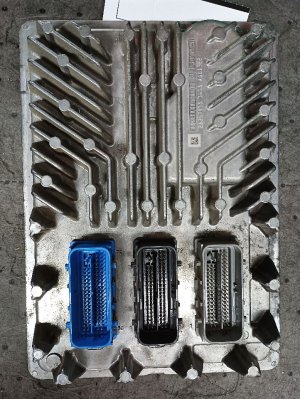
- Failed Engine Control Module (ECM/PCM) 🔴 High Probability The E38 and E67 ECMs used in C6 Corvettes can fail internally due to thermal stress and vibration over time, leading to issues like cold solder joints on the main processor. This can cause intermittent no-start conditions that seem to resolve after the car warms up.
How to confirm: A professional scan tool must be used to confirm the P0601 code is stored in the ECM. The technician will then check all power and ground circuits to the ECM. If circuits are good, the ECM is condemned. In some cases, a re-flash of the ECM may be attempted, but this rarely fixes a true checksum error.
Typical fix: Replace the ECM and program it to the vehicle's VIN.
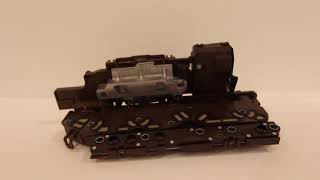
Est. part cost: $450-$1050 - Failed Transmission Control Module (TCM) 🟡 Medium Probability As per GM TSB #PIP4653E, the TCM is a known source for this code on Corvettes with 6-speed automatic transmissions (6L80). The TCM is part of the TEHCM (Transmission Electro-Hydraulic Control Module) located inside the transmission oil pan, where it is subjected to heat and vibration, which can lead to internal failure.
How to confirm: A professional scan tool must be used to verify that the P0601 code originated from the TCM, not the ECM. The diagnostic procedure involves attempting to reprogram the TCM first; if the code returns, the module is faulty.
Typical fix: Replace the TEHCM, which includes the TCM and valve body solenoids. This requires dropping the transmission pan 🎬 Watch: A guide to TEHCM and TCM replacements for 6-speed transmissions. and is followed by programming.
Est. part cost: $250-$600 - Poor Power/Ground Connections or Low Voltage ⚪ Low Probability The C6 Corvette is known for being sensitive to voltage drops and having problematic ground connections. Owners report that factory grounds are often bolted over painted frame surfaces, leading to corrosion and poor contact over time. A loose starter positive terminal is also a common culprit for electrical gremlins.
How to confirm: Inspect battery terminals for tightness and corrosion. Perform a voltage drop test on the main power and ground circuits for the ECM/TCM. Key ground points to check on a C6 include the one under the battery tray, the engine block ground braid, and frame grounds near the front driver's side.
Typical fix: Clean and tighten all battery and ground connections. This involves removing the bolt, sanding the paint/corrosion off the frame and terminal lug for a clean metal-to-metal contact, and re-securing. Replace a weak battery or faulty alternator if necessary.
Est. part cost: $0-$400
Rare But Worth Checking
- Corrupted Aftermarket Tune: If the vehicle has been modified with an aftermarket engine or transmission tune, an improper flash or data corruption during the tuning process can trigger a P0601 code. Reverting to the stock tune or having the tuner re-flash the module may be a first step before replacement. Some owners have successfully resolved issues by having a reputable tuner like Chuck CoW provide a new tune or module.
Diagnosis Steps
- Connect a professional-grade scan tool (e.g., Tech 2 or GDS2) to the OBD-II port.
- Verify which module (ECM, TCM, etc.) has stored the P0601 code. This is the most critical step.
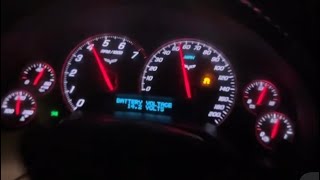
- Check the battery and charging system. Ensure battery voltage is stable and above 12.4V with the engine off, and that the alternator provides a stable charging voltage (typically 13.5-14.5V) when running.
- Thoroughly inspect and clean all major power and ground connections. Disconnect the battery first. Check the battery terminals, the main engine-to-frame ground strap, and the specific C6 ground points under the battery tray and on the frame rails.
- Inspect the wiring harness and connectors going to the identified faulty module. Look for any signs of corrosion, damage, or backed-out pins. On automatic models, the 16-way connector at the transmission is a known point of failure.
- If all wiring, power, and grounds are confirmed to be good, the module itself is almost certainly faulty. An attempt to re-flash the module with the latest factory software can be made, but it is unlikely to fix a hardware-based checksum error.
- Replace the faulty control module (ECM or TCM/TEHCM).
- Program the new module using dealership or equivalent professional tools. The vehicle will not start or run correctly until this is done. A security relearn procedure will also be required.
Parts You'll Likely Need
- Engine Control Module (ECM/PCM)
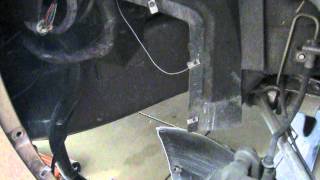
(OEM #12612384, 12633238 (Example part numbers, always verify by VIN))— This is the most common cause of a P0601 code. The internal memory has failed, 🎬 See this walkthrough on how to remove the Corvette PCM. and the entire unit must be replaced.
Trusted brands: ACDelco (OEM), Cardone, Flagship One
OEM price range: $500-$1100
Aftermarket price range: $200-$800 - Transmission Control Module (TCM/TEHCM)
(OEM #24239647 (Example part number for 6L80, always verify by VIN))— A known, though less common, cause for P0601 on this platform, as identified in GM service bulletins. It is integrated with the valve body inside the transmission.
Trusted brands: ACDelco (OEM), Sonnax
OEM price range: $300-$700
Aftermarket price range: $250-$500
Related Codes That Often Appear With This One
- P0700 — Transmission Control System (MIL Request). This code is set by the ECM when the TCM has detected a fault (like P0601) and requested the Check Engine Light to be turned on.
- U0100 — Lost Communication With ECM/PCM. This often appears alongside P0601, indicating a severe internal ECM fault or a major power/ground issue is causing the module to drop off the vehicle's communication network.
- U0101 — Lost Communication With TCM. This points towards a failure in the TCM or the wiring to it, corroborating the possibility that the TCM is the source of the P0601.
- P062F — Internal Control Module EEPROM Error. This is another related internal memory fault code mentioned in GM TSBs alongside P0601 as potentially originating in the TCM.
Technical Service Bulletins (TSBs) & Recalls
- PIP4653E: Notes that DTCs P0601, P0603, P0604, P062F or P1621 can be stored in the Transmission Control Module (TCM).
- 05-06-04-060A: Informs technicians that P0601 is one of several codes that can be shared in multiple control modules, reinforcing the need for careful diagnosis.
Platform-Specific Known Issues
- TSB #PIP4653E - TCM as the Source: This bulletin is crucial. It explicitly states that DTCs P0601, P0603, P0604, P062F, or P1621 can be stored in the Transmission Control Module (TCM) and advises technicians to verify which module set the code before beginning diagnosis to avoid replacing the wrong part.
- CorvetteForum Owner Experience - ECM Failure: A user on CorvetteForum with the username 'rmedina' detailed their experience with P0601, which started with a 'reduce power' message and progressed to stalling. After checking grounds and connections, the final fix was a new PCM. This highlights the typical failure progression. (https://www.corvetteforum.com/forums/c6-tech-performance/4510007-dreaded-p0601-code.html)
- CorvetteForum Owner Experience - Loose Battery Terminals: Another owner on CorvetteForum reported classic P0601 symptoms like limp mode and stalling. Before replacing the ECU, they discovered their battery terminals were extremely loose. Tightening them resolved the issue, at least temporarily, underscoring the importance of checking the basics first. (https://www.corvetteforum.com/forums/c6-general-discussion/4730628-p0601-fixed.html)
- C6 Grounding Issues: Multiple forum threads and videos confirm that C6 Corvettes are prone to electrical issues from poor grounds. The ground point under the battery tray is a common problem area. Owners recommend proactively removing, cleaning (sanding off paint), and re-securing all major ground points in the engine bay to prevent difficult-to-diagnose problems.
Mechanic-Grade Diagnostic Values
- Battery Voltage (Key Off, Engine Off) — expected: ≥ 12.6 Volts. Failure: Voltage below 12.4V indicates a weak or discharged battery which can cause various electrical faults.
- Charging System Voltage (Engine Running) — expected: 13.5V - 14.5V. Failure: Voltage below 13.5V or above 14.8V indicates a faulty alternator or regulator, which can cause voltage spikes or drops, potentially damaging modules.
- ECM Main Ground Strap Resistance — expected: < 0.1 Ω. Failure: Higher resistance indicates a poor ground connection, which can starve the module of a stable reference and cause unpredictable behavior.
- ECM Power Feed Voltage Drop (Under Load) — expected: < 0.5 V. Failure: A voltage drop greater than 0.5V indicates high resistance in the power supply circuit to the ECM, which can mimic a module failure.
- Engine Coolant Temperature (ECT) Sensor Circuit Test — expected: With the sensor connector unplugged, the scan tool should read approximately -40°F and the signal wire should have 5V. With the two pins in the connector jumpered, it should read a very high temperature (e.g., ~290°F).. Failure: Readings that don't match these expected values point to a wiring issue between the sensor and the ECM, not necessarily a faulty sensor or ECM. This is a generic test for 5V reference circuits.
Scan Tool Commands That Help
- Tech 2 / GDS2: Module Reprogramming — This is a diagnostic step for the TCM. Per TSB guidance, if a P0601 is stored in the TCM, a technician may first attempt to reprogram it. If the code returns, the module is faulty.
- GM Techline Connect (TLC): SPS2 (Service Programming System 2) — This is the official GM software suite used to program a new or replacement ECM or TCM to the vehicle. It downloads the correct VIN-specific calibration and security information into the blank module.
- Professional OBD-II Scanner: Bi-Directional Test (Request Live Data) — Before condemning a module, a simple bi-directional command to request live data can confirm if the module is communicating at all. If it fails to respond or sends corrupted data, it points to a communication breakdown.
- J2534 Pass-Thru Device / GDS2: Fast Adapt Procedure — After replacing and programming an internal TEHCM (TCM) in a 6L80 transmission, a 'fast adapt' procedure must be performed. This allows the new module to quickly learn the clutch fill volumes and apply pressures, ensuring proper shift quality.
Wiring & Ground Locations
- ECM Location — Behind the passenger's side front wheel well liner. The fender liner must be removed for access.. This is the physical location of the primary module that sets P0601. Its location exposes it to moisture and debris kicked up by the front tire, making connector integrity a potential issue.
- G104 / G108 — On the frame rail right next to the battery tray in the engine compartment.. This is a major ground point for the BCM and other interior electronics. While not a direct ECM ground, poor contact here can cause widespread electrical issues and voltage instability that can affect the ECM. It is prone to corrosion due to battery fumes.
- G105 / G106 — G105 is on the lower left side of the engine block; G106 is the main battery negative cable connection point, often on the right side of the engine block above the starter.. These are the primary engine block grounds. The ECM and other critical engine sensors rely on this ground path to the battery negative terminal. A loose or corroded connection here is a common cause of intermittent and hard-to-diagnose electrical problems.
- TEHCM Connector — Inside the transmission, connecting the TEHCM/valve body assembly to the main case connector that passes through the transmission housing.. If the P0601 is originating from the TCM, this internal connector is a potential point of failure, though less common than the module itself. The external case connector is also a point to inspect for damage or fluid intrusion.
Real Owner Repair Stories
- CorvetteForum user (2005 C6 Corvette) — Car went into limp mode, Check Engine Light on, P0601 stored. Later, it would stall after about 10 minutes of idling.
❌ Tried (didn't work) Cleaned ECU connectors., Checked some grounds in the engine bay.
✅ What actually fixed it The owner discovered both the positive and negative battery terminals were extremely loose, able to be removed by hand. After tightening the terminals securely, the car ran for 35 minutes with no issues. This suggests the intermittent power loss from the loose terminals was causing the module to error out. - CorvetteForum user (C6 Corvette (year not specified)) — Got 'reduce power' message, car stalled, Check Engine Light on with code P0601. Also noted 'Service ABS' message and fuel gauge dropping to empty.
❌ Tried (didn't work) Was considering immediate replacement of the PCM.
✅ What actually fixed it Before replacing the module, the owner disconnected the PCM connectors (located in the passenger wheel well) and cleaned them thoroughly with canned air ('keyboard cleaner'). After reconnecting, the car ran without issues, suggesting a poor connection or debris in the connector was the root cause. - CorvetteForum user (2012 C6 Grand Sport) — P0601 code, engine stalling, 'Reduced Engine Power' message, fuel gauge reading empty after fill-ups, 'dead battery syndrome'.
❌ Tried (didn't work) Difficulty sourcing a replacement ECU from local dealers.
✅ What actually fixed it The owner purchased a pre-programmed replacement PCM from aftermarket vendor Chuck CoW (Corvettes of Westchester). Installing the new module not only fixed the P0601 and stalling, but also resolved the fuel gauge issue and dead battery problem, which were attributed to firmware bugs fixed in the new programming.
When the Usual Fixes Don't Work
- While the standard procedure for a recurring P0601 code is to replace the control module, a significant amount of evidence from owner forums suggests this should be the last resort, not the first. Multiple documented cases show that the 'internal' module error was actually caused by external factors. These include extremely loose battery terminals that were causing intermittent power loss to the module, and corroded connectors at the ECM itself. Before spending hundreds or thousands of dollars on a module replacement and programming, a thorough inspection and cleaning of all battery connections, main power feeds, and critical ground points (especially G104 by the battery and G105/106 on the engine block) is essential and has been shown to resolve the code in some cases.
OEM Part Supersession History
12597121 (2007 LS7 ECM)→19210738— Standard part update and revision by manufacturer.12612384 (2008 LS3/LS7 ECM)→12633238 (Used in 2010-2013 models)— Software and potential hardware updates for newer model years.
Heads up: While the E38 hardware is similar, using a later part number on an earlier car requires correct programming with the vehicle's original VIN and calibration file to ensure compatibility with all systems.
Model Year Variations Within This Range
- 2007-2013 (C6): The ECM type varies. 2007 models use the E38 ECM. The high-performance Z06 (LS7) and ZR1 (LS9) may use the E38 or the more powerful E67 ECM, particularly for factory supercharged applications. The 2014 C7 uses a newer E92 ECM. It is critical to identify the correct ECM for the specific year and model.
Helpful Videos

Used OEM Parts in Stock


New Aftermarket Parts Available



The information in this article is provided for general reference and educational purposes only. Vehicle specifications, procedures, and part compatibility can vary by production date, trim level, and region. Always consult your vehicle's factory service manual and verify part numbers before purchasing or performing repairs. Safety-critical components such as airbags, seat belts, and braking systems should be installed by a qualified professional.
- Chevrolet CORVETTE:
- 🎬 Helpful Videos
- 🛍️ Shop This Part
- What's Unique About the 2007-2014 Chevrolet CORVETTE
- Diagnostic Flowchart
- Symptoms You May Notice
- Most Likely Causes
- Rare But Worth Checking
- Diagnosis Steps
- Parts You'll Likely Need
- Related Codes That Often Appear With This One
- Technical Service Bulletins (TSBs) & Recalls
- Platform-Specific Known Issues
- Mechanic-Grade Diagnostic Values
- Scan Tool Commands That Help
- Wiring & Ground Locations
- Real Owner Repair Stories
- When the Usual Fixes Don't Work
- OEM Part Supersession History
- Model Year Variations Within This Range
- 🎟️ Get 5% Off