

P0601 on 2007-2014 Cadillac Escalade: Internal Module Failure Causes & Fixes
P0601 on a 2007-2014 Escalade indicates a critical internal memory error, most often in the Engine Control Module (ECM), known as the E38 on this platform. This is a serious fault that can cause stalling or a no-start condition. The fix is almost always replacing the faulty module and having it professionally programmed after ruling out power and ground issues.
- P0601 is a critical code indicating an internal failure of a control module, most often the Engine Control Module (ECM).
- Do not continue to drive the vehicle, as it can stall without warning.
- Always test the battery and charging system first to rule out simple power supply issues.
- The fix almost always involves replacing the faulty module and having it professionally programmed to your vehicle's VIN.
- Use a scan tool that can identify which module (ECM or TCM) stored the code, as GM has confirmed it can appear in either.
What's Unique About the 2007-2014 Cadillac ESCALADE
The 2007-2014 Escalade belongs to the GMT900 platform, which uses the E38 ECM for its V8 engines. This module, typically located in the engine bay on the driver's side, is known to fail internally from heat cycles and age, making P0601 a relatively straightforward, albeit expensive, diagnosis. General Motors has issued technical bulletins acknowledging that P0601 and similar codes can appear in multiple modules, including the Transmission Control Module (TCM), confirming this isn't just an abstract possibility but a documented issue on these vehicles.
Diagnostic Flowchart
Tap your situation to follow the diagnostic path that matches what you're seeing on this vehicle.
Symptoms You May Notice
- Check Engine Light is on
- Engine stalls intermittently or will not start at all
- Vehicle enters 'limp mode' with reduced power
- "Service Stabilitrak" and "Reduced Engine Power" messages on the dashboard
- Erratic or harsh transmission shifting (if the TCM is the source)
- Multiple other warning lights may appear on the dash
- Failure to pass an emissions test
- Replacing spark plugs or ignition coils when the issue is a no-start or stalling caused by the ECM shutting down.
- Replacing fuel system components when the ECM is failing to command the fuel injectors.
- Condemning the ECM immediately without first thoroughly checking and cleaning all power and ground connections between the battery, engine block, and chassis.
Most Likely Causes
- Internal Engine Control Module (ECM) Failure 🔴 High Probability The E38 ECM used in this generation of Escalade can fail internally due to age, heat cycles, or electronic component degradation. Its location in the hot engine bay contributes to this wear over time.
How to confirm: After confirming the battery and charging system are healthy and all wiring to the ECM is secure, the diagnosis points to the ECM itself. A professional scan tool can confirm the checksum error. In some cases, a burnt electronic smell may be noticeable near the module, or visual inspection of the circuit board (if opened) may show burnt components.
Typical fix: Replace the ECM and have it programmed to the vehicle's VIN.
Est. part cost: $140-$350 for a remanufactured, pre-programmed unit. - Low Battery Voltage or Faulty Charging System 🟡 Medium Probability These trucks have significant electrical demands. A weak battery or failing alternator can cause voltage drops or spikes that corrupt module memory or trigger false codes during startup.
How to confirm: Test the battery with a load tester, ensuring it's above 12.5 volts with the engine off. With the engine running, use a multimeter to check alternator output at the battery terminals; it should be roughly 13.5-14.5 volts.
Typical fix: Replace the weak battery and/or faulty alternator.
Est. part cost: $150-$300 for a battery, $250-$500 for an alternator. - Poor Grounds or Damaged Wiring ⚪ Low Probability Corrosion, especially in regions that use road salt, can degrade the main engine and chassis ground connections, leading to unstable voltage for control modules. A specific known failure point is a ground wire located on a stud behind the power steering pump on the driver's side of the engine block, which can break off.
How to confirm: Visually inspect and physically check the main battery cables, chassis grounds, and engine ground straps for tightness and corrosion. Pay special attention to the ground connection on the engine block near the driver-side motor mount (G104); wiggling these wires can sometimes trigger or clear the code, indicating a poor connection. Check the ECM connectors for any signs of water intrusion or pin damage.
Typical fix: Clean all grounding points to bare metal and tighten securely. Repair any damaged wires or connectors. In one documented case, the broken ground wire was extended and relocated to a secure point on a nearby bracket.
Est. part cost: $5-$50 for cleaning supplies, hardware, and wiring. - Internal Transmission Control Module (TCM) Failure ⚪ Low Probability GM TSB PIP4653E specifically lists a wide range of GM vehicles, including the 2008-2015 Escalade, and states that P0601 can be stored in the TCM.
How to confirm: Use a high-end scan tool to determine which module logged the P0601 code. The TSB explicitly warns: "Make sure that you know which module (for example ECM, FPCM or TCM) has set the DTC before attempting to diagnose and repair this condition." If symptoms are primarily transmission-related and the code is in the TCM, it is the likely culprit.
Typical fix: Replace the TCM and have it programmed.
Est. part cost: $200-$500 for a remanufactured unit. (e.g., Part #24272004 for a later model).
Rare But Worth Checking
- Failed Aftermarket Programming: If the vehicle has an aftermarket engine tune, a failed or improper flash can corrupt the ECM's memory and set a P0601 code. Reverting to the stock tune may be a necessary diagnostic step.
Diagnosis Steps
- Perform a Hard Reset: As a preliminary step, disconnect the negative battery terminal for 30 minutes to reset all modules. Reconnect and see if the code returns immediately. This can sometimes clear transient glitches.
- Check Battery and Charging System: Before condemning any expensive modules, ensure the battery is fully charged and holds a load. Test the alternator output to rule out voltage issues that can corrupt module memory.
- Scan for Codes in ALL Modules: Use a professional-grade scan tool to see which module specifically set the P0601 code. TSB PIP4653E confirms it could be the ECM or TCM, and it is critical to know which one is at fault before proceeding.
- Inspect Wiring and Grounds: Thoroughly inspect the ECM/TCM connectors for corrosion or damage. Meticulously check and clean the main battery, engine, and chassis ground connections. Pay special attention to the ground wires on the driver's side of the engine block (G104), as they are a known failure point.
- Attempt a Re-flash (Professional Only): In some rare cases, a software glitch can be resolved by re-flashing the module with the latest factory software. This is a last resort before replacement and is less likely to fix a checksum error than other software issues. 🎬 See a real-world diagnosis of a stalling truck with code P0601.
- Replace the Faulty Module: If all external factors are ruled out, the module that stored the code has failed internally. It must be replaced.
- Program the New Module: The new ECM or TCM must be programmed to the vehicle's VIN and security system using specialized equipment. Some suppliers offer pre-programmed modules, but a key relearn or crankshaft position variation relearn procedure is often still required.
Parts You'll Likely Need
- Engine Control Module (ECM)
(OEM #Common Service Numbers: 12633238, 12612384, 12629009, 12608676, 19210738)— This is the most common cause of a P0601 code on this vehicle. The internal memory checksum test fails, indicating the computer is faulty. These are often referred to as the 'Service Number' on the module's label.
Trusted brands: ACDelco (OEM/Remanufactured), Cardone, Standard Motor Products, FS1
OEM price range: $250-$450
Aftermarket price range: $140-$350
Related Codes That Often Appear With This One
- P0603 — Indicates a Keep Alive Memory (KAM) error, often related to power supply issues or internal module faults.
- P0604 — Indicates a Random Access Memory (RAM) error, another type of internal module memory fault.
- P0606 — Indicates a general PCM/ECM Processor Fault, pointing directly to a failed computer.
- P062F — Indicates an internal control module EEPROM error, also related to module memory failure. This code is specifically mentioned alongside P0601 in GM TSB PIP4653E.
- P1621 — A GM-specific code for Control Module Long Term Memory Performance, often seen with other module memory codes. This is also cited in TSB PIP4653E as being set in the TCM.
Technical Service Bulletins (TSBs) & Recalls
- PIP4653E: Notes that P0601 can be stored in the Transmission Control Module (TCM) and provides diagnostic direction, warning against assuming the ECM is the cause without verification.
- 05-06-04-060A: Informs technicians that P0601 is one of several codes that can be set in multiple different control modules.
Platform-Specific Known Issues
- NHTSA Bulletin #PIP4653E is a critical document for this code. It confirms that DTCs P0601, P0603, P0604, P062F, or P1621 can be stored in the Transmission Control Module (TCM), not just the ECM. It explicitly warns technicians to confirm which module set the code before beginning diagnosis.
- A known weak point is the ground wire attachment on the driver's side of the engine block, behind the power steering pump. This wire can corrode and break, causing intermittent power loss to the ECM and triggering a P0601.
- NHTSA Bulletin #05-06-04-060A is an informational bulletin noting that P0601 and other related codes can be shared in multiple modules.
Mechanic-Grade Diagnostic Values
- ECM Ignition 1 Voltage — expected: 12V+ with Key On, Engine Off (KOEO). Failure: 0V or significantly less than battery voltage indicates a problem with the ignition switch, fuse, or wiring.
- ECM Battery Positive Voltage — expected: 12V+ at all times. Failure: 0V indicates a blown fuse, fusible link, or break in the power supply wire.
- ECM Main Ground Resistance — expected: Less than 0.2 Ohms. Failure: High resistance indicates a corroded or loose ground connection, which can cause intermittent module resets and false codes.
- 5-Volt Reference — expected: 5.0V +/- 0.1V. Failure: 0V or a voltage significantly different from 5.0V indicates an internal ECM fault or a shorted sensor on that reference circuit.
Scan Tool Commands That Help
- Tech2 / GDS2: Module Diagnostic Information — This is the first step to comply with TSB PIP4653E. Use this function to verify which specific module (ECM or TCM) has set the P0601 code before attempting any repairs or reprogramming.
- Tech2 / GDS2 with SPS Subscription: Service Programming System (SPS) — This function is required to flash the vehicle's VIN and the correct, latest GM-approved software calibration onto a new or replacement ECM or TCM.
- Tech2 / GDS2: Crankshaft Position Variation Learn — This procedure is mandatory after replacing or reprogramming the ECM to prevent a P0315 DTC. The function commands the ECM to learn the minor variations in the crankshaft reluctor wheel for accurate misfire detection.
Wiring & Ground Locations
- ECM (E38) — In the engine compartment, on the driver's side, mounted to a bracket near the firewall and brake booster.. This is the primary module that sets P0601. Its connectors (X1 and X2) and grounds must be perfect.
- G104 — A ground stud on the rear of the driver's side cylinder head, often located behind the power steering pump assembly.. This is a known failure point. A loose or corroded connection at G104 can cause intermittent voltage drops to the ECM, directly triggering a false P0601 code and mimicking a failed module.
- X1 Connector — The 73-pin black connector on the E38 ECM.. This connector carries the primary power, ignition, and data bus signals. Pins 19 (Ignition) and 20 (Battery) are critical for stable ECM operation.
- X2 Connector — The 80-pin gray connector on the E38 ECM.. This connector carries the main ECM ground on pin 73, as well as signals for many engine sensors and actuators.
Real Owner Repair Stories
- Professional Technician Video (Diagnosing a 2011 GM Truck) (2011 Chevrolet Silverado 1500 (GMT900 platform, same as Escalade)) — Stalling while driving, ABS and Service Stabilitrak messages, Reduced Power mode, and a P0601 code.
❌ Tried (didn't work) The initial diagnosis based on the code definition pointed directly to a failed ECM.
✅ What actually fixed it The technician physically wiggled the wiring harness near the driver's side motor mount and was able to make the P0601 code reappear after clearing it. The root cause was a poor connection at the G104 ground on the cylinder head. Cleaning and securing this ground connection resolved all symptoms. - YouTube DIY Repair Video (2007 Cadillac Escalade ESV 6.2L AWD) — Intermittent stalling issues.
❌ Tried (didn't work) Replaced multiple other parts, including a new mass airflow sensor, without success.
✅ What actually fixed it The owner replaced the ECM with a pre-programmed unit and performed a 30-minute security relearn procedure. This resolved the stalling. The video notes that a P0315 (Crankshaft Position Variation Not Learned) code was present afterward, requiring a separate scan tool procedure to clear.
"I Checked Everything" — The Actual Cause
- For code P0601, the equivalent of a 'smoke test clean' scenario is when all power and ground voltage/resistance tests at the ECM connector appear normal under static conditions. In a documented case on a similar GM truck, the vehicle would stall and set a P0601, but the actual cause was an intermittent G104 ground connection on the driver's side cylinder head that only failed when the engine was running and vibrating. The fault was only found by physically manipulating the harness while monitoring the system, which caused the code to reset, proving the wiring was the issue, not the module itself.
When the Usual Fixes Don't Work
- While P0601 is defined as an internal module error and most often points to a failed ECM, it should not be replaced without first performing a rigorous inspection of the vehicle's power and ground systems. In a documented case for a 2011 GM truck, a technician was able to induce the P0601 code simply by wiggling the main engine-to-chassis ground strap (G104) on the driver's side of the engine. The fix was cleaning the ground, not replacing the expensive computer. This proves that intermittent power or ground integrity issues can perfectly mimic a fatal internal module error, making a thorough physical inspection of wiring the most critical, and often overlooked, diagnostic step.
OEM Part Supersession History
12597121 / 12612384→Varies; these are early service numbers.— Hardware and software updates for later model years.
Heads up: These early E38 ECMs cannot reliably run software calibrations intended for 2009 or newer vehicles. Attempting to flash a newer OS can corrupt the ECM.12625455→Varies— Specific hardware/software for the 2009 model year, which introduced changes like a new throttle body design.
Heads up: This ECM is specific to the 2009 model year and its unique calibrations. It is not backwards or forwards compatible with other E38 hardware revisions.12633238→Current service number for later models.— Hardware revision for 2010+ models which included features like Active Fuel Management (AFM) on the L94 engine.
Heads up: This is the final hardware version for this platform. Do not attempt to flash its calibrations onto older ECM service numbers.
Model Year Variations Within This Range
- 2007-2008: These models typically use the 6.2L L92 V8 engine without Flex Fuel or Active Fuel Management (AFM). They use the earliest E38 ECM hardware (e.g., service #12612384).
- 2009: The 6.2L engine was updated to the L9H, adding Flex Fuel (E85) capability. This required different fuel injectors and a specific ECM calibration. The ECM hardware was also revised (service #12625455).
- 2010-2014: The engine was updated to the L94, which added Active Fuel Management (AFM) on top of Flex Fuel and VVT. This requires a specific lifter valley cover, camshaft, and corresponding ECM software running on the latest E38 hardware (service #12633238).
Helpful Videos

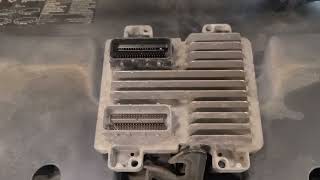
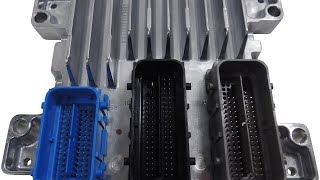
Used OEM Parts in Stock


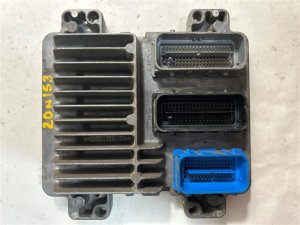

New Aftermarket Parts Available



The information in this article is provided for general reference and educational purposes only. Vehicle specifications, procedures, and part compatibility can vary by production date, trim level, and region. Always consult your vehicle's factory service manual and verify part numbers before purchasing or performing repairs. Safety-critical components such as airbags, seat belts, and braking systems should be installed by a qualified professional.
- Cadillac ESCALADE:
- 🎬 Helpful Videos
- 🛍️ Shop This Part
- What's Unique About the 2007-2014 Cadillac ESCALADE
- Diagnostic Flowchart
- Symptoms You May Notice
- Most Likely Causes
- Rare But Worth Checking
- Diagnosis Steps
- Parts You'll Likely Need
- Related Codes That Often Appear With This One
- Technical Service Bulletins (TSBs) & Recalls
- Platform-Specific Known Issues
- Mechanic-Grade Diagnostic Values
- Scan Tool Commands That Help
- Wiring & Ground Locations
- Real Owner Repair Stories
- "I Checked Everything" — The Actual Cause
- When the Usual Fixes Don't Work
- OEM Part Supersession History
- Model Year Variations Within This Range
- 🎟️ Get 5% Off