

P0601 on 2007-2011 Cadillac DTS: Internal Control Module Failure Causes and Fixes
P0601 on a 2007-2011 Cadillac DTS indicates a fatal internal memory error in a control module, most often the Engine Control Module (ECM/PCM). The only reliable fix is to replace the faulty module and have it professionally programmed. Before replacement, always verify the battery and charging system are healthy and that all module power and ground connections are clean and secure, as voltage issues can sometimes trigger this code.
- P0601 is a critical code indicating an internal failure of a control module, most often the Engine Control Module (ECM).
- Do not drive the vehicle. A failing module can cause sudden stalling, creating a serious safety hazard.
- On this Cadillac, the Transmission Control Module (TCM) can also cause this code. Professional diagnosis is required to identify the correct failed part before replacement.
- Always check the battery, charging system, and module ground connections before condemning an expensive computer.
What's Unique About the 2007-2011 Cadillac DTS
For this generation of Cadillac, including the DTS, a P0601 code doesn't exclusively point to the Engine Control Module (ECM). General Motors has issued technical service bulletins, specifically PIP4653E, indicating that this code can also be set by a failure within the Transmission Control Module (TCM). This makes professional diagnosis with a scan tool like a GM Tech 2 or GDS2, which can pinpoint the originating module, absolutely critical to avoid replacing the wrong expensive component. For the DTS, the TCM is a separate module located in the engine compartment on the driver's side, mounted to the strut tower, not inside the transmission.
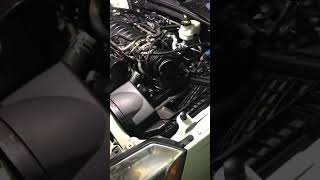
🎬 See this quick guide to locating the ECM and BCM.Diagnostic Flowchart
Tap your situation to follow the diagnostic path that matches what you're seeing on this vehicle.
Symptoms You May Notice
- Check Engine Light is on.
- Vehicle may not start, or may crank but not fire up. 🎬 Watch a technician diagnose a DTS no-start condition.
- Engine may stall intermittently or hesitate while driving.
- Reduced engine power or entering 'limp mode'.
- Erratic or harsh transmission shifting.
- Noticeable decrease in fuel economy.
- ABS or Traction Control lights may illuminate if the ECM fails to communicate.
- Instrument cluster gauges may behave erratically or stop working.
- Replacing the ECM when the TCM was the actual cause of the fault, as highlighted by TSB PIP4653E.
- Replacing a control module without first thoroughly testing the battery, charging system, and all related power and ground connections.
Most Likely Causes
- Failed Engine Control Module (ECM/PCM) 🔴 High Probability Control modules can fail from age, heat cycles, and electrical stress. The P0601 code is a specific indicator of this type of internal hardware or memory corruption, which is often not repairable.
How to confirm: After verifying all power and ground circuits to the module are good, a professional scan tool is used to confirm the ECM is the source of the code. If an attempted software reflash fails or the code returns immediately, the hardware is condemned. A burnt smell near the module can also indicate internal component failure.
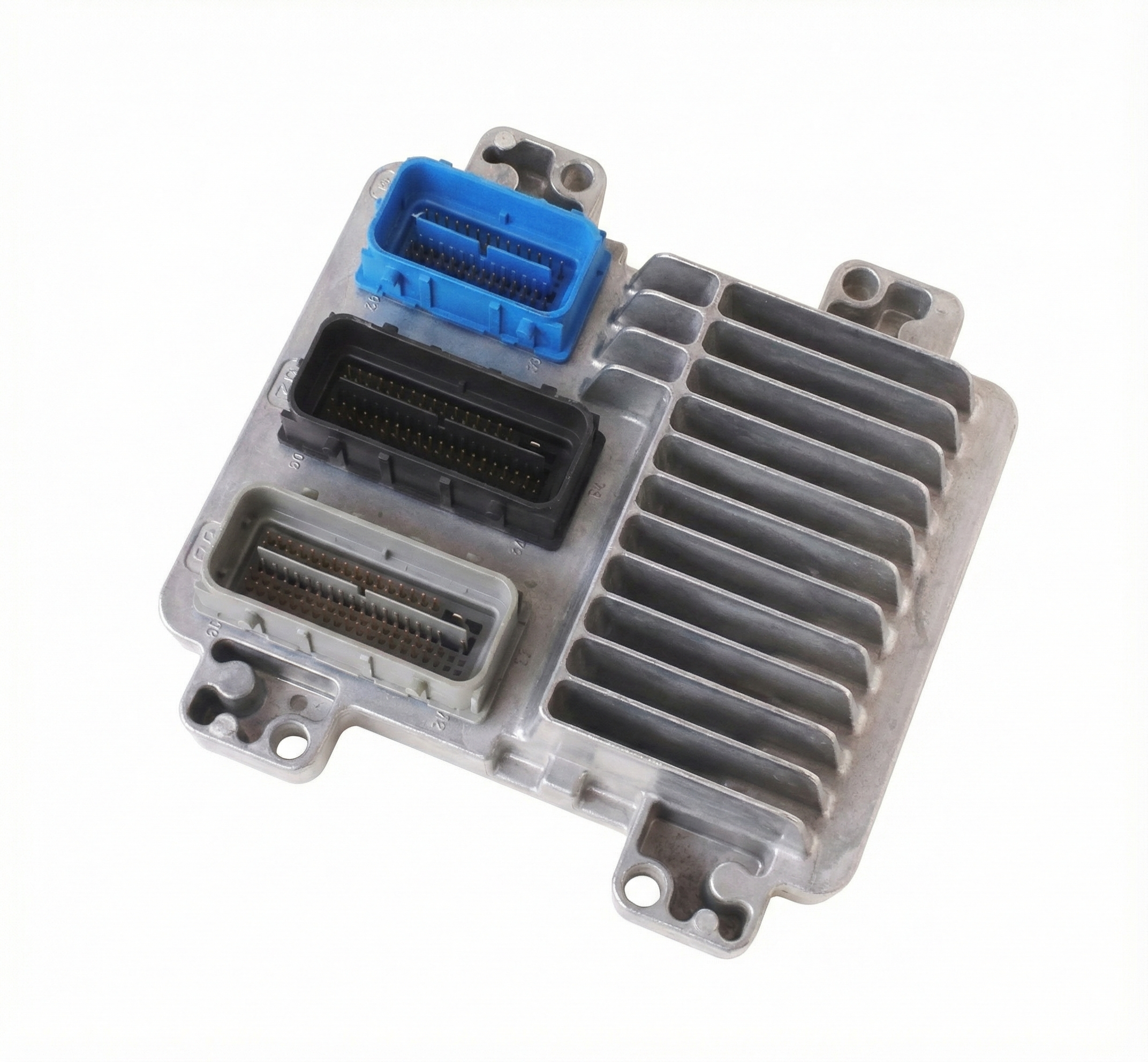
Typical fix: Replace the ECM with a new or remanufactured unit and program it to the vehicle's VIN and specific options using GM's Service Programming System (SPS) or equivalent professional tool.
Est. part cost: $250-$800 - Failed Transmission Control Module (TCM) 🟡 Medium Probability GM has acknowledged through TSB PIP4653E that the TCM can also be the source of a P0601 code on this platform, which includes the 4T80-E automatic transmission used in the DTS.
How to confirm: A professional scan tool (GM Tech 2 or GDS2) must be used to specifically identify that the P0601 code is stored in the TCM, not the ECM. The TSB recommends attempting a reprogram first.
Typical fix: If reprogramming fails, replace the TCM and program the new module to the vehicle. On the DTS, the TCM is located on the driver's side strut tower in the engine bay.
Est. part cost: $200-$500 - Low Battery Voltage or Charging System Fault ⚪ Low Probability While less common as a root cause for a permanent P0601, a weak battery or failing alternator can cause voltage spikes or drops that disrupt a control module's memory during startup or operation, potentially triggering a false or intermittent code.
How to confirm: Test the battery with a digital tester to ensure it holds a charge (should be at least 12.6V at rest). With the engine running, use a multimeter to check alternator output at the battery terminals (should be 13.5-14.5V). Many GM service bulletins stress the importance of stable battery voltage during any diagnostics or programming.
Typical fix: Replace the faulty battery and/or alternator. Clean any corrosion from the battery terminals and main cable ends.
Est. part cost: $150-$600
Rare But Worth Checking
- Poor Power or Ground Connection at the Module: A corroded or loose wire in the ECM/TCM harness can cause voltage drops that mimic an internal module failure. It's a crucial check before ordering an expensive computer. On the DTS, key ground points to inspect include G100 (left front of engine), G101 (left side of radiator support), G103 (right rear of engine), and G104 (right front of engine compartment). A bad engine block ground can cause widespread electrical issues. Resistance on ground circuits should be less than 0.1 Ω, and a voltage drop test under load should be less than 0.2-0.5V.
Diagnosis Steps
- Connect a professional OBD-II scanner (GM Tech 2 or GDS2 recommended) to confirm the P0601 code and, most importantly, check which module (ECM, TCM, etc.) has stored it. Note any other codes present.
- Test the battery and charging system. Ensure battery voltage is above 12.6 volts at rest and that the alternator provides a stable 13.5-14.5 volts when the engine is running.
- Inspect the main battery cables and chassis/engine ground straps for corrosion, security, and damage. Key locations for the DTS include grounds G100, G101, G103, and G104 in the engine bay. Clean or replace as needed.
- Visually inspect the wiring harness and connectors at the identified control module for any signs of damage, corrosion, or loose pins.
- Using a multimeter and a wiring diagram, perform a voltage drop test on the module's primary power and ground circuits. With the key on, the voltage drop should be less than 0.5V on the power side and less than 0.2V on the ground side.
- If all external factors are ruled out, an attempt to re-flash the module with the latest GM software can be made. This is recommended by TSBs before replacement, especially for the TCM.
- If the code returns immediately after clearing or if the re-flash fails, the control module itself is faulty and must be replaced.
- Install the new module and program it to the vehicle using a GM-specific programming tool (SPS) to sync the VIN and security information. Perform the 30-minute VATS (Vehicle Anti-Theft System) relearn procedure.
Parts You'll Likely Need
- Engine Control Module (ECM)
(OEM #12618163, 12590032, 12607096, 12678511 (Part numbers can vary by year and specific calibration; always verify with VIN))— This is the most common cause of a P0601 code, indicating an irreparable internal memory failure.
Trusted brands: ACDelco (GM Genuine), Cardone (Remanufactured), Flagship One (FS1)
OEM price range: $300-$800
Aftermarket price range: $225-$500
Related Codes That Often Appear With This One
- P0603 — Internal Control Module Keep Alive Memory (KAM) Error. This is another memory integrity code that often appears alongside P0601, sometimes related to power interruptions.
- P0604 — Internal Control Module Random Access Memory (RAM) Error. This also points to an internal memory fault within the same module.
- P0606 — ECM/PCM Processor Fault. This is a more general internal processor failure code that can accompany the specific memory error of P0601.
- U-codes (e.g., U0100, U0101) — These communication codes indicate a loss of communication with the ECM or TCM. They can appear if the failing module is intermittently dropping off the vehicle's data network.
Technical Service Bulletins (TSBs) & Recalls
- 05-06-04-060A: An informational bulletin for technicians regarding control module DTCs (including P0601) that can be set in multiple modules, stressing the need to identify which module set the code. [⭐ MANUFACTURER TSB]
- PIP4653E: A specific Preliminary Information bulletin advising technicians that DTCs like P0601 can be stored in the TCM and that reprogramming should be attempted before condemning the module.
Platform-Specific Known Issues
- As noted in TSB #05-06-04-060A, GM acknowledges that P0601 is one of several control module diagnostic codes that can be shared across multiple modules, highlighting the need for careful diagnosis. [⭐ MANUFACTURER TSB]
- TSB #PIP4653E is highly relevant for this platform, specifically calling out that P0601 can be stored in the Transmission Control Module (TCM) and that a re-program should be attempted before replacement.
Mechanic-Grade Diagnostic Values
- Module Power Circuit Voltage Drop — expected: < 0.5 Volts. Failure: A reading higher than 0.5V indicates excessive resistance in the power feed wiring or connectors, which can starve the module for voltage.
- Module Ground Circuit Voltage Drop — expected: < 0.2 Volts. Failure: A reading higher than 0.2V indicates high resistance in the ground strap or connection to the chassis/engine block.
- Ground Circuit Resistance to Chassis — expected: < 0.1 Ω. Failure: Resistance higher than 0.1 Ohms points to a corroded or loose ground connection that needs to be cleaned or tightened.
- Alternator Output Voltage — expected: 13.5 - 14.5 Volts. Failure: Voltage below 13.5V or above 14.5V indicates a charging system fault that can cause electrical spikes or drops, potentially corrupting module memory.
Scan Tool Commands That Help
- GM Tech 2 / GDS2: Module ID / DTC Information — This is the first and most critical step. Before any diagnosis, use this function to determine exactly which module (ECM, TCM, FPCM, etc.) has stored the P0601. TSB PIP4653E explicitly states this is required to avoid misdiagnosis.
- GM SPS (Service Programming System): Reprogram Control Module — As recommended by GM TSBs, if a P0601 is stored in the TCM, a reprogram should be attempted before replacing the module. This can sometimes resolve software corruption issues without hardware replacement.
- GM SPS (Service Programming System): Program New Control Module — This is required after installing a new ECM or TCM. The function downloads the correct software and VIN into the new module, allowing it to communicate with other vehicle systems.
Wiring & Ground Locations
- ECM (Engine Control Module) — Located in the engine compartment, under the plastic cover and air filter box assembly on the driver's side.. This is the primary module that sets P0601. Its location makes it susceptible to heat, which can contribute to failure over time. All power and ground connections at its connectors must be verified.
- TCM (Transmission Control Module) — Located in the engine compartment on the driver's side, mounted to the strut tower.. This is the second most likely module to set P0601, per GM TSBs. Unlike many other GM vehicles, it is not inside the transmission, making it easier to access for testing and replacement.
- G103 — On the right rear of the engine, often near the EGR valve area.. This is a primary engine ground. A poor connection here can cause unstable sensor readings and insufficient power for the control modules, potentially triggering a P0601.
- G104 — Located in the right front of the engine compartment, sometimes near the windshield washer fluid reservoir.. This is a key chassis ground point in the engine bay. Corrosion or looseness here can affect multiple systems, including the ECM and TCM.
- G112 — A specific ground located on the transaxle case itself.. This ground is critical for the proper operation of the transmission and its sensors. A fault here could potentially affect the TCM, even though the TCM itself is remotely mounted.
Real Owner Repair Stories
- ScannerDanner Forum (2007 Cadillac DTS) — No crank, no start. Instrument cluster needles sweep, then lights go black and come back on. No communication with scan tool at DLC.
❌ Tried (didn't work) Replacing a blown 15 amp fuse in the underhood fuse block., Replacing a blown 20 amp fuse in the rear fuse block.
✅ What actually fixed it The root cause was determined to be a bad engine ground cable between the battery and the engine block. Even though initial checks showed 12.6 volts at underhood grounds, a voltage drop test under load would have revealed the faulty connection, which was causing a complete communication loss and no-start condition.
OEM Part Supersession History
12590032, 12602044, 12603530→12607096, 12630457— Standard part evolution for hardware and software updates by the manufacturer.
Heads up: The hardware service number 12607096 is a common replacement for many earlier ECMs on the 2006-2008 DTS. However, it is critical to verify compatibility with the vehicle's VIN, as the final software calibration must match the vehicle's options.
Helpful Videos



We Have This Part in Stock


The information in this article is provided for general reference and educational purposes only. Vehicle specifications, procedures, and part compatibility can vary by production date, trim level, and region. Always consult your vehicle's factory service manual and verify part numbers before purchasing or performing repairs. Safety-critical components such as airbags, seat belts, and braking systems should be installed by a qualified professional.
- Cadillac DTS:
- 🎬 Helpful Videos
- 🛍️ Shop This Part
- What's Unique About the 2007-2011 Cadillac DTS
- Diagnostic Flowchart
- Symptoms You May Notice
- Most Likely Causes
- Rare But Worth Checking
- Diagnosis Steps
- Parts You'll Likely Need
- Related Codes That Often Appear With This One
- Technical Service Bulletins (TSBs) & Recalls
- Platform-Specific Known Issues
- Mechanic-Grade Diagnostic Values
- Scan Tool Commands That Help
- Wiring & Ground Locations
- Real Owner Repair Stories
- OEM Part Supersession History
- 🎟️ Get 5% Off