

OBD-II Code P0593: Cruise Control Multi-Function Input 'B' Circuit High
What P0593 means, why it triggers, and how to fix it
- Code P0593 disables your cruise control because the PCM detects a constant, stuck-on high voltage signal (above 4.8V) from a steering wheel button.
- Spilled liquids and worn internal contacts make a faulty steering wheel cruise control switch the #1 cause of this code.
- An illuminated airbag light alongside P0593 confirms a failed clockspring, making this a critical safety repair since the driver's airbag will not deploy.
- Owners of 2011-2016 Jeep Wranglers and Dodge vehicles should check for the X68 extended warranty, which covers clockspring replacement for 15 years or unlimited miles.
- Avoid replacing unnecessary parts by using a scan tool to monitor live voltage data; if voltage drops when the switch is disconnected, the switch is the culprit.
What Does P0593 Mean?
P0593 indicates the Powertrain Control Module (PCM) detects a constant, abnormally high voltage signal from a cruise control button (the 'B' circuit). The PCM interprets this as a button physically stuck in the 'on' position and disables the cruise control system to prevent unintended acceleration.
Technical definition: The SAE/OBD-II definition is "Cruise Control Multi-Function Input 'B' Circuit High". The PCM registers a voltage on the specified cruise control input circuit that exceeds the manufacturer's expected maximum threshold (typically above 4.8V). The 'B' circuit corresponds to a specific button function (e.g., 'Set' or 'Resume') communicating via a resistance ladder.
Can I Drive With P0593?
Yes, But With Caution. Yes, but the cruise control system is disabled. This is a convenience issue unless the airbag warning light is also on. A simultaneous airbag light indicates a broken clockspring, meaning the driver's airbag will not deploy in a collision—requiring immediate repair.
Common Causes
- Faulty or Contaminated Cruise Control Switch (Very Common) — The most frequent cause. Internal contacts wear out or stick due to spilled liquids (coffee, soda) and dirt. This sends a constant 'high' voltage or incorrect resistance signal to the PCM.
- Failed Clockspring (Spiral Cable) (Common) — The clockspring is a coiled ribbon cable behind the steering wheel connecting all electronic controls. Constant turning stress causes internal wires to break or short. If your horn, radio buttons, or airbag light also malfunction, the clockspring is the culprit.
- Wiring or Connector Damage (Less Common) — Frayed wires in the steering column or moisture-corroded connectors create high resistance or a short to power. Water intrusion from leaks or high humidity accelerates this corrosion.
- Blown Fuse (Less Common) — A blown cruise control fuse triggers this code. While easy to replace, a blown fuse is usually a symptom of an underlying short circuit that requires diagnosis.
- Faulty Brake Pedal Position (BPP) Switch (Rare) — The brake switch signals the PCM to disengage cruise control. A malfunctioning switch sending a constant signal interferes with cruise control logic, contributing to circuit fault codes on certain vehicle architectures.
- PCM/BCM Failure or Software Glitch (Very Rare) — The vehicle's main computer or Body Control Module fails internally or requires a firmware update, causing it to misinterpret normal voltage signals. Consider this only after exhausting all hardware and wiring tests.
Symptoms
- Cruise control will not turn on or engage — Pressing the cruise control buttons has no effect. The system is entirely disabled.
- Other steering wheel controls fail — The horn, radio volume, or phone buttons stop working, strongly pointing to a broken clockspring.
- Cruise control indicator light malfunctions — The dashboard cruise light fails to illuminate, stays on continuously, or flashes to indicate a system fault.
- Erratic cruise control operation — The system disengages randomly or fails to set speed intermittently before failing completely, indicating a worn switch contact or failing clockspring wire.
- Check Engine Light is on — The PCM illuminates the Check Engine Light to alert the driver of the stored fault code.
Diagnostic Flowchart
Tap your situation to follow the diagnostic path that matches what you're seeing on this code.
Common Fixes & Costs
- Replace Cruise Control Switch
— Parts: $40-$150, Labor: $80-$150, ~1 hr book time
(Intermediate)
Dodge Grand Caravan (2012-2020): OEM [{'brand': 'Mopar', 'part_number': '56046252AE'}] (Alt: {"brand": "Dorman", "part_number": "601-607", "price_comparison": "$80"}) - Replace Clockspring
— Parts: $200-$550, Labor: $120-$250, ~1.5 hr book time
(Professional)
Jeep Wrangler (2011-2016): OEM [{'brand': 'Mopar', 'part_number': '5156106AG'}] (Alt: {"brand": "Crown Automotive", "part_number": "5156106AD", "price_comparison": "$170"}) - Repair Wiring or Connectors — Parts: $5-$50, Labor: $100-$300, ~1.5 hr book time (Intermediate)
- Replace Blown Fuse — Parts: $1-$10, Labor: $0-$50, ~0.1 hr book time (DIY)
- Control Module (PCM/BCM) Replacement — Parts: $600-$900, Labor: $200-$300, ~1.5 hr book time (Professional)
DIY vs Professional
- Replace Blown Fuse — Beginner:
Tools: Owner's Manual, Fuse Puller or Pliers. - Replace Cruise Control Switch — Beginner:
Tools: Socket set, Torx bit set, trim removal tools. - Repair Wiring or Connectors — Beginner:
Tools: Multimeter, wire strippers, crimpers, heat shrink. - Replace Clockspring — Beginner:
Tools: Socket set, torque wrench, Torx bit set, steering wheel puller.
Used vs. New Parts: Buying Guide
When a used part is worth it: A used cruise control switch from a low-mileage vehicle is cost-effective. Buying a used clockspring is strongly discouraged due to safety risks.
Donor-vehicle mileage cap: roughly under 60000 miles for the part to have meaningful remaining life.
Donor quality checklist:
- Verify the donor vehicle wasn't scrapped for electrical or flood damage.
- Match the part number exactly, as variations exist within the same model year.
- Never buy a used clockspring; they are critical wear-and-tear safety items.
Decision logic:
- If The faulty part is the clockspring → Always buy new OEM or high-quality aftermarket. The safety risk of a used airbag component is unacceptable.
- If The faulty part is the cruise control switch and new is < $100 → Buy new for peace of mind and maximum lifespan.
- If Budget is the primary concern and the part is a simple switch → A used part from a reputable seller with a 30-day warranty is acceptable.
Warranty tradeoff: Used parts offer 30-90 day warranties. New aftermarket parts offer 1-year to lifetime warranties. New OEM parts carry the manufacturer's warranty.
Worst-case if a used part fails: $200-$400 if a used part fails, primarily due to repeated labor costs for diagnosis and replacement.
What Happens If You Wait — Timeline
- 0-1 month: Code P0593 sets, Check Engine Light illuminates, and cruise control is inoperative. No other symptoms are present. (MPG impact: 0%% · Added cost: $0. The issue is isolated to the cruise control circuit.)
- 1-4 months: If the clockspring is failing, the horn and radio buttons begin working intermittently. The problem expands beyond the cruise control. (MPG impact: 0%% · Added cost: $200-$500. Repair costs increase from a $150 switch to a $350-$700 clockspring replacement.)
- 2-6 months: The airbag warning light illuminates. The clockspring has failed completely, disabling the driver's airbag. (MPG impact: 0%% · Added cost: Incalculable (Safety Risk). The vehicle is unsafe to operate in a collision.)
- 6+ months: A persistent short circuit damages the PCM/BCM, or the broken ribbon cable physically binds within the steering column. (MPG impact: 0%% · Added cost: $800-$2000. PCM replacement and programming are now required.)
Cost of Not Fixing It
- Immediate: Loss of cruise control functionality. This is strictly a convenience issue. (Added cost: 0)
- Ongoing: If the airbag light is on, the driver's airbag is disabled and will not deploy in a collision, representing a critical safety risk. (Added cost: Incalculable (Safety Risk))
- Long-Term (Rare): A persistent short circuit in the steering column wiring damages the PCM/BCM, or a broken clockspring ribbon binds steering wheel movement. (Added cost: $500-$1500)
Diagnosis Steps
- Read the Fault Codes
Confirm P0593 is active using an OBD-II scanner. Note related codes like P0581, U1109, or airbag codes (B1Bxx). Clear the codes to see which return immediately.
Tools: OBD-II Scanner (Beginner) - Test All Steering Wheel Controls
Systematically test the horn, radio volume, and other steering wheel buttons. If multiple systems fail, the clockspring is the definitive cause.
Tools: None (Beginner) - Check for Recalls, TSBs, and Warranties
Search the manufacturer's website with your VIN. Jeep, Dodge, and Chrysler have well-known extended warranties (like Jeep's X68) and TSBs for clockspring failures that guarantee a free repair.
Tools: Vehicle Identification Number (VIN), Internet Access (Beginner) - Inspect the Fuses
Locate the fuse box and visually inspect the cruise control fuse. Replace if blown, but prepare to hunt for a short circuit if it blows again immediately.
Tools: Owner's Manual, Fuse Puller or Pliers (Beginner) - Advanced Scan Tool Analysis (Live Data)
Use a scan tool to monitor the cruise control switch PID. If the status is stuck on 'Pressed' or shows voltage above 4.8V without touching buttons, a 'Circuit High' fault is confirmed.
Tools: Advanced OBD-II Scan Tool with Live Data (Advanced) - Component-Level Switch Testing
Disconnect the switch and measure resistance across its pins with a multimeter while pressing buttons. An open circuit (OL), zero ohms, or unchanging resistance confirms a failed switch.
Tools: Multimeter, Wiring Diagram, Back-probe Kit (Advanced) - Visually Inspect Wiring and Connectors
Inspect wiring harnesses around the steering column for pinched, frayed, or corroded wires. Disconnect switch and clockspring connectors (battery disconnected) to check for bent pins.
Tools: Flashlight, Trim Removal Tools (Intermediate) - Test Clockspring Continuity
Disconnect both ends of the clockspring. Check continuity on the 'B' circuit wire. Resistance above 5.0 ohms indicates a broken internal ribbon cable.
Tools: Multimeter, Wiring Diagram (Advanced)
When This Code Triggers (Freeze-Frame Conditions)
- Engine Coolant Temp: 175-210°F (Engine at normal operating temperature.)
- RPM: 700-2500 (The code sets at idle or during steady-state driving when the driver attempts to use cruise control.)
- Engine Load: 15-60% (Varies widely, as this is a circuit fault, not a performance fault.)
- Vehicle Speed: 0-65 mph (The fault is detected during the initial key-on self-test (0 mph) or while driving.)
Related Codes
- P0581 — Cruise Control Multi-Function Input 'A' Circuit High. It is highly improbable two separate button circuits fail high simultaneously. Seeing both P0581 and P0593 confirms a shared component failure, usually the clockspring.
- U1109 — Lost Communication With LIN Steering Wheel Controls. P0593 indicates high voltage, while U1109 indicates total data loss. Seeing both guarantees a failed clockspring.
- B-series codes (e.g., B1B02, B1B06) — Driver Airbag Squib Circuit Open/High. Seeing an airbag code alongside P0593 makes a faulty clockspring the primary suspect, elevating the repair to a critical safety issue.
- P1593 — Speed Control Multiplexed Switch Stuck. A manufacturer-specific code for Chrysler/Dodge/Jeep indicating the PCM sees the switch as electrically stuck, pointing directly to the switch or clockspring.
Climate & Environmental Factors
- Dust and Debris: Driving in highly dusty environments forces particulates into the clockspring assembly. This compromises internal circuits, leading to P0593 and airbag faults, particularly on 2011-2016 Jeep Wranglers.
- High Humidity / Water Intrusion: Direct water intrusion from open windows or high ambient humidity accelerates corrosion in steering column electrical connectors, creating the high resistance that triggers P0593.
How to Talk to a Mechanic About This Code
Say this: "I have a P0593 code and my cruise control isn't working. If my other steering wheel controls and airbag light are working fine, please diagnose the cruise control switch first. If my airbag light is also on, please focus on the clockspring and check if my VIN has extended warranty coverage before starting."
This guides the technician to the most likely cause based on symptoms, preventing a costly clockspring diagnosis when only the switch is suspect, and prompts a warranty check that saves hundreds of dollars.
Avoid saying:
- 'My cruise control is broken.' (Too vague)
- 'Just replace the clockspring.' (Invites unnecessary parts replacement if the switch is the actual fault)
- 'Fix the check engine light.' (Invites open-ended diagnostic fees)
Questions to ask before authorizing the repair:
- What specific tests did you perform to isolate the fault to the switch versus the clockspring?
- Did you check with a dealer to see if my VIN has an extended warranty for the clockspring?
- Will you be using an OEM or aftermarket part, and what is the warranty on both parts and labor?
Where to Take It: Dealer vs Independent vs Chain
- Dealer:
Go here FIRST if you own a Jeep/Dodge/Chrysler to check for warranty coverage. Otherwise, it is a safe but expensive option.
Best for: Jeep, Dodge, or Chrysler owners checking for extended clockspring warranty coverage., Vehicles requiring clockspring replacement where guaranteed airbag system expertise is desired.
Downsides: Highest labor rates ($150-$250/hr)., May default to replacing expensive parts without thorough diagnostics. (Typical cost: +50% vs. baseline) - Independent Shop:
The best choice for out-of-warranty repairs, provided the shop has proven electrical and safety system expertise.
Best for: Out-of-warranty vehicles where the diagnosis points to a simple switch replacement., Cost-conscious owners with a trusted mechanic skilled in electrical diagnostics.
Downsides: Quality and experience with SRS/airbag systems vary widely., May be unaware of manufacturer-specific extended warranties. (Typical cost: +0% vs. baseline) - Chain Shop:
AVOID for this repair. The involvement of the airbag system (clockspring) makes this unsuitable for chain shops.
Best for: Simple, unrelated services like oil changes or tires.
Downsides: Technician skill varies dramatically; lacks specific expertise for airbag system repairs., High pressure to upsell expensive parts. (Typical cost: -10% vs. baseline)
When to Walk Away From the Repair
If the estimated repair cost exceeds 40-50% of the car's value, pause. For P0593, this decision is heavily influenced by the airbag light—an illuminated airbag light demands repair for safety and resale.
- Car worth $3000, fix is $750: Fix it if the airbag light is on. A functioning airbag is critical for safety and passing state inspections.
- Car worth $2500, fix is $800: Borderline. If the airbag light is on, the car is unsafe and deters buyers. Fix it to sell, or sell as a 'mechanic's special'.
- Car worth $15000, fix is $800: Fix it. The repair cost is a small fraction of the vehicle's value.
What Scan Tool You Need for This Code
Minimum: A scanner that reads and displays live data PIDs (Parameter IDs) from the Powertrain or Body Control Module.
A basic $20 code reader only shows the P0593 code, forcing you to guess between a cheap switch and an expensive clockspring. Live data lets you watch the button voltage in real-time to confirm a stuck switch.
Budget: BlueDriver Pro (~$90) — Connects to your smartphone to display live data for steering wheel button presses, isolating the switch from the wiring.
Mid-range: Foxwell NT510 Elite (~$180) — Accesses manufacturer-specific modules (like the SCCM) for detailed data and performs bidirectional tests to actively check components.
Professional: Autel MaxiCOM MK808 (~$500) — Offers full-system diagnostics, deep BCM analysis, and graphs voltage signals to easily spot inconsistencies for definitive diagnosis.
Rent vs buy: Auto parts stores rent basic scanners for free, but ensure the rental unit displays live data. Buying a budget pick like the BlueDriver is a worthwhile investment for DIY diagnosis.
How to Clear the Code After You Fix It
- Reconnect the battery if disconnected during repair.
- Use an OBD-II scan tool to erase the P0593 fault code from the PCM.
- Perform a complete drive cycle to reset the vehicle's readiness monitors.
Drive cycle (~20 minutes): A standard drive cycle includes a cold start, 3 minutes of idling, followed by a mix of stop-and-go city driving and 15 minutes of steady highway driving at 55 mph.
Readiness monitors affected: Comprehensive Component Monitor
Before emissions retest: drive at least 50 miles to fully set monitors.
Watch out for:
- Clearing the code without fixing the electrical short causes the code to return immediately.
- Disconnecting the battery clears the code but resets all readiness monitors, causing an automatic emissions test failure until a drive cycle is completed.
Will This Fail Emissions / State Inspection?
Yes — this code typically fails an OBD-II emissions inspection.
- California: An illuminated Check Engine Light from P0593 is an automatic smog check failure. All readiness monitors must be 'Ready'.
- New York: An active P0593 code causes an automatic failure during the OBD-II emissions inspection.
- Texas: An active Check Engine Light is an automatic failure. Drive 50-100 miles post-repair to reset readiness monitors before re-testing.
Most Commonly Affected Vehicles
- Jeep Wrangler (2011-2016) — Extremely common clockspring failure. Jeep issued a 15-year/unlimited mileage extended warranty (code X68) and TSB 08-005-17 REV. A. Always check dealer coverage first.
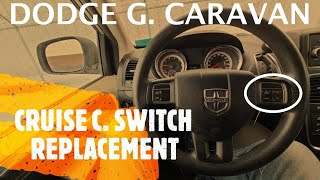
- Dodge Grand Caravan (2008-2020) — Known for cruise control switch failures. On 2011-2020 models, the switch is replaceable without removing the airbag, making it a fast repair.
- Dodge Ram 1500 (2003-2009) — Prone to setting P0593 and P0581 simultaneously. The code appears even on models without factory cruise control, proving a clockspring or wiring harness fault.
- Chrysler Town & Country (2008-2016) — Shares the Grand Caravan platform and is equally susceptible to clockspring and switch failures.
- Ford F-150 (2004-2014) — Cruise switches hardwire to the Steering Column Control Module (SCCM), adding the SCCM as a potential failure point alongside the switch and clockspring.
- Chevrolet / GMC Silverado / Sierra (2007-2013) — Frequently reported on GM trucks. Causes are typically the cruise control switch or wiring within the steering column.
- Hyundai Sonata (2011-2015) — Often traced back to a faulty cruise control switch or an intermittent failure in the clockspring.
- Dodge Journey (2009-2020) — P0593 appears on base models lacking cruise control, pointing directly to a faulty clockspring shorting the shared wiring harness.
Manufacturer-Specific Notes
- Jeep/Dodge/Chrysler: Exceptionally high rate of clockspring failure. Chrysler issued extended warranty X68 and TSB 08-005-17 REV. A for 2011-2016 Wranglers, extending coverage to 15 years/unlimited miles.
- Dodge: On the Caliber, Journey, and Ram, P0593 appears even if the vehicle lacks factory cruise control. The wiring harness is present regardless of trim, and a failing clockspring shorts the unused circuit.
- Ford: Cruise control switches wire to a Steering Column Control Module (SCCM) rather than directly to the PCM. The SCCM reads resistance and sends CAN network commands, adding a diagnostic layer.
Real Owner Stories
2013 Jeep Wrangler JKU - The Classic Clockspring Failure
Airbag light illuminated, horn became intermittent, and cruise control failed completely, triggering codes P0593 and U1109.
What they tried:
- Researched symptoms and discovered TSB 08-005-17 REV. A and the X68 extended warranty for clocksprings.
Outcome: The dealership confirmed the clockspring fault. The part was replaced for $0 under the 15-year/unlimited mileage extended warranty.
Lesson: For 2011-2016 Jeep Wranglers with P0593 and an airbag light, always verify X68 warranty coverage with a dealer before paying for repairs.
2009 Dodge Journey SE - Phantom Codes
Check Engine Light on with codes P0581 and P0593, plus an intermittent airbag light. The vehicle did not have factory cruise control.
What they tried:
- Suspected the clockspring since it houses the wiring for both the airbag and the unused cruise control circuit.
Outcome: A technician confirmed the clockspring shorted the unused cruise control wires. Replacing the clockspring resolved the airbag light and the phantom cruise control codes.
Lesson: Receiving a cruise control code on a Dodge/Chrysler vehicle without cruise control is a definitive indicator of a bad clockspring.
2011 Dodge Grand Caravan - A Simple Switch Fix
Cruise control stopped working and triggered P0593. The horn, radio controls, and airbag light worked perfectly.
What they tried:
- A mechanic used a scan tool to monitor button inputs and confirmed the 'Set' button was sending a constant high voltage signal.
Outcome: The cruise control switch was replaced without removing the airbag. The total repair was under $200, avoiding a costly clockspring replacement.
Lesson: If no other steering wheel controls are affected, the cheaper cruise control switch is the most likely culprit, not the clockspring.
How to Prevent This Code From Triggering
- Keep Steering Column Area Clean and Dry (Daily habit) — Liquid spills (coffee, soda) are the #1 cause of switch failure. Using cup holders prevents liquids from shorting the switch contacts.
- Clean Sticky Buttons Promptly (As needed) — Cleaning sticky buttons with isopropyl alcohol removes residue before it penetrates the switch mechanism and causes permanent electrical faults.
- Apply Dielectric Grease to Connectors (During any related repair) — Applying dielectric grease to clockspring and switch connectors prevents moisture intrusion and corrosion, stopping high resistance faults.
- Avoid Aggressive Full-Lock Steering (Daily habit) — Repeatedly hitting the steering stops puts maximum stress on the delicate clockspring ribbon cable, accelerating internal wire breakage.
Frequently Asked Questions
What exactly is the 'B' circuit in code P0593?
The 'B' circuit refers to a specific electrical pathway associated with one of the cruise control functions, like 'Set' or 'Resume'. The code means the computer sees a high-voltage problem on that specific input line.
Can I just replace the fuse to fix P0593?
You should always check the fuse first because it is a fast, $5 fix. However, a blown fuse is a symptom of a short circuit in the wiring or switch. If the new fuse blows immediately, you must trace the underlying electrical short.
Is it safe to drive with a bad clockspring?
No. While losing cruise control is an inconvenience, the clockspring also connects the driver's airbag. If the clockspring is bad, the airbag warning light illuminates, and the airbag will not deploy in an accident.
Why did my horn and radio buttons stop working at the same time as my cruise control?
This is the classic symptom of a failed clockspring. The clockspring is the central wire bundle connecting all steering wheel electronics to the car. When it breaks, it takes multiple systems offline simultaneously.
Why am I getting a P0593 code if my car doesn't have cruise control?
Manufacturers use standard wiring harnesses for all trim levels, meaning cruise control wires pass through the clockspring even without buttons installed. When the clockspring fails, it shorts this unused circuit, causing the PCM to report a phantom fault.
Can I clean a sticky cruise control switch to fix the code?
Sometimes, yes. If a spill caused the issue, spray electronics-safe contact cleaner into the switch mechanism and operate the button repeatedly. If internal contacts are physically worn, cleaning fails and replacement is required.
Can a bad battery or alternator cause P0593?
Unstable voltage causes unpredictable error codes, but it is rarely the direct cause of P0593. If you experience dimming lights or slow starting alongside the code, test your charging system first.
Can a bad speed sensor cause P0593?
No. A faulty vehicle speed sensor (VSS) sets specific codes (like P0500) and causes speedometer issues. P0593 is strictly a circuit input code for the steering wheel switch.
Can I replace the clockspring myself?
This is a professional-level repair requiring the removal of the driver's airbag module. Mishandling an airbag causes severe injury. Have a qualified technician perform this repair to ensure SRS system safety.
Will clearing the code make my cruise control work again?
No. P0593 is a 'hard fault' indicating a constant electrical short or stuck switch. Clearing the code results in it reappearing immediately upon starting the car.
Key Takeaways
- Code P0593 disables your cruise control because the PCM detects a constant, stuck-on high voltage signal (above 4.8V) from a steering wheel button.
- Spilled liquids and worn internal contacts make a faulty steering wheel cruise control switch the #1 cause of this code.
- An illuminated airbag light alongside P0593 confirms a failed clockspring, making this a critical safety repair since the driver's airbag will not deploy.
- Owners of 2011-2016 Jeep Wranglers and Dodge vehicles should check for the X68 extended warranty, which covers clockspring replacement for 15 years or unlimited miles.
- Avoid replacing unnecessary parts by using a scan tool to monitor live voltage data; if voltage drops when the switch is disconnected, the switch is the culprit.
Helpful Videos

The information in this article is provided for general reference and educational purposes only. Vehicle specifications, procedures, and part compatibility can vary by production date, trim level, and region. Always consult your vehicle's factory service manual and verify part numbers before purchasing or performing repairs. Safety-critical components such as airbags, seat belts, and braking systems should be installed by a qualified professional.
- 🎬 Helpful Videos
- What Does P0593 Mean?
- Can I Drive With P0593?
- Common Causes
- Symptoms
- Diagnostic Flowchart
- Common Fixes & Costs
- DIY vs Professional
- Used vs. New Parts: Buying Guide
- What Happens If You Wait — Timeline
- Cost of Not Fixing It
- Diagnosis Steps
- When This Code Triggers (Freeze-Frame Conditions)
- Related Codes
- Climate & Environmental Factors
- How to Talk to a Mechanic About This Code
- Where to Take It: Dealer vs Independent vs Chain
- When to Walk Away From the Repair
- What Scan Tool You Need for This Code
- How to Clear the Code After You Fix It
- Will This Fail Emissions / State Inspection?
- Most Commonly Affected Vehicles
- Manufacturer-Specific Notes
- Real Owner Stories
- 2013 Jeep Wrangler JKU - The Classic Clockspring Failure
- 2009 Dodge Journey SE - Phantom Codes
- 2011 Dodge Grand Caravan - A Simple Switch Fix
- How to Prevent This Code From Triggering
- Frequently Asked Questions
- What exactly is the 'B' circuit in code P0593?
- Can I just replace the fuse to fix P0593?
- Is it safe to drive with a bad clockspring?
- Why did my horn and radio buttons stop working at the same time as my cruise control?
- Why am I getting a P0593 code if my car doesn't have cruise control?
- Can I clean a sticky cruise control switch to fix the code?
- Can a bad battery or alternator cause P0593?
- Can a bad speed sensor cause P0593?
- Can I replace the clockspring myself?
- Will clearing the code make my cruise control work again?
- Key Takeaways
- 🎟️ Get 5% Off