

OBD-II Code P0573: Brake & Cruise Control Switch 'A' Circuit High
The Ultimate Guide to Meaning, Diagnosis, and Repair for P0573
- A faulty brake light switch causes over 70% of P0573 codes and costs under $50 to replace yourself.
- The PCM immediately disables cruise control when P0573 triggers because it cannot verify if you are braking.
- Verify your brake lights immediately; stuck-on lights drain your battery overnight, while non-functional lights risk a rear-end collision.
- For 2011-2018 Chrysler, Dodge, and Jeep vehicles, a known software glitch causes this code and requires a $150 dealership PCM update, not new parts.
- On Ford and Hyundai models, check the brake pedal arm for a crumbled $5 plastic stopper pad before replacing the entire switch assembly.
What Does P0573 Mean?

P0573 means the Powertrain Control Module (PCM) detects a continuous high voltage signal from the brake pedal switch 'A' circuit. The computer interprets this as a fault, believing the switch is stuck closed or shorted to power. Because the computer cannot reliably determine when you are pressing the brakes, it disables safety-critical features that depend on this signal, most notably the cruise control system.
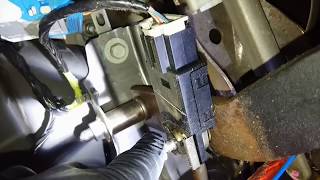
🎬 Watch: Troubleshooting a P0573 code and cruise control failure on a Silverado.Technical definition: The official SAE/OBD-II definition is "Brake Switch 'A' Circuit High". This indicates the PCM detects voltage from the brake switch circuit that is higher than the specified range (typically 12V+) when the brake pedal is in its resting, released position. This constant high voltage prevents the computer from knowing the true state of the brake pedal.
Can I Drive With P0573?
Yes, But With Caution. You can drive, but it poses a moderate safety risk. Cruise control is disabled, and critically, your brake lights often stick ON (confusing other drivers and draining your battery) or fail entirely. A non-functional brake light system significantly increases the risk of a rear-end collision. Verify brake light operation immediately and repair the vehicle promptly to avoid accidents and traffic citations.
Common Causes

- Faulty Brake Light Switch (Very Common) — The internal contacts of the switch, located on the brake pedal arm, wear out, corrode, or physically break, causing it to send a continuous high voltage signal.
- Disintegrated Brake Pedal Stop Pad (Very Common) — Many vehicles (especially Ford, Hyundai, and Honda) use a small plastic or rubber pad on the pedal arm that presses against the switch. If this pad becomes brittle and falls off, the switch plunger extends fully, keeping the circuit permanently closed and triggering the code.
- Incorrectly Adjusted Brake Light Switch (Common) — If the switch is positioned incorrectly after a replacement or knocked out of place by a driver's foot, it fails to disengage when the pedal is released, mimicking a 'stuck on' condition.
- PCM/BCM Software Glitch (Common) — On 2011-2018 Chrysler, Dodge, and Jeep vehicles, a known software bug in the Powertrain Control Module (PCM) falsely triggers the P0573 code without any actual hardware failure.
- Damaged or Shorted Wiring (Common) — Wires in the brake switch circuit fray, pinch, or corrode near the moving brake pedal assembly or firewall, creating a short to a 12V power source.
- Aftermarket LED Bulb Installation (Less Common) — Installing LED brake light bulbs without a compatible in-line load resistor triggers P0573. The computer misinterprets the significantly lower power draw of LEDs as a circuit fault.
- Corroded Trailer Wiring Harness (Less Common) — On vehicles with a trailer hitch, water intrusion or damage in the trailer light wiring harness shorts the brake light circuit to a power source, causing a constant high voltage signal.
Symptoms

- Cruise control will not engage — The vehicle's computer immediately disables cruise control for safety when it cannot verify the brake pedal's position.
- Brake lights are stuck on (or do not turn on) — The faulty circuit causes the brake lights to stay illuminated even when the pedal is released, or fail to light up when braking.
- Push-to-start system fails — Vehicles with push-button start require a valid brake pedal press signal to crank the engine. A P0573 fault prevents the vehicle from starting.
- Difficulty shifting out of Park — The brake-shift interlock system fails to receive the correct signal, leaving the gear selector locked in Park.
- ABS or Traction Control warning lights illuminate — Modern stability systems rely on the brake switch signal. A fault disables these systems and triggers dashboard warning lights.
Diagnostic Flowchart
Tap your situation to follow the diagnostic path that matches what you're seeing on this code.
Common Fixes & Costs
- Replace Brake Light Switch
— Parts: $15-$50, Labor: $80-$120, ~0.8 hr book time
(DIY)
Ford F-150 (2015-2020): OEM GL3Z-13480-A (Alt: {"brand": "Duralast", "part_number": "JA4496"})
Chevrolet Silverado 1500 (2014-2018): OEM 25981009 (Alt: {"brand": "ACDelco", "part_number": "D1539J"}) - Replace Brake Pedal Stop Pad
— Parts: $5-$15, Labor: $0-$50, ~0.2 hr book time
(DIY)
Ford / Hyundai / Honda (Various): OEM N/A (Alt: {"brand": "Dorman", "part_number": "74015"}) - Adjust or Reinstall Brake Light Switch — Parts: $0, Labor: $50-$100, ~0.5 hr book time (DIY)
- Update PCM/BCM Software at Dealership — Parts: $0, Labor: $150-$250, ~1.0 hr book time (Professional)
- Repair Damaged Wiring or Connector — Parts: $10-$40, Labor: $150-$350, ~2.0 hr book time (Intermediate)
Used vs. New Parts: Buying Guide
When a used part is worth it: For a simple, low-cost electronic part like a brake light switch, buying used rarely makes sense. The part is a known wear item, and a used switch carries a high risk of premature failure.
Donor-vehicle mileage cap: roughly under 20000 miles for the part to have meaningful remaining life.
Donor quality checklist:
- Match the part number exactly, as there are many variations.
- Avoid parts from vehicles with high mileage or from regions with high humidity or road salt use.
Decision logic:
- If The cost of a new OEM or quality aftermarket switch is under $75 → Always buy new. The labor to replace it a second time outweighs any potential savings.
- If The vehicle is very old and a new part is unavailable → A used part is the only option, but test it with a multimeter before installation.
Warranty tradeoff: Used parts from a salvage yard typically have a 30-90 day warranty. New aftermarket parts carry a 1-year to limited lifetime warranty.
Worst-case if a used part fails: $100-$150 (cost of repeat labor to install another switch when the used one fails)
What Happens If You Wait — Timeline
- Immediate: Check Engine Light illuminates. Cruise control is disabled. Brake lights stick ON, fail entirely, or function intermittently. (MPG impact: 0%% · Added cost: $0 (but high immediate safety risk))
- 1-7 days: If brake lights are stuck on, the battery drains when parked. Repeated deep cycling permanently damages the battery, requiring replacement. (MPG impact: 0%% · Added cost: $150-$300 (Cost of a new battery))
- 1 week - 3 months: Driving with faulty brake lights results in a traffic stop and citation for an equipment violation. (MPG impact: 0%% · Added cost: $140-$285 (Typical fines for improper equipment))
Cost of Not Fixing It
- Immediate: No cruise control and potentially non-functional or constantly-on brake lights, creating a significant safety hazard. (Added cost: $0 (but high safety/legal risk))
- 0-1 month: If brake lights are stuck on, the battery drains completely, requiring a jump start or a new battery. (Added cost: $150-$300 (for new battery))
- 1-6+ months: Continued failure to address the code results in an automatic failure of state safety and emissions inspections. (Added cost: $50-$200+ (in inspection re-test fees and potential fines))
Diagnosis Steps
- Verify Brake Light Function
Have a helper stand behind the vehicle (or use a reflective surface) while you press and release the brake pedal. Note if the lights turn on and off correctly, stay on constantly, or fail to light up. This confirms the real-world safety status.
Tools: A helper or reflective surface (Beginner) - Visually Inspect the Brake Switch and Pedal Pad
Look under the dashboard at the top of the brake pedal arm. Check if the switch is securely mounted. Crucially, look for a missing or crumbled plastic 'stop pad' on the pedal arm where the switch plunger makes contact. If you see broken plastic pieces on the floor mat, the pad is the culprit.
Tools: Flashlight (Beginner) - Scan Codes and Monitor Live Data
Use a scan tool to read codes from all modules (Engine, BCM, ABS). Monitor the live data PID for the brake switch (e.g., 'Brake Pedal Status'). The status must toggle between 'Applied' and 'Released' as you press the pedal. If it is stuck on 'Applied', the fault is active.
Tools: Advanced OBD-II scanner (Intermediate) - Test Circuit Voltage at the Switch Connector
Disconnect the brake switch connector. Turn the ignition ON. With the pedal released, probe the signal wire terminal on the harness side with a multimeter. A normal reading is 0V. If you see battery voltage (12V+) with the switch disconnected, the short to power is in the wiring harness or the PCM.
Tools: Digital multimeter, vehicle-specific wiring diagram (Advanced) - Test Brake Switch Resistance
Remove the brake switch. Set a multimeter to Ohms (Ω). With the switch plunger un-pressed (simulating pedal pressed), it should read near 0 Ω (continuity). Pressed in (simulating pedal released), it should read 'OL' (open circuit). If it shows continuity in both positions, replace the switch.
Tools: Digital multimeter (Advanced) - Inspect Circuit Wiring and Connectors
Trace the wires from the brake switch connector into the main harness. Look for chafing, melting, or breaks near the firewall. Disconnect and inspect trailer wiring harnesses for severe corrosion bridging the pins.
Tools: Flashlight, trim removal tools (Intermediate)
When This Code Triggers (Freeze-Frame Conditions)
- Vehicle Speed: 0 mph or 40-65 mph (Vehicle stationary or at highway speed when cruise control is attempted)
- Engine Load: 20-50% (Light to moderate throttle application)
Related Codes
- P0572 — The direct opposite: 'Brake Switch A Circuit Low.' P0573 points to a short to power, while P0572 suggests an open circuit, a short to ground, or a burned-out bulb.
- P0504 — Stands for 'Brake Switch A/B Correlation.' The computer gets conflicting information from redundant circuits within the switch. A single faulty switch triggers both P0573 and P0504 simultaneously.
- C0035 / C0040 — ABS codes related to wheel speed sensors. P0573 triggers alongside these if the ABS module receives conflicting data (brake switch says pedal is pressed, but wheel speed sensors show no deceleration).
Climate & Environmental Factors
- High Humidity / Water Leaks: Moisture penetrates connectors for the brake light switch or trailer wiring harness. This leads to corrosion on the pins, creating a conductive bridge that causes a short to power.
- Cold Climates / Road Salt: Salt spray accelerates the degradation of wiring insulation and connectors, particularly on exposed trailer wiring harnesses, increasing the likelihood of shorts.
How to Talk to a Mechanic About This Code
Say this: "I have a Check Engine Light on and my scanner shows code P0573, Brake Switch Circuit High. My cruise control is not working. I checked the brake lights and they are [stuck on / working normally / not working at all]."
This provides the specific code, the primary symptom, and the critical safety status of your brake lights. This focuses their diagnostic effort on the correct circuit and prevents them from starting from scratch.
Avoid saying:
- 'My check engine light is on.' (Too vague, invites a broad and expensive diagnostic).
- 'My cruise control isn't working.' (Could be many things; the P0573 code is the key piece of information).
- 'Just fix it.' (Gives the shop a blank check to replace parts without proper diagnosis).
Questions to ask before authorizing the repair:
- Did you test the brake switch's signal with a multimeter or scan tool live data to confirm it is faulty?
- If the switch tested good, did you check the wiring harness for a short to power?
- For my Chrysler/Dodge/Jeep, did you check for Technical Service Bulletins related to a software update for P0573?
Where to Take It: Dealer vs Independent vs Chain
- Dealer:
Recommended for Chrysler/Dodge/Jeep vehicles due to common software issues. For other makes, an independent shop is more cost-effective.
Best for: Vehicles under warranty., Chrysler, Dodge, and Jeep vehicles where a software update is a likely cause., Complex electrical issues where other modules (ABS, BCM) are also setting codes.
Downsides: Typically highest labor rate., May default to replacing a module when a wiring repair or software flash is the true fix. (Typical cost: +50% vs. baseline) - Independent Shop:
Best fit for most P0573 repairs. The majority of causes are straightforward electrical or mechanical issues.
Best for: Out-of-warranty vehicles., Common P0573 causes like a faulty brake light switch, wiring damage, or a bad pedal pad., Shops with ASE-certified technicians specializing in electrical diagnostics.
Downsides: May not have the proprietary tools to perform a PCM software update if needed. (Typical cost: +0% vs. baseline) - Chain Shop:
Use with caution. Acceptable for a straightforward switch replacement, but avoid for initial diagnosis of a P0573 code.
Best for: If the problem is confirmed to be only a simple brake light switch replacement.
Downsides: Technicians may lack advanced electrical diagnostic skills to trace wiring shorts., High pressure to sell parts leads to replacing the switch without proper circuit testing. (Typical cost: -10% vs. baseline)
When to Walk Away From the Repair
If the total estimated repair cost for the P0573 code and any other known issues exceeds 40-50% of your car's private-party value, consider selling or trading it in.
- Car worth $3500, fix is $1200: Borderline. A $1200 fix likely involves a module replacement. Get a second opinion to confirm a wiring repair isn't possible.
- Car worth $10000, fix is $450: Fix it. A repair cost of $450 for a wiring issue is well below the threshold and restores a critical safety function.
- Car worth $2000, fix is $1100: Walk away. The repair cost is over 50% of the car's value. It is not financially sensible to invest this much into an older vehicle.
What Scan Tool You Need for This Code

Minimum: A scanner that reads and clears codes from the engine module (PCM) and shows live data for the brake pedal position sensor.
A basic $20 reader only shows the P0573 code. It cannot show the 'live data' of the brake switch toggling on and off, which is the fastest way to determine if the switch or the wiring is the problem.
Budget: Innova 1000 / Ancel BD310 (~$100) — These Bluetooth scanners connect to a phone app and display live data, including the brake switch status. This is sufficient to diagnose a bad switch versus a wiring problem.
Mid-range: Foxwell NT510 Elite / XTOOL A30 PRO (~$180) — Provides live data graphing and accesses other modules like ABS and BCM. Some offer bidirectional controls to command the brake lights on/off, helping test the circuit.
Professional: Autel MaxiCOM MK808 / Launch X431 series (~$500-1200) — Offers full bidirectional control to activate switches and relays. They also perform module software updates (with subscription), necessary for the known Chrysler/Dodge/Jeep issue.
Rent vs buy: For a one-time diagnosis, auto parts stores scan codes for free, but their tools may not show live data. Buying a budget scanner with live data capability is a worthwhile investment.
How to Clear the Code After You Fix It
- Use an OBD-II scan tool to clear the diagnostic trouble codes.
- Turn the ignition off and let the vehicle sit for at least 30 seconds.
- Start the engine and verify the Check Engine Light does not immediately return.
- Perform a complete drive cycle to allow the system's readiness monitors to reset.
Drive cycle (~30 minutes): A general drive cycle includes a cold start (after sitting for 8+ hours), 2-3 minutes of idling, 15-20 minutes of mixed city/suburban driving with several stops, and at least 5-10 minutes of steady-speed highway driving (55-60 mph).
Readiness monitors affected: Comprehensive Component Monitor, Catalyst (CAT) Monitor, Evaporative (EVAP) System Monitor
Before emissions retest: drive at least 100 miles to fully set monitors.
Watch out for:
- Disconnecting the battery clears the code but erases all readiness monitors, causing an immediate emissions test failure.
- The code returns quickly if the underlying electrical fault (shorted wire, bad switch) is not properly repaired.
Will This Fail Emissions / State Inspection?
Yes — this code typically fails an OBD-II emissions inspection.
- California: An active Check Engine Light for P0573 is an automatic failure for a Smog Check. All readiness monitors must also be 'Ready' before a test can be passed.
- New York: The NYS vehicle safety/emissions inspection includes an OBD-II scan. An illuminated Malfunction Indicator Lamp causes the vehicle to fail.
Most Commonly Affected Vehicles
- Chrysler / Dodge 300, Charger (2012-2018) — Frequently caused by a software glitch. TSB #18-020-13 Rev. A addresses this; the fix is a dealership PCM software update.
- Ford F-150, F-250, F-350 (2011-2019) — Often caused by a disintegrated plastic 'Brake Pedal Pad' that the switch plunger presses against. Replacing the pad fixes the issue.
- Chevrolet / GMC Silverado, Sierra (2005-2014) — Prone to P0573 from a failing brake light switch or wiring issues near the pedal. The BCM and ECM both monitor the switch, and a discrepancy triggers the code.
- Hyundai / Kia Elantra, Sonata, Sorento (2011-2017) — A high rate of brake light switch failures led to multiple recalls. Check for open recalls related to the stop lamp switch.
- Subaru Outback, Forester (2010-2017) — Subaru issued a major recall for brake light switch failures that prevent the vehicle from starting or cause VDC warning lights to illuminate.
Manufacturer-Specific Notes

- Chrysler / Dodge / Jeep: These brands issued TSBs acknowledging a software glitch causes P0573. The fix is a PCM software update performed by a dealer. Attempting to fix it with parts will fail.
- Ford: A common failure point is a small, brittle plastic bushing on the brake pedal arm. When this bushing crumbles, it creates a gap, and the switch remains in the 'on' position.
- General Motors: The brake switch signal is monitored independently by the BCM and ECM. A discrepancy between the two modules triggers the code, requiring serial data diagnosis.
Real Owner Stories
2012 Chrysler 300, Check Engine Light and no cruise control
Check Engine Light illuminated with code P0573. Cruise control became completely inoperative.
What they tried:
- Replaced the brake light switch twice, assuming the first replacement was defective.
Outcome: The actual cause was a software glitch in the PCM. Chrysler issued TSB #18-020-13 for this specific issue. A dealership PCM software update permanently resolved the code.
Lesson: For Chrysler, Dodge, and Jeep vehicles, always check for TSBs related to P0573 before replacing parts. A software update solves a problem that replacing hardware never will.
2014 Ford F-150, intermittent wrench icon and P0573
Intermittent wrench icon, traction control error light, and disabled cruise control. All external lights functioned normally.
What they tried:
- Inspected the brake light switch and found it functioning, but noticed small plastic pieces on the floor mat.
Outcome: The plastic 'pedal pad' that the switch presses against had disintegrated. Replacing this $5 plastic stopper fixed the issue entirely.
Lesson: On Ford and Hyundai vehicles, visually inspect the brake pedal arm for a crumbled plastic stopper before replacing the switch assembly.
2010 Cadillac Escalade, P0573 with ABS codes
Intermittent 'Service Stabilitrak' message with P0573, C0455, and C0701 codes triggered by bumps in the road.
What they tried:
- Replaced the brake light switch and inspected the transmission wiring harness.
Outcome: A TSB related to the steering position sensor required shimming the sensor connector. This resolved the combination of codes, including the P0573.
Lesson: When P0573 appears alongside ABS or stability control codes, diagnose them as a group. A fault in one sensor provides bad data that causes secondary systems to set codes.
How to Prevent This Code From Triggering
- Inspect and clean trailer wiring connectors (Annually, or before each towing season) — Trailer connectors are exposed to weather and road salt. Cleaning pins and applying dielectric grease prevents moisture from creating a short that back-feeds into the brake light circuit.
- Apply dielectric grease to new switch connectors (During any replacement of the brake light switch) — Applying non-conductive dielectric grease to the connector's weather seal keeps moisture out, preventing corrosion on the electrical pins over the long term.
- Avoid resting your foot on the brake pedal (Daily driving habit) — Lightly 'riding' the brake pedal keeps the switch in a partially active state, generating heat and causing premature wear on the internal contacts.
Frequently Asked Questions
What does 'Circuit High' actually mean?
It means the computer sees a constant electrical voltage (typically 12V+) from a sensor when it expects the voltage to be low or changing. For the brake switch, it is like a light switch stuck in the 'on' position, sending power continuously even when the pedal is released.
Can a weak battery cause a P0573 code?
While a weak battery causes bizarre electrical issues, it does not cause P0573. This code specifically points to a voltage that is too high, whereas a weak battery causes low voltage conditions.
Why did P0573 appear after I installed LED brake lights?
Aftermarket LED bulbs draw significantly less electrical current than original halogen bulbs. The vehicle's computer interprets this low current draw as a circuit fault. Installing a 6-ohm, 50-watt in-line load resistor for each LED bulb resolves this by mimicking a traditional bulb's electrical load.
What is the most common misdiagnosis for P0573?
A common mistake is replacing the brake light switch multiple times without testing the circuit. Technicians often assume the new switch is faulty when the actual problem is a wiring short, a missing pedal pad, or a required software update.
Can I just clear the code and keep driving?
You can clear the code, but if the underlying electrical fault exists, it returns immediately. Ignoring it is unsafe because your brake lights may not function correctly, creating a serious risk of being rear-ended.
How much does it cost to fix a P0573 code?
A DIY brake light switch replacement costs under $50, while a mechanic charges $100-$170. Wiring repairs or PCM software updates range from $150 to $350. A full PCM replacement is the most expensive fix, often exceeding $1,000.
Will a P0573 code fail an emissions inspection?
An active Check Engine Light results in an automatic failure for emissions and safety inspections in most jurisdictions. Even if the code does not directly relate to emissions, the illuminated Malfunction Indicator Lamp is grounds for failure.
Key Takeaways
- A faulty brake light switch causes over 70% of P0573 codes and costs under $50 to replace yourself.
- The PCM immediately disables cruise control when P0573 triggers because it cannot verify if you are braking.
- Verify your brake lights immediately; stuck-on lights drain your battery overnight, while non-functional lights risk a rear-end collision.
- For 2011-2018 Chrysler, Dodge, and Jeep vehicles, a known software glitch causes this code and requires a $150 dealership PCM update, not new parts.
- On Ford and Hyundai models, check the brake pedal arm for a crumbled $5 plastic stopper pad before replacing the entire switch assembly.
Helpful Videos

The information in this article is provided for general reference and educational purposes only. Vehicle specifications, procedures, and part compatibility can vary by production date, trim level, and region. Always consult your vehicle's factory service manual and verify part numbers before purchasing or performing repairs. Safety-critical components such as airbags, seat belts, and braking systems should be installed by a qualified professional.
- 🎬 Helpful Videos
- What Does P0573 Mean?
- Can I Drive With P0573?
- Common Causes
- Symptoms
- Diagnostic Flowchart
- Common Fixes & Costs
- Used vs. New Parts: Buying Guide
- What Happens If You Wait — Timeline
- Cost of Not Fixing It
- Diagnosis Steps
- When This Code Triggers (Freeze-Frame Conditions)
- Related Codes
- Climate & Environmental Factors
- How to Talk to a Mechanic About This Code
- Where to Take It: Dealer vs Independent vs Chain
- When to Walk Away From the Repair
- What Scan Tool You Need for This Code
- How to Clear the Code After You Fix It
- Will This Fail Emissions / State Inspection?
- Most Commonly Affected Vehicles
- Manufacturer-Specific Notes
- Real Owner Stories
- 2012 Chrysler 300, Check Engine Light and no cruise control
- 2014 Ford F-150, intermittent wrench icon and P0573
- 2010 Cadillac Escalade, P0573 with ABS codes
- How to Prevent This Code From Triggering
- Frequently Asked Questions
- What does 'Circuit High' actually mean?
- Can a weak battery cause a P0573 code?
- Why did P0573 appear after I installed LED brake lights?
- What is the most common misdiagnosis for P0573?
- Can I just clear the code and keep driving?
- How much does it cost to fix a P0573 code?
- Will a P0573 code fail an emissions inspection?
- Key Takeaways
- 🎟️ Get 5% Off