

P0563 on 2024 GMC Sierra 3500: System Voltage High Causes and Fixes
P0563 on a 2024 GMC Sierra 3500 means the electrical system voltage is too high. This is most often caused by a failing alternator with a bad internal voltage regulator. Expect to pay between $400 and $800 for a replacement alternator, with DIY difficulty at 3/5. This code is often seen with P0606, which is addressed by a specific TSB.
- P0563 means your truck's charging system is producing excessive voltage, which can damage electronics.
- The most likely culprit is a failed alternator with a bad internal voltage regulator.
- Before replacing any parts, use a multimeter to confirm the charging voltage is above 15.0V with the engine running.
- If you also have a P0606 code, do not replace the brake control module. This is a known side effect of the high voltage condition per TSB 24-NA-050.
- Check and clean all battery and ground connections as a first step, as poor connections can cause erratic voltage readings.
What's Unique About the 2024-2024 Gmc SIERRA 3500
For the 2024 GMC Sierra, the electrical system is highly complex, managing numerous electronic modules and a sophisticated charging strategy called Regulated Voltage Control (RVC). A critical issue for this platform is documented in Technical Service Bulletin (TSB) 24-NA-050. This TSB explains that a high voltage condition (P0563) or low voltage (P0562) can cause a software anomaly in the Electronic Brake Control Module (EBCM), triggering a separate diagnostic code, P0606. This highlights how a charging system fault can directly flag a fault within the service brake system. The bulletin was revised in August 2024 to specify that the fix is to reprogram the EBCM after addressing the root voltage issue, and it explicitly advises against replacing the EBCM for this condition. Stable battery voltage is noted as critical during this reprogramming procedure.
Diagnostic Flowchart
Tap your situation to follow the diagnostic path that matches what you're seeing on this vehicle.
Symptoms You May Notice
- Check Engine Light is on
- Battery or charging system warning light is on
- Headlights or interior lights appearing unusually bright, or flickering.
- Erratic behavior from electronic accessories (radio, power windows, infotainment screen).
- Engine stalling, especially at idle
- Battery appearing swollen or leaking from being overcharged.
- A whining, growling, or grinding noise from the alternator, indicating failing bearings or internal components.
- "Service Steering Column Lock" message on the Driver Information Center (DIC).
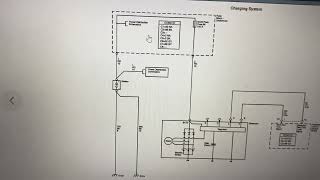
- Fluctuating voltage gauge on the instrument cluster, often spiking above 15V. 🎬 Watch: Understanding the P0563 high voltage code and its causes.
- Replacing the battery without testing the alternator. A new battery will soon be damaged by an overcharging alternator.
- Replacing the Electronic Brake Control Module (EBCM) when code P0606 is also present. TSB 24-NA-050 specifically warns against this, directing technicians to investigate the charging system and reprogram the EBCM first.
Most Likely Causes
- Failing Alternator / Voltage Regulator 🔴 High Probability The internal voltage regulator is the most common failure point within an alternator that leads to overcharging. Modern trucks like the 2024 Sierra have high electrical demands, placing significant stress on the charging system. The alternator is designed to produce around 14.5 volts; when the internal regulator fails, it can go into a full-output mode, causing the system voltage to spike.
How to confirm: With the engine running, use a multimeter or an OBD-II scanner with live data to check the voltage at the battery terminals. A reading consistently above 15.0 volts points to a faulty alternator. Many auto parts stores can also perform a comprehensive charging system test, often for free.
Typical fix: Replace the alternator. Since the voltage regulator is internal to the alternator on modern GM trucks, the entire unit is replaced.
Est. part cost: $300-$600 - Poor Ground Connection 🟡 Medium Probability Ground straps can become loose, corroded, or damaged, creating high resistance in the electrical circuit. This can confuse the system's voltage readings, as the PCM may interpret a shifting ground reference as a voltage spike. Forum users on platforms like AT4 Forum have noted that loose grounds can cause a wide array of electrical issues on these trucks.
How to confirm: Visually inspect all major ground connections: from the battery to the chassis, from the engine block to the chassis, and the alternator case ground. Check for tightness and any signs of corrosion or fraying. Perform a voltage drop test on the ground side of the circuit; the reading from the alternator case to the negative battery terminal should be less than 0.2V under load. 🎬 Watch: Step-by-step guide to performing a charging system voltage drop test.
Typical fix: Clean the connection points with a wire brush and ensure the fasteners are tight. If a cable is corroded or damaged, it should be replaced.
Est. part cost: $10-$50 - Damaged or Corroded Battery Cables/Terminals ⚪ Low Probability While less common for a high voltage code than a low voltage one, high resistance in the main power or ground cables can cause erratic voltage readings and trigger a P0563. This can be especially true on newer vehicles where even minor connection issues can cause widespread electronic faults.
How to confirm: Inspect the battery terminals for any signs of corrosion (white or greenish powder). Check the entire length of the positive and negative battery cables for damage, swelling, or corrosion. Ensure terminal connections are clean and tight. Perform a voltage drop test from the alternator's B+ post to the positive battery terminal; the reading should be less than 0.2V with the engine running and electrical loads on.
Typical fix: Clean the battery terminals and posts thoroughly. Replace any damaged cables.
Est. part cost: $5-$150
Rare But Worth Checking
- Faulty Powertrain Control Module (PCM): This is extremely rare. The PCM is often mistakenly blamed. All other possibilities, especially the alternator and wiring, must be exhaustively ruled out before considering PCM replacement.
- Failing Battery: While a bad battery usually causes low voltage codes, an internal short or other failure in a battery can sometimes create bizarre charging system behavior, potentially causing the system to overcompensate. On the AT4 Forum, a user with a 2024 truck experiencing multiple electrical faults, including charging issues, reported that a bad battery was diagnosed by the dealer as a primary cause.
- Short in Alternator Wiring: A short circuit in the wiring related to the alternator's field circuit can cause it to go into a full-output mode, leading to overcharging. This could be due to chafed wires or damage from a previous repair.
Diagnosis Steps
- Retrieve all stored DTCs with an OBD-II scanner. Note any other codes present, especially P0606.
- Visually inspect the battery terminals and cables for corrosion, damage, or loose connections. Clean and tighten as necessary.
- Inspect the main engine and chassis ground connections for tightness and corrosion. A known issue on previous generation trucks involved loose fuse box connections causing similar electrical problems.
- Start the engine. Using a multimeter set to DC volts, measure the voltage directly at the battery terminals. The reading should be between 13.2V and 14.8V. Note that GM's RVC system can vary voltage, but a consistent reading over 15.5V indicates a fault.
- If the voltage is consistently above 15.0V, the alternator's voltage regulator is almost certainly faulty, and the alternator needs to be replaced.
- Perform voltage drop tests. With the engine running and accessories on, check the voltage between the alternator's main power post and the positive battery terminal, and between the alternator case and the negative battery terminal. Both readings should be under 0.2 volts.
- If TSB 24-NA-050 applies (P0606 is also present), follow its guidance. After repairing the charging system fault (e.g., replacing the alternator), the EBCM must be reprogrammed with the latest software via Techline Connect. Do not replace the EBCM.
Parts You'll Likely Need
- Alternator
(OEM #84143540 (170A), 84143543 (150A) - Note: Part numbers can vary by specific engine and options. Always verify with VIN.)— This is the most frequent cause of P0563, as the internal voltage regulator fails and causes the alternator to overcharge the system.
Trusted brands: ACDelco (GM Genuine), Bosch, Denso
OEM price range: $400-$700
Aftermarket price range: $300-$500
Related Codes That Often Appear With This One
- P0562 — System Voltage Low. This code may appear in history if the voltage is fluctuating wildly between high and low states, or if a failing component is causing intermittent issues. TSB 24-NA-050 also applies if P0562 is present with P0606.
- P0606 — Control Module Processor Performance. On 2024 Sierra/Silverado, GM issued TSB 24-NA-050 noting that high voltage (P0563) or low voltage (P0562) can cause the Electronic Brake Control Module (EBCM) to set a P0606 due to a software anomaly. The root cause is the voltage issue, not the EBCM itself.
Technical Service Bulletins (TSBs) & Recalls
- 24-NA-050: Provides repair information for DTC P0606 set in conjunction with P0562 or P0563. Originally advised testing the battery and clearing codes, but was revised in August 2024 to direct technicians to reprogram the EBCM after the primary voltage fault is corrected.
Platform-Specific Known Issues
- A known issue documented in TSB 24-NA-050 shows that a high voltage condition setting P0563 can cause the Electronic Brake Control Module (EBCM) to log a P0606 fault code. The bulletin clarifies that the EBCM should not be replaced; the fix is to address the underlying charging system problem and then reprogram the EBCM.
- Owners of new 2024 GM trucks have reported various electrical gremlins, including dead batteries and charging system faults, sometimes traced back to bad batteries from the factory or loose ground connections.
Mechanic-Grade Diagnostic Values
- Normal System Voltage (Engine Running) — expected: 13.2V - 14.8V. Note: GM's RVC system may fluctuate voltage from 13V to 16V under normal operation.. Failure: A consistent reading above 15.5V indicates a fault.
- Voltage Drop Test (Alternator B+ Post to Positive Battery Terminal) — expected: < 0.2 Volts (with engine running and electrical loads on). Failure: A reading > 0.2V indicates high resistance in the main power cable or connections.
- Voltage Drop Test (Alternator Case to Negative Battery Terminal) — expected: < 0.2 Volts (with engine running and electrical loads on). Failure: A reading > 0.2V indicates a poor ground connection for the alternator.
- Alternator AC Leakage Test — expected: < 0.5 Volts AC. Failure: A reading > 0.5V AC indicates failing diodes within the alternator, requiring replacement.
- Alternator Control Wire Voltage (Key On, Engine Off) — expected: Within 1-2 volts of battery voltage.. Failure: No voltage or very low voltage suggests a problem with the wiring from the PCM or the PCM itself.
Scan Tool Commands That Help
- GDS2 / Techline Connect: EBCM Reprogramming — Required after fixing the root cause of P0563 if code P0606 was also present in the Electronic Brake Control Module, as per TSB 24-NA-050.
- GDS2 / Techline Connect: Clear DTCs — After the repair is complete. TSB 24-NA-050 notes that simply disconnecting the battery may not clear the P0606 from the EBCM; a scan tool must be used.
Wiring & Ground Locations
- Battery Current Sensor — Typically a small module integrated into the negative battery terminal clamp or cable.. This sensor informs the BCM/PCM of the battery's state of charge to manage the charging rate. A faulty sensor can lead to an improper (high) charge command being sent to the alternator. It must be installed in the correct orientation.
- Main Alternator Fuse/Fusible Link — In the underhood fuse block, between the alternator B+ terminal and the battery.. A broken or high-resistance main fuse can cause erratic charging behavior and trigger voltage codes. This was the confirmed fix for a P0563 on a Chevy Colorado after the alternator had already been unnecessarily replaced.
- G110 (Example from other GM trucks) — On other GM models, this critical ground is often located at the right rear of the engine, on the cylinder head.. This ground point often serves the ECM and TCM. A poor connection here can cause a host of engine management and communication codes, potentially including misinterpreted voltage readings.
Real Owner Repair Stories
- Daniels Customs (YouTube) (2004 Chevrolet Colorado) — P0563 (System High Voltage) and P0622 (Generator F-Terminal Circuit)
❌ Tried (didn't work) Replacing the alternator
✅ What actually fixed it The main fuse for the alternator, located in the underhood fuse block, was internally broken. Replacing the fuse resolved the codes. - YouTube user discussing GM smart charging (Chevrolet Silverado (year not specified)) — Voltage dropping into the 12V range after driving for long periods (a low voltage issue, but demonstrates the system's sensitivity).
❌ Tried (didn't work) Initial diagnosis was confusing as the alternator and battery seemed fine.
✅ What actually fixed it The DRL (Daytime Running Light) fuses had been removed. This prevented the BCM from commanding the system into a full charge mode under certain conditions. Reinstalling the fuses corrected the charging behavior.
"I Checked Everything" — The Actual Cause
- In a case involving a Chevrolet Colorado with P0563, a shop replaced the alternator, but the code persisted. The actual cause was an internally broken main alternator fuse in the underhood fuse block, which was overlooked during the initial diagnosis.
Model Year Variations Within This Range
- 2024: The official repair procedure for the related P0606 code changed mid-year. An early 2024 version of TSB 24-NA-050 focused on battery testing, while a revised version from August 2024 mandates reprogramming the Electronic Brake Control Module (EBCM) after the voltage fault is fixed.
Helpful Videos
We Have This Part in Stock



The information in this article is provided for general reference and educational purposes only. Vehicle specifications, procedures, and part compatibility can vary by production date, trim level, and region. Always consult your vehicle's factory service manual and verify part numbers before purchasing or performing repairs. Safety-critical components such as airbags, seat belts, and braking systems should be installed by a qualified professional.
- Gmc SIERRA 3500:
- 🎬 Helpful Videos
- 🛍️ Shop This Part
- What's Unique About the 2024-2024 Gmc SIERRA 3500
- Diagnostic Flowchart
- Symptoms You May Notice
- Most Likely Causes
- Rare But Worth Checking
- Diagnosis Steps
- Parts You'll Likely Need
- Related Codes That Often Appear With This One
- Technical Service Bulletins (TSBs) & Recalls
- Platform-Specific Known Issues
- Mechanic-Grade Diagnostic Values
- Scan Tool Commands That Help
- Wiring & Ground Locations
- Real Owner Repair Stories
- "I Checked Everything" — The Actual Cause
- Model Year Variations Within This Range
- 🎟️ Get 5% Off