

P0563 on 2024 GMC Sierra 2500: High System Voltage Causes and Fixes
P0563 on a 2024 GMC Sierra 2500 indicates the electrical system voltage is too high, most commonly due to a faulty alternator. However, a specific GM Technical Service Bulletin (TSB #24-NA-050) points to a software anomaly in the brake module that can trigger this code, often with P0606. This specific issue requires a dealer to reprogram the module with updated software.
- P0563 means the vehicle's electrical system voltage is too high.
- On a 2024 GMC Sierra 2500, check for code P0606. If it's present with P0563, the problem is likely a software glitch covered by TSB #24-NA-050 that requires a dealer to reprogram the brake module.
- If P0606 is not present, the most likely cause is a failing alternator that is overcharging the system.
- Before replacing parts, always check the battery voltage with the engine running to confirm an overcharge condition (over 15.0V).
- Ensure all battery and alternator connections, including the main fuse box, are clean and tight.
What's Unique About the 2024-2024 Gmc SIERRA 2500
For the 2024 GMC Sierra 2500, a P0563 code has a unique and documented cause beyond the usual alternator failure. General Motors issued Technical Service Bulletin #24-NA-050, which was updated in June 2024. The bulletin states that a "software diagnostic anomaly" in the Electronic Brake Control Module (EBCM) can falsely trigger DTC P0563 along with P0606 (Control Module Processor Fault). This means that instead of a hardware failure, the root cause is a software glitch that requires a dealer to reprogram the EBCM with a new calibration. The original version of the TSB from March 2024 noted the issue could be triggered by voltage fluctuations during cranking or jump-starting.
Diagnostic Flowchart
Tap your situation to follow the diagnostic path that matches what you're seeing on this vehicle.
Symptoms You May Notice
- Check Engine Light is on
- Battery or charging system warning light is illuminated on the dashboard
- Headlights and interior lights may appear unusually bright, or flicker
- Erratic operation of electronic accessories like the radio, blind spot monitors, or auto start-stop system
- Engine may stall intermittently
- In cases related to TSB #24-NA-050, a "Malfunction Indicator Lamp (MIL)" will be illuminated.
- A "Service Steering Column Lock" message may appear on the dash, especially after a dead battery event.
- Replacing the battery when the alternator's voltage regulator is the actual cause of the overcharging.
- Replacing the Electronic Brake Control Module (EBCM) when only a software update is needed, as warned against in TSB #24-NA-050.
Most Likely Causes
- Faulty Alternator / Voltage Regulator 🔴 High Probability The voltage regulator, which is typically internal to the alternator, is the most common component to fail and cause an overcharging condition. This is a common failure point on most modern vehicles.
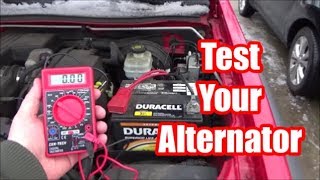
How to confirm: With the engine running, use a multimeter to measure the voltage across the battery terminals. 🎬 Watch: How to test your alternator and battery with a multimeter. A reading consistently above 15.0 volts indicates the alternator is overcharging. Most auto parts stores can also perform a comprehensive charging system test.
Typical fix: Replace the alternator assembly.
Est. part cost: $250-$600 - EBCM Software Anomaly 🟡 Medium Probability As documented in the revised TSB #24-NA-050, 2024 Sierra and Silverado HD trucks have a known software issue in the Electronic Brake Control Module (EBCM) that can cause this code to be set, often alongside a P0606 code. Forum users have reported needing a reprogram along with a battery replacement to fix various electrical gremlins.
How to confirm: Check if DTC P0606 is also present in the EBCM. If both codes are stored, the issue is very likely the software anomaly described in the TSB. The dealer will confirm vehicle eligibility.
Typical fix: A GM dealer must reprogram the Electronic Brake Control Module (EBCM) with updated software using the Service Programming System (SPS). The bulletin explicitly states NOT to replace the module for this condition.
Est. part cost: $0 (if under warranty) - Poor Electrical Connections ⚪ Low Probability While less common on a new vehicle, loose or corroded battery terminals, alternator connections, or main ground straps can cause erratic voltage readings. One owner of a 2020 GM truck reported a completely dead vehicle due to the main fuse box bolts not being properly torqued from the factory. GM has also issued engineering information requests for loose grounds on similar truck platforms, such as G110 and G114 on 2019-2020 models, indicating a history of potential ground issues from the factory.
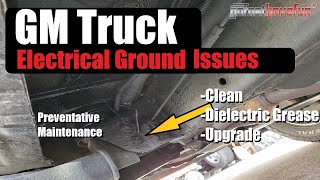
How to confirm: Visually inspect all main power and ground connections. Ensure battery terminals are clean and tight. Check the main power cable at the alternator and the engine/chassis ground straps for tightness and lack of corrosion. Verify that the main fuse box is securely bolted down. 🎬 See this guide on fixing and preventing GM truck ground issues.
Typical fix: Clean terminals with a wire brush and contact cleaner, then tighten all connections securely. Apply dielectric grease to prevent future corrosion.
Est. part cost: $5-$15
Rare But Worth Checking
- Faulty Battery: While a bad battery more commonly causes low voltage issues, an internal short or other failure can sometimes confuse the charging system and contribute to voltage spikes or trigger the EBCM fault described in TSB #24-NA-050. One forum user's fix for unstable voltage and multiple electronic issues on a new AT4 was a new battery combined with a reprogram.
- Wiring Short to Voltage: A damaged wiring harness where a power wire is shorting to the alternator's sense or field circuit can cause the alternator to go to maximum output, causing an overcharge condition.
Diagnosis Steps
- Scan for all stored DTCs in all modules. Pay close attention if P0606 is stored in the EBCM, as this points directly to TSB #24-NA-050.
- With the engine off, use a multimeter to check the battery voltage. It should be approximately 12.6 volts.
- Start the engine. Measure the voltage at the battery terminals again. The reading should be stable, between approximately 13.2 and 14.8 volts.
- If the voltage is consistently above 15.0V, the alternator is overcharging and is the likely culprit.
- If the voltage is normal, but codes P0563 and P0606 are present in the EBCM, the issue is almost certainly the software glitch covered by TSB #24-NA-050. The vehicle should be taken to a dealer for reprogramming.
- Visually inspect the battery terminals, alternator B+ cable, and all major ground straps for looseness, damage, or corrosion. Clean and tighten as necessary. Check that the main fuse box is securely fastened.
Parts You'll Likely Need
- Alternator — The internal voltage regulator is the most common hardware cause of an overcharging condition that sets code P0563.
Trusted brands: ACDelco
OEM price range: $350-$600
Aftermarket price range: $250-$450
Related Codes That Often Appear With This One
- P0606 — According to GM TSB #24-NA-050, a software anomaly in the Electronic Brake Control Module (EBCM) can cause P0606 (Control Module Processor Fault) to be set along with P0563.
- P0562 — TSB #24-NA-050 also notes that the same EBCM software fault can trigger P0562 (System Voltage Low) instead of P0563, indicating general voltage monitoring instability within the module.
Technical Service Bulletins (TSBs) & Recalls
- 24-NA-050: Addresses a condition where the Malfunction Indicator Lamp is on and DTC P0606 is set in the EBCM along with P0562 or P0563 due to a software anomaly. The fix is to reprogram the EBCM.
Platform-Specific Known Issues
- Technical Service Bulletin #24-NA-050 (revised June 2024) documents a software diagnostic anomaly in the Electronic Brake Control Module (EBCM) that causes it to set DTC P0606 along with either P0562 or P0563. The official fix is to reprogram the EBCM, not replace it.
Mechanic-Grade Diagnostic Values
- Charging system voltage under heavy load — expected: 13.2V to 14.7V. Failure: Voltage consistently above 15.0V or below 12.0V
- Alternator L-Terminal PWM Signal — expected: 5-volt, 128Hz Pulse-Width Modulated signal. Failure: An absent or incorrect signal from the ECM/BCM can cause the alternator to default to a high-charge state.
Scan Tool Commands That Help
- GDS2 (GM Global Diagnostic System 2): Module Diagnostics -> EBCM -> Clear DTCs — TSB #24-NA-050 specifically notes that disconnecting the battery may not clear the P0606 code from the EBCM. A scan tool must be used to erase the code after addressing the root cause.
- GDS2 (GM Global Diagnostic System 2): Service Programming System (SPS) — This function is required to perform the software update on the Electronic Brake Control Module (EBCM) as mandated by the revised TSB #24-NA-050 to fix the software anomaly.
- GDS2 (GM Global Diagnostic System 2): Control Functions / Output Controls — A technician can use bidirectional controls to command specific modules and outputs, such as commanding the alternator field on/off or to a specific duty cycle, to test the response of the charging system independently of the automated RVC system.
Wiring & Ground Locations
- G103 / G104 — G103 is located on the front of the passenger side cylinder head. G104 is on the rear of the driver's side cylinder head.. These are primary engine block ground points. High resistance at these locations can affect how the entire engine electrical system, including the alternator and various sensors, references ground, potentially causing erratic voltage readings.
- Battery to Frame Ground — A 10-gauge wire that runs from the negative battery terminal down to the frame, often near the B-pillar on the driver's side on GM trucks.. This is the main ground path for the entire vehicle. Corrosion or looseness at the frame connection is a common cause of widespread, difficult-to-diagnose electrical problems, including charging system faults.
- Alternator Connector — A 2-pin connector on the alternator's voltage regulator.. On modern GM trucks, this is typically a 2-pin connector for the Regulated Voltage Control (RVC) system. One pin is the 'L' terminal (PWM control signal from ECM/BCM) and the other is the 'F' terminal (Field Duty Cycle feedback). A poor connection here can cause the alternator to default to a high-charge state, triggering P0563.
- EBCM Connector — The main harness connector at the Electronic Brake Control Module, which is part of the ABS pump assembly, typically located on the driver's side frame rail.. Since TSB #24-NA-050 identifies the EBCM as the source of the false code, inspecting its main connector for corrosion, moisture, or backed-out pins is a critical step if the software reprogram does not resolve the issue.
Helpful Videos

We Have This Part in Stock



The information in this article is provided for general reference and educational purposes only. Vehicle specifications, procedures, and part compatibility can vary by production date, trim level, and region. Always consult your vehicle's factory service manual and verify part numbers before purchasing or performing repairs. Safety-critical components such as airbags, seat belts, and braking systems should be installed by a qualified professional.
- Gmc SIERRA 2500:
- 🎬 Helpful Videos
- 🛍️ Shop This Part
- What's Unique About the 2024-2024 Gmc SIERRA 2500
- Diagnostic Flowchart
- Symptoms You May Notice
- Most Likely Causes
- Rare But Worth Checking
- Diagnosis Steps
- Parts You'll Likely Need
- Related Codes That Often Appear With This One
- Technical Service Bulletins (TSBs) & Recalls
- Platform-Specific Known Issues
- Mechanic-Grade Diagnostic Values
- Scan Tool Commands That Help
- Wiring & Ground Locations
- 🎟️ Get 5% Off