

P0562 on 2007-2016 Volvo S80: System Voltage Low Causes and Fixes
On a 2007-2016 Volvo S80, code P0562 almost always points to a failing alternator, its one-way clutch pulley, or an old battery. Start by testing the battery and charging system voltage; a replacement alternator is the most common fix. Also, inspect the alternator drive mechanism, as pulley failure is a known issue on these engines.
- P0562 means your Volvo's electrical system voltage is dangerously low.
- Do not drive the vehicle, as it can stall or lose power to essential safety systems at any time.
- The most likely cause is a failed alternator, followed by an old battery.
- Always start your diagnosis with a multimeter to test the battery voltage (engine off) and the alternator's charging voltage (engine on).
- Before replacing expensive parts, always check that all battery cables and ground connections are clean and tight.
What's Unique About the 2007-2016 Volvo S80
The 2007-2016 Volvo S80 (P3 platform) is a sophisticated vehicle with numerous electronic modules, all managed by the Central Electronic Module (CEM), which are highly sensitive to voltage. When this code appears, you may see a cascade of seemingly unrelated error messages like "Charging system failure, service urgent," "Transmission service required," or system shutdowns, such as 'Power saving mode' appearing on the dashboard. These Volvos also utilize a Battery Monitoring Sensor (BMS) on the negative terminal. If a new battery is installed, this system should be reset via a diagnostic tool (or by temporarily unplugging the BMS sensor) to ensure the charging strategy is correct for the new battery, otherwise, P0562 can return. The charging system is controlled by the CEM via a LIN (Local Interconnect Network) bus, which commands the alternator's output voltage based on various conditions. This means that simply measuring a voltage below 14V is not always a sign of failure; the system may command lower voltages (down to ~12.3V) to improve fuel economy.
Symptoms You May Notice
- Check Engine Light is on
- Battery warning light is illuminated
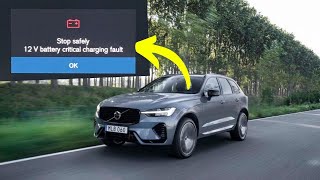
- "Power saving mode" or "Charging system failure, service urgent" message on the instrument cluster
- Dimming or flickering headlights and interior lights
- Engine is hard to start or won't crank
- Intermittent stalling, especially at idle
- Erratic behavior from radio, windows, or climate control
- Automatic transmission may shift harshly or display a service message
- Multiple other warning lights (ABS, SRS, etc.) appearing at once
- Replacing the battery when the alternator is the actual cause. If a new battery fixes the problem temporarily but the code returns, the alternator is not recharging it properly.
- Replacing the entire alternator when only the one-way clutch pulley has failed. On 6-cylinder models, this is a very common failure and can sometimes be replaced separately.
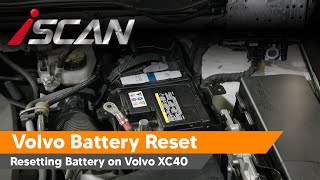
- Replacing a battery without performing a BMS reset. 🎬 Watch how to perform a battery reset on Volvos The car may continue to undercharge the new battery, thinking the old, degraded one is still installed, leading to a premature return of the P0562 code.
Most Likely Causes
- Failing Alternator 🔴 High Probability The alternator is a wear-and-tear component. On the 6-cylinder engines used in the S80, a very common failure point is the one-way decoupler pulley on the alternator. This pulley can seize, which in turn loosens the drive gear, causing the alternator to stop spinning and charging. The internal voltage regulator, which communicates with the CEM via a LIN bus, can also fail.
How to confirm: With the engine running, use a multimeter to measure the voltage across the battery terminals. A healthy alternator should produce between 13.5 and 14.8 volts under normal charging conditions. If the reading is below 13.2V, the alternator is likely faulty. If possible, visually confirm the alternator pulley is spinning with the engine. A seized decoupler pulley is a known issue.
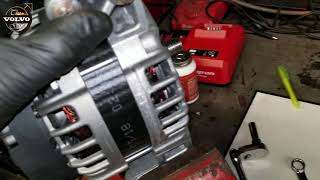
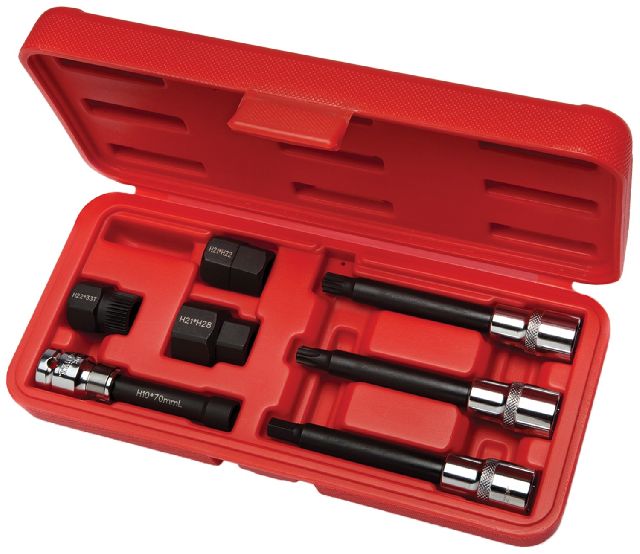
Typical fix: Replace the alternator, often along with the serpentine belt and potentially the decoupler pulley/drive gear assembly 🎬 Watch this step-by-step 3.2L/3.0T alternator replacement walkthrough if sold separately.
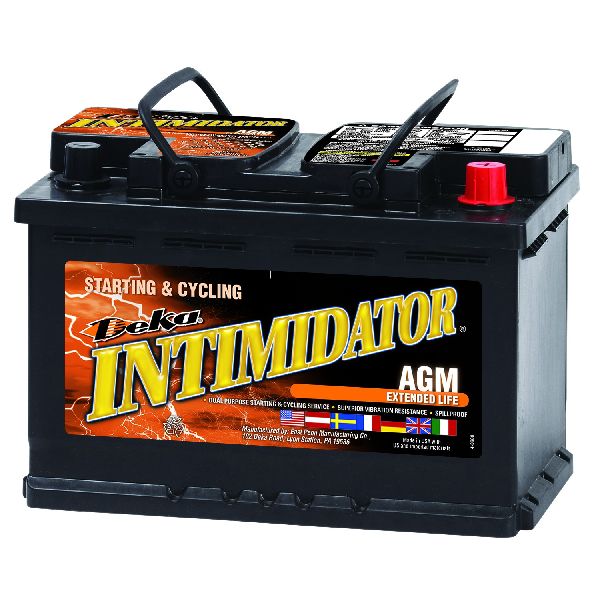
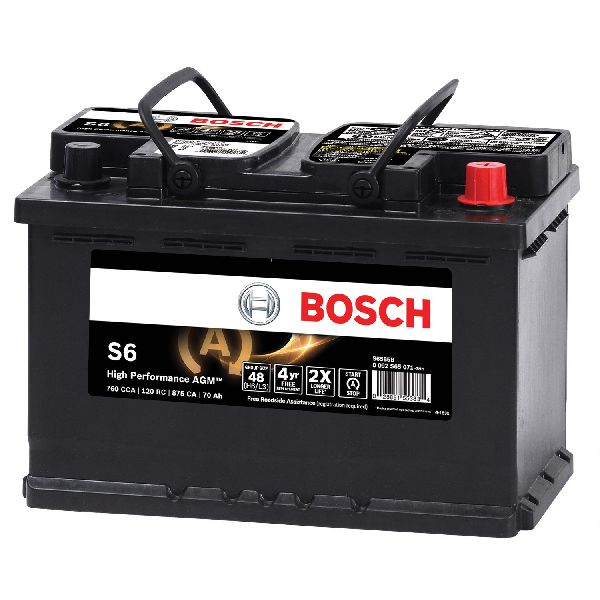
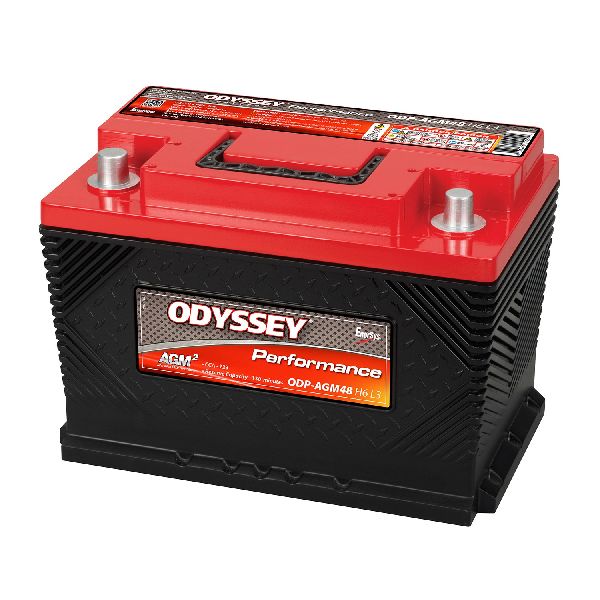
Est. part cost: $300-$700 - Weak or Defective Battery 🟡 Medium Probability Car batteries have a typical lifespan of 3-5 years. These Volvos are equipped with many electronic modules that can be sensitive to a battery that can no longer hold a stable voltage under load. Many models require an AGM (Absorbent Glass Mat) battery, which is more expensive.
How to confirm: With the engine off, measure the battery voltage. A healthy, fully charged battery should read at least 12.4-12.6 volts. If it's lower, try fully charging it. If it cannot hold a charge or fails a load test (where voltage shouldn't drop below 9.6V under load), it needs replacement.
Typical fix: Replace the car battery, ensuring it is the correct type (often AGM). After replacement, perform a Battery Monitoring Sensor (BMS) reset 🎬 See how to code a new battery using a scan tool to inform the car's computer about the new battery.
Est. part cost: $200-$350 - Corroded or Loose Battery Terminals/Cables ⚪ Low Probability Over time, battery acid fumes can cause corrosion (white or greenish powder) on the terminals, creating high resistance that prevents proper current flow. The main chassis ground strap is also a potential point of failure.
How to confirm: Visually inspect the battery terminals, cable ends, and the main chassis ground strap. Ensure they are clean, shiny, and tight. Any corrosion should be cleaned off with a wire brush. Check for high resistance between the alternator B+ post and the positive battery terminal.
Typical fix: Clean the battery terminals and cable ends thoroughly. If the cables or ground straps are damaged or frayed, they should be replaced.
Est. part cost: $10-$75
Rare But Worth Checking
- Slipping or Worn Serpentine Belt: If the belt that drives the alternator is loose, glazed, or contaminated with oil, it can slip on the pulley, preventing the alternator from spinning fast enough to generate adequate voltage, especially under electrical load.
- Faulty Ground Strap: The main ground cable from the engine to the chassis can corrode or break. This creates high resistance in the charging circuit and can cause a wide range of electrical issues and voltage drops.
- Parasitic Drain: A module or component may not be shutting down correctly when the car is off, slowly draining the battery and causing a low voltage state on the next startup. A quiescent current draw should not exceed ~25mA after the vehicle has been locked and allowed to sleep for 20-30 minutes.
- Faulty Central Electronic Module (CEM): In very rare cases, the CEM itself can fail. It plays a role in managing the charging system, and an internal fault could theoretically lead to a P0562 code even with a good battery and alternator.
Diagnosis Steps
- Scan for any other trouble codes. Address other codes first if they are present.
- With the engine off, use a multimeter to check the battery's static voltage. It should be 12.4V or higher. If low, charge the battery and re-test. A load test is recommended.
- Visually inspect the battery terminals, positive and negative cables, and the main engine/chassis ground straps for corrosion, damage, or looseness. Clean and tighten as needed.
- Start the engine. Check that the alternator pulley is spinning and the serpentine belt is in good condition and properly tensioned.
- Measure the voltage at the battery terminals with the engine running. The reading should be between 13.5V and 14.8V. If the voltage is below 13.5V, the alternator is likely failing or not being driven correctly.
- If the voltage is stable, turn on all heavy electrical loads (headlights, A/C on high, rear defroster). The voltage should remain stable and not drop significantly below 13.0V. A large drop indicates a weak alternator.
- If the battery and alternator test good, check for a parasitic drain using a multimeter set to measure amps. This can help identify a component that is drawing power when the car is off.
- If a new battery is installed, ensure the Battery Monitoring System (BMS) is reset. This can be done with a Volvo-specific scan tool or by temporarily disconnecting the BMS sensor plug on the negative terminal for ~20 seconds with the ignition in position I.
Parts You'll Likely Need
- Alternator
(OEM #Volvo 36000210 (Bosch AL0849X) or 30644805 for 3.2L/3.0T engines)— This is the most frequent cause of P0562, either due to internal failure or, very commonly on this platform, failure of the external one-way clutch pulley.
Trusted brands: Bosch, Valeo, Denso
OEM price range: $600-$900
Aftermarket price range: $300-$700 - Battery — An old battery that can no longer hold a proper charge is the second most common cause. An AGM battery is often required.
Trusted brands: Interstate (AGM), DieHard (AGM), Bosch (AGM)
OEM price range: $250-$400
Aftermarket price range: $200-$350
Technical Service Bulletins (TSBs) & Recalls
- TJ 26745.13.8 - This Technical Journal provides updated guidelines for battery checking and charging on P3 platform vehicles, emphasizing the role of the Battery Monitoring Sensor (BMS) and the specific requirements for charging AGM batteries.
Platform-Specific Known Issues
- Alternator One-Way Clutch Failure: On the 3.2L and T6 engines, the alternator is driven via a special one-way clutch pulley and a drive gear assembly. The clutch is known to seize, which can cause the drive gear bolt to back out, resulting in the alternator not spinning at all. An owner on VolvoForums reported replacing a remanufactured alternator only to find the no-charge issue persisted because the underlying drive gear mechanism was the problem.
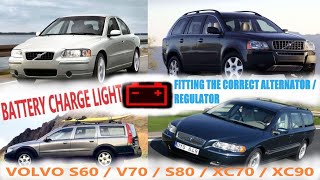
- Incorrect Voltage Regulator: During a mid-cycle refresh, Volvo changed the design of the voltage regulator. Using an alternator with the wrong regulator (e.g., an early style on a later car) can cause a persistent 'Charge Fault' warning light even if the alternator is producing the correct voltage, as the CEM cannot communicate with it properly.
Mechanic-Grade Diagnostic Values
- Quiescent Current Draw (Parasitic Drain) — expected: < 25 mA. Failure: A reading significantly higher than 25 mA after the vehicle has been locked and in sleep mode for at least 30 minutes indicates a parasitic drain.
- LIN Bus Commanded Voltage — expected: Varies from ~12.3V to ~15.5V. Failure: A static voltage that never changes, or a complete loss of signal (stuck at 0V or 12V), may indicate a fault. However, low voltage (e.g., 12.5V) is not necessarily a fault, as it could be a fuel-saving mode commanded by the CEM. Diagnosis requires a scan tool like VIDA to see the commanded vs. actual voltage.
- Alternator Charging Voltage (Engine Running, No Load) — expected: 13.5V - 14.8V (typically ~14.4V in charge recovery mode). Failure: Consistently below 13.2V when the battery is known to be discharged.
- Battery Static Voltage (Engine Off) — expected: 12.4V - 12.6V. Failure: Below 12.4V indicates a discharged or failing battery.
Hidden / Shadow Codes Worth Checking
- ECM-U012087: Lost Communication With Alternator Control Module - Bus Signal/Message Failures - Missing Message. This code indicates the Engine Control Module (ECM) is not receiving a signal from the Alternator Control Module (ACM) over the LIN bus. (see via This is a Volvo-specific DTC best read with a VIDA/DICE tool or an advanced scanner capable of reading manufacturer-specific codes.)
Scan Tool Commands That Help
- Volvo VIDA: CEM > Advanced > Read quiescent current average — To diagnose a suspected parasitic drain without using a multimeter. VIDA can read the value stored by the Battery Monitoring Sensor (BMS) over the last 10 hours of sleep time.
- Volvo VIDA: Diagnostics > Vehicle Communication > CEM > Parameters > Charging System — To monitor the LIN bus commanded voltage vs. the actual alternator output voltage in real-time. This is critical for determining if a low voltage reading is intentional (commanded by the CEM) or the result of a faulty alternator/regulator.
- Volvo VIDA: Vehicle Profile > Software > CEM Reload — In rare cases of persistent, unexplained electrical faults after all hardware has been tested. A CEM reload can sometimes resolve software glitches that may contribute to false codes, but this should be a last resort.
Wiring & Ground Locations
- Main Fuse Box (Engine Compartment) — Located in the engine compartment, typically on the driver's side.. Contains the main fuses for the charging system and other critical components. A blown main fuse will cause a total loss of charging.
- Main Fuse Box (Cargo Area) — Located behind the upholstery on the left-hand side of the trunk/cargo area.. Contains fuses for various electronic modules. A fault here can cause parasitic drains or communication issues.
- Main Chassis Ground — A large cable running from the battery's negative terminal to a point on the chassis, often near the strut tower or inner fender.. A poor chassis ground creates high resistance for the entire electrical system, causing voltage drops and preventing the battery from charging correctly.
- Engine-to-Chassis Ground Strap — A braided or solid cable connecting the engine block to the vehicle's frame/chassis. Its exact location can vary by engine, but it's typically low on the engine block.. The alternator is grounded through the engine block. If this strap is corroded or broken, the alternator has no return path for its current, leading to a no-charge condition.
Real Owner Repair Stories
- Matthew's Volvo Site user (2008 Volvo S80 3.2L) — "Charging System Failure" message, battery not charging.
❌ Tried (didn't work) Replacing the alternator with a remanufactured unit.
✅ What actually fixed it The alternator drive gear mechanism had failed. The one-way clutch on the original alternator seized, which caused the bolt holding the drive gear to back out. When the new alternator was installed, the drive gear was not properly engaged and tightened, so the alternator was not being spun by the engine. The final fix was to correctly install and torque the drive gear assembly onto the new alternator.
OEM Part Supersession History
30644805→36000210, 36012382— Part revision and consolidation. Different amperage ratings (150A, 180A) exist for different engine and trim levels.
Heads up: Using an alternator with a different amperage rating or a regulator with a different communication protocol than the original can cause persistent charging faults. Always verify the correct part number for the specific VIN using a Volvo parts catalog.
Model Year Variations Within This Range
- 2007-2010: The 4.4L V8 engine was available and has a unique alternator and drive setup compared to the inline-6 engines. The V8 was discontinued after the 2010 model year.
- 2011+: The base 3.2L inline-6 engine received a minor power increase (from 235 hp to 240 hp). The T6 engine power also increased. While not a direct cause for P0562, software for the CEM and engine management was updated, which could affect diagnostic strategies.
- 2014-2016: A significant facelift occurred in 2014, introducing a new digital instrument cluster and updated infotainment (Sensus). This increases the number of sensitive electronic modules that can be affected by low voltage.
Diagnostic Flowchart
Other Known Issues on This Vehicle
Issues unrelated to this code that are worth knowing about as an owner of this generation:
- Power Steering Pump Whine/Failure 🟠 Medium — Common across P3 models, especially with the 3.2L and V8 engines. Often caused by a clogged internal filter in the power steering reservoir, not the pump itself.
- 3.2L SI6 Engine Oil Consumption 🔴 High — Some of the normally aspirated 3.2L inline-six engines can develop high oil consumption due to piston ring issues. This is a well-documented problem in owner forums.
- Transmission Shift Quality (TF-80SC) 🟠 Medium — The Aisin TF-80SC automatic transmission can develop harsh shifting, flares, or hesitation, particularly when warm. Often attributed to fluid degradation or valve body wear. Regular fluid changes are critical.
- Alternator Drive Gear / One-Way Clutch Failure 🔴 High — Specifically on the 6-cylinder engines, the one-way clutch on the alternator can seize. This can cause the alternator's drive gear to loosen and stop spinning, resulting in a no-charge condition even if the alternator itself is functional.
Used vs. New Parts: Buying Guide for This Vehicle
When a used part is the smart pick: A used OEM alternator from a low-mileage, rear-ended donor vehicle can be a cost-effective option, especially if the labor to replace it is low (DIY). The primary failure points are often the bearings or regulator, so a used unit is a gamble on its remaining lifespan.
Donor-vehicle mileage cap: roughly under 80000 miles for the part to have meaningful remaining life.
What to inspect on the donor part:
- Check for a clean, corrosion-free housing.
- Ensure the pulley spins freely and smoothly by hand with no grinding or roughness.
- Verify the part number on the donor alternator matches the required OEM number for your vehicle.
- Ask the dismantler for the donor vehicle's mileage and if it comes with a short warranty (e.g., 30-90 days).
OEM-only on this vehicle (don't cheap out):
- Central Electronic Module (CEM)
Aftermarket brands forum-validated for this vehicle:
- Bosch (often the OEM supplier)
- Denso
- Valeo
Brands owners have reported issues with on this vehicle:
- Unknown, no-name brands from online marketplaces. These often have high failure rates, use inferior internal components, and may not have the correct LIN bus communication protocol, leading to persistent codes even if they produce voltage.
Real Owner Stories
Aggregated from forums and TSBs cited above. Mileages and costs reflect what owners reported in those sources.
2008 Volvo S80 3.2L
Symptoms: The owner experienced a no-charge issue. After replacing the alternator with a remanufactured unit, the charging failure persisted.
What fixed it: The underlying drive gear mechanism/one-way clutch pulley assembly was found to be the actual cause of the failure, preventing the alternator from spinning.
Source hint: Matthew's Volvo Site: 2008 S80 3.2 Alternator Drive Failure
2007 Volvo S80 V8
Symptoms: Instrument cluster displayed 'charging system failure' message.
What fixed it: Diagnosis of the charging system components, specifically looking for failures in the alternator or battery common to the V8 and 3.2L P3 architecture.
Source hint: VolvoForums: 2007 S80 V8 'charging system failure'
Related OBD-II Codes
Frequently Asked Questions
My 2007 S80 V8 is showing 'charging system failure' but the alternator seems new. What else could it be?
Does Volvo have specific guidelines for testing the battery on my P3 platform S80?
I replaced my alternator but now I have a persistent 'Charge Fault' light. Did I get a bad part?
Do I need to do anything special after installing a new battery in my S80?
What voltage should I see at the battery while my S80 engine is running?
Helpful Videos
Used OEM Parts in Stock


New Aftermarket Parts Available


The information in this article is provided for general reference and educational purposes only. Vehicle specifications, procedures, and part compatibility can vary by production date, trim level, and region. Always consult your vehicle's factory service manual and verify part numbers before purchasing or performing repairs. Safety-critical components such as airbags, seat belts, and braking systems should be installed by a qualified professional.
- Volvo S80:
- 🎬 Helpful Videos
- 🛍️ Shop This Part
- What's Unique About the 2007-2016 Volvo S80
- Symptoms You May Notice
- Most Likely Causes
- Rare But Worth Checking
- Diagnosis Steps
- Parts You'll Likely Need
- Technical Service Bulletins (TSBs) & Recalls
- Platform-Specific Known Issues
- Mechanic-Grade Diagnostic Values
- Hidden / Shadow Codes Worth Checking
- Scan Tool Commands That Help
- Wiring & Ground Locations
- Real Owner Repair Stories
- OEM Part Supersession History
- Model Year Variations Within This Range
- Diagnostic Flowchart
- Other Known Issues on This Vehicle
- Used vs. New Parts: Buying Guide for This Vehicle
- Real Owner Stories
- 2008 Volvo S80 3.2L
- 2007 Volvo S80 V8
- Related OBD-II Codes
- Frequently Asked Questions
- 🎟️ Get 5% Off