

P0562 on 2021 Ram 1500: System Voltage Low Causes and Fixes
On a 2021 Ram 1500, P0562 usually points to a failing battery or a faulty alternator. Owners report premature battery failure is common, so start by load-testing the battery. If the truck has the eTorque system, the alternator (MGU) is a more complex and expensive repair. A weak battery can cause a cascade of other electronic error codes.
- The most likely cause of P0562 on a 2021 Ram 1500 is a weak battery, which is known to fail prematurely on this model.
- Always perform a load test on the battery; a simple voltage check is not sufficient for diagnosis.
- If the truck has the eTorque engine, the alternator (MGU) is a known failure point that is significantly more expensive to replace than a standard alternator.
- A low voltage condition can cause a cascade of other electronic error codes; resolving the P0562 issue will likely clear the others.
- Check battery terminals and ground connections for tightness and corrosion before replacing any parts.
What's Unique About the 2021-2021 Ram 1500

For the 2021 Ram 1500, especially models with the eTorque mild-hybrid system, the charging system is more complex than a traditional setup. The eTorque system replaces the conventional alternator with a Motor Generator Unit (MGU), which is a more sophisticated and expensive component responsible for both charging the 12V battery and assisting the engine. Owner complaints and forum discussions for this model year frequently mention premature battery failures and issues with the MGU, including whining noises and backordered parts, making these primary areas to investigate for P0562. Furthermore, these trucks use an Intelligent Battery Sensor (IBS) to monitor the battery's state, and a reset procedure is recommended after battery replacement to ensure proper charging.
Diagnostic Flowchart
Tap your situation to follow the diagnostic path that matches what you're seeing on this vehicle.
Symptoms You May Notice
- Check Engine Light is on
- Battery warning light is on
- Slow or no-start condition, clicking from the starter
- Dimming or flickering interior and exterior lights
- Engine stalling, especially at idle or when shifting into gear
- Erratic behavior from electronic components (radio, windows, gauges)
- Warning messages on the dash, such as "Service Electronic Stability Control"
- Reduced engine performance or vehicle entering a 'limp mode'
- Replacing the alternator when only the battery is bad. Always load test the battery first, as a bad battery can overwork and damage a healthy alternator.
- Replacing the battery without checking for a parasitic drain. If a module is draining power overnight, a new battery will also be drained and eventually fail.
- Chasing individual electronic module codes (U-codes) before addressing the low voltage condition. Low voltage is a common root cause for a flood of communication errors.
Most Likely Causes

- Failing or Weak Battery 🔴 High Probability Numerous owner reports on forums for the 2021 model year indicate that the factory-installed AGM batteries have a short lifespan, often failing within 1-3 years. The complex electronics on modern trucks place a high demand on the battery.
How to confirm: Use a multimeter to check the battery voltage at rest (should be ~12.6V). Then, perform a load test using a dedicated battery tester. Many auto parts stores offer this service for free. A battery can show good voltage but fail under a load, which is a very common scenario reported by owners.
Typical fix: Replace the battery. The common size is a Group H7 or H8/94R AGM battery. After installation, it is recommended to perform a Battery Management System (BMS) / Intelligent Battery Sensor (IBS) reset. This can sometimes be done by leaving the negative terminal disconnected for 15+ minutes, or more reliably with a capable scan tool like AlfaOBD.
Est. part cost: $200-$400 - Faulty Alternator or MGU (eTorque) 🟡 Medium Probability For eTorque models, the MGU is a known point of failure, with owners reporting whining noises preceding failure and difficulty sourcing replacements. Standard models can also experience alternator failure, though it's less unique to the platform.
How to confirm: With the engine running, use a multimeter to measure the voltage at the battery terminals. A healthy charging system should read between 13.7 and 14.7 volts. If the voltage is low (below 13.5V), doesn't increase with RPM, or fluctuates wildly, the alternator/MGU is likely faulty.
Typical fix: Replace the alternator or MGU. Note that replacing an MGU on an eTorque model is a more involved repair and may require programming at a dealership. 🎬 See how to perform MGU programming on eTorque models.
Est. part cost: $800-$1600+ - Loose or Corroded Battery Terminals/Cables 🟡 Medium Probability
How to confirm: Visually inspect the battery terminals for white or blue-green corrosion. Physically try to wiggle the cable clamps on the battery posts; they should not move at all. Follow the main ground cable from the battery to the chassis and engine block and ensure the connections are clean and tight. Forum users have noted several ground points, including a key firewall ground stud, that can loosen.
Typical fix: Disconnect the battery (negative first), clean the terminals and cable ends with a wire brush and a baking soda/water solution, and re-secure them tightly. Apply dielectric grease to prevent future corrosion. Check and tighten chassis grounds.
Est. part cost: $0-$20
Rare But Worth Checking
- Parasitic Battery Drain: Some modern Rams have been known to have issues with modules not going to sleep properly, causing a slow drain on the battery when the truck is off. This can be diagnosed using a multimeter in amperage mode 🎬 Watch: The easiest way to test for parasitic battery draw. in series with the negative battery cable. A normal draw after all modules are asleep (wait up to an hour) should be under 50mA. Some owners have traced drains to the radio head unit or aftermarket accessories.
- Faulty Powertrain Control Module (PCM): This is a very rare cause. The PCM itself can fail and misinterpret the voltage, but all other possibilities (battery, alternator, wiring) should be exhausted before considering PCM replacement.
- Faulty Intelligent Battery Sensor (IBS): The IBS is a small module on the negative battery terminal that reports voltage, current, and temperature to the BCM/PCM. If it fails, it can send incorrect data, leading to improper charging and a P0562 code. This is uncommon but should be considered if the battery and alternator test good.
Diagnosis Steps

- Read the codes with an OBD-II scanner. Note any other codes present, especially U-codes (communication faults), as they often accompany P0562.
- Visually inspect the battery terminals, battery cables, and main ground connections (on the chassis and engine block) for corrosion, damage, or looseness. Clean and tighten as necessary.
- With the engine off, measure the battery voltage using a multimeter. A fully charged, healthy battery should read approximately 12.6 volts.
- Perform a load test on the battery. This is the most crucial step to rule out a weak battery that may still show acceptable static voltage.
- If the battery tests good, start the engine. Measure the voltage at the battery terminals again. It should be between 13.7 and 14.7 volts.
- If voltage is below 13.7V with the engine running, turn on accessories like headlights and the HVAC fan to increase the electrical load. If the voltage drops further, the alternator (or MGU) is likely faulty.
- If the charging system and battery test good, check for a parasitic draw using a multimeter set to measure amps. This will identify if a component is draining the battery while the truck is off.
- Inspect the Intelligent Battery Sensor (IBS) on the negative terminal for damage or loose connections.
Parts You'll Likely Need
- Battery — Based on extensive owner feedback, the factory AGM battery is the most common failure point causing low voltage conditions on this model year.
Trusted brands: Mopar, Optima, Odyssey, DieHard, Duracell
OEM price range: $250-$400
Aftermarket price range: $200-$350 - Alternator / MGU (eTorque)
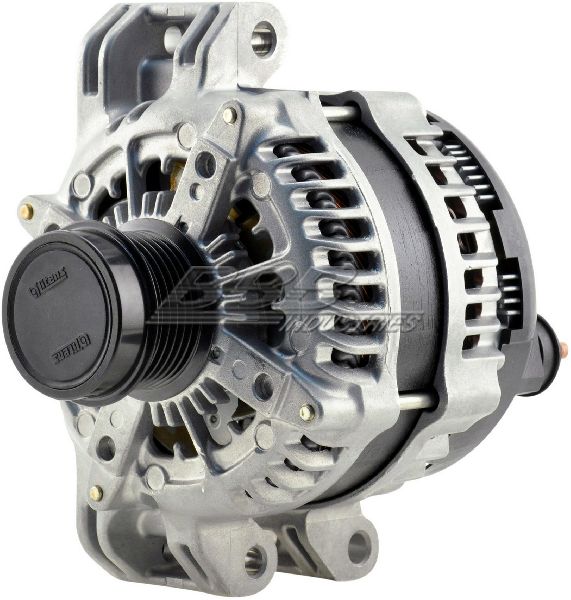
(OEM #68623194AC (5.7L eTorque MGU, supersedes multiple previous numbers))— If the battery is healthy, the next most likely cause is a failed charging unit. For eTorque models, the MGU is a known issue.
Trusted brands: Mopar
OEM price range: $1200-$1600+
Aftermarket price range: N/A
Related Codes That Often Appear With This One
- U0140-00 — Lost Communication With Body Control Module. As seen in TSB #08-037-21, low system voltage can disrupt communication between various electronic modules on the CAN bus network.
- U0415-00 — Implausible Data Received From ABS. Similar to other U-codes, the ABS module is sensitive to voltage and can set communication faults when system voltage is unstable.
- U0102-00 — Lost Communication With Transfer Case Control Module. This is another common communication code listed in TSB #08-037-21 that points to an underlying electrical system fault.
Technical Service Bulletins (TSBs) & Recalls

- 08-037-21: Flash: Hybrid Control Processor (HCP) Updates. Applies to 2021 Ram 1500 with 3.6L eTorque engine. Lists P0562 as one of many DTCs that can be addressed with a software update. This highlights how a voltage issue can trigger numerous other faults and may have a software component.
Platform-Specific Known Issues
- A known Technical Service Bulletin (TSB #08-037-21) for 2021 models with the 3.6L eTorque engine involves a software update for the Hybrid Control Processor (HCP). It lists P0562 along with a host of communication (U-codes), indicating that a software glitch can contribute to or be triggered by a low voltage event.
- Owners of eTorque models report a high failure rate for the Motor Generator Unit (MGU), often preceded by a whining noise, with parts being expensive and on backorder.
- Premature failure of the factory AGM battery is a very common complaint. Many owners report needing a replacement within 1-3 years, far shorter than the expected lifespan.
Mechanic-Grade Diagnostic Values
- Battery Voltage, Key-Off (Static) — expected: 12.4V - 12.7V. Failure: Below 12.4V indicates a discharged or weak battery.
- Charging System Voltage, Engine Running at Idle — expected: 13.7V - 14.7V. Failure: Below 13.5V indicates a fault in the alternator/MGU or wiring.
- Charging System Voltage, Engine Running with Full Load (lights, A/C, etc.) — expected: Should remain stable, above 13.5V. Failure: Significant drop below 13.5V points to a failing alternator/MGU.
- Parasitic Draw (after all modules asleep, ~30-60 min) — expected: < 50 milliamperes (0.05A). Failure: A reading higher than 50mA indicates a module or component is not shutting down and is draining the battery.
- Battery Terminal Connection Resistance — expected: < 0.5 ohms. Failure: Higher resistance indicates corrosion or a poor connection that needs to be cleaned and tightened.
- Intelligent Battery Sensor (IBS) Nut Torque — expected: 44 in-lbs. Failure: An improperly torqued nut can cause poor connection and faulty readings from the IBS.
Scan Tool Commands That Help
- AlfaOBD / wiTECH: Battery Replacement — After installing a new battery, this function resets the learned data in the Body Control Module (BCM) and Intelligent Battery Sensor (IBS), including the battery's state of health and charge history. This ensures the charging system adapts to the new battery correctly.
- High-End OBD-II Scanners (e.g., iCarsoft, Autel): Live Data Monitoring for 'Battery Voltage' and 'Alternator Output Voltage' — Use this to monitor what the PCM is actually seeing for voltage, both with the engine off and running. This can help differentiate between a true voltage drop and a sensor/reporting issue.
Wiring & Ground Locations
- Main Chassis Ground — On the passenger side inner fender/wheel well, near the alternator. The main negative battery cable connects here.. This is the primary ground point for the entire vehicle's electrical system. Corrosion or looseness here can cause widespread voltage issues and trigger P0562.
- Firewall Ground Stud — A ground stud located on the firewall, which serves as a common ground point for multiple components.. Owners have reported finding this specific ground stud loose, causing intermittent electrical issues and P0562 even after replacing the battery and alternator. It is a critical but often overlooked connection.
- External Power Distribution Center (PDC) — Located in the engine compartment near the battery.. This fuse box contains the main fuses for the alternator and other high-power circuits. A blown fuse or internal corrosion in the PDC can interrupt charging and cause P0562.
- Internal Power Distribution Center — Under the driver's side instrument panel, behind a removable cover.. Contains fuses and relays for various in-cabin electronics. While less likely to be the primary cause of P0562, a fault here could cause a parasitic drain.
- Rear Frame Ground — On the driver's side frame rail, just rearward of the stabilizer link mount.. Provides grounding for rear components. While less likely to cause a primary P0562 charging fault, a bad ground here can cause other electrical issues and U-codes that may appear alongside P0562.
Real Owner Repair Stories
- Forum User Reports (2019+ Ram 1500 (DT)) — P0562 code, flickering lights, intermittent no-start, multiple random warning lights on the dash.
❌ Tried (didn't work) Replacing the battery (sometimes multiple times), Replacing the alternator/MGU
✅ What actually fixed it Finding and tightening a loose main ground connection on the firewall or the main chassis ground on the passenger-side inner fender. The connection appeared tight visually but required a wrench to fully secure, resolving the voltage drop. - YouTube DIY Repair Video (Generic, but applicable to Ram) — P0562, stalling, hard starting, flickering dash lights.
❌ Tried (didn't work) Tightening the battery terminal clamp bolt repeatedly.
✅ What actually fixed it The factory battery terminal end had stretched and would no longer clamp tightly. The fix was to cut off the old terminal end and replace it with a new, bolt-on style terminal, creating a secure connection.
OEM Part Supersession History
Multiple previous part numbers for the 5.7L eTorque MGU→68623194AC— Likely due to design revisions to address high failure rates of the original units, including bearing noise and charging failures.
Model Year Variations Within This Range
- 2020-2021: A recall for some 2020-2021 Ram 1500 5.7L eTorque models required a powertrain control module (PCM) software update to fix an issue that could cause an overly rich fuel mixture and engine stalls, which can be related to electrical system monitoring.
Helpful Videos
Used OEM Parts in Stock


New Aftermarket Parts Available



The information in this article is provided for general reference and educational purposes only. Vehicle specifications, procedures, and part compatibility can vary by production date, trim level, and region. Always consult your vehicle's factory service manual and verify part numbers before purchasing or performing repairs. Safety-critical components such as airbags, seat belts, and braking systems should be installed by a qualified professional.
- Ram 1500:
- 🎬 Helpful Videos
- 🛍️ Shop This Part
- What's Unique About the 2021-2021 Ram 1500
- Diagnostic Flowchart
- Symptoms You May Notice
- Most Likely Causes
- Rare But Worth Checking
- Diagnosis Steps
- Parts You'll Likely Need
- Related Codes That Often Appear With This One
- Technical Service Bulletins (TSBs) & Recalls
- Platform-Specific Known Issues
- Mechanic-Grade Diagnostic Values
- Scan Tool Commands That Help
- Wiring & Ground Locations
- Real Owner Repair Stories
- OEM Part Supersession History
- Model Year Variations Within This Range
- 🎟️ Get 5% Off