

P0562 on 2007-2017 Jeep Compass: Low System Voltage Causes and Fixes
On a 2007-2017 Jeep Compass, code P0562 almost always means the alternator is failing or the battery is dead. Before replacing any parts, test the battery's health and then check the alternator's voltage output with the engine running. A new alternator costs around $150-$400, while a new battery is about $150-$300.
- P0562 on a 2007-2017 Jeep Compass indicates low electrical system voltage, most often caused by a failing alternator.
- Do not replace the battery without first testing the alternator's output voltage with the engine running; it should be between 13.5V and 14.8V.
- Symptoms include dimming/flickering lights, stalling, difficulty starting, and erratic behavior from electronics.
- Always check for simple fixes first, such as loose or corroded battery terminals and ground connections, before replacing expensive components.
- Driving with this code is risky as the vehicle could stall at any time and may not restart.
What's Unique About the 2007-2017 Jeep Compass
For the first-generation Jeep Compass (and its platform mates, the Patriot and Caliber), the electrical system is relatively straightforward. However, like many Chrysler products of this era, the charging system is sensitive to weak components. The voltage regulator is integrated into the PCM, not the alternator, meaning the PCM directly commands the alternator's charging rate. The code P0562 is most frequently triggered by the failure of the alternator itself, which can no longer meet the PCM's voltage request. While battery and connection issues are possible, a failing alternator is the primary suspect on this platform, often causing a cascade of electrical gremlins before it fails completely.
Symptoms You May Notice
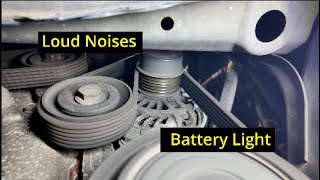
- Check Engine Light and/or battery warning light is on. 🎬 Watch: Troubleshooting a Jeep Compass battery light issue
- Electronic Throttle Control (ETC) or 'lightning bolt' warning light may illuminate.
- Dimming or flickering headlights and dashboard lights, especially at idle.
- Engine stalls unexpectedly, sometimes when shifting into gear or stopping.
- Difficulty starting the engine, slow cranking, or a no-start condition.
- Power windows, radio, or other accessories work erratically or not at all.
- A whining or grinding noise from the front of the engine, indicating a failing alternator bearing.
- Poor or harsh shifting in automatic transmissions.
- Replacing the battery when the alternator is actually the cause. A bad alternator will quickly ruin a new battery. Always test the charging system before replacing the battery.
Most Likely Causes
- Failing Alternator 🔴 High Probability On the Jeep Compass and its platform mates, the alternator is cited as the cause in the vast majority of P0562 cases, with some mechanics stating it's the issue '9 out of 10 times'. The internal components wear out, making it unable to produce sufficient voltage to keep the system charged.
How to confirm: With the engine running, use a multimeter to measure the voltage across the battery terminals. A healthy charging system should read between 13.5 and 14.8 volts. If the reading is below 13.2V, or if it drops significantly when you turn on headlights and A/C, the alternator is likely bad. Many auto parts stores will test an alternator for free off the vehicle.
Typical fix: Replace the alternator.
Est. part cost: $150-$400 - Weak or Dead Battery 🟡 Medium Probability Batteries have a finite lifespan of 3-5 years. An old battery that can no longer hold a full charge, or one with an internal short, will cause low system voltage, especially during engine cranking.
How to confirm: With the engine off, measure the battery voltage. A reading below 12.4 volts indicates a discharged or weak battery. Most auto parts stores can perform a load test, which is crucial as a battery can show good voltage but still fail under load.
Typical fix: Replace the battery.
Est. part cost: $150-$300 - Loose or Corroded Battery Terminals/Cables 🟡 Medium Probability Corrosion (white or green crust) on the battery terminals or loose connections create resistance, which prevents the alternator from properly charging the battery and causes voltage drops. This is a common point of failure due to simple lack of maintenance.
How to confirm: Visually inspect the battery terminals and cable ends for corrosion or looseness. Wiggle the terminals to ensure they are tight. Also, check the main ground strap from the battery to the chassis and the engine block for corrosion and tightness.
Typical fix: Disconnect the battery (negative first), clean the terminals and cable ends with a wire brush and baking soda solution, and re-tighten securely. Replace corroded cable ends if necessary.
Est. part cost: $5-$30 - Worn or Slipping Serpentine Belt ⚪ Low Probability
How to confirm: Visually inspect the serpentine belt for cracks, fraying, or a glazed appearance. With the engine off, check the belt for proper tension. Listen for a squealing sound when the engine is running, especially when electrical loads are high.
Typical fix: Replace the serpentine belt and, if necessary, the belt tensioner.
Est. part cost: $20-$80
Rare But Worth Checking
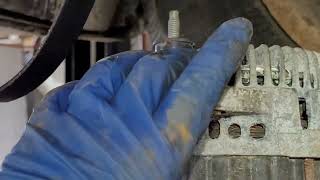
- Faulty Totally Integrated Power Module (TIPM): The TIPM (the main fuse/relay box) is a known issue on many 2007-2014 Chrysler/Jeep/Dodge platforms. An internal failure can cause a parasitic drain that kills the battery or disrupt charging system commands, triggering a P0562 code. 🎬 Watch: How to diagnose and fix a P0562 low voltage code This is difficult to diagnose and should be considered after ruling out the alternator and battery.
- Corroded Alternator Power Wire: The main power wire running from the alternator's output post to the battery can corrode, especially at the connector on the alternator. This creates high resistance and prevents the full charging voltage from reaching the battery. This should be inspected when replacing the alternator.
- Parasitic Electrical Drain: A module or component that doesn't shut off with the key can slowly drain the battery overnight. If the battery is consistently dead in the morning but tests good, a parasitic drain test is needed.
Diagnosis Steps
- Read the Codes: Use an OBD-II scanner to confirm P0562 is the primary code. Note any other codes, especially 'U' (communication) codes, which often accompany low voltage situations.
- Inspect Battery Terminals: Visually check the battery terminals and cables for looseness, damage, or corrosion. Clean and tighten as needed.
- Test Battery Voltage (Engine Off): Use a multimeter to check the battery's static voltage. It should be approximately 12.6 volts. If it's below 12.4V, charge the battery and have it load-tested at an auto parts store.
- Test Charging System Voltage (Engine Running): Start the engine. Measure the voltage at the battery terminals. It should be between 13.5V and 14.8V.
- Load Test the Charging System: With the engine still running, turn on the headlights, A/C blower on high, and rear defroster. The voltage should remain above 13.2V. If it drops significantly, the alternator is failing.
- Inspect the Serpentine Belt: Check the condition and tension of the belt driving the alternator. A loose or worn belt can cause undercharging.
- Check Main Grounds and Power Wires: Inspect the main ground cable from the battery to the chassis and any engine-to-chassis ground straps. Ensure they are clean, tight, and free of corrosion. Also inspect the main power wire from the alternator for corrosion or damage.
- If all else fails, consider a parasitic drain test or professional diagnosis of the PCM or TIPM.
Parts You'll Likely Need
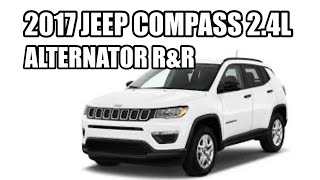
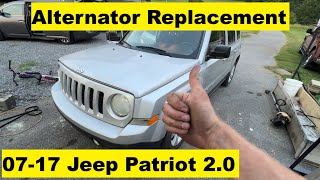
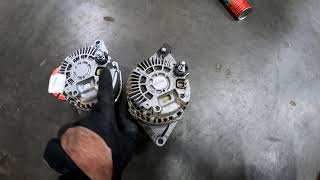
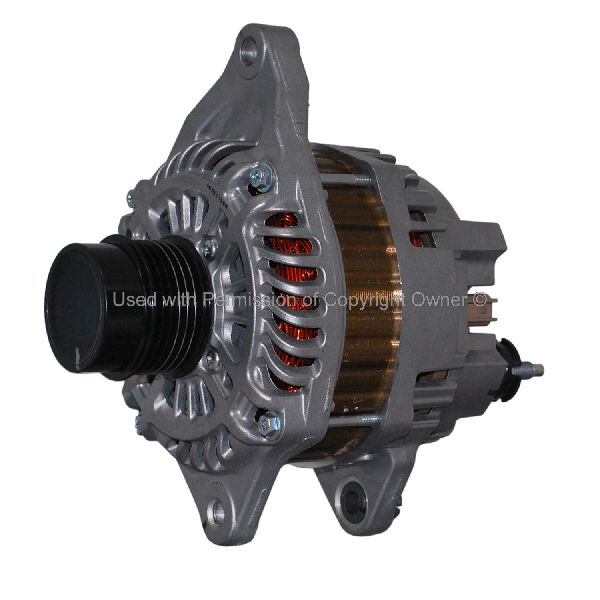
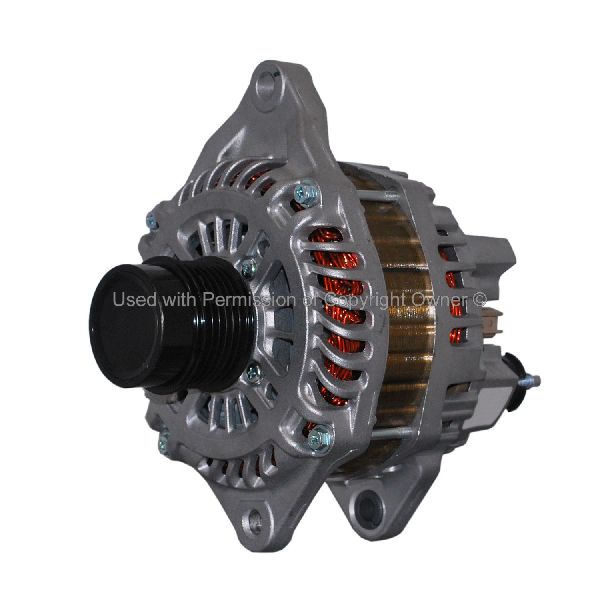
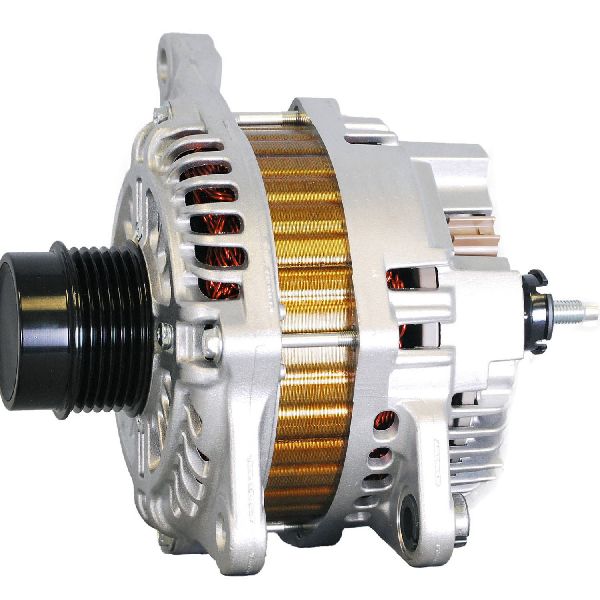
- Alternator
(OEM #04801477AE (For 2.0L/2.4L Engines))— This is the most common failure point for a P0562 code on this vehicle, as it is responsible for generating the vehicle's electrical power while running.
Trusted brands: Mopar, Denso, Bosch, TYC
OEM price range: $300-$500
Aftermarket price range: $150-$400 - Battery
(OEM #BBAH6L400AA (Group 48/H6 is a common size))— An old or weak battery that cannot hold a charge is the second most likely cause of low system voltage.
Trusted brands: Mopar, Interstate, DieHard, Duralast
OEM price range: $200-$300
Aftermarket price range: $150-$250 - Battery Terminal Ends — If the original terminals are heavily corroded, they can create high resistance and must be replaced to ensure a solid connection.
OEM price range: $15-$40
Aftermarket price range: $5-$20
Technical Service Bulletins (TSBs) & Recalls
- While no TSB is directly for P0562, Chrysler Service Bulletin 23-007-17 REV A (Warranty Extension X69) addresses severe front and rear subframe corrosion on 2008-2012 Compass/Patriot models in salt-belt states. While unrelated to the charging system, severe corrosion underneath the vehicle can sometimes compromise important ground connections, indirectly contributing to electrical issues.
- Manufacturer TSB Bulletin #08-111-14 and Bulletin #0801315 note that if battery system DTC P0562 Battery/System Voltage Low is set, normal charging system diagnostics need to be performed.
- Manufacturer TSB Bulletin #S2208000075 identifies P0562 as a code that may be present alongside a Check Engine Light and a no-start condition.
Platform-Specific Known Issues
- A user on www.jeeppatriot.com with a 2014 model experiencing P0562 found the solution was replacing the alternator after confirming the battery was good. This is a typical repair story for the platform.
- On www.compassjeepforum.com, a 2011 Compass owner with P0562 and dimming lights also resolved the issue with a new alternator, highlighting how common this specific failure is.
Mechanic-Grade Diagnostic Values
- Voltage Drop: Alternator B+ Post to Battery Positive Terminal — expected: Less than 0.2 Volts. Failure: A reading over 0.2V indicates high resistance in the main power cable or connections. Some sources allow up to 0.5V, but lower is always better.
- Voltage Drop: Alternator Case to Battery Negative Terminal — expected: Less than 0.2 Volts. Failure: A reading over 0.2V indicates a poor ground connection between the alternator, engine block, and battery.
- Alternator Field Control Circuit Voltage (at alternator connector, engine running, for dual-field systems) — expected: One wire should have steady system voltage (near battery voltage). The other (PCM-controlled) wire will vary based on load.. Failure: If the supply wire has low voltage, check fuses and wiring. If the control wire voltage doesn't change with electrical loads, suspect a wiring or PCM driver issue.
- AC Voltage Leakage (at alternator B+ post) — expected: Less than 0.5 Volts AC. Failure: A reading higher than 0.5V AC indicates failed internal rectifier diodes in the alternator, which will cause undercharging and can damage the battery.
Scan Tool Commands That Help
- Manual Procedure: Alternator Full-Field Test — Use this when the alternator is not charging but you suspect the PCM or wiring may be at fault, not the alternator itself. By disconnecting the field control connector and manually applying power and ground to the alternator's field terminals (with a fused jumper), you bypass the PCM. If the alternator's output voltage rises to maximum (16V+), the alternator is functional and the problem lies in the control circuit (wiring or PCM).
- Manual Procedure: TIPM / System Hard Reset — Use this after replacing a battery, alternator, or TIPM, or to resolve persistent, unexplained electrical glitches. Disconnect both battery cables and hold them together (away from the battery) for 10 minutes. This drains residual power from modules like the TIPM, clearing fault memory and forcing them to re-initialize.
Wiring & Ground Locations
- Connector S173 — This is a large-gauge wire splice/connector located in the harness near the starter motor.. A loose or corroded connection at this point creates high resistance in the main power path between the alternator and the rest of the vehicle. This can cause a significant voltage drop, leading to a P0562 code and charging system failure symptoms, even with a perfectly good alternator. It is often overlooked during diagnosis.
- Main Engine/Transmission Ground — A heavy gauge strap connecting the engine block or transmission case to the vehicle's chassis/frame.. The alternator is grounded through its mounting bracket to the engine block. If the engine's main ground strap to the chassis is corroded or loose, the entire charging circuit's ground path is compromised, causing low voltage and a P0562 code. This should be checked with a voltage drop test.
- Alternator Field Control Connector — The 2-pin electrical connector on the alternator body.. This is where the PCM sends the signal to control the alternator's output. Testing for power, ground, and signal integrity at this connector is critical for determining if a charging failure is due to the alternator itself or a fault in the control circuit (wiring or PCM).
Real Owner Repair Stories
- YouTube Channel 'advancedautodiagnostics' (2011 Jeep Compass) — Battery light on and off, engine surging. Both low voltage and high voltage codes were stored in various modules (PCM, ABS, SRS).
❌ Tried (didn't work) Replacing the alternator three separate times.
✅ What actually fixed it A voltage drop test was performed on the main power circuit. A loose connection was found at a large connector (identified as S173 in the video's wiring diagram) near the starter, causing a voltage drop of nearly 2 volts. Tightening this connection resolved all charging system issues. - An owner reported in NHTSA ODI #11268694 that they experienced the engine RPM raising high before shifting, followed by a check engine light with codes P0700, P0562, and P0750; they changed the battery and throttle body but the issue persisted.
- In NHTSA ODI #11524214, an owner noted that while they suspected a P0563 error, the P0562 code typically leaves the check engine light on in most instances.
When the Usual Fixes Don't Work
- While replacing the alternator is the most common fix for P0562, it is not a guaranteed solution. In a documented case involving a 2011 Jeep Compass, the vehicle continued to have charging faults after three new alternators were installed. The actual root cause was not the alternator, but a high-resistance loose connection in the main power wiring near the starter. This highlights the critical importance of performing a full-circuit voltage drop test before replacing expensive components, as the 'common fix' can lead to repeated, unnecessary repairs.
Model Year Variations Within This Range
- c. 2007-2008: Early models in this generation used a dual-field terminal alternator, where the PCM controls charging by modulating both power and ground to the field coil.
- c. 2008-2017: Chrysler began transitioning to single-field terminal alternators around 2008. These systems are simpler, with the PCM typically controlling only the ground side of the field circuit. Diagnosis differs slightly between the two types.
- 2007-2014: Models in this range are particularly susceptible to failures of the Totally Integrated Power Module (TIPM). While P0562 is not a primary TIPM failure code, a faulty TIPM can cause erratic electrical behavior and parasitic drains that can contribute to or mimic charging system problems.
Diagnostic Flowchart
Other Known Issues on This Vehicle
Issues unrelated to this code that are worth knowing about as an owner of this generation:
- Front and Rear Subframe Corrosion 🔴 High — Very common on vehicles in the salt belt. Can become structurally unsafe. A warranty extension (X69) was issued for 10 years. (Ref: Chrysler Service Bulletin 23-007-17 REV A (Warranty Extension X69))
- CVT Transmission Overheating and Failure 🔴 High — Common, especially on earlier models (2007-2012). Symptoms include whining, shuddering, and loss of power. Failures can occur under 100,000 miles.
- Water Leaks into Cabin 🟠 Medium — Often reported, typically from clogged sunroof drains or bad seals, leading to wet headliners and floorboards.
- Throttle Body Failure 🟠 Medium — Can fail causing the vehicle to enter 'limp mode' with reduced power, which can be a safety hazard.
- Wheel Bearing Failure 🟡 Low — A frequently reported maintenance item. Failure causes a humming noise and can disable ABS/traction control as the speed sensor is integrated into the hub assembly.
Used vs. New Parts: Buying Guide for This Vehicle
When a used part is the smart pick: A used alternator from a reputable auto recycler can be a cost-effective option. It is critical to get one from a lower-mileage donor vehicle and, if possible, have it bench-tested by an auto parts store before installation.
Donor-vehicle mileage cap: roughly under 80000 miles for the part to have meaningful remaining life.
What to inspect on the donor part:
- Check for a clean, corrosion-free body.
- Ensure the pulley spins smoothly by hand with no grinding or excessive noise.
- Inspect the electrical connector and B+ post for damage or corrosion.
- Verify the part number matches your original alternator or is a known compatible unit for your specific year and engine.
OEM-only on this vehicle (don't cheap out):
- Powertrain Control Module (PCM)
Aftermarket brands forum-validated for this vehicle:
- Denso (often the OEM supplier)
- Bosch
- TYC
Brands owners have reported issues with on this vehicle:
- Avoid no-name, unbranded 'white box' parts from online marketplaces, as their internal voltage regulators and diodes are often of poor quality and can fail prematurely or provide unstable voltage.
Real Owner Stories
Aggregated from forums and TSBs cited above. Mileages and costs reflect what owners reported in those sources.
2014 Jeep Compass
Symptoms: Confirmed P0562 code after checking the battery was still in good condition.
What fixed it: Replacing the alternator.
Source hint: vehicle_specific_issues: user on www.jeeppatriot.com with a 2014 model
2011 Jeep Compass
Symptoms: P0562 code accompanied by dimming lights.
What fixed it: Installation of a new alternator.
Source hint: vehicle_specific_issues: www.compassjeepforum.com owner with a 2011 Compass
2007-2017 Jeep Compass
Symptoms: P0562 code and stalling issues.
What fixed it: Alternator replacement (consensus fix among forum members).
Source hint: forum_citations: https://www.myjeepcompass.com/threads/p0562-code-and-stalling.11845/
Related OBD-II Codes
Frequently Asked Questions
Could the subframe corrosion mentioned in Service Bulletin 23-007-17 REV A cause my P0562 code?
My 2011 Compass has dimming lights and a P0562 code; is this a common failure pattern?
Can a failing CVT transmission cause the P0562 code on my Jeep Compass?
Is it true that the alternator is the problem '9 out of 10 times' for this code on the Compass?
Will a bad battery terminal cause my engine to stall unexpectedly?
Helpful Videos
Used OEM Parts in Stock


New Aftermarket Parts Available



The information in this article is provided for general reference and educational purposes only. Vehicle specifications, procedures, and part compatibility can vary by production date, trim level, and region. Always consult your vehicle's factory service manual and verify part numbers before purchasing or performing repairs. Safety-critical components such as airbags, seat belts, and braking systems should be installed by a qualified professional.
- Jeep Compass:
- 🎬 Helpful Videos
- 🛍️ Shop This Part
- What's Unique About the 2007-2017 Jeep Compass
- Symptoms You May Notice
- Most Likely Causes
- Rare But Worth Checking
- Diagnosis Steps
- Parts You'll Likely Need
- Technical Service Bulletins (TSBs) & Recalls
- Platform-Specific Known Issues
- Mechanic-Grade Diagnostic Values
- Scan Tool Commands That Help
- Wiring & Ground Locations
- Real Owner Repair Stories
- When the Usual Fixes Don't Work
- Model Year Variations Within This Range
- Diagnostic Flowchart
- Other Known Issues on This Vehicle
- Used vs. New Parts: Buying Guide for This Vehicle
- Real Owner Stories
- 2014 Jeep Compass
- 2011 Jeep Compass
- 2007-2017 Jeep Compass
- Related OBD-II Codes
- Frequently Asked Questions
- 🎟️ Get 5% Off