

P0562 on 2009-2015 Honda Pilot: Charging System Low Voltage Causes and Fixes
On a 2009-2015 Honda Pilot, code P0562 almost always points to a failing alternator, often contaminated by an oil leak from the VVT solenoid gasket above it. Other likely causes are a weak battery or corroded terminals. Expect to pay $200-$500 for an aftermarket alternator and around 1.5-2.5 hours of labor.
- P0562 on a 2009-2015 Pilot means the electrical system voltage is dangerously low.
- The most likely cause is a failed alternator, followed by an old battery or bad connections.
- Do not drive the vehicle; you risk stalling in traffic or being stranded.
- Diagnosis is simple with a multimeter: check battery voltage with the engine off (~12.6V), then with it on. If the voltage doesn't jump to 13.5V+, the alternator is bad.
- If the alternator and battery are good, check the battery current sensor on the negative terminal, as it's a known issue on Hondas.
What's Unique About the 2009-2015 Honda Pilot

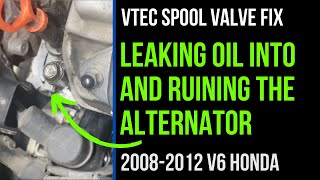
For the second-generation Honda Pilot with the J35Z4 engine, the charging system includes a dual-mode charging system managed by the PCM, which relies on input from the Battery Current Sensor and the Electronic Load Detector (ELD). The Battery Current Sensor, mounted on the negative battery terminal, helps the PCM determine the battery's state of charge, while the ELD (in the under-hood fuse box) reports the total electrical load. A very common issue on this platform is an oil leak from the VVT solenoid gasket (located on the front valve cover) dripping directly onto the alternator, causing premature failure.
Symptoms You May Notice
- Illuminated Check Engine Light
- Illuminated battery or 'CHECK CHARGING SYSTEM' warning on the dashboard
- Dimming or flickering headlights and interior lights
- Difficulty starting the engine, or a no-start condition
- Engine stalling, especially at idle
- Erratic behavior from electrical accessories like the radio or power windows
- Erratic transmission behavior or shifting problems, as the PCM requires stable voltage to manage shifts.
- Replacing the battery when the alternator is the actual cause. If a new battery fixes the problem temporarily but the car dies again after a short time, the alternator is almost certainly the culprit.
- Replacing the alternator without fixing the oil leak from the VVT solenoid gasket. This will lead to repeat failure of the new alternator.
Most Likely Causes

- Failing Alternator (Often due to Oil Contamination) 🔴 High Probability The alternator is a wear-and-tear component, but its failure is often accelerated by a common oil leak. The VVT (spool valve) solenoid gasket on the front valve cover, located directly above the alternator, is known to leak oil. This oil drips into the alternator, contaminating the brushes and internal components, leading to failure. Honda TSB 20-023 addresses this specific issue.
How to confirm: With the engine running, use a multimeter to measure the DC voltage across the battery terminals. A healthy alternator should produce 13.5 to 14.7 volts. If the voltage is below 13 volts or near the battery's static voltage (around 12.6V), the alternator is likely bad. Visually inspect the alternator for signs of oil saturation.
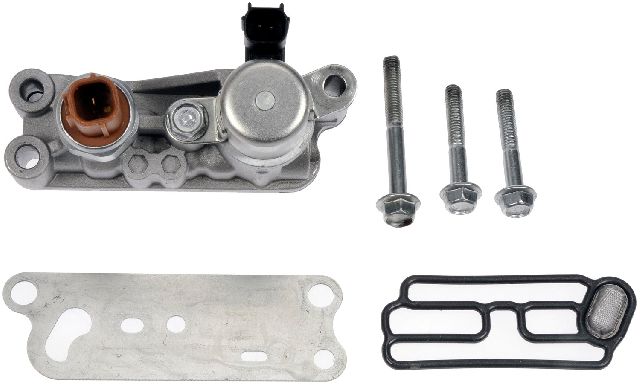
Typical fix: Replace the alternator and the serpentine belt. CRITICAL: At the same time, replace the VVT solenoid gaskets (Part numbers 15845-R70-A01 and 15815-R70-A01) to prevent the new alternator from failing prematurely. 🎬 Watch: How to replace the VVT solenoid gaskets step-by-step.
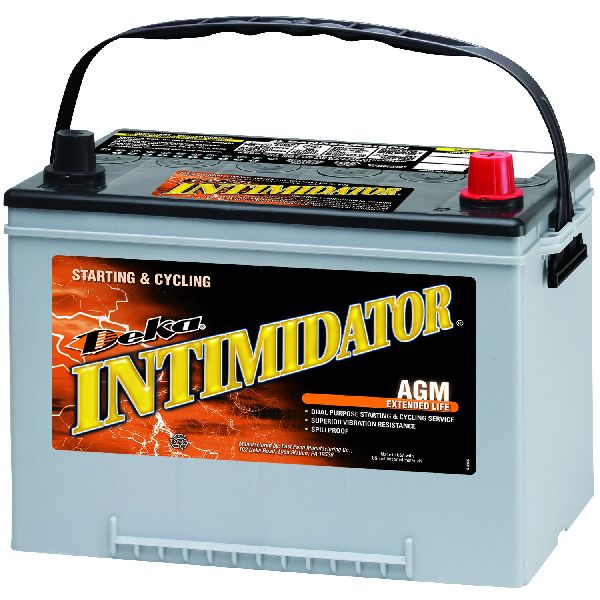
Est. part cost: $200-$500 for alternator, $20-$40 for gaskets. - Weak or Dead Battery 🟡 Medium Probability Car batteries have a finite lifespan of 3-5 years. An old battery may not be able to hold a sufficient charge, causing system voltage to drop even with a functioning alternator. Honda's dual-mode charging system can be sensitive to a battery's state of health.
How to confirm: With the engine off, measure the battery voltage with a multimeter. A fully charged battery should read approximately 12.6 volts. A reading below 12.2 volts indicates a discharged or weak battery. Most auto parts stores can perform a load test for free to confirm the battery's health.
Typical fix: Replace the battery.
Est. part cost: $150-$250 - Loose or Corroded Battery Terminals/Cables 🟡 Medium Probability
How to confirm: Visually inspect the battery terminals for white or greenish corrosion. Check that both the positive and negative cable clamps are tight and cannot be moved by hand. Also inspect the main ground connection to the chassis and the engine block for tightness and corrosion.
Typical fix: Disconnect the battery (negative first) and clean the terminals and cable clamps with a wire brush and a baking soda/water solution. Reconnect securely (positive first).
Est. part cost: $1-$10 - Faulty Battery Current Sensor ⚪ Low Probability Honda issued TSB 16-026 for other models of the same era for a faulty battery sensor causing charging system warnings. This sensor can fail and send incorrect information to the PCM, causing it to undercharge the battery. This can trigger P0562, but often presents with code P154A as well.
How to confirm: Diagnosis can be complex as the sensor communicates with the PCM via a LIN bus signal. A scan tool may show a specific code for the sensor, like P154A. It's typically diagnosed after confirming the alternator and battery are good. Testing involves checking for battery voltage at pin 2 and a square wave signal on pin 1 of the sensor connector.
Typical fix: Replace the battery current sensor, which is located on the negative battery terminal.
Est. part cost: $60-$120
Rare But Worth Checking
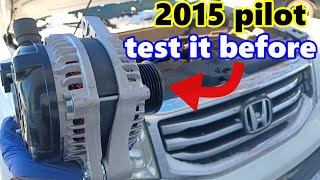
- Blown Fuse: The charging system has a large multi-fuse (often 100A or higher) in the under-hood fuse box. While rare, a blown fuse will prevent the alternator from charging the battery. Always check fuses before replacing expensive components. 🎬 Watch: Test this first if your alternator isn't charging.
- Faulty PCM: In very rare instances, the Powertrain Control Module itself can fail, causing it to misinterpret voltage readings or fail to command the alternator correctly. This should only be considered after all other possibilities have been exhaustively ruled out.
Diagnosis Steps

- Read all stored trouble codes with an OBD-II scanner. Note any codes besides P0562. 🎬 See this walkthrough for diagnosing P0562 and battery light issues.
- Visually inspect the battery terminals and cables for corrosion or looseness. Clean and tighten as necessary.
- Visually inspect the alternator for signs of heavy oil saturation. If oil is present, suspect a leak from the VVT solenoid gasket above it.
- With the engine off, use a multimeter to check the battery's static voltage. It should be around 12.6V. If it's low, charge the battery and have it load tested.
- Start the engine. Measure the voltage at the battery terminals again. The reading should rise to between 13.5V and 14.7V.
- If voltage does not rise, the alternator is the primary suspect. Before replacing, verify the large B+ wire on the alternator has battery voltage and the 4-pin electrical connector is secure.
- If the alternator and battery test good, inspect the charging system fuses in the under-hood fuse box, including the large multi-fuse.
- If all other components are confirmed good, investigate the battery current sensor on the negative terminal for potential failure, especially if code P154A is also present.
Parts You'll Likely Need

- Alternator
(OEM #31100-RV0-305 (replaces 31100-RV0-A01))— This is the most common component to fail and cause a P0562 code on the Honda Pilot, often due to oil contamination.
Trusted brands: Denso (OEM supplier), Bosch, Carquest Premium (Remanufactured)
OEM price range: $590-$620
Aftermarket price range: $200-$500 - Battery — An old battery that can no longer hold a proper charge is the second most likely cause of low system voltage.
Trusted brands: Interstate, Duralast, DieHard
OEM price range: $200-$300
Aftermarket price range: $150-$250 - Battery Current Sensor
(OEM #38920-TZ5-A02 (Note: verify by VIN, may be superseded by 38920-TZ5-305))— A known, though less common, failure point on Hondas that can lead to charging system issues.
Trusted brands: Honda (Genuine), Duralast
OEM price range: $60-$90
Aftermarket price range: $40-$70 - VVT Solenoid Gasket / Spool Valve Filter Assembly
(OEM #15845-R70-A01 (Screen Gasket) & 15815-R70-A01 (Valve Gasket))— These gaskets are the source of the oil leak that commonly destroys the alternator. They should be replaced whenever the alternator is replaced.
Trusted brands: Honda (Genuine)
OEM price range: $15-$25 (for the set)
Aftermarket price range: $10-$20
Related Codes That Often Appear With This One
- P0300-P0306 — Low voltage can cause weak spark, leading to cylinder misfires.
- U-series codes — Low system voltage can disrupt communication between various control modules on the vehicle's network.
- P154A — This code specifically points to an internal failure of the battery sensor, which can be a contributing cause of the overall low system voltage reported by P0562.
Technical Service Bulletins (TSBs) & Recalls
- SB-12-002 (January 2012): Mentions a new alternator/starter tester for dealerships, indicating a focus on improving charging system diagnostics around this time. Requires a 15-digit test code from this tool for warranty alternator replacements.
- SB 16-026 (March 2016): While for Accord, Fit, and HR-V, this TSB addresses a faulty battery sensor causing charging system warnings (DTC P154A), a relevant issue for diagnosing charging problems on Hondas of this era.
- Bulletin #A16-026 (June 2017): A manufacturer bulletin for related Honda models notes that P0562 (battery condition monitor module power source circuit unexpected voltage or generator motor control module system low voltage) may be seen during an i-HDS check even if the MIL is off and there are no apparent symptoms.
- Honda TSB 20-023 (March 2020): Directly addresses oil leaks from the VVT solenoid contaminating and destroying the alternator on V6 models, providing detailed repair instructions. This is highly relevant to the P0562 issue on the Pilot.
Platform-Specific Known Issues
- Oil Leak from VVT Solenoid: This is the most significant vehicle-specific issue. The VVT solenoid (spool valve) on the front cylinder head is directly above the alternator. Its gasket hardens over time and leaks oil directly into the alternator's cooling vents, leading to premature failure. Any P0562 diagnosis on this vehicle must include an inspection for this leak.
- Alternator Replacement Access: Replacing the alternator is a moderately difficult job. Access is tight. The process typically involves removing the radiator cooling fans and power steering reservoir to create clearance.
Mechanic-Grade Diagnostic Values
- Battery Voltage (Engine Off) — expected: ~12.6 Volts. Failure: Below 12.2V indicates a discharged or weak battery.
- Charging System Voltage (Engine Running, No Load) — expected: 13.5 - 14.7 Volts DC. Failure: Voltage below 13.2V or not rising from static battery voltage indicates a charging problem.
- Starter Load Test (Min Voltage during Crank) — expected: Above 9.6 Volts. Failure: Voltage dropping below 9.6V during cranking indicates a weak battery unable to handle the load.
- Alternator Diode Ripple Test — expected: Below 0.5 Volts AC (500mV AC). Failure: AC voltage above 0.5V indicates failing diodes inside the alternator, which will cause charging issues and battery drain.
- Battery Current Sensor LIN Bus Signal — expected: Square wave signal present on Pin 1 (Blue wire) of the sensor connector.. Failure: No signal or a flat line indicates a faulty sensor or a wiring issue between the sensor and the PCM.
Scan Tool Commands That Help
- Honda HDS or advanced bidirectional scanner: Alternator Output Test / Charging System Load Test — This function is used after basic voltage checks are normal. The tool commands the vehicle's systems (headlights, fans, defroster) to turn on, creating a maximum electrical load to verify the alternator can maintain proper voltage under stress.
- Honda HDS or advanced bidirectional scanner: Live Data Monitoring (ELD Value, Battery Current, Commanded Voltage) — Use this to observe how the PCM is controlling the charging system. You can see the electrical load reported by the ELD, the current flow from the battery sensor, and the voltage the PCM is commanding the alternator to produce. This helps differentiate between a component failure and a control system problem.
Wiring & Ground Locations

- G101 — On the left side of the engine block, typically on or near the thermostat housing.. This is a primary ground for the PCM. A corroded or loose G101 connection can cause an unstable reference voltage for the PCM, leading it to misread system voltage and incorrectly set a P0562 code, even if the alternator and battery are healthy.
- Alternator 4-Pin Connector — Plugged into the back of the alternator.. This connector carries the control signals between the PCM and the alternator. Probing these pins is necessary for advanced diagnosis. Pin 2 (Tan) should have ignition power, while Pins 1 (Green), 3 (Red), and 4 (Blue) are communication lines with the PCM.
- Electronic Load Detector (ELD) Unit — Integrated into the under-hood fuse/relay box.. The ELD tells the PCM how much electrical load is being used, which influences the commanded charging rate. A faulty ELD can cause the PCM to under-charge the system, leading to P0562.
Real Owner Repair Stories
- Multiple owner forums (e.g., Piloteers.org) and Reddit (Commonly reported on 2009-2015 Honda Pilots with the 3.5L V6.) — Check Charging System light, P0562 code, battery dies overnight or while driving.
❌ Tried (didn't work) Replacing the battery (problem returns within days)., Cleaning battery terminals., Replacing the alternator without addressing the oil leak.
✅ What actually fixed it The definitive fix was replacing the alternator AND the leaking VVT spool valve gaskets (Honda PNs 15845-R70-A01 & 15815-R70-A01) located on the front valve cover directly above the alternator. The leaking oil had saturated and destroyed the original alternator. - Reddit user experience (2011 Honda Pilot) — P0562 code, intermittent flashing battery light after alternator and battery replacement.
❌ Tried (didn't work) Replacing the battery., Replacing the original alternator with a new aftermarket (Carquest) unit.
✅ What actually fixed it The user's report ended with the new intermittent issue unresolved, but it serves as a strong cautionary tale. Honda charging systems are notoriously sensitive to the voltage regulator quality in alternators. Using non-OEM or budget remanufactured alternators can introduce new, hard-to-diagnose electrical issues even if the P0562 code is resolved. The consensus from experts is to use Denso (OEM) or a high-quality remanufactured unit.
"I Checked Everything" — The Actual Cause
- This code is electrical, so a smoke test is not applicable. However, a common pattern is 'Alternator and Battery Test Good, But P0562 Persists'. In these cases, the root cause is often a poor main ground connection at G101 on the engine block, which provides the PCM's reference voltage. Another hidden cause can be a faulty Electronic Load Detector (ELD) in the fuse box sending incorrect load information to the PCM, causing it to command an insufficient charge rate.
OEM Part Supersession History
31100-RV0-A01→31100-RV0-305— Standard part revision by the manufacturer.
Heads up: The new part number is a direct replacement for the original. Both are Denso units.
Model Year Variations Within This Range
- 2009-2015: While this generation is mechanically consistent, a facelift occurred for the 2012 model year. Some parts databases show different alternator fitments for 2009-2011 vs. 2012-2015. It is critical to always verify the correct part number using the vehicle's VIN before ordering parts like the alternator or battery sensor.
Diagnostic Flowchart
Used vs. New Parts: Buying Guide for This Vehicle
When a used part is the smart pick: For the alternator, a used OEM Denso unit from a low-mileage wrecked vehicle can be a more reliable and cost-effective choice than a new, cheap aftermarket remanufactured unit. Honda's electrical systems are sensitive, and the quality of the internal voltage regulator is critical.
Donor-vehicle mileage cap: roughly under 80000 miles for the part to have meaningful remaining life.
What to inspect on the donor part:
- Check the donor vehicle's mileage if possible.
- Visually inspect the used alternator for heavy oil saturation. If it's soaked in oil, it likely came from a vehicle with the same VVT gasket leak and should be avoided.
- Spin the pulley by hand. It should spin smoothly with no grinding noises or excessive play.
- Ensure the 4-pin electrical connector and the B+ terminal post are not cracked, corroded, or damaged.
OEM-only on this vehicle (don't cheap out):
- Battery Current Sensor
- VVT Solenoid Gaskets
Aftermarket brands forum-validated for this vehicle:
- Denso (New or Remanufactured in Denso box)
- Bosch (New or Remanufactured)
Brands owners have reported issues with on this vehicle:
- Generic 'white-box' or store-brand remanufactured alternators have a higher reported incidence of premature failure or causing intermittent electrical issues like flickering lights on this platform.
Real Owner Stories
Aggregated from forums and TSBs cited above. Mileages and costs reflect what owners reported in those sources.
2011 Honda Pilot — 130000 miles
Symptoms: The P0562 code appeared along with a cascade of other warning lights, including the 'Check Charging System' message, the battery light, and the VSA light.
What fixed it: The issue was resolved by replacing the failed alternator.
Source hint: Piloteers.org: 'Check Charging System, Battery Light, VSA, etc.'
2009-2015 Honda Pilot
Symptoms: The owner replaced the alternator to fix a charging system issue, but the brand new alternator failed again about a year later.
What fixed it: The recurring failure was caused by an unaddressed oil leak from the VVT spool valve gasket, which is located directly above the alternator and drips oil into it.
Source hint: Piloteers.org: Multiple threads confirm the VVT spool valve oil leak as a common killer of alternators.
2007-2012 Acura RDX
Symptoms: A whining noise from the engine bay and a charging system warning light that would come on at idle, especially when electrical accessories were on. The problem was noticeably worse in cold weather.
What fixed it: Forum consensus pointed to a failing alternator as the cause.
Source hint: Acurazine.com: 'Charging system error P0562'
Related OBD-II Codes
Frequently Asked Questions
I'm replacing the alternator on my Pilot. Is there anything else I absolutely must do at the same time?
Why does my Pilot's alternator seem to fail so often? Is this a known issue?
What are the first things I should check myself if I get a P0562 code?
My battery and alternator tested good. What else could cause this code on my 2011 Pilot?
Besides the check engine light, what other dashboard warnings might appear with P0562?
Is replacing the alternator a difficult job on this vehicle?
Helpful Videos

Used OEM Parts in Stock

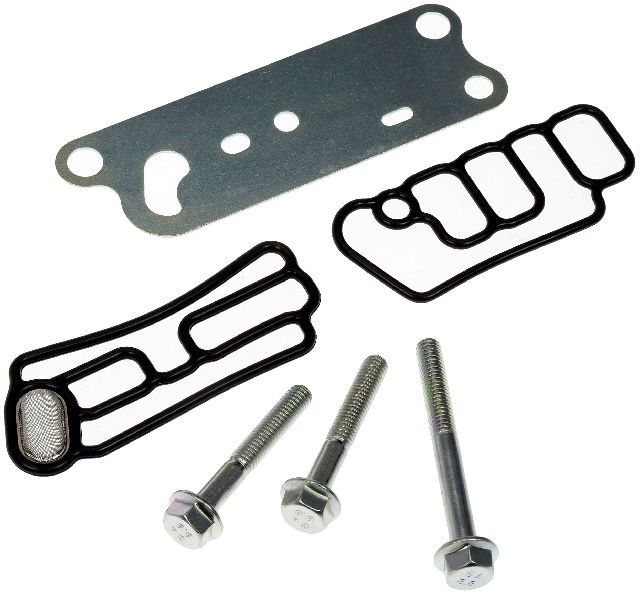
New Aftermarket Parts Available



The information in this article is provided for general reference and educational purposes only. Vehicle specifications, procedures, and part compatibility can vary by production date, trim level, and region. Always consult your vehicle's factory service manual and verify part numbers before purchasing or performing repairs. Safety-critical components such as airbags, seat belts, and braking systems should be installed by a qualified professional.
- Honda Pilot:
- 🎬 Helpful Videos
- 🛍️ Shop This Part
- What's Unique About the 2009-2015 Honda Pilot
- Symptoms You May Notice
- Most Likely Causes
- Rare But Worth Checking
- Diagnosis Steps
- Parts You'll Likely Need
- Related Codes That Often Appear With This One
- Technical Service Bulletins (TSBs) & Recalls
- Platform-Specific Known Issues
- Mechanic-Grade Diagnostic Values
- Scan Tool Commands That Help
- Wiring & Ground Locations
- Real Owner Repair Stories
- "I Checked Everything" — The Actual Cause
- OEM Part Supersession History
- Model Year Variations Within This Range
- Diagnostic Flowchart
- Used vs. New Parts: Buying Guide for This Vehicle
- Real Owner Stories
- 2011 Honda Pilot — 130000 miles
- 2009-2015 Honda Pilot
- 2007-2012 Acura RDX
- Related OBD-II Codes
- Frequently Asked Questions
- 🎟️ Get 5% Off