

P0562 on 2021-2025 GMC Yukon XL: System Voltage Low Causes and Fixes
This code means the vehicle's electrical system voltage is too low. On a 2021-2025 Yukon XL, this is most often caused by a weak or failing AGM battery, loose/corroded battery connections, or a failing alternator. A battery replacement is the most common fix, as these vehicles are highly sensitive to battery health.
- P0562 on a 2021-2025 Yukon XL is a serious code that can affect safety systems like ABS and StabiliTrak.
- The most likely cause is a weak battery or a poor connection at the battery terminals.
- Always start diagnosis with the simplest and most probable causes: test the battery and inspect the terminals before considering alternator replacement.
- A specific TSB (PIT6347B) exists for this issue, especially if P0606 is also present, confirming this is a known problem area.
- Do not ignore this code, as it can lead to a no-start condition or stalling while driving.
What's Unique About the 2021-2025 Gmc YUKON XL

The 2021-2025 GMC Yukon XL and its GM T1 platform mates (Tahoe, Suburban, Escalade) feature a highly sophisticated and integrated electronic architecture. These systems, especially the electronic brake assist controlled by the Brake System Control Module (BSCM), are extremely sensitive to voltage fluctuations. A GM Technical Service Bulletin (TSB #PIT6347B) specifically links the P0562 code to the BSCM, often appearing with code P0606, and warns of messages like "Service Brake System" and "Service StabiliTrak." This indicates that on this platform, a low voltage condition is not just a starting issue but a primary safety system concern that can affect brake pedal effort. Another TSB, 24-NA-050, reinforces this, noting that low voltage during cranking can cause the EBCM/BSCM to set these codes and advises against replacing the module itself.
Diagnostic Flowchart

Tap your situation to follow the diagnostic path that matches what you're seeing on this vehicle.
Symptoms You May Notice

- Check Engine Light is on
- "Service Brake System" message on dash
- "Service StabiliTrak" message on dash
- ABS warning light is on
- Battery or charging system warning light on
- Slow or hesitant engine cranking
- Dimming or flickering headlights and interior lights
- Erratic behavior from electronics (radio, windows, instrument cluster blanking)
- Engine may stall, especially after a jump start when put into gear
- Vehicle may not start at all
- Replacing the alternator when the actual problem is a weak AGM battery that fails under load.
- Replacing the Brake System Control Module (BSCM/EBCM) when TSBs clearly state the module is reporting the low voltage correctly and should not be replaced.
Most Likely Causes

- Weak or Failing AGM Battery 🔴 High Probability These vehicles have a high electrical demand (parasitic drain) even when off, which wears out batteries, typically lasting only 3-5 years. The required Absorbent Glass Mat (AGM) battery is sensitive, and TSB PIT6347B points to a low state of charge as a primary factor, especially in cold weather. A single bad cell can cause voltage to drop under load even if it tests okay at rest.
How to confirm: Test the battery with a digital multimeter or a professional carbon pile load tester. A healthy AGM battery should read about 12.6 volts with the engine off. A load test is crucial, as a surface charge can be misleading. Many auto parts stores will test your battery for free.
Typical fix: Replace the vehicle's AGM battery. These vehicles typically use a Group Size H7 (94R) AGM battery. 🎬 Watch: How to replace the battery in your 2021+ Yukon.
Est. part cost: $200-$400 - Loose or Corroded Battery Terminals/Cables 🔴 High Probability Vibration can loosen connections, and corrosion is common. The main power distribution block sits directly on the battery, creating multiple connection points that must be secure. TSB PIT6347B specifically calls for inspecting battery cables and fuse block connections.
How to confirm: Visually inspect the battery terminals for white or greenish powder. Physically check if the cable clamps and the connections on the fuse block are tight and cannot be moved by hand.
Typical fix: Disconnect the battery (negative first), clean the terminals, cable ends, and fuse block contacts with a wire brush, re-secure tightly, and apply dielectric grease to prevent future corrosion.
Est. part cost: $5-$25 - Failing Alternator 🟡 Medium Probability The alternator recharges the battery and powers the extensive electronics. If it fails to produce sufficient voltage, the battery will drain rapidly, causing a low voltage condition.
How to confirm: With the engine running, check the voltage at the battery terminals. It should be between 13.5 and 14.8 volts. If the voltage is low (near 12V) or not increasing with the engine on, the alternator is likely faulty. Load test the system by turning on headlights and HVAC to see if voltage holds steady.
Typical fix: Replace the alternator.
Est. part cost: $300-$700 - Poor Ground Connection ⚪ Low Probability These vehicles have multiple critical ground points. A loose or corroded main ground strap between the engine/chassis and the battery can create high resistance, leading to voltage drop issues. Forum users on TahoeYukonForum have noted grounds behind the front wheels on the frame are in a terrible location prone to corrosion.
How to confirm: Perform a voltage drop test on the ground side of the circuit. Visually inspect the main ground straps from the battery to the chassis, and from the engine block to the firewall/chassis for tightness and corrosion.
Typical fix: Clean and tighten the ground connections or replace the ground strap.
Est. part cost: $20-$75
Rare But Worth Checking
- Parasitic Battery Drain: An aftermarket accessory (dash cam, etc.) or a faulty module may not be shutting down correctly, slowly draining the battery. TSB PIT6347B mentions inspecting for aftermarket equipment. A separate issue documented for 2022 models involved a software glitch with Over-The-Air (OTA) updates causing a significant 5-6 amp draw.
- Faulty Body Control Module (BCM) or Powertrain Control Module (PCM): In very rare cases, a control module itself may be faulty and incorrectly report a low voltage condition or cause a drain. TSB 24-NA-050 explicitly warns technicians NOT to replace the EBCM for this code, as the root cause is almost always the battery or its connections.
Diagnosis Steps
- Scan for all DTCs. Note if P0606 is present with P0562, as this strongly points towards the issue described in TSB PIT6347B.
- Visually inspect the battery terminals, cables, and the main fuse block connections for corrosion or looseness. Clean and tighten as necessary.
- With the engine off, measure the battery voltage using a multimeter. A reading below 12.4 volts on an AGM battery indicates it is discharged or weak. A reading of 12.6V+ is healthy.
- Perform a battery load test using a professional tester. This is critical for AGM batteries which can show a good surface charge but fail under load.
- Start the engine. Measure the charging voltage at the battery. The reading should be between 13.5 and 14.8 volts. If it remains low, the alternator is likely not charging correctly.
- If battery and alternator test good, inspect the main power and ground connections. Key locations include the battery-to-chassis strap and the engine-to-firewall strap.
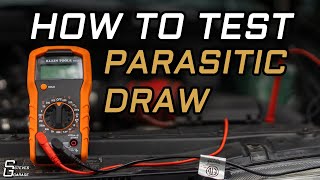
- If a slow drain is suspected, perform a parasitic draw test using a multimeter in series with the negative battery cable to measure current draw after all modules have gone to sleep (can take up to 30 minutes). A normal draw is under 50mA. 🎬 Watch: The easiest way to perform a parasitic draw test.
Parts You'll Likely Need

- AGM Battery
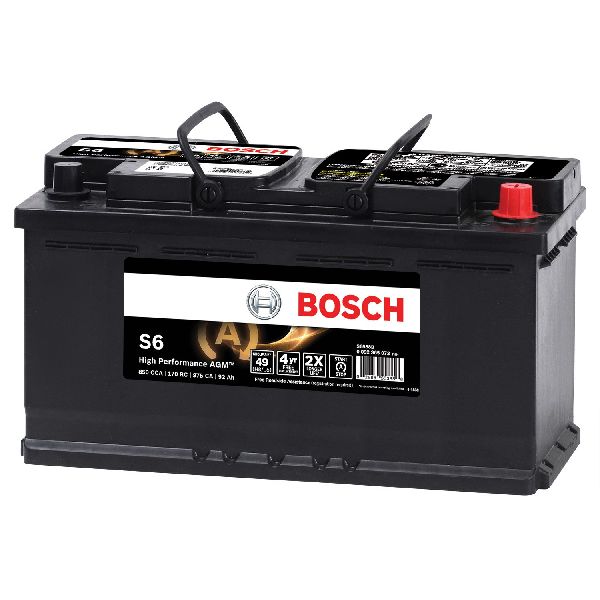
(OEM #ACDelco Gold 94RAGM (GM P/N 88866309) or similar)— The most frequent cause of P0562 is a battery that can no longer hold a sufficient charge. These vehicles require an AGM battery, typically Group Size H7/94R with at least 850 CCA.
Trusted brands: ACDelco, Interstate, Odyssey
OEM price range: $250-$400
Aftermarket price range: $220-$380 - Alternator — If the charging system is not producing adequate voltage while the engine is running, the alternator has likely failed.
Trusted brands: ACDelco, Bosch
OEM price range: $400-$700
Aftermarket price range: $300-$600 - Battery Cable/Terminals — Corroded or damaged cables and terminals create high resistance, preventing proper voltage flow from the battery and alternator.
Trusted brands: ACDelco, Standard Motor Products
OEM price range: $50-$200
Aftermarket price range: $20-$100
Related Codes That Often Appear With This One
- P0606 — This code indicates an internal processor failure in a control module. TSBs PIT6347B and 24-NA-050 explicitly state that P0606 and P0562 often appear together in the Brake System Control Module (BSCM) when a low voltage event occurs. The low voltage itself causes the processor to report an integrity fault.
- U3006 / U3007 — These codes indicate 'Control Module Input Power A/B' issues. They often accompany P0562 as they directly relate to the power supply received by various modules on the vehicle, as seen in owner forum posts.
Technical Service Bulletins (TSBs) & Recalls
- PIT6347B: Recommends additional battery and connection testing when P0562 and P0606 are present with ABS, StabiliTrak, or Brake System warnings.
- 24-NA-050: Warns against replacing the EBCM for P0562/P0606 codes and points to low battery state of charge as the cause, with a software update in development.
Platform-Specific Known Issues
- TSB #PIT6347B: BSCM Codes P0562 & P0606: A known issue documented in TSB #PIT6347B involves the P0562 and P0606 codes setting in the Brake System Control Module (BSCM), causing 'Service Brake System' and 'Service StabiliTrak' warnings. The bulletin advises dealers to perform thorough battery and connection tests, noting the condition is more common in cold weather and that the BSCM should not be replaced.
- TSB #24-NA-050: EBCM Software Anomaly: This TSB also addresses P0562/P0563 with P
Mechanic-Grade Diagnostic Values
- Voltage Drop Test on Positive Battery Cable (during crank) — expected: Less than 100 mV. Failure: A reading above 100 mV indicates high resistance in the cable or its connections.
- Voltage Drop Test on Negative Battery Cable (during crank) — expected: Less than 200 mV. Failure: A reading above 200 mV indicates high resistance in the cable or ground connections.
- General Circuit Voltage Drop (low-current computer circuits) — expected: Less than 0.1 V. Failure: Any reading higher than 0.1V suggests a problematic wire, switch, or connection that can cause module communication errors.
- General Ground Connection Voltage Drop — expected: Less than 0.1 V. Failure: A reading greater than 0.1V indicates a poor ground connection.
Scan Tool Commands That Help
- GDS2: HVAC Afterblow Configuration — While not directly for P0562, this is an example of a GDS2 function. If a parasitic drain is suspected from the HVAC system, this function can be used to enable or disable the afterblow feature, which runs the fan after the vehicle is off.
- GDS2: Clear All DTCs (Vehicle-Wide) — After a repair, such as replacing the battery or alternator, a vehicle-wide DTC clear using GDS2 is recommended to ensure all modules reset, not just the one that stored the primary code.
- GDS2: Hybrid/EV Battery Pack Capacity Reset — Though documented for hybrid models like the Volt, a similar battery monitor reset function exists for non-hybrids. This is used after a battery replacement to force the Battery Energy Control Module (BECM) or BCM to relearn the new battery's state of charge and health, ensuring the charging system operates correctly.
Wiring & Ground Locations
- G218 — A poor BCM ground at G218 is cited as a potential cause of low voltage issues in GM service bulletin 18-NA-161. On similar platforms, this ground is located inside the cab, near the A-pillar.. The Body Control Module (BCM) is a central hub for the vehicle's electronics. A poor ground at this location can cause widespread, intermittent electrical problems, including setting a P0562 code.
- K9 Body Control Module (BCM) — Inside the passenger cabin, typically behind the lower dashboard panel on the driver's side, near the interior fuse block.. The BCM monitors and controls many systems. It receives voltage inputs and can set codes like P0562. Its connector pins (e.g., X3) are specific points for testing ignition and accessory voltage.
- Frame Grounds near Front Wheels — On the frame rails behind the front wheels, one on the passenger side and one on the driver's side.. These grounds are exposed to road salt and grime, making them highly susceptible to corrosion. A user on TahoeYukonForum noted the passenger side ground was covered in gunk, and cleaning them was part of their successful fix for electrical issues.
Real Owner Repair Stories
- TahoeYukonForum user 'Apach 031' (2008 Yukon Denali 6.2L AWD (Note: GMT900 platform, but the failure mode is relevant)) — After 5-10 minutes of driving, door chime would ring, check engine light on, Stabilitrak off, service suspension message. Consistent codes P0700 and U0073.
❌ Tried (didn't work) Big 3 wiring upgrade, Replaced weak battery, Unplugged and cleaned every control module connection, Cleaned ground under driver's seat
✅ What actually fixed it The wiring harness for the transmission was resting against the exhaust heat shield, melting the loom and exposing the wires. The user wrapped the wires, installed a new loom, and secured the harness away from the heat shield. They also unplugged an aftermarket stereo from the OBD-II port as a precaution. The issues did not return after two weeks of daily driving.
Model Year Variations Within This Range
- 2022-2025: GM Preliminary Information bulletin #PIT6347, which covers P0562 and P0606 on full-size SUVs, was updated in March 2025 to include the 2025 model year, indicating the issue and diagnostic procedure are consistent across these years.
Helpful Videos
![[HOW TO] Replace the Battery in a 2021+ GMC Yukon/Tahoe/Suburban/Escalade (5.3, 6.2, 3.0)](https://img.youtube.com/vi/wQEXHcB3XsI/mqdefault.jpg)
Used OEM Parts in Stock



New Aftermarket Parts Available

The information in this article is provided for general reference and educational purposes only. Vehicle specifications, procedures, and part compatibility can vary by production date, trim level, and region. Always consult your vehicle's factory service manual and verify part numbers before purchasing or performing repairs. Safety-critical components such as airbags, seat belts, and braking systems should be installed by a qualified professional.
- Gmc YUKON XL:
- 🎬 Helpful Videos
- 🛍️ Shop This Part
- What's Unique About the 2021-2025 Gmc YUKON XL
- Diagnostic Flowchart
- Symptoms You May Notice
- Most Likely Causes
- Rare But Worth Checking
- Diagnosis Steps
- Parts You'll Likely Need
- Related Codes That Often Appear With This One
- Technical Service Bulletins (TSBs) & Recalls
- Platform-Specific Known Issues
- Mechanic-Grade Diagnostic Values
- Scan Tool Commands That Help
- Wiring & Ground Locations
- Real Owner Repair Stories
- Model Year Variations Within This Range
- 🎟️ Get 5% Off