

P0562 on 2021-2025 GMC Yukon: System Voltage Low Causes and Fixes
On a 2021-2025 GMC Yukon, code P0562 almost always points to a weak or failing battery, or loose/corroded battery connections. The code triggers when system voltage drops below ~10 volts for more than a minute. Start by load-testing the AGM battery and cleaning all main power/ground connections before suspecting a bad alternator.
- P0562 on a 2021-2025 Yukon means the electrical system voltage is too low.
- The most common causes are a weak battery or loose/corroded battery terminals.
- Always test the battery and check all connections before replacing more expensive parts like the alternator.
- A specific TSB exists for this issue, indicating it's a known problem that can trigger multiple warning lights.
- Driving with this code is risky as it can cause the vehicle to stall or fail to restart.
What's Unique About the 2021-2025 Gmc YUKON

The 2021-2025 GMC Yukon, built on the GM T1 platform, has a highly complex and sensitive electrical system. Features like the auto start/stop system, Dynamic Fuel Management, numerous control modules (for brakes, seats, body, etc.), and large infotainment screens create a high constant demand on the battery. A specific Technical Service Bulletin for this platform, #PIT6347B, directly links P0562 with other module communication codes (like P0606 in the BSCM) and explicitly instructs technicians to perform enhanced battery and connection testing, highlighting how critical stable voltage is. The bulletin notes the issue is more prevalent in colder temperatures when battery performance is naturally reduced.
Diagnostic Flowchart

Tap your situation to follow the diagnostic path that matches what you're seeing on this vehicle.
Symptoms You May Notice
- Check Engine Light is on
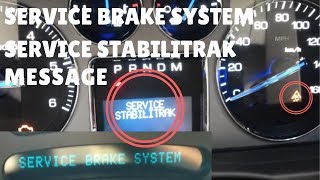
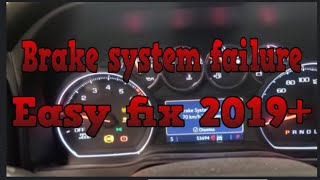
- "Service Brake System" message
- "Service StabiliTrak" message
- ABS and/or StabiliTrak warning lights illuminated
- Battery or charging system warning light on the dash
- Dimming or flickering interior and exterior lights
- Difficulty starting the engine, slow crank, or a no-start condition
- Erratic behavior from electrical components like the radio or power windows
- Automatic transmission not shifting properly or delayed engagement
- Replacing the alternator when the actual problem is a weak battery or a poor connection. Always test the battery and check all main power and ground connections first, as this is the most common and least expensive fix.
Most Likely Causes

- Weak or Failing Battery 🔴 High Probability Modern Yukons have a high electrical demand from onboard computers, sensors, and features like auto start/stop, which puts a heavy strain on the battery. The original AGM battery may be reaching the end of its typical 3-5 year service life.
How to confirm: Use a multimeter to check the battery voltage with the engine off; a healthy battery should read ~12.6V. If it's below 12.4V, it is discharged and needs charging and testing. For a definitive test, have the battery load-tested at an auto parts store, as a battery can show good voltage but fail under load.
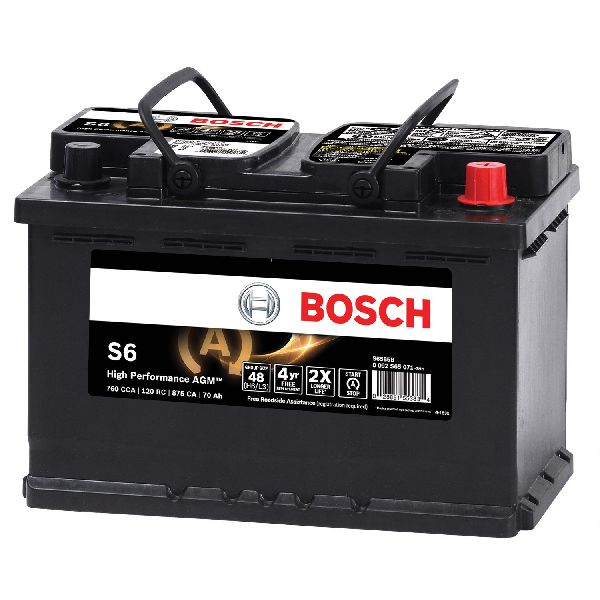
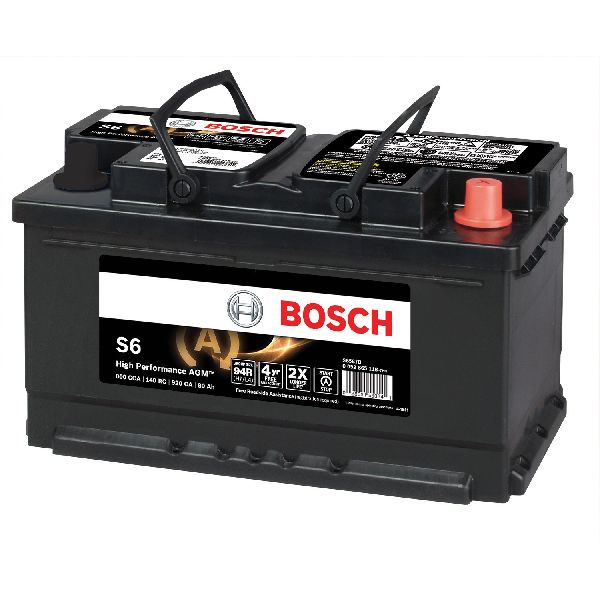
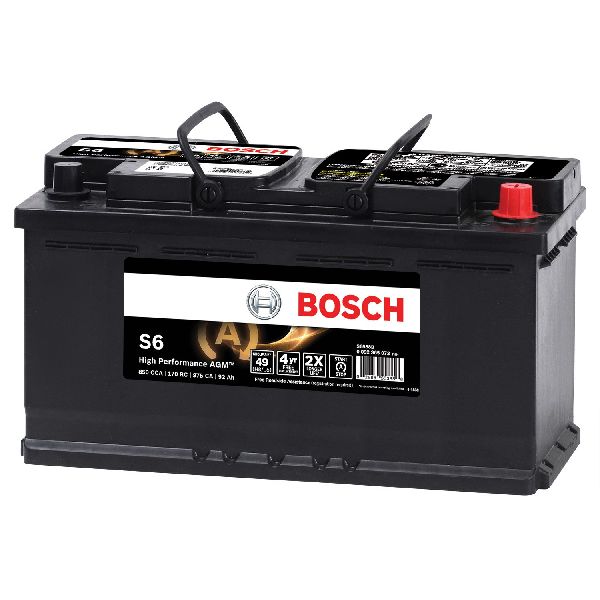
Typical fix: Replace the battery. These vehicles require an AGM (Absorbent Glass Mat) battery, typically a Group Size H7/94R or H6/48. A battery relearn procedure should be performed after replacement.
Est. part cost: $200-$400 - Loose or Corroded Battery Terminals/Cables 🔴 High Probability Vibration can loosen connections over time, and exposure can lead to corrosion, creating high resistance. TSB PIT6347B for this vehicle specifically calls for checking all battery and fuse block connections.
How to confirm: Visually inspect the battery terminals for white or greenish corrosion. Physically attempt to twist the terminals; they should not move. Check where the main ground cable attaches to the chassis and engine block for tightness and corrosion.
Typical fix: Disconnect the battery (negative first), clean the terminals, cable ends, and chassis/engine ground points with a wire brush, and re-tighten securely. Apply dielectric grease to prevent future corrosion.
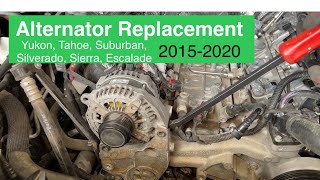
Est. part cost: $5-$15 - Failing Alternator 🟡 Medium Probability The alternator recharges the battery and powers the vehicle when running. If it fails, the vehicle runs solely off battery power until the voltage drops too low, triggering the P0562 code.
How to confirm: With the engine running, use a multimeter to measure the voltage at the battery terminals. A healthy alternator should produce between 13.7 and 14.7 volts. If the voltage is below 13.5V or does not increase with RPMs, the alternator is likely faulty.
Typical fix: Replace the alternator.
Est. part cost: $300-$600
Rare But Worth Checking
- Poor Ground Connections: Beyond the main battery ground, other ground straps from the engine to the chassis can corrode or break. On GM trucks, key ground points to inspect are on the frame rail below the driver's door, on the firewall, and at the back of the cylinder head. Poor grounds can cause intermittent and hard-to-diagnose electrical issues.
- Parasitic Battery Drain: A module or component may not be shutting down correctly when the vehicle is off, slowly draining the battery. TSB PIT5745D notes that on some GM vehicles, the Seat Memory Control Module (SMCM) can intermittently wake up in cold temperatures (<40°F) and cause a drain. TSB N212335340 also points to a specific ECM calibration issue causing a drain on some 2021 models.
- Faulty Powertrain Control Module (PCM): In very rare cases, the PCM itself can fail and incorrectly report low voltage or be the source of the problem. This should only be considered after all other possibilities, including wiring, have been exhaustively checked.
Diagnosis Steps
- Read all fault codes from all modules using an OBD-II scanner. Note any other codes present, especially U-codes or P0606.
- Visually inspect the battery terminals and main ground connections (on the frame, firewall, and engine block) for looseness or corrosion. Clean and tighten as necessary.
- With the engine off, measure battery voltage using a multimeter. It should be approximately 12.6 volts. If it's below 12.4V, the battery is discharged and needs charging and testing.
- Have the battery professionally load-tested to confirm its health, even if it shows good voltage at rest. This is the most critical step.
- Start the engine. Measure the voltage at the battery terminals. It should be between 13.7 and 14.7 volts.
- Turn on heavy electrical loads (headlights, A/C blower on high, rear defroster). The voltage should remain stable within the 13.7-14.7V range. If it drops significantly, the alternator is likely weak or the belt is slipping.
- If the battery and alternator test good, perform voltage drop tests on the main battery cables per GM bulletin 21-NA-214. Voltage drop should be under 100mV for the positive cable and under 200mV for the negative cable.
- If all tests pass, investigate potential parasitic drains using a multimeter set to measure amps. This can be complex and may require isolating circuits by pulling fuses. 🎬 Watch: How to tell if it's a parasitic draw or bad battery.
- After repairs, especially battery replacement, perform a Battery Relearn Procedure. This may involve using a scan tool like the GDS2 to perform a 'Battery Sensor Module Reset' or similar function in the BCM. Failure to do so can lead to improper charging and a premature return of the P0562 code.
- Clear the codes and test drive the vehicle for at least 50-100 miles to ensure all systems have relearned and the P0562 code does not return.
Parts You'll Likely Need

- AGM Battery
(OEM #ACDelco Gold 94RAGM (GM #88865934) or 48AGM (GM #88864541))— This is the most frequent cause of P0562 on modern, electronically-dense vehicles like the Yukon. The battery simply wears out and can no longer provide stable voltage under the high electrical load.
Trusted brands: ACDelco, Interstate, DieHard, Odyssey
OEM price range: $250-$400
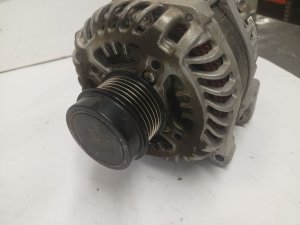
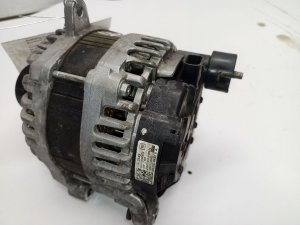
Aftermarket price range: $200-$350 - Alternator — If the charging system test fails, the alternator is the culprit, as it's responsible for maintaining system voltage and recharging the battery while the engine is running.
Trusted brands: ACDelco, Denso, Bosch
OEM price range: $450-$700
Aftermarket price range: $300-$600 - Battery Cable Terminals — If corrosion is severe or the terminal cannot be tightened properly, it must be replaced to ensure a solid electrical connection.
Trusted brands: ACDelco, Dorman
OEM price range: $20-$50
Aftermarket price range: $10-$30
Related Codes That Often Appear With This One
- P0606 — This code indicates a processor fault within a control module. On this Yukon, TSB #PIT6347B specifically notes that P0606 in the Brake System Control Module (BSCM) can be triggered by the low voltage condition of P0562. A user on ChevroletForum.com reported this exact combination on their 2021 Tahoe.
- U-series codes (e.g., U0100, U3006, U3007) — U-codes indicate a loss of communication between modules. When system voltage is too low, modules can shut down or fail to communicate properly, triggering these codes alongside P0562. Specifically, U3006 (Control Module Input Power A) and U3007 (Control Module Input Power B) have been seen with P0562 on this platform, indicating a direct power supply issue to a module.
Technical Service Bulletins (TSBs) & Recalls
- PIT6347B: ABS SES MIL / Service Brake System / Service StabiliTrak / BSCM DTC P0606 P0562
- PIT5745D: Diagnostic Tips - Intermittent Parasitic Battery Draw Below 40 Degrees F / Dead Battery / Slow Crank
- N212335340: Customer Satisfaction Program - ECM Calibration Causing Battery Drain
Platform-Specific Known Issues
- TSB #PIT6347B: This bulletin addresses an issue where P0562 appears with other codes like P0606 and various service messages. It directs dealers to perform 'additional battery and connection testing,' noting the issue is more common in cold weather with a low battery state of charge, confirming that simple voltage issues are a known trigger for what might appear to be more complex module failures on this platform.
- TSB #PIT5745D: For persistent, hard-to-find battery drains, this TSB points to the Seat Memory Control Module (SMCM) as a potential cause. It can wake up intermittently when the ambient temperature is below 40°F, causing a parasitic draw that leads to a low battery and P0562.
- TSB #N212335340: A customer satisfaction program for some 2021 models addresses an ECM calibration issue that could cause a parasitic battery drain, leading to a no-start condition and potentially P0562.
- Bulletin #21-NA-214: This document provides advanced diagnostic steps for battery drain/low voltage conditions, including specific voltage drop test values for battery cables and inspection of BCM ground G218.
Mechanic-Grade Diagnostic Values
- Loaded Voltage Drop Test - Positive Battery Cable — expected: < 100 mV. Failure: A reading above 100 mV indicates high resistance in the positive cable or its connections.
- Loaded Voltage Drop Test - Negative Battery Cable — expected: < 200 mV. Failure: A reading above 200 mV indicates high resistance in the negative cable or its ground connections.
- Battery Cable Clamp Nut Torque — expected: 7 Nm (62 lb in). Failure: Loose clamps can cause high resistance and intermittent voltage loss.
- Generator (Alternator) BAT Terminal Nut Torque — expected: 20 Nm (15 lb ft). Failure: A loose connection at the alternator output stud is a common point of failure.
- Battery Negative Cable to Engine Block Ground Fastener Torque — expected: 25 Nm (18 lb ft). Failure: A poor engine ground can cause a wide range of electrical issues, including charging problems.
Hidden / Shadow Codes Worth Checking
- U3006: Control Module Input Power A. This code indicates a problem with one of the power supply circuits to a specific control module. (see via A professional scan tool capable of reading codes from all vehicle modules (e.g., GDS2, high-end Autel/Snap-on scanners). Often set in conjunction with P0562 when low system voltage affects a specific module's power feed.)
- U3007: Control Module Input Power B. This code indicates a problem with a secondary power supply circuit to a specific control module. (see via A professional scan tool capable of reading codes from all vehicle modules. Seeing this with U3006 and P0562 strongly points to a power supply or ground issue rather than a faulty module.)
Scan Tool Commands That Help
- GDS2 (GM Diagnostic Software): Clear All DTCs — After a repair is completed, this function is used to erase stored fault codes from all modules. Some low-voltage codes may not clear until the underlying voltage issue is stable.
- GDS2 (GM Diagnostic Software): Battery Sensor Module Reset / Battery Relearn — After replacing the vehicle's 12V battery. This function, typically found within the Body Control Module (BCM) menu, resets the learned battery state of charge and state of health data, ensuring the new battery is charged correctly by the intelligent charging system.
Wiring & Ground Locations

- G218 — Likely located in the passenger compartment, as it is a Body Control Module (BCM) ground.. GM Service Bulletin #21-NA-214 specifically identifies a poor connection at G218 as a potential cause for battery discharge conditions that can lead to P0562.
- Main Engine Ground — Negative battery cable connection to the engine block.. This is the primary ground path for the alternator and starter. High resistance here due to looseness or corrosion is a common cause of charging system problems. Torque spec is 25 Nm (18 lb ft).
- G103 (Typical GM location) — On the cowl/firewall, often above the brake booster on the driver's side.. This is a major ground point for numerous in-cabin electronics, including the BCM, Instrument Panel Cluster (IPC), and Data Link Connector (DLC). A poor connection here can cause widespread electrical chaos mimicking module failures.
- Frame Grounds — On the frame rails in the engine bay, near the front wheels.. These provide the main ground path from the body to the frame. Owners have reported finding these loose or corroded, and cleaning them resolved electrical issues.
Real Owner Repair Stories
- Reddit user in r/gmc ('22 Yukon) — Low battery warning, followed by the windshield washer pump not working and the outside temperature display being stuck at -9°C.
❌ Tried (didn't work) Driving the vehicle to charge the battery.
✅ What actually fixed it A commenter with a similar vehicle experiencing multiple electrical gremlins (limp mode, false window shatter sensor, ABS failure) after a low battery warning reported the final fix was replacing the battery. It had a bad cell, which caused low voltage under load even when the engine was running. This resolved all the strange electronic issues. - ChevroletForum.com user (2021 Tahoe High Country 6.2L) — Dead battery, Check Engine Light with codes P0562, P0606, U3006, U3007.
❌ Tried (didn't work) Initial diagnosis was unclear.
✅ What actually fixed it The issue appeared to resolve itself after the owner charged the battery and drove the vehicle for about 50 miles, causing the Check Engine Light to turn off. The root cause was suspected to be a parasitic drain that discharged the battery, and once recharged, the systems returned to normal. This highlights that a simple discharged battery can set a cascade of seemingly complex codes.
Model Year Variations Within This Range
- 2022: Some 2022 Tahoe/Suburban/Yukon models were subject to a customer satisfaction program for a parasitic battery drain caused by an issue with Over-the-Air (OTA) software updates. The modules would fail to go to sleep properly, causing a significant current draw (up to 5+ amps) and draining the battery overnight. The fix is a software update performed by the dealer.
- 2021-2025: The alternator amperage varies based on engine and optional equipment packages (RPO codes). V8 models (5.3L, 6.2L) and the 3.0L Diesel have different alternators available, with common ratings being 170A, 220A, and 250A. Replacing a failed alternator with one of a lower amperage rating than the original can lead to an overloaded charging system and a return of P0562, especially on high-trim models like Denali.
Helpful Videos
![[HOW TO] Replace the Battery in a 2021+ GMC Yukon/Tahoe/Suburban/Escalade (5.3, 6.2, 3.0)](https://img.youtube.com/vi/wQEXHcB3XsI/mqdefault.jpg)

Used OEM Parts in Stock


New Aftermarket Parts Available

The information in this article is provided for general reference and educational purposes only. Vehicle specifications, procedures, and part compatibility can vary by production date, trim level, and region. Always consult your vehicle's factory service manual and verify part numbers before purchasing or performing repairs. Safety-critical components such as airbags, seat belts, and braking systems should be installed by a qualified professional.
- Gmc YUKON:
- 🎬 Helpful Videos
- 🛍️ Shop This Part
- What's Unique About the 2021-2025 Gmc YUKON
- Diagnostic Flowchart
- Symptoms You May Notice
- Most Likely Causes
- Rare But Worth Checking
- Diagnosis Steps
- Parts You'll Likely Need
- Related Codes That Often Appear With This One
- Technical Service Bulletins (TSBs) & Recalls
- Platform-Specific Known Issues
- Mechanic-Grade Diagnostic Values
- Hidden / Shadow Codes Worth Checking
- Scan Tool Commands That Help
- Wiring & Ground Locations
- Real Owner Repair Stories
- Model Year Variations Within This Range
- 🎟️ Get 5% Off