

P0562 on 2013-2016 Dodge Dart: System Voltage Low Causes and Fixes
On a 2013-2016 Dodge Dart, P0562 is most often caused by a weak battery, a failing alternator, or a poor factory ground connection. Inspecting and cleaning the main chassis ground behind the driver's side wheel well is a common, low-cost first step that resolves many electrical issues.
- P0562 on a Dodge Dart means the system voltage is too low.
- Before replacing expensive parts, ALWAYS inspect, clean, and tighten the battery terminals and main chassis ground connections. A bad ground is a very common problem on this car.
- The three most likely causes, in order, are a bad ground, a weak battery, or a failing alternator.
- Do not drive the vehicle with this code. An unexpected stall could be dangerous.
What's Unique About the 2013-2016 Dodge Dart
The Dodge Dart platform is known for having sensitive electronics and, most notably, a weak factory grounding system. Many owners report that a wide range of strange electrical problems, including stalling and no-start conditions that trigger P0562, can be traced back to corroded or insufficient ground wires. The primary ground point from the battery to the chassis, located behind the driver's side front wheel well liner, is a notorious failure point due to its exposure to road spray and salt. While a bad battery or alternator are still common culprits, checking the grounds is a critical, vehicle-specific diagnostic step for any Dart exhibiting this code.
Symptoms You May Notice
- Check Engine Light is on
- Battery warning light is on
- Engine stalls while driving, sometimes in traffic.
- Car won't start or has difficulty starting (no-crank or slow crank)
- Dimming or flickering headlights and dashboard lights
- Erratic behavior from electronic components like the radio, power windows, or blind spot monitors
- Flashing odometer
- Automatic transmission may not shift properly or may feel jerky
- Electronic Throttle Control (ETC) or 'red lightning bolt' light may illuminate, sometimes putting the car in limp mode
- Replacing the battery without testing the alternator and checking grounds. If the alternator is bad or a poor ground exists, a new battery will not solve the problem and will quickly be drained.
- Replacing the throttle body. Low system voltage can cause the Electronic Throttle Control (ETC) system to malfunction and set throttle-related codes. The root cause is often the low voltage itself, not a faulty throttle body.
Most Likely Causes
- Poor or Corroded Ground Connections 🔴 High Probability Dodge Darts are frequently cited by owners for having inadequate factory grounds that are susceptible to corrosion. The main battery-to-chassis ground point, located behind the driver's side wheel well liner on the frame rail, is a known failure point. This poor connection creates high resistance, starving the entire vehicle of a proper ground path.
How to confirm: Perform a voltage drop test between the negative battery terminal and the engine block, and between the negative terminal and the chassis. A reading above 0.2-0.3 volts indicates high resistance. Visually inspect the ground strap connections for green or white corrosion or looseness. A YouTube video by 'All about cars' specifically shows locating and cleaning this ground on a Dart.
Typical fix: Remove the driver's side front wheel and wheel well liner. Locate the ground stud on the frame rail. Disconnect the 10mm nut, remove the ground cable eyelets, and thoroughly clean the stud, the eyelets, and the frame surface with a wire brush until shiny metal is exposed. Also clean the connection from the ground point to the transmission (13mm bolt). Many owners proactively add a supplementary 4-gauge ground wire from the negative battery terminal directly to a solid point on the chassis or engine block for a more robust connection.
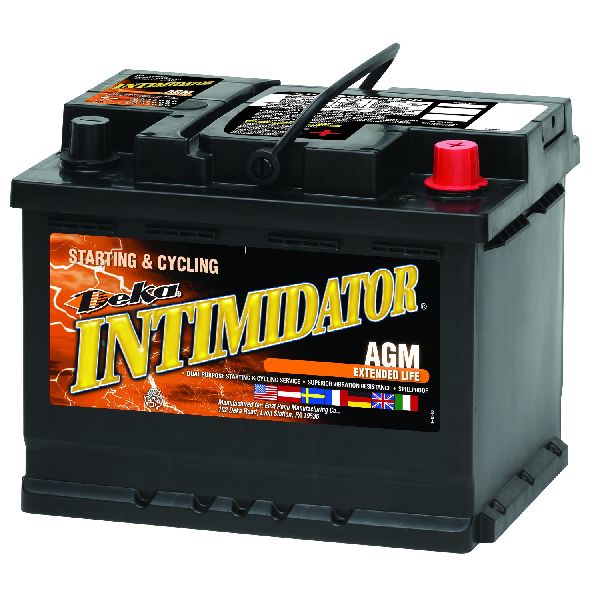
Est. part cost: $0-$20 - Failing or Weak Battery 🔴 High Probability Batteries are a common failure item on all vehicles, typically lasting 3-5 years. The Dart's electronics can be sensitive to even a slightly weak battery, which may struggle to hold a charge or drop significant voltage under load, triggering the code.
How to confirm: Test the battery voltage with the engine off; a healthy battery should read ~12.6 volts. A reading below 12.2V suggests it is discharged or failing. Have the battery professionally load-tested at an auto parts store to confirm its health. A load test is crucial, as a battery can show good voltage at rest but fail under load.
Typical fix: Replace the battery. Note that 2013 models typically use a Group H6 (L3/48) battery, while 2014-2016 models often use a smaller Group H5 (L2/47). Always verify the correct size for your specific vehicle.
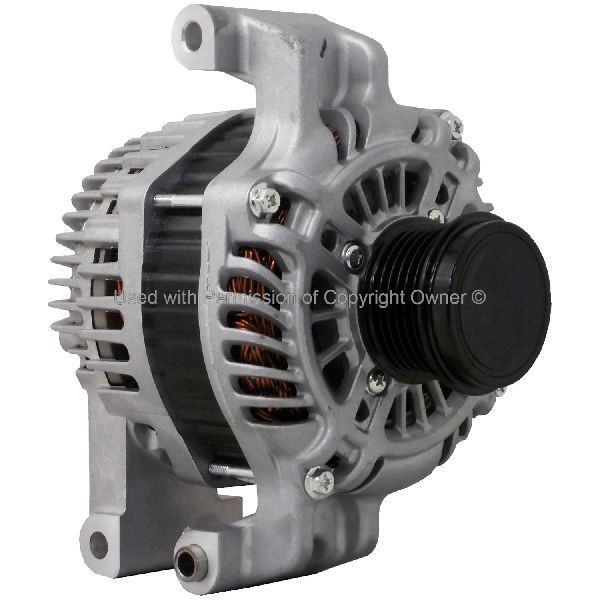
Est. part cost: $150-$250 - Failing Alternator 🟡 Medium Probability The alternator recharges the battery and powers the car when running. Like any component, it can wear out over time, typically after 80,000-150,000 miles.
How to confirm: With the engine running, use a multimeter to check the voltage at the battery terminals. A healthy alternator should produce between 13.5 and 14.7 volts. If the voltage is below this range or at battery voltage (~12V), the alternator is likely not charging. Many auto parts stores can test the alternator on the vehicle for free.
Typical fix: Replace the alternator. The Mopar OEM part number for the 150 Amp alternator for the 2.4L engine is often cited as 68080522AF, but always verify with VIN.
Est. part cost: $200-$450
Rare But Worth Checking
- Faulty Powertrain Control Module (PCM): On the Dodge Dart, the voltage regulator is built into the PCM. If the battery, alternator, and all wiring/grounds are confirmed to be good, the PCM's internal regulator may have failed. This is an uncommon but possible cause that would require PCM replacement and programming.
- Corroded or Loose Battery Terminals/Cables: While simple, corrosion or a loose connection right at the battery can prevent proper charging and power delivery, mimicking a failed component. Always check this first. Also inspect the main power distribution block on the positive terminal for hidden corrosion.
- Faulty Intelligent Battery Sensor (IBS): The Dart uses an Intelligent Battery Sensor on the negative terminal to monitor battery health and control charging strategy. If this sensor fails, it can incorrectly report battery status to the PCM, potentially causing charging issues and triggering a P0562 code.
Diagnosis Steps
- Visually inspect the battery terminals for corrosion or looseness. Clean and tighten as necessary.
- With the engine off, measure the battery voltage using a multimeter. It should be approximately 12.6 volts. If it's below 12.2V, charge the battery and have it professionally load-tested.
- Start the engine. Measure the voltage at the battery again. It should be between 13.5 and 14.7 volts. If the voltage is low, the alternator is the likely problem. If it's too high (over 15V), the PCM's internal voltage regulator may be faulty.
- If charging voltage is good, inspect the vehicle's main ground connections. The most critical one on the Dart is the battery-to-chassis ground located behind the driver's side wheel well liner. Disassemble, clean all contact surfaces (stud, eyelets, frame) with a wire brush, and reassemble securely.
- Perform a voltage drop test on the ground side by placing one multimeter lead on the negative battery post and the other on the engine block with the engine running. You should see a very low voltage (under 0.3V). A higher reading confirms a bad ground connection.
- Inspect the serpentine belt to ensure it is in good condition and properly tensioned, as a slipping belt can prevent the alternator from charging effectively.
- If all of the above check out, the issue could be a rare wiring problem, a faulty Intelligent Battery Sensor (IBS), or a fault within the PCM's internal voltage regulator.
Parts You'll Likely Need
- Battery — The battery is a common wear item and a primary cause of low system voltage. Darts can be hard on batteries.
Trusted brands: Duralast, DieHard, Interstate
OEM price range: $200-$300
Aftermarket price range: $150-$250 - Alternator
(OEM #68080522AF (150A, verify with VIN))— A failed alternator will not charge the battery, leading directly to a P0562 code and a stalled vehicle.
Trusted brands: Bosch, Denso, Mopar
OEM price range: $350-$500
Aftermarket price range: $200-$450 - Battery Ground Cable
(OEM #05183772AD (Verify with VIN))— The factory ground cable and its connection points are a known weak spot on the Dart, prone to corrosion that causes a wide range of electrical faults.
Trusted brands: Mopar, Duralast
OEM price range: $40-$80
Aftermarket price range: $15-$30
Related Codes That Often Appear With This One
- P0335 — Low system voltage can cause sensor circuits, like the Crankshaft Position Sensor, to operate incorrectly and set faults. A real-world owner complaint linked P0562 and P0335. [ODI #11164298]
- U-Series Codes (e.g., U00XX) — Communication (U-series) codes are common when system voltage is low, as the various electronic modules on the vehicle cannot communicate with each other properly.
- P0121, P0221 — These are Throttle/Pedal Position Sensor codes. Low voltage can cause the electronic throttle body to act erratically, logging these codes alongside P0562. The issue is often the voltage supply, not the throttle body itself.
Technical Service Bulletins (TSBs) & Recalls
- While no TSB directly addresses P0562, TSB 08-027-14 REV. A was issued for some FCA vehicles for a battery drain condition caused by the radio, which could indirectly lead to a low voltage state. It's worth checking if your vehicle has had all relevant PCM and radio software updates.
Platform-Specific Known Issues
- Corroded Main Chassis Ground: A known weak point is the main ground connection (sometimes referred to as G301) located on the chassis behind the driver's side front wheel well. This area is exposed to moisture and road salt, leading to corrosion and high resistance that can cause a no-start or stalling condition. The ground path runs from the battery to a stud on the frame, and then from that stud to the transmission. Both connection points (a 10mm nut on the stud and a 13mm bolt on the transmission) must be cleaned.
Mechanic-Grade Diagnostic Values
- Battery Voltage (Engine Off, at rest) — expected: 12.4V - 12.6V. Failure: Below 12.2V indicates a discharged or failing battery.
- Battery Voltage (During Cranking) — expected: Above 9.0V, typically 9.0V - 11.0V. Failure: A drop below 9.0V indicates a weak battery unable to handle the starter load.
- Charging System Voltage (Engine Running at Idle) — expected: 13.5V - 14.7V. Failure: Below 13.2V indicates a failing alternator; above 15.0V indicates a faulty voltage regulator (internal to PCM).
- Ground Path Voltage Drop (Engine Running) — expected: < 0.3V (ideally < 0.2V). Failure: A reading higher than 0.3V between the negative battery post and the engine block/chassis indicates high resistance in the ground circuit.
- P0562 Set Condition — expected: System voltage must remain above 10V.. Failure: The PCM will store P0562 if system voltage drops below ~10V for 60 seconds or more.
Scan Tool Commands That Help
- Professional Scan Tool (e.g., wiTECH): Intelligent Battery Sensor (IBS) Relearn/Adaptation — After replacing the battery or IBS. The sensor must read the new battery's state of charge uninterrupted for up to 4 hours. This can be followed by 3-5 drive cycles with 8-hour key-off periods to fully calibrate the sensor and restore functions like auto start-stop.
- Professional Scan Tool (e.g., wiTECH): Module Communication Test — If the PCM is suspected of being faulty. This bidirectional test verifies if the module can properly send and receive data. A failure can point to internal damage, such as a bad voltage regulator.
Wiring & Ground Locations
- Main Chassis Ground (G109/G301) — Behind the driver's side front wheel well liner, on the frame rail. It is a stud with a 10mm nut.. This is the primary ground path from the battery to the chassis and is a notorious point of corrosion. A poor connection here creates high resistance and is a leading cause of P0562 and other electrical issues on the Dart.
- Engine/Transmission Ground — A cable runs from the main chassis ground stud to a bolt on the transmission case. This bolt typically requires a 13mm socket.. This is the second half of the critical ground path. Corrosion at this connection point can also cause a no-start or stalling condition, even if the chassis stud is clean.
- Intelligent Battery Sensor (IBS) — A module integrated into the negative battery terminal clamp.. The IBS measures current flow and battery state of health, communicating with the BCM via a LIN bus. A faulty sensor can send incorrect voltage data, triggering a false P0562 code.
Real Owner Repair Stories
- YouTube channel 'Fix It All' (Vehicle exhibiting P0562, stalling, and flickering lights.) — Stalling, hard starting, flickering dash lights, P0562 code.
❌ Tried (didn't work) Tightening the existing battery terminal clamp.
✅ What actually fixed it The positive battery terminal clamp was worn and would no longer tighten sufficiently. The owner cut off the old terminal end, stripped the wire, and installed a new aftermarket terminal clamp, which resolved the loose connection and the code. - YouTube channel 'All about cars' (2013 Dodge Dart 2.0L with a no-crank, no-start condition.) — Car driven to a store, then would not crank or start. No previous symptoms.
❌ Tried (didn't work) Replacing the starter motor.
✅ What actually fixed it The issue was a bad ground. The technician located the main ground point behind the driver's side wheel well, finding heavy corrosion on the 10mm stud to the frame and the 13mm bolt from the frame to the transmission. After disassembling and cleaning both connection points with a wire brush, the car started immediately. The fix cost $0 in parts. - Reddit user 'elliwigy1' (2014 Dodge Dart) — Corroded ground wire from battery.
❌ Tried (didn't work) Using a single-point aftermarket ground cable from AutoZone, which caused flickering lights.
✅ What actually fixed it The user noted the original OEM ground cable bolts to the chassis in two spots behind the driver's side wheel fender. An aftermarket cable with only one ground point was insufficient. The fix implies that replacing the cable with an OEM-style dual-point ground is necessary for proper function.
"I Checked Everything" — The Actual Cause
- For code P0562, the electrical equivalent of a 'smoke test clean' scenario is when both the battery and alternator test as 'good' at an auto parts store, yet the vehicle continues to stall and throw the code. In the 2013-2016 Dodge Dart, the actual cause in this situation is very frequently high resistance in the main ground circuit due to corrosion at the connection point behind the driver's side wheel well. Standard component tests will not detect this wiring fault, leading to misdiagnosis.
When the Usual Fixes Don't Work
- While the most common fixes are the battery, alternator, or main ground cleaning, some owners have found the root cause to be simpler. In one documented case, the P0562 code and associated stalling were caused solely by a worn-out positive battery terminal clamp that could no longer be tightened sufficiently. This highlights that before replacing major components, one should confirm the integrity of the most basic connections at the battery posts themselves.
Model Year Variations Within This Range
- 2013 vs 2014-2016: The factory-installed battery size often differs. 2013 models more commonly came with a larger Group H6 (Group 48) battery. 2014-2016 models frequently used a smaller Group H5 (Group 47) battery. While the sizes are often interchangeable, the factory battery blanket/insulator is form-fitted and may not fit properly if you switch sizes.
Diagnostic Flowchart
Other Known Issues on This Vehicle
Issues unrelated to this code that are worth knowing about as an owner of this generation:
- Excessive Oil Consumption 🔴 High — Very common across all model years with the 2.4L engine. Can begin at any mileage. Consumption of 1 quart per 1,000-2,000 miles is frequently reported. (Ref: TSB 09-007-21 REV. A and Warranty Extension XB1 address this issue, involving an oil consumption test and potential engine replacement.)
- Electronic Throttle Body (ETB/ETC) Failure 🟠 Medium — Common failure item. Symptoms include the 'red lightning bolt' on the dash, rough idle, stalling, and the vehicle entering limp mode. Often requires cleaning or replacement.
- Shifter Cable Bushing Failure (Automatic Transmission) 🟠 Medium — The bushing connecting the shifter cable to the transmission lever can degrade and break, leaving the shifter disconnected from the transmission. This can prevent the car from going into gear or being taken out of Park. (Ref: Recall S43 / NHTSA #16V-461 addresses this for some 2013-2016 Darts.)
- Uconnect Infotainment System Glitches 🟡 Low — Widespread reports of the screen freezing, becoming unresponsive, or rebooting randomly. Software updates can sometimes resolve issues, but hardware failure is also possible. (Ref: Various software update TSBs have been released over the years.)
Used vs. New Parts: Buying Guide for This Vehicle
When a used part is the smart pick: For this repair, used parts are generally not recommended for core electrical components. However, a used OEM battery ground cable from a dry-climate, low-mileage donor vehicle can be a viable option if it is thoroughly inspected for corrosion. Mechanical parts like the battery hold-down bracket or tray are perfectly fine to source from a junkyard.
Donor-vehicle mileage cap: roughly under 60000 miles for the part to have meaningful remaining life.
What to inspect on the donor part:
- For a used ground cable, bend it to ensure it is still flexible and the insulation is not cracked.
- Inspect the metal eyelets and crimp points for any signs of green or white corrosion.
- Ensure the donor vehicle is from a region that does not use road salt in winter.
OEM-only on this vehicle (don't cheap out):
- Powertrain Control Module (PCM) - Aftermarket or used PCMs often lead to compatibility and programming headaches. A new or professionally remanufactured unit programmed to the car's VIN is the safest choice.
- Battery Ground Cable - Some aftermarket cables may use a different design (e.g., single ground point instead of the OEM dual point), which has been reported to cause electrical issues like flickering lights. Sticking with an OEM Mopar cable is highly recommended.
Aftermarket brands forum-validated for this vehicle:
- Battery: Optima (DH6 YELLOWTOP), Interstate, Duralast, DieHard.
- Alternator: Denso, Bosch (often the OEM supplier), Mopar (remanufactured).
Brands owners have reported issues with on this vehicle:
- Generic, unbranded alternators from online marketplaces can have high failure rates.
- Aftermarket ground cables that do not replicate the OEM multi-point grounding design.
Real Owner Stories
Aggregated from forums and TSBs cited above. Mileages and costs reflect what owners reported in those sources.
2014 Dodge Dart 2.4L
Symptoms: The vehicle shuts off at random while driving, sometimes in traffic. Owners discussed electrical failures and low voltage as the root cause.
What fixed it: Replacing failing batteries or alternators that were unable to maintain proper system voltage.
Source hint: Dodge-Dart.org: '2014 2.4 shuts off at random while driving'
2013-2016 Dodge Dart 2.4L
Symptoms: No crank, no start condition.
What fixed it: Cleaning the corroded ground stud and cable ends located behind the driver's side wheel well. The repair involved removing the 10mm nut and 13mm transmission bolt to clean all contact surfaces to shiny metal.
Cost: $0-$0
Source hint: YouTube: 'Dodge Dart No Crank No Start - Fixed for $0.00 - Bad Ground'
2013-2016 Dodge Dart 2.4L
Symptoms: Voltage light illuminated and a throttle body code appeared.
What fixed it: Addressing a charging fault or corroded battery connections; the throttle body code was determined to be a secondary symptom of low system voltage.
Source hint: Reddit r/dodgedart: 'Throttle body'
Related OBD-II Codes
Frequently Asked Questions
Which battery size should I buy for my 2013-2016 Dodge Dart 2.4L?
Is there a TSB for the battery drain issues on the Dodge Dart?
Where is the main chassis ground located on the Dodge Dart?
Why is my odometer flashing along with the P0562 code?
Can a bad ground cause my Dart to not start even if the battery is good?
What is the part number for a replacement alternator for the 2.4L engine?
Used OEM Parts in Stock


New Aftermarket Parts Available



The information in this article is provided for general reference and educational purposes only. Vehicle specifications, procedures, and part compatibility can vary by production date, trim level, and region. Always consult your vehicle's factory service manual and verify part numbers before purchasing or performing repairs. Safety-critical components such as airbags, seat belts, and braking systems should be installed by a qualified professional.
- Dodge Dart:
- 🛍️ Shop This Part
- What's Unique About the 2013-2016 Dodge Dart
- Symptoms You May Notice
- Most Likely Causes
- Rare But Worth Checking
- Diagnosis Steps
- Parts You'll Likely Need
- Related Codes That Often Appear With This One
- Technical Service Bulletins (TSBs) & Recalls
- Platform-Specific Known Issues
- Mechanic-Grade Diagnostic Values
- Scan Tool Commands That Help
- Wiring & Ground Locations
- Real Owner Repair Stories
- "I Checked Everything" — The Actual Cause
- When the Usual Fixes Don't Work
- Model Year Variations Within This Range
- Diagnostic Flowchart
- Other Known Issues on This Vehicle
- Used vs. New Parts: Buying Guide for This Vehicle
- Real Owner Stories
- 2014 Dodge Dart 2.4L
- 2013-2016 Dodge Dart 2.4L
- 2013-2016 Dodge Dart 2.4L
- Related OBD-II Codes
- Frequently Asked Questions
- 🎟️ Get 5% Off