

P0562 on 2009-2017 Chevrolet Traverse: System Voltage Low Causes and Fixes
P0562 on a first-generation Traverse almost always points to a failing alternator or a weak battery, often accompanied by a "Service Battery Charging System" message. A failing alternator is the most common cause. Expect to spend $350-$650 for an alternator replacement or $150-$250 for a new battery. Always perform a load test on the battery and check charging voltage before replacing parts.
- P0562 means your vehicle's electrical system voltage is dangerously low.
- Do not continue driving, as the vehicle could stall at any moment.
- The most likely culprits are a failed alternator or a weak battery. Always test both before buying parts.
- Check for simple fixes first, like cleaning corroded battery terminals and ensuring all connections are tight.
- On this vehicle, voltage readings can fluctuate normally; the key indicators of a problem are the P0562 code and the 'Service Battery Charging System' warning.
What's Unique About the 2009-2017 Chevrolet Traverse

The first-generation Chevrolet Traverse, part of the GM Lambda platform, uses a computer-controlled charging system called Regulated Voltage Control (RVC). This means the ECM, in conjunction with the Body Control Module (BCM), actively adjusts the alternator's output based on electrical demand, battery state of charge, and operating mode. Owners may notice the voltage gauge fluctuating between 12.5V and 15.5V, which can be normal. However, a persistent P0562 code, often accompanied by a "SERVICE BATTERY CHARGING SYSTEM" message, indicates a hard fault that the system cannot compensate for. This frequently points to a worn-out 170-amp alternator or a failing AGM battery that can no longer accept a proper charge.
Symptoms You May Notice
- Check Engine Light illuminated
- "Service Battery Charging System" message on the driver information center
- Battery light illuminated
- Dimming or flickering headlights and interior lights
- Difficulty starting the engine or a no-start condition
- Engine stalling, especially at idle
- Erratic automatic transmission shifting
- Unusual behavior from electrical components like the radio or power windows
- Whining noise from the engine bay, indicating a failing alternator
- Loss of power steering assist at low RPM
- Replacing the battery when the alternator was the actual cause of the battery's failure.
- Replacing the alternator when a corroded positive cable at the fuse block or a poor ground connection was preventing a proper charge.
- Replacing the PCM when a low voltage condition was the root cause of other electronic module errors.
Most Likely Causes


- Failing Alternator 🔴 High Probability Alternators are wear items, and on high-mileage Traverses (100k-150k miles), internal components like the voltage regulator, diodes, or bearings can fail, leading to insufficient charging output. The 170-amp alternator on this platform works hard to support the vehicle's many electronic systems.
How to confirm: With the engine running, use a multimeter to test the voltage at the battery terminals. A healthy alternator should produce between 13.5 and 14.7 volts (though it can be higher with RVC). If the voltage is below 13.2V or doesn't increase when electrical loads (headlights, A/C) are turned on, the alternator is likely faulty. Many auto parts stores can test the alternator on the vehicle.
Typical fix: Replace the alternator. Due to tight access in the engine bay, this can be a labor-intensive job.
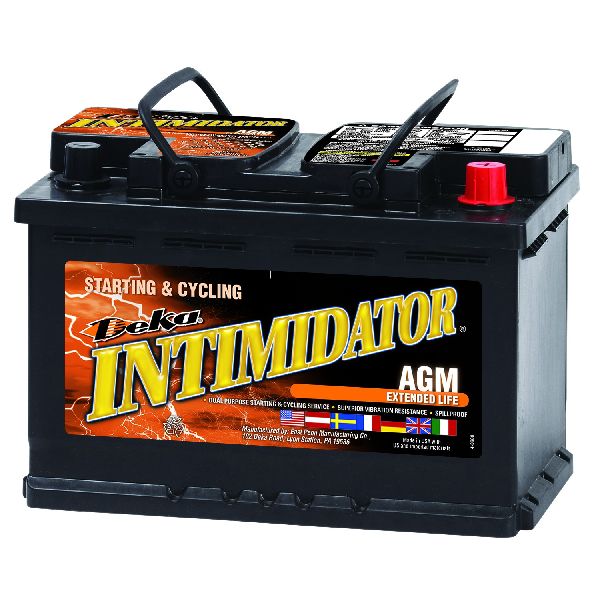
Est. part cost: $200-$400 - Weak or Defective Battery 🔴 High Probability Batteries typically last 3-5 years. An old battery, especially the required AGM (Absorbent Glass Mat) type, may not be able to hold a sufficient charge, causing the system voltage to drop under load even if the alternator is working correctly.
How to confirm: Have the battery professionally load-tested at an auto parts store. A simple voltage check is not enough. The test should measure Cold Cranking Amps (CCA) against the battery's rating. A healthy, fully charged battery should read around 12.6V with the engine off.
Typical fix: Replace the battery. It is recommended to use an AGM battery as specified by the manufacturer.
Est. part cost: $150-$250 - Corroded or Loose Battery Terminals/Cables 🟡 Medium Probability Corrosion (a white or greenish powder) on the battery terminals acts as an insulator, preventing the alternator from properly charging the battery and hindering current flow. A specific known issue is corrosion at the positive cable's connection stud on the side of the underhood fuse block, which can cause a major voltage drop.
How to confirm: Visually inspect the battery terminals, cable ends, and the connection at the underhood fuse block for corrosion or looseness. Attempt to wiggle the cable connections; they should be completely solid.
Typical fix: Clean the battery terminals, cable ends, and fuse block stud with a wire brush and ensure they are securely tightened. Apply a dielectric grease or anti-corrosion spray. Replace cables if corrosion is severe.
Est. part cost: $5-$50 - Poor Ground Connection ⚪ Low Probability Corroded or loose ground straps can create high resistance in the electrical system. The G110 ground, located on a bracket at the rear of the driver's side cylinder head near the firewall, is a known potential issue spot on this platform that can cause various electrical gremlins.
How to confirm: Perform a voltage drop test on the main ground cables. With the engine running, place one multimeter lead on the negative battery post and the other on the engine block and then the chassis. A reading above 0.2-0.3 volts indicates a poor ground.
Typical fix: Locate, remove, clean, and securely re-attach the main ground straps (battery-to-chassis and engine-to-chassis). Pay special attention to cleaning the G110 ground point.
Est. part cost: $0-$20
Rare But Worth Checking
- Faulty Powertrain Control Module (PCM): This is extremely rare. The PCM should only be considered after all other possibilities, including wiring, have been exhaustively tested and ruled out.
- Parasitic Battery Drain: A module or component that fails to shut down when the vehicle is off can drain the battery, causing a low voltage state on startup and triggering P0562. This can be caused by aftermarket accessories or a failing factory module.
- Slipping or Worn Serpentine Belt: A worn, stretched, or oil-contaminated serpentine belt can slip on the alternator pulley, preventing it from spinning at the correct speed to generate adequate voltage. This is often accompanied by a squealing noise during startup or acceleration.
Diagnosis Steps

- Scan the vehicle for any other stored trouble codes to see if other systems are affected.
- With the engine off, check the battery's state of charge with a multimeter. A healthy battery should read approximately 12.6 volts.
- Visually inspect the battery terminals, positive and negative cables, and the main power stud on the underhood fuse block for corrosion, damage, or looseness.
- Inspect the main ground straps, especially the G110 ground on the rear of the cylinder head, for tightness and corrosion.
- Start the engine and measure the voltage at the battery terminals. It should rise to between 13.5V and 14.7V (may fluctuate higher due to RVC system).
- Turn on all major electrical accessories (high beams, A/C on max, rear defroster). The voltage should remain stable, above 13.2V. If it drops significantly, the alternator is likely failing under load.
- If charging voltage is good, have the battery professionally load-tested to confirm it can hold a charge under load.
- If the battery and alternator test good, perform a voltage drop test on the main power and ground cables to check for hidden resistance in the wiring.
Parts You'll Likely Need

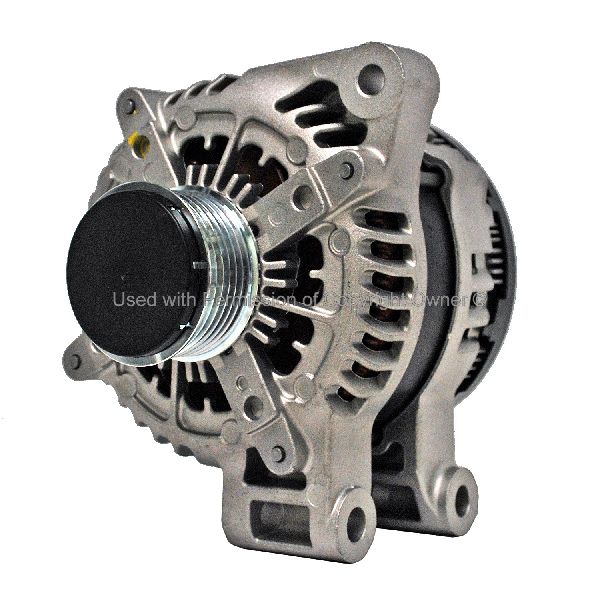
- Alternator
(OEM #ACDelco 23279588 (or remanufactured 334-3094A))— This is the most common cause of P0562, as the 170-amp alternator is responsible for charging the battery and powering the vehicle's electronics while running.
Trusted brands: ACDelco, Denso, Bosch
OEM price range: $300-$500
Aftermarket price range: $200-$400 - AGM Battery
(OEM #ACDelco Gold 48AGM (Group Size H6/L3/48))— The second most common cause. An old or failing battery cannot store the energy provided by the alternator, leading to a low system voltage condition.
Trusted brands: ACDelco, Interstate, DieHard
OEM price range: $200-$300
Aftermarket price range: $150-$250 - Battery Cables — In cases of severe corrosion, especially at the fuse block connection, the cables themselves can develop high internal resistance and must be replaced to restore proper current flow.
Trusted brands: ACDelco, Standard Motor Products
OEM price range: $50-$150
Aftermarket price range: $30-$100
Related Codes That Often Appear With This One
- P0606 — System voltage instability is a known trigger for the P0606 (PCM Processor Fault) code on this platform. GM has issued service bulletins (e.g., PIT5347B for similar platforms) advising technicians to resolve any voltage codes like P0562 before suspecting a faulty PCM. Manufacturer TSB #24-NA-050 also notes that Silverado and Sierra models may set P0606 in conjunction with P0562 or P0563.
- U0100 — A significant drop in system voltage can cause the ECM to lose communication with other modules on the vehicle's network, such as the Transmission Control Module (TCM) or Body Control Module (BCM), resulting in U-series communication codes.
Technical Service Bulletins (TSBs) & Recalls
- PIE0548: An Engineering Information bulletin where GM requested technicians to submit photos of loose or corroded G110 and G114 ground connections, indicating it is a known area of concern.
- Similar Platform TSB PIT5347B: While for a newer platform, this TSB for codes P0562/P0606 reinforces the diagnostic principle of thoroughly testing the battery and connections before condemning an expensive control module, a logic that applies directly to the Traverse.
- Bulletin #PIT6347B: This manufacturer bulletin addresses issues with ABS, Service StabiliTrak, and the Service Brake System accompanied by DTCs P0606 and P0562, advising dealers to perform additional battery and connection testing.
- Bulletin #PIT5634: GM engineering notes that failing to follow SI diagnostics for DTC P0562 "System Voltage Low" can lead to a misdiagnosis and an incorrect repair.
Platform-Specific Known Issues
- Corrosion at Underhood Fuse Block: The main positive battery cable connects to a stud on the side of the underhood fuse block. This connection is exposed to the elements and is a common point for corrosion to build up, creating high resistance that can mimic the symptoms of a failed alternator.
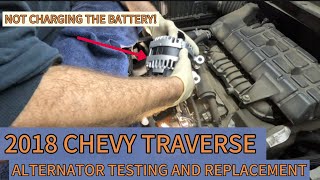
- Difficult Alternator Access: Replacing the alternator is more difficult than on many other vehicles. It is located low on the back of the engine, requiring removal of other components for access.
Mechanic-Grade Diagnostic Values
- Regulated Voltage Control (RVC) - Normal Operation — expected: 12.5V to 15.5V, fluctuating based on mode.. Failure: Voltage consistently below 13.2V with the engine running and under load, or not increasing from battery resting voltage.
- RVC 'Fuel Economy Mode' — expected: 12.6V - 13.1V. This mode activates under light load to reduce engine drag.. Failure: This is a normal reading and not a failure, but can be confusing. Turning on headlights or tow/haul mode should force the system into a higher charging mode (13.9V+).
- RVC 'Charge Mode' — expected: 13.9V - 15.5V. Used after startup or when electrical demand is high.. Failure: System fails to enter this mode when electrical loads (headlights, A/C, defroster) are activated.
- Voltage Drop Test: Alternator B+ post to Battery Positive Post — expected: Less than 0.5V with engine running and high electrical load.. Failure: Voltage reading higher than 0.5V indicates high resistance in the positive charging cable or connections, often at the underhood fuse block stud.
- Voltage Drop Test: Alternator Case to Battery Negative Post — expected: Less than 0.2V with engine running.. Failure: Voltage reading higher than 0.2V indicates a poor ground connection between the engine and the battery/chassis.
Scan Tool Commands That Help
- GDS2 (GM Global Diagnostic System 2): Generator L-Terminal Control / Generator Field Duty Cycle Control — This bidirectional control allows a technician to manually command the alternator's output percentage, bypassing the BCM/ECM. It's used to definitively test if the alternator is mechanically capable of charging, isolating it from potential control system or wiring faults.
- GDS2 (GM Global Diagnostic System 2): Charging System Data Display — Use this to monitor live data PIDs such as 'Battery State of Charge', 'Generator Field Duty Cycle Signal', and 'Charging System Operating Mode'. This helps determine what the BCM is seeing and commanding, which is crucial for diagnosing control-side issues.
Wiring & Ground Locations
- G110 — On a bracket at the right rear of the engine, mounted to the back of the driver's side cylinder head, near the firewall and power steering pump pressure hose.. This is a primary engine ground point. Corrosion or looseness here can cause high resistance, leading to charging system faults and various other electrical issues.
- Underhood Fuse Block Positive Stud — A large threaded stud on the side of the underhood fuse block where the main positive battery cable and the alternator output cable connect.. This is a critical power distribution point. It is highly susceptible to corrosion, which creates a significant voltage drop between the alternator and the battery, directly causing P0562 symptoms even with a good alternator.
- G103 — On the left inner fender panel in the engine compartment.. Serves as a major chassis ground point. A poor connection here can affect the entire vehicle's electrical stability.
- G305 — Near the battery, often related to the battery tray or nearby chassis structure.. A key ground point for components located near the battery and front of the vehicle.
- Alternator 2-Pin Connector — The electrical plug on the alternator itself, which contains the L-terminal (regulator turn-on) and F-terminal (field duty cycle feedback).. A broken wire or corroded pin in this connector can prevent the ECM from controlling the alternator, leading to a no-charge condition and P0562.
Real Owner Repair Stories
- Traverse Forum User (2011 Chevrolet Traverse) — "Service Battery Charging System" light, P0562 code, voltage dropping to 11.5V while driving, dimming lights.
❌ Tried (didn't work) Replaced the battery., Replaced the alternator.
✅ What actually fixed it The positive battery cable connection at the underhood fuse block was severely corroded. Cleaning the stud and the cable end restored proper voltage and resolved the code. - Acadia Forum User (Lambda Platform) (2010 GMC Acadia) — Intermittent P0562, battery light flickering, voltage gauge fluctuating wildly before dropping low.
❌ Tried (didn't work) Battery tested good., Alternator tested good off the vehicle.
✅ What actually fixed it The small 2-wire connector on the alternator had a broken wire inside the insulation right at the connector body. The connection was intermittent. Replacing the pigtail connector (Duralast 792) fixed the charging issue. - NHTSA ODI #11676063: An owner reported a P0562 code indicating the vehicle’s electrical system was running at low voltage, noting it could be due to a weak battery.
When the Usual Fixes Don't Work
- In several documented cases, both the battery and alternator were replaced by owners or shops, yet the P0562 code returned. The final solution was often found in the wiring, specifically the corroded positive power stud on the underhood fuse block or a compromised engine ground strap (G110). This highlights that while the alternator is a common failure point, assuming it's the cause without performing voltage drop tests on the main cables can lead to expensive and unnecessary parts replacement.
OEM Part Supersession History
Varies by year, e.g., 25866001→23279588— GM consolidated part numbers and may have integrated design updates for durability.
Heads up: While multiple part numbers exist, the 170-amp Denso-family alternator is the correct type for this platform. Ensure the replacement matches this amperage and has the correct 2-pin regulator connector.
Model Year Variations Within This Range
- 2009-2012: These model years are equipped with the LLT 3.6L V6 engine.
- 2013-2017: These model years use the updated LFX 3.6L V6 engine. While architecturally similar, the LFX features changes like integrated exhaust manifolds and a different ECM (Delphi instead of Bosch). While the charging system concept (RVC) is the same, specific part numbers for the alternator or wiring may differ. The alternator part number 23279588 is listed as compatible across both engine types on the Traverse.
Diagnostic Flowchart
Other Known Issues on This Vehicle
Issues unrelated to this code that are worth knowing about as an owner of this generation:
- Premature Timing Chain Stretch 🔴 High — Very common, especially on 2009-2012 models, often appearing between 70,000 and 120,000 miles. Linked to long oil change intervals and original chain design. (Ref: Special Coverage Adjustment 11340C (expired) was issued for 2009 models, extending the warranty. TSBs 12-06-01-009F and PIP3423P provide diagnostic guidance.)
- Cracked 3-5-R Wave Plate in Transmission 🔴 High — Common on earlier models (especially 2009), typically occurring between 80,000 and 130,000 miles, resulting in loss of 3rd, 5th, and Reverse gears. (Ref: Special Coverage Adjustment 14404B (expired) covered this failure for 10 years/120,000 miles on 2009 models.)
- Power Steering Pump/Gear Failure 🟠 Medium — Frequent complaints of whining noises, fluid leaks, or sudden loss of power steering assist at low speeds, often requiring pump or steering rack replacement. (Ref: TSB 13-02-32-001E addresses leaking power steering lines.)
- Excessive Oil Consumption 🟠 Medium — Often reported on models approaching 100,000 miles, caused by worn piston rings or a failing PCV system. (Ref: TSB #010601011L was released to address oil consumption.)
- Water Pump Failure 🟠 Medium — The water pump is a common failure item, often leading to coolant leaks from its weep hole. Failure can occur as early as 60,000 miles.
Used vs. New Parts: Buying Guide for This Vehicle
When a used part is the smart pick: Used parts can be a cost-effective choice for battery cables and the underhood fuse block. These components are generally durable, and their condition can be easily verified through visual inspection for corrosion, melting, or physical damage.
Donor-vehicle mileage cap: roughly under 80000 miles for the part to have meaningful remaining life.
What to inspect on the donor part:
- For cables, check for any signs of green or white corrosion, especially at the terminal ends and the fuse block connection.
- Ensure insulation is not cracked, brittle, or melted.
- For a fuse block, inspect the power connection studs for any pitting, corrosion, or signs of overheating (discoloration).
- Prefer donor vehicles from dry, salt-free climates to minimize the risk of corrosion.
OEM-only on this vehicle (don't cheap out):
- While not strictly 'OEM-only', using a high-quality alternator is critical. Low-quality, no-name aftermarket alternators have a high failure rate on this platform due to the demands of the RVC system.
Aftermarket brands forum-validated for this vehicle:
- Alternator: ACDelco (OEM or Remanufactured), Denso (often the original manufacturer), Valeo.
- Battery: Interstate, DieHard, ACDelco AGM.
Brands owners have reported issues with on this vehicle:
- Avoid generic, unbranded 'white-box' alternators from online marketplaces, as their internal voltage regulators often fail to communicate correctly with the GM RVC system.
Real Owner Stories
Aggregated from forums and TSBs cited above. Mileages and costs reflect what owners reported in those sources.
2011 Chevrolet Traverse 3.6L V6
Symptoms: Service Battery Charging System message and P0562 code.
What fixed it: Replacement of the alternator after a shop confirmed it was failing under load.
Source hint: 2011 Traverse - Service Battery Charging System - P0562 thread on traverseforum.com
2011 Chevrolet Traverse 3.6L V6 — ~125000 miles
Symptoms: P0562 code and other electrical warnings.
What fixed it: Replacing both the original 7-year-old battery and the failed alternator.
Source hint: P0562 System Voltage Low thread on traverseforum.com
2011 Chevrolet Traverse 3.6L V6
Symptoms: Electrical gremlins and low voltage issues related to the G110 ground.
What fixed it: Locating and cleaning the G110 ground on the rear of the cylinder head.
Source hint: Reddit r/Chevy thread: 'Does anyone know the location of the G110 ground on the 2011 Chevy traverse?'
Related OBD-II Codes
Frequently Asked Questions
I'm seeing a 'Service Battery Charging System' message on my 2011 Traverse. Is this related to code P0562?
Does GM have any technical bulletins regarding ground issues for the P0562 code on this platform?
Can I use a standard lead-acid battery in my Traverse to fix this code?
I suspect my alternator is failing; is it an easy DIY fix on the 3.6L V6?
Could a problem with the underhood fuse block cause a P0562 code?
Should I replace my Engine Control Module if I have P0562 and P0606?
Helpful Videos
Used OEM Parts in Stock

New Aftermarket Parts Available



The information in this article is provided for general reference and educational purposes only. Vehicle specifications, procedures, and part compatibility can vary by production date, trim level, and region. Always consult your vehicle's factory service manual and verify part numbers before purchasing or performing repairs. Safety-critical components such as airbags, seat belts, and braking systems should be installed by a qualified professional.
- Chevrolet Traverse:
- 🎬 Helpful Videos
- 🛍️ Shop This Part
- What's Unique About the 2009-2017 Chevrolet Traverse
- Symptoms You May Notice
- Most Likely Causes
- Rare But Worth Checking
- Diagnosis Steps
- Parts You'll Likely Need
- Related Codes That Often Appear With This One
- Technical Service Bulletins (TSBs) & Recalls
- Platform-Specific Known Issues
- Mechanic-Grade Diagnostic Values
- Scan Tool Commands That Help
- Wiring & Ground Locations
- Real Owner Repair Stories
- When the Usual Fixes Don't Work
- OEM Part Supersession History
- Model Year Variations Within This Range
- Diagnostic Flowchart
- Other Known Issues on This Vehicle
- Used vs. New Parts: Buying Guide for This Vehicle
- Real Owner Stories
- 2011 Chevrolet Traverse 3.6L V6
- 2011 Chevrolet Traverse 3.6L V6 — ~125000 miles
- 2011 Chevrolet Traverse 3.6L V6
- Related OBD-II Codes
- Frequently Asked Questions
- 🎟️ Get 5% Off