

P0562 on 2009-2016 Audi A4 2.0T: System Voltage Low Causes and Fixes
P0562 on a B8 Audi A4 means the electrical system voltage is too low. This is most often caused by a failing alternator or an old battery. A replacement battery must be coded to the car's computer using a diagnostic tool like VCDS, making this a more complex job than on many other vehicles. Ignoring this step will lead to premature failure of the new battery.
- P0562 indicates a serious low voltage problem; do not continue driving.
- The most likely culprits are a failed alternator or an old battery.
- Always test both the battery and alternator before replacing parts.
- CRITICAL: Any new battery installed in a 2009-2016 Audi A4 must be electronically coded to the car's computer to ensure proper charging and longevity.
- Check simple things first: ensure battery terminals are clean and tight.
What's Unique About the 2009-2016 Audi A4

The 2009-2016 (B8 generation) Audi A4 uses a sophisticated Battery Management System (BMS) controlled by the J533 CAN Gateway module or a dedicated J367/61 Battery Regulation module. Unlike many cars where you can simply swap the battery, on this A4, a new battery must be 'coded' or registered. This process, done with a diagnostic tool like VCDS or OBDeleven, updates the BMS with the new battery's specifications (e.g., capacity, type like AGM, brand, and serial number) found on a BEM (Battery Energy Management) sticker on OEM or compatible batteries. This allows the BMS to adjust its charging strategy for the new unit. Skipping this step causes the system to continue charging the new battery as if it were the old, degraded one, leading to chronic under or overcharging, which significantly shortens its life and causes the P0562 code to return.
Symptoms You May Notice

- Check Engine Light and/or a red battery warning light on the dashboard.
- Multiple other warning lights may appear, such as EPC, ABS, or Parking Brake Fault.
- Dimming or flickering headlights and interior lights, especially at idle.
- Difficulty starting the engine or slow, labored cranking.
- Engine stalling, especially when coming to a stop.
- Erratic behavior from electrical accessories like the radio, power windows, or MMI system.
- Transmission shifting issues or warnings, as the transmission control module relies on stable voltage.
- A message on the MMI screen indicating low battery charge.
- Replacing the battery without coding it to the vehicle. The new battery will not be charged correctly by the BMS, and the problem will likely return, often with premature battery failure.
- Replacing the alternator when the actual issue is a simple bad ground connection or corroded battery terminal.
- Mistaking a P0562 code caused by a failing ride height level sensor for a charging system issue. In some cases, a faulty suspension level sensor can short and cause this code.
Most Likely Causes

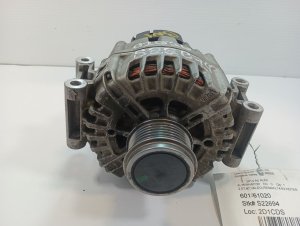
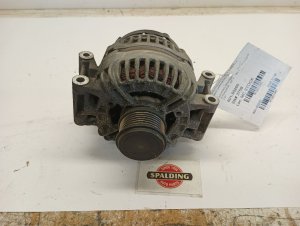
- Failing Alternator 🔴 High Probability The alternator (or its internal voltage regulator) is a common wear item responsible for charging the battery and powering the car's electronics when running. Its failure is a primary cause of low system voltage. Both Bosch and Valeo are OEM suppliers for this platform.
How to confirm: With the engine running, use a multimeter to measure the voltage across the battery terminals. A healthy alternator should produce between 13.5 and 14.8 volts. If the voltage is below 13.2V, does not increase when the engine is revved, or if you see fault code P2503 (Charging System Voltage Low), the alternator is likely faulty. A voltage drop test between the alternator output post and the positive battery terminal should show less than 0.3V; higher indicates a bad cable or fusible link.
Typical fix: Replace the alternator. It is also highly recommended to replace the serpentine belt at the same time if it shows signs of wear.
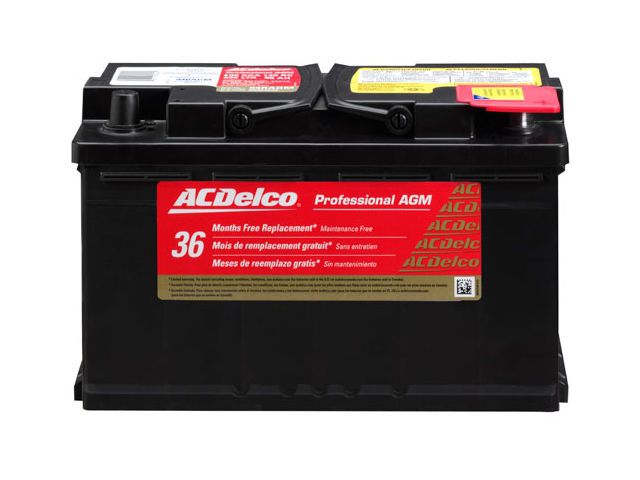
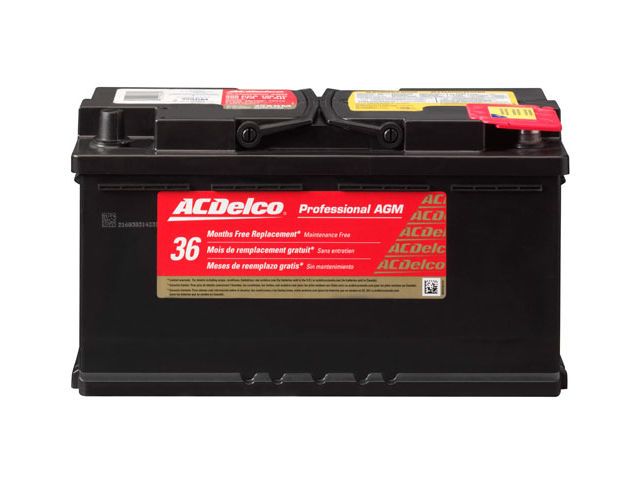
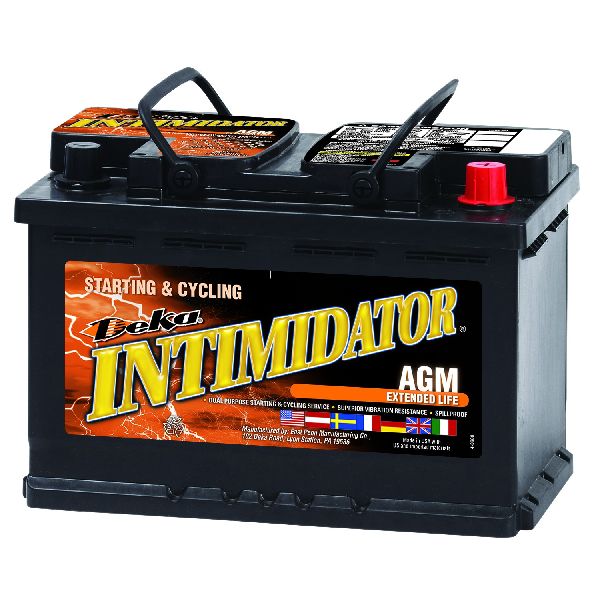
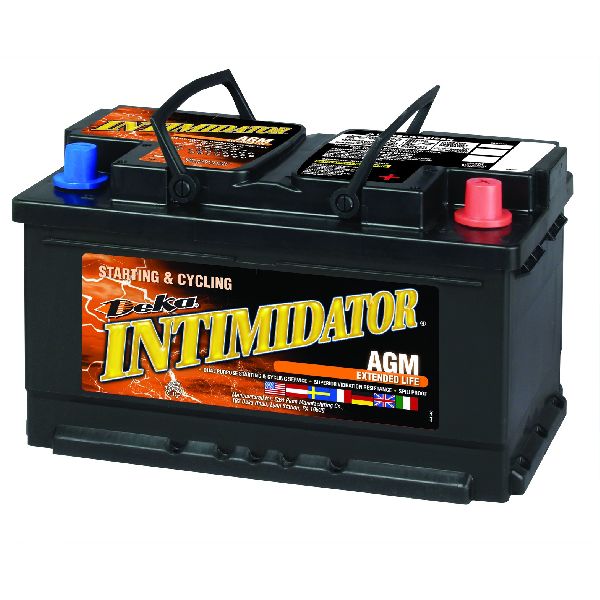
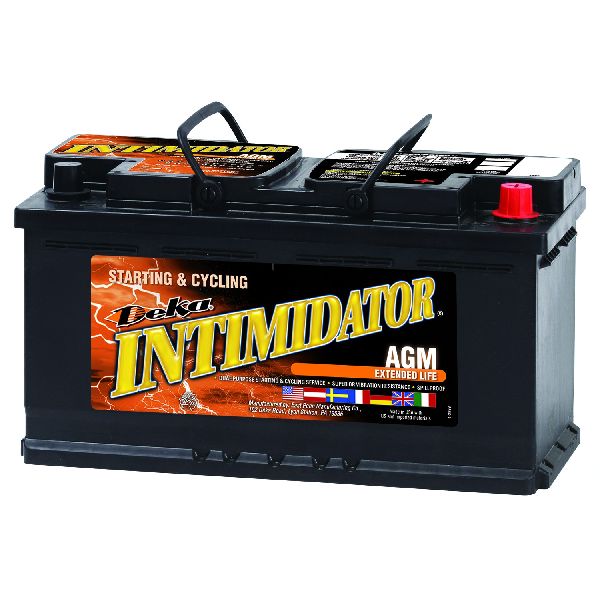
Est. part cost: $300-$700 - Weak or Old Battery 🔴 High Probability Car batteries have a finite lifespan of 3-5 years. The B8 A4 uses an AGM (Absorbent Glass Mat) battery, typically in H7 or H8 size, which is located in the trunk. An old battery may no longer be able to hold a sufficient charge to operate the vehicle's systems.
How to confirm: With the engine off for at least an hour, measure the battery voltage with a multimeter. A fully charged, healthy battery should read approximately 12.6 volts. A reading below 12.2V indicates a discharged or failing battery. Most auto parts stores can perform a load test to confirm its health.
Typical fix: Replace the battery. Crucially, the new battery must be coded to the vehicle's Battery Management System (BMS) using a compatible diagnostic tool like VCDS or OBDeleven.
Est. part cost: $200-$400 - Corroded or Loose Battery Terminals/Cables 🟡 Medium Probability Corrosion (a white or greenish powder) on the battery terminals or main ground straps acts as an insulator, creating high resistance that prevents proper current flow for charging and operation.
How to confirm: Visually inspect the battery terminals in the trunk. Also, check the main engine-to-chassis and battery-to-chassis ground straps for corrosion, looseness, or damage. A voltage drop test across these cables can pinpoint high resistance. A drop of more than 0.2V from the alternator case to the negative battery post indicates a bad ground path.
Typical fix: Disconnect the battery (negative terminal first) and clean the terminals and cable clamps with a wire brush and corrosion inhibitor. Ensure all connections are clean and tight.
Est. part cost: $5-$20
Rare But Worth Checking
- Faulty Battery Management System (BMS) Sensor: The BMS sensor, a small module located on the negative battery terminal (part number often starts with 8K0 915 181), can fail. It may report incorrect voltage or state-of-charge data to the gateway, leading to improper charging and this fault code. Diagnosis can be done by monitoring battery data blocks in VCDS.
- Parasitic Electrical Drain: A faulty module (like the MMI system or a door control module) or a poorly installed aftermarket accessory may not shut down correctly when the car is off, slowly draining the battery overnight and causing a low voltage condition on startup. A parasitic draw test with an ammeter is required to diagnose this. A draw over 50mA after the car has entered sleep mode (approx. 30-60 minutes) is considered excessive.
- Blown Main Fuse or Faulty Fusible Link: The main fuse for the charging system, often located in the engine bay fuse box or near the battery, can blow, cutting off the connection between the alternator and the battery.
Diagnosis Steps

- Read all fault codes from all control modules using an Audi-compatible scanner (like VCDS). Note if P0562 is present in multiple modules.
- With the engine off, measure the battery's static voltage using a multimeter. It should be ~12.6V. If it's below 12.2V, charge the battery and have it load tested.
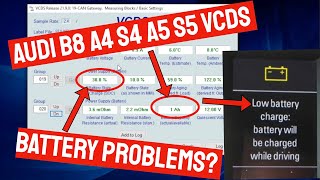
- Using VCDS or similar, navigate to the CAN Gateway (19) or Battery Regulation (61) module and check the measuring blocks for Battery State of Charge (SOC). A low SOC (e.g., 30%) on a recently driven car points to a charging issue.
- Visually inspect the battery terminals, main power cables, and chassis ground straps for corrosion, damage, or looseness. Clean and tighten as necessary.
- Start the engine. Measure the voltage at the battery terminals again. It should be between 13.5V and 14.8V.
- Turn on heavy electrical loads (headlights, rear defroster, blower fan on high). The voltage should remain stable and above 13.2V. If it drops significantly, the alternator is likely weak.
- Inspect the alternator's serpentine belt for proper tension, cracks, or glazing. A slipping belt can prevent the alternator from charging effectively.
- If the battery and alternator test good, perform a parasitic draw test to check for modules or components drawing power when the car is off.
- If a new battery is installed, ensure it is correctly coded to the Battery Management System using a diagnostic tool, entering the new part number, serial number, and vendor code.
Parts You'll Likely Need

- Alternator
(OEM #06H903016L (Valeo 140A), 06E903016S (Bosch 150A))— The alternator is the most common point of failure in the charging system that leads to a P0562 code when the battery itself is healthy. Amperage (140A, 150A, 180A) varies by vehicle options.
Trusted brands: Bosch, Valeo
OEM price range: $600-$900
Aftermarket price range: $300-$550 - AGM Battery
(OEM #000915105DL (H8/L5 Size, 92Ah))— The battery is a consumable item and often the cause of low voltage. B8 A4s typically use an H7 or H8 size AGM (Absorbent Glass Mat) battery, which must be coded upon installation.
Trusted brands: Varta, Bosch, Exide, Interstate
OEM price range: $300-$450
Aftermarket price range: $200-$350
Related Codes That Often Appear With This One
- 00532 — This is a VAG-specific code for 'Supply Voltage B+: Signal too Low', which is often logged in multiple control modules alongside P0562, indicating a widespread low-voltage problem.
- P2503 — This code for 'Charging System Voltage Low' points more directly toward a problem with the alternator's output.
- P0016 — Crankshaft/Camshaft Position Correlation. In some cases, a severe voltage drop can occur during a timing chain failure event, causing both codes to be logged simultaneously.
Platform-Specific Known Issues
- The requirement to code a new battery to the Battery Management System (BMS) is the most significant vehicle-specific issue. Failure to do so will result in premature battery failure and recurring charging system problems.
- The Battery Management Module (J367), located on the negative battery terminal, can fail and send incorrect data, causing the system to undercharge a perfectly good battery and alternator setup.
Mechanic-Grade Diagnostic Values
- VCDS CAN Gateway (19) Measuring Blocks — expected: Groups 018, 019, and 020 display battery state of charge, voltage, current, temperature, and calculated aging. A healthy, charged battery should show ~100% State of Charge and low aging values.. Failure: A low State of Charge (e.g., 30%) after driving, or high quiescent current draw (above 50mA) after the car sleeps, indicates a charging or parasitic draw issue.
- Voltage Drop: Alternator B+ to Battery Positive Post — expected: Less than 0.3 Volts with engine at 1500 RPM.. Failure: A reading greater than 0.5 Volts indicates high resistance in the main charging cable or a failing fusible link within the cable assembly.
- Voltage Drop: Alternator Case to Battery Negative Post — expected: Less than 0.2 Volts with engine running under load.. Failure: A reading greater than 0.4 Volts points to a compromised ground path, likely from a corroded or loose main engine or chassis ground strap.
- Parasitic Draw (Quiescent Current) — expected: Less than 50 milliamperes (0.05A) after all modules have entered sleep mode (approx. 30-60 minutes after locking).. Failure: A sustained draw above 50mA indicates a module is not sleeping or there is a short. Common culprits on the B8 platform include the MMI system or a faulty alternator diode.
Scan Tool Commands That Help
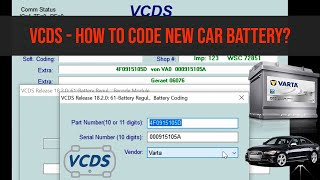
- VCDS (VAG-COM): Battery Coding via [19-CAN Gateway] -> [Long Adaptation - 0A] -> Channel 4 — Used on most B8 A4s where the Battery Management module (J367) is a subsystem of the CAN Gateway. This is required after installing a new battery to inform the BMS of the new battery's specs (Part Number, Serial Number, Vendor).
- VCDS (VAG-COM): Battery Coding via [61 - Battery Regul.] -> [Coding - 07] — Used on some B8 models that have a separate, dedicated Battery Regulation control module. The process is similar to the Module 19 method but accessed via a different controller.
- VCDS / OBDeleven: Generating a BEM code for an aftermarket battery — If an aftermarket battery without a BEM code is installed, you can often use the part number of a compatible OEM battery (e.g., 000915105AG) and simply change one digit of the old battery's serial number. This action resets the BMS learning cycle.
Wiring & Ground Locations
- Main Engine Ground Strap — Typically connects from the engine block or transmission bellhousing to the chassis frame rail on the driver's side.. This is the primary ground path for the alternator. Corrosion or looseness here creates high resistance, impeding the alternator's ability to charge the battery and power the vehicle, directly causing low system voltage.
- Battery Ground Strap — Connects the negative battery terminal to the chassis in the trunk, near the battery location.. A poor connection here can cause incorrect readings by the Battery Management Sensor (J367) located on the negative terminal, leading to improper charging strategy and a P0562 code.
- Alternator LIN Bus Wire — A single wire (typically purple or violet) running from the alternator's voltage regulator connector to the Engine Control Module (ECM).. This wire is for communication, not power. The ECM uses it to command the alternator's output. A break or short in this wire can cause a 'No Communication with Alternator' fault and may result in the alternator defaulting to a low-output mode or not charging at all.
- Main Fuse/Relay Panel — Located in the plenum chamber (under the plastic cowl below the windshield) in the engine bay.. This panel houses high-amperage fuses and relays critical to the charging and power distribution system. A failure here can cut power from the alternator.
Real Owner Repair Stories
- Reddit user on r/MechanicAdvice (2009 Audi A4 Avant 2.0T (B8)) — Persistent parasitic battery drain of 0.55 amps, killing the battery overnight. P0562 was likely present due to the low voltage state.
❌ Tried (didn't work) Pulled every fuse in all three fuse panels., Disconnected various interior modules (radio, amp, etc.)., Removed and bench-tested the original alternator (it tested good)., Replaced the ignition lock assembly.
✅ What actually fixed it The owner had replaced the alternator with an aftermarket unit from a parts store. It was discovered that the store provided the wrong part number (Duralast 15082 for a B7 platform car instead of 15043 for the B8). The incorrect alternator, while physically fitting, was causing the parasitic draw. Installing the correct B8-specific alternator resolved the drain completely. - Owner report via NHTSA ODI #11171521 — On a related Audi platform with the same powertrain, an owner reported a P0562 low voltage code appearing simultaneously with a P001600 (237) DTC code. The vehicle required towing to a specialist after issues were detected in the pump area.
OEM Part Supersession History
06H903016L→This part number is still widely used for the 140A Valeo alternator. It has many cross-references to aftermarket rebuilds but is not directly superseded by a different Audi number in most catalogs.— N/A
Heads up: Be cautious of part numbers for the B7 generation A4, which can be confused with B8 parts, especially for the 2009 model year. An incorrect alternator can cause persistent parasitic draw even if it appears to charge correctly.
Model Year Variations Within This Range
- 2009-2012 (B8) vs 2013-2016 (B8.5): While the fundamental charging system is the same, some B8.5 models may have a higher likelihood of the Battery Management System being integrated directly into the CAN Gateway (Module 19) for coding, whereas some earlier B8 models might use the separate Battery Regulation module (Module 61). Always perform a full scan with VCDS to see which module is present in the installation list before attempting to code a battery.
Diagnostic Flowchart
Other Known Issues on This Vehicle
Issues unrelated to this code that are worth knowing about as an owner of this generation:
- Excessive Oil Consumption 🔴 High — Very common, especially on 2009-2011 models with the CAEB engine code. Caused by faulty piston ring design. (Ref: Multiple TSBs were issued, and a class-action lawsuit led to warranty extensions and a repair process (Stage 1: PCV/seal replacement, Stage 2: new pistons and rings).)
- Timing Chain Tensioner Failure 🔴 High — Common across pre-facelift (B8) models. The original tensioner design is prone to failure, which can cause the timing chain to jump, leading to catastrophic engine damage. (Ref: An updated tensioner was released. A class-action lawsuit also addressed this issue, extending warranties for some owners.)
- Water Pump Failure 🟠 Medium — The OEM water pump has a plastic housing that is prone to cracking and leaking with age and heat cycles, often occurring after 60,000 miles. (Ref: A recall was issued for some 2013-2016 models. Many owners proactively replace the plastic pump with an all-metal aftermarket version.)
- PCV Valve Failure 🟠 Medium — The diaphragm in the PCV (Positive Crankcase Ventilation) valve / oil separator can tear, causing a large vacuum leak, rough idle, whistling noises, and fault codes like P2279. (Ref: Audi had a service campaign (17F9) for some vehicles to address this. It's a common DIY or shop repair.)
- Intake Valve Carbon Buildup 🟠 Medium — As a direct-injection engine, fuel does not wash over the intake valves. This leads to carbon accumulation over time (typically 40k-60k miles), restricting airflow and causing misfires (P0300, etc.) and rough running. (Ref: No recall; this is considered a maintenance item. The fix is a manual or walnut-shell media blasting cleaning of the valves.)
Used vs. New Parts: Buying Guide for This Vehicle
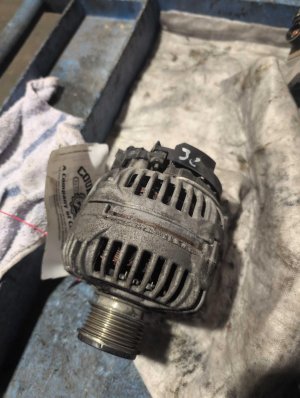
When a used part is the smart pick: A used OEM alternator from a reputable salvage yard can be a cost-effective option, especially if it comes from a low-mileage, rear-ended donor vehicle. It is often preferable to a new, cheap aftermarket unit of questionable quality.
Donor-vehicle mileage cap: roughly under 80000 miles for the part to have meaningful remaining life.
What to inspect on the donor part:
- Check the pulley for smoothness; it should spin freely without noise or roughness.
- Inspect the electrical connector for any signs of corrosion, melting, or broken pins.
- Verify the OEM part number (e.g., Bosch, Valeo) on the sticker matches the one required for your vehicle's specific options (140A, 150A, etc.).
- Ask for the donor vehicle's VIN to confirm mileage and check for any reported electrical issues.
OEM-only on this vehicle (don't cheap out):
- Battery Management System (BMS) Sensor (on negative terminal): Aftermarket versions are rare and may not communicate correctly with the gateway module.
Aftermarket brands forum-validated for this vehicle:
- Bosch (New or Remanufactured)
- Valeo (New or Remanufactured)
Brands owners have reported issues with on this vehicle:
- Generic, unbranded 'white box' alternators from online marketplaces have a high failure rate and are known to cause communication issues or parasitic draws on this platform.
Real Owner Stories
Aggregated from forums and TSBs cited above. Mileages and costs reflect what owners reported in those sources.
2010 Audi A4 2.0T TFSI
Symptoms: Owner needed to know the definitive procedure for coding a new battery and how to access the correct modules to clear power-related faults.
What fixed it: Followed the procedure for coding the new battery to the Battery Management System by accessing either module 19 (CAN Gateway) or module 61 (Battery Regulation) using VCDS.
Source hint: Ross-Tech Wiki: Battery Replacement
Audi Owner Report (NHTSA ODI #11171521)
Symptoms: The vehicle logged a P0562 low voltage code alongside a P001600 (237) DTC code. The owner noted issues in the pump area and was advised to tow the vehicle to a specialist.
What fixed it: The owner contacted the manufacturer to address the underlying mechanical and electrical correlation issues identified by the specialist.
Related OBD-II Codes
Frequently Asked Questions
I just replaced the battery in my 2012 Audi A4; do I really need to use a tool like VCDS or OBDeleven to 'code' it?
My MMI screen is showing a low battery charge message and my headlights are flickering at idle. Is this a battery or alternator issue?
Which alternator brands are considered OEM for the 2009-2016 Audi A4 2.0T?
Could a bad ground strap cause a P0562 code on my Audi A4?
Is there a specific module that might be misdiagnosing my battery health?
My Audi A4 has P0562 and is also stalling when I come to a stop. Are these related?
Helpful Videos
Used OEM Parts in Stock



New Aftermarket Parts Available


The information in this article is provided for general reference and educational purposes only. Vehicle specifications, procedures, and part compatibility can vary by production date, trim level, and region. Always consult your vehicle's factory service manual and verify part numbers before purchasing or performing repairs. Safety-critical components such as airbags, seat belts, and braking systems should be installed by a qualified professional.
- Audi A4:
- 🎬 Helpful Videos
- 🛍️ Shop This Part
- What's Unique About the 2009-2016 Audi A4
- Symptoms You May Notice
- Most Likely Causes
- Rare But Worth Checking
- Diagnosis Steps
- Parts You'll Likely Need
- Related Codes That Often Appear With This One
- Platform-Specific Known Issues
- Mechanic-Grade Diagnostic Values
- Scan Tool Commands That Help
- Wiring & Ground Locations
- Real Owner Repair Stories
- OEM Part Supersession History
- Model Year Variations Within This Range
- Diagnostic Flowchart
- Other Known Issues on This Vehicle
- Used vs. New Parts: Buying Guide for This Vehicle
- Real Owner Stories
- 2010 Audi A4 2.0T TFSI
- Audi Owner Report (NHTSA ODI #11171521)
- Related OBD-II Codes
- Frequently Asked Questions
- 🎟️ Get 5% Off