

P0558 on 2018-2021 Chevrolet Traverse: Brake Booster Pressure Sensor Circuit High Causes and Fixes
On a 2018-2021 Traverse, code P0558 is most often caused by a known wiring issue outlined in GM Technical Service Bulletin #20-NA-071. The cause is typically electrical interference (EMI) or poor terminal tension in the engine harness. The official fix involves replacing the power brake booster vacuum hose/sensor assembly and installing a new, separate wiring harness (Part No. 84868339 for V6 models) to prevent electrical interference. This is a safety-critical repair.
- P0558 on a 2018-2021 Traverse indicates a 'Brake Booster Pressure Sensor Circuit High' fault, almost always caused by a known wiring issue detailed in GM TSB #20-NA-071.
- Symptoms are serious and include a hard brake pedal, increased stopping distance, and a 'Service Power Brake Assist' warning.
- The correct repair is not just to replace the sensor, but to follow the TSB by installing a new vacuum hose/sensor assembly and a new, separate wiring harness (Part #84868339 for V6) to shield the signal from electrical interference.
- This issue is shared across many GM C1XX platform vehicles, including the Buick Enclave, GMC Acadia, and Cadillac XT5/XT6.
- Driving the vehicle is not recommended due to the compromised braking performance.
What's Unique About the 2018-2021 Chevrolet TRAVERSE
The 2018-2021 Traverse, equipped with a 3.6L V6 (LFY) engine, uses an auxiliary engine-driven vacuum pump to supply the brake booster, as modern direct-injection engines don't always produce enough vacuum on their own. General Motors identified a specific issue on these vehicles where electrical interference (EMI) or poor terminal connections in the factory wiring harness can cause false high voltage signals from the brake booster pressure sensor. This problem is common enough that GM issued a Technical Service Bulletin (TSB #20-NA-071) with a dedicated repair procedure that involves installing a new, rerouted wiring harness to shield the sensor's signal.
Diagnostic Flowchart
Tap your situation to follow the diagnostic path that matches what you're seeing on this vehicle.
Symptoms You May Notice
- "Service Power Brake Assist" message on the instrument cluster.
- Check Engine Light (Service Engine Soon Lamp) is on.
- Hard brake pedal that requires significantly more effort to press.
- Increased stopping distance.
- Hissing noise from the engine bay or near the brake pedal.
- Intermittent loss of power assist during a stop.
- Replacing the entire power brake booster when the issue is only the sensor or its wiring. 🎬 See how replacing just the sensor can save you money.
- Replacing the engine-driven vacuum pump. While a pump failure can cause a hard pedal, it typically doesn't set the P0558 circuit code.
- Replacing only the sensor without performing the TSB wiring harness update, leading to a repeat failure.
Most Likely Causes
- Wiring Harness Interference / Poor Terminal Tension 🔴 High Probability This is a known issue documented by GM in TSB #20-NA-071 for the Traverse and related platforms. The TSB states the cause is potential for EMI (Electromagnetic Interference) in the engine harness and/or poor terminal tension at the sensor connector, which negatively impacts the signal.
How to confirm: A technician would reference TSB #20-NA-071 and inspect the wiring harness between the brake booster vacuum sensor and the ECM. They would check sensor voltage with a scan tool to confirm it's stuck high (e.g., above 4.8V). The TSB is the primary diagnostic path.
Typical fix: The official GM fix involves installing a new power brake booster vacuum hose (which includes a new sensor) and a new, separate wiring harness (GM Part #84868339 for V6 engines) that is rerouted and spliced into the ECM connector to shield it from interference. The old sensor wiring is abandoned.
Est. part cost: $75-$150 - Faulty Brake Booster Pressure Sensor 🟡 Medium Probability Sensors can fail due to internal shorts or damage. However, on this platform, the wiring issue is far more common and should be ruled out first. The TSB procedure replaces the sensor as part of the hose assembly anyway.
How to confirm: If the TSB does not apply or has already been performed, the sensor itself is the next suspect. A technician can test the sensor's output voltage directly. Disconnecting the sensor should cause the voltage reading on the scan tool to drop; if it does, the sensor is likely shorted internally.
Typical fix: Replace the brake booster pressure sensor. On this vehicle, the sensor is integrated with the vacuum hose assembly. The GM part number for the hose assembly varies by engine (LFY vs LGX).
Est. part cost: $60-$125 - Vacuum Leak ⚪ Low Probability
How to confirm: Inspect all vacuum lines connected to the brake booster and the engine-driven vacuum pump for cracks, brittleness, or loose connections. A hissing sound can help pinpoint the leak's location.
Typical fix: Replace the cracked or leaking vacuum hose.
Est. part cost: $20-$50
Rare But Worth Checking
- Failing Engine Control Module (ECM): This is very rare. The ECM should only be considered after all other possibilities, including the TSB, wiring, and the sensor itself, have been exhaustively ruled out.
- Weak or Failing Battery: On some related GM platforms with auto start/stop, a weak battery has been known to cause various electrical issues, including 'Service Brake Assist' messages, during restart events due to voltage drops. While not a direct cause of a 'circuit high' fault, it can create related symptoms and should be considered if the issue co-occurs with auto start/stop.
Diagnosis Steps
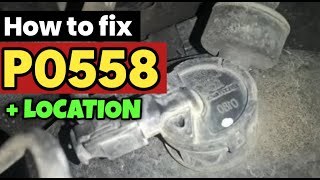
- Verify the P0558 code is present using an OBD-II scanner. 🎬 Watch: Understanding the P0558 circuit high fault code.
- Check for other related codes, especially P0557.
- Obtain and review GM Technical Service Bulletin #20-NA-071. This is the most critical step.
- Confirm the vehicle is within the scope of the TSB (make, model, year).
- Instead of traditional wiring checks, follow the TSB's specific procedure, which involves replacing the vacuum hose/sensor assembly and installing the new overlay harness.
- The TSB procedure requires de-pinning the original sensor wires from the ECM connector and installing the new harness wires into the specified terminals (e.g., X1 terminals 44, 45, 65 for V6 models).
- If the TSB has already been performed or does not apply, proceed with standard diagnostics: visually inspect the harness, check for vacuum leaks, and test the sensor signal with a scan tool or multimeter.
- Check battery health and voltage, especially on vehicles with auto start/stop, as low voltage can cause related electronic brake system warnings.
Parts You'll Likely Need
- Power Brake Booster Vacuum Hose with Sensor and Harness Kit
(OEM #Harness: 84868339 (V6), Hose Assy: Varies (e.g., 84539653))— This is the specific fix recommended by GM's TSB #20-NA-071 to resolve the known electrical interference issue causing code P0558. The kit includes the new overlay harness and the vacuum hose with an integrated sensor.
Trusted brands: GM Genuine Parts, ACDelco
OEM price range: $90-$160 - Power Brake Booster Vacuum Sensor
(OEM #178-0857 (General ACDelco number, but typically sold with hose))— If the issue is an isolated sensor failure and not the TSB-related wiring problem, the sensor itself will need replacement. It is almost always sold as part of the vacuum line assembly for this platform.
Trusted brands: GM Genuine Parts, ACDelco
OEM price range: $60-$125
Aftermarket price range: $40-$80
Related Codes That Often Appear With This One
- P0557 — P0557 is for 'Brake Booster Pressure Sensor Circuit Low'. Both P0557 and P0558 are mentioned in TSB #20-NA-071 as being caused by the same wiring harness interference and terminal tension issue.
Technical Service Bulletins (TSBs) & Recalls
- 20-NA-071: Provides the definitive repair procedure for a 'Service Power Brake Assist' message with DTCs P0557 or P0558. It identifies the cause as EMI/poor terminal tension and instructs technicians to replace the vacuum hose/sensor and install a new external wiring harness that splices into the ECM connector.
Platform-Specific Known Issues
- A known issue documented in GM Technical Service Bulletin #20-NA-071 describes how electrical interference (EMI) or poor terminal tension in the wiring harness can cause P0557 or P0558 to set. The fix involves a new, rerouted harness for the sensor and replacing the vacuum line/sensor assembly.
Helpful Videos
We Have This Part in Stock


The information in this article is provided for general reference and educational purposes only. Vehicle specifications, procedures, and part compatibility can vary by production date, trim level, and region. Always consult your vehicle's factory service manual and verify part numbers before purchasing or performing repairs. Safety-critical components such as airbags, seat belts, and braking systems should be installed by a qualified professional.
- Chevrolet TRAVERSE:
- 🎬 Helpful Videos
- 🛍️ Shop This Part
- What's Unique About the 2018-2021 Chevrolet TRAVERSE
- Diagnostic Flowchart
- Symptoms You May Notice
- Most Likely Causes
- Rare But Worth Checking
- Diagnosis Steps
- Parts You'll Likely Need
- Related Codes That Often Appear With This One
- Technical Service Bulletins (TSBs) & Recalls
- Platform-Specific Known Issues
- 🎟️ Get 5% Off