

P0557 on 2018-2021 Chevrolet Traverse: Brake Booster Sensor Circuit Low Causes and Fixes
On a 2018-2021 Traverse, code P0557 is almost always caused by a faulty brake booster vacuum sensor or its related wiring. GM has issued multiple Technical Service Bulletins (notably #20-NA-071 and #21-NA-107) that recommend replacing the vacuum hose/pipe assembly (which includes a new, more robust sensor) and, in cases of electrical interference, installing a new, separate wiring harness to resolve the issue. Expect parts to cost between $80 and $210 for the required hose and harness.
- P0557 on a 2018-2021 Traverse indicates a serious fault in the power brake assist system that requires prompt attention.
- The most common cause is a faulty brake booster vacuum sensor or a problem with its wiring, as confirmed by multiple GM Technical Service Bulletins.
- Do not be surprised if the recommended fix involves replacing both the vacuum hose/sensor assembly and adding a new, separate wiring harness to prevent future issues from electrical interference.
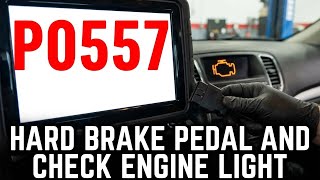
- Symptoms include a hard brake pedal, warning lights on the dash, and potentially longer stopping distances.
- Misdiagnosing this as a bad brake booster can lead to a significantly more expensive and unnecessary repair.
What's Unique About the 2018-2021 Chevrolet TRAVERSE

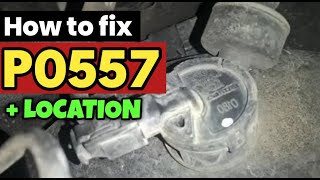
The 2018-2021 Traverse, along with a wide range of GM platform mates like the GMC Acadia and Buick Enclave, is known for this specific issue. GM has issued multiple Technical Service Bulletins (TSBs) acknowledging several distinct root causes. TSB #20-NA-071 points to electrical interference (EMI) within the main engine harness or poor terminal tension at the sensor's connector, which corrupts the sensor's signal. TSB #21-NA-107 identifies another cause as inconsistent in-rush current from the 5V reference during engine start/stop cycles, which the original sensor was not robust enough to handle. A third bulletin, #17-NA-314, blames an internal circuit board fault 🎬 Watch: Understanding the P0557 code and how to fix it. within the sensor itself. Because of these varied but well-documented electrical issues, the official GM fix often involves replacing not just the sensor but also installing a new, separate overlay wiring harness to reroute the signal away from the interference.
Diagnostic Flowchart
Tap your situation to follow the diagnostic path that matches what you're seeing on this vehicle.
Symptoms You May Notice

- Check Engine Light (Service Engine Soon lamp) is on.
- "Service Power Brake Assist" message on the driver information center.
- Brake pedal is harder to press than usual.
- Increased stopping distance required.
- Brake shudder.
- Hissing noise from the brake booster area (indicative of a vacuum leak).
- Engine may stall when pressing the brakes.
- Replacing only the sensor/hose assembly when the root cause is electrical interference (EMI) in the harness. The code will likely return until the overlay harness from TSB #20-NA-071 is also installed.
- Replacing the entire brake booster when the issue is only the attached sensor, the vacuum hose, or the wiring harness. This is a much more expensive and labor-intensive repair.
Most Likely Causes

- Faulty Brake Booster Vacuum Sensor 🔴 High Probability GM TSBs identify multiple failure modes for the sensor itself. TSB #17-NA-314 cites internal circuit board faults, while TSB #21-NA-107 explains that the original sensor lacks robustness against electrical variations during engine start/stop events, leading to the fault code.
How to confirm: Use a scan tool to monitor the sensor's voltage. If the reading is stuck low or doesn't change when applying the brakes, the sensor is likely faulty. However, given the known issues, following the TSB to replace the part with the updated version is the most reliable confirmation.
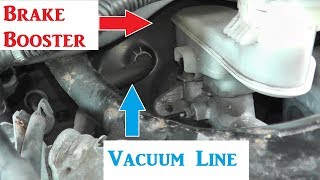
Typical fix: The sensor is integrated into the brake booster vacuum hose/pipe assembly. The entire assembly is replaced with an updated part number as specified in the relevant TSB.
Est. part cost: $50 - $150 - Wiring Harness or Connector Issue 🔴 High Probability TSB #20-NA-071 explicitly states that electrical interference (EMI) in the engine harness or poor terminal tension at the sensor connector can corrupt the signal, causing codes P0557 or P0558. The wiring's original routing makes it susceptible to this interference.
How to confirm: While a visual inspection for damage is a good first step, the interference is not visible. The most effective confirmation is following the TSB repair procedure, as this issue is widespread and well-documented by GM.
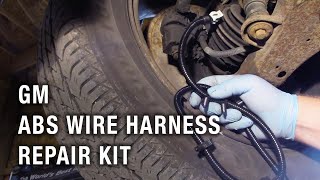
Typical fix: GM's recommended procedure per TSB #20-NA-071 is to install a new external wiring harness that connects the sensor directly to the ECM, bypassing the problematic wiring in the main engine harness. The old wiring at the sensor connector is cut, and the ends are taped off and abandoned.
Est. part cost: $30 - $60 for the harness - Leaking Brake Booster Vacuum Hose or Check Valve 🟡 Medium Probability TSB #17-NA-314 mentions inspecting for vacuum leaks as a preliminary step. Hoses can become brittle and crack over time, causing vacuum leaks that the sensor correctly reports as a low pressure (low voltage) condition.
How to confirm: With the engine running, listen for a hissing sound near the brake booster and its vacuum lines. A smoke machine can be used to pinpoint the exact location of a leak.
Typical fix: Replace the brake booster vacuum hose assembly. Since the sensor is part of this assembly, this fix addresses multiple potential causes at once.
Est. part cost: $50 - $150
Rare But Worth Checking
- Failing Brake Booster: While less common for this specific code, a significant internal diaphragm leak in the booster itself could cause a loss of vacuum that the sensor correctly reports as a low reading. This is usually accompanied by a loud hissing sound when the brakes are applied.
- Engine Control Module (ECM) Fault: This is very rare. The ECM is the last component to suspect after all other possibilities, including the sensor, wiring, and vacuum system, have been thoroughly tested and ruled out per the official TSBs.
Diagnosis Steps
- Verify the code with an OBD-II scanner. Note any other codes present, especially P0558.
- Check for relevant Technical Service Bulletins (TSBs) for your vehicle's VIN. TSBs #20-NA-071, #17-NA-314, and #21-NA-107 are highly relevant and provide the most direct path to a fix.
- If a vacuum leak is suspected, listen carefully for any hissing sounds around the brake booster and vacuum lines with the engine running.
- Perform a visual inspection of the brake booster vacuum sensor's electrical connector and wiring harness. Look for any signs of damage, corrosion, or loose connections.
- Given the high probability of a known issue, the most efficient diagnostic step is to follow the TSBs. If TSB #20-NA-071 applies, the procedure involves replacing the vacuum hose/sensor assembly AND installing the new overlay harness. This involves cutting the old connector, taping the wires, and running the new harness to the ECM.
- If TSB #21-NA-107 applies, the fix is to replace the power brake booster vacuum pipe with the updated, more robust version.
- If no TSB applies or the issue persists, test the sensor circuit for the 5V reference, good ground, and signal integrity using a digital multimeter.
Parts You'll Likely Need
- Power Brake Booster Vacuum Hose/Pipe Assembly
(OEM #84298056 (per TSB 17-NA-314), 84974392 (per TSB 21-NA-107 for LHD/LGX). Note: Always verify with VIN via GM parts catalog.)— This assembly includes the new, updated vacuum sensor. All relevant TSBs from GM recommend replacing this entire pipe as a primary step in the fix.
Trusted brands: ACDelco, GM Genuine Parts
OEM price range: $50-$150
Aftermarket price range: $40-$100 - Brake Booster Vacuum Sensor Wiring Harness (Overlay)
(OEM #VIN-specific, must be ordered via GM Electronic Parts Catalog (EPC) per TSB 20-NA-071.)— TSB #20-NA-071 calls for installing this new external harness to bypass electrical interference (EMI) in the original engine harness, which is a known cause of the code.
Trusted brands: ACDelco, GM Genuine Parts
OEM price range: $30-$60
Aftermarket price range: $20-$40
Related Codes That Often Appear With This One
- P0558 — P0558 is for 'Brake Booster Pressure Sensor Circuit High'. TSB #20-NA-071 mentions that both codes can be triggered by the same wiring and sensor issues, indicating an erratic or corrupted signal.
Technical Service Bulletins (TSBs) & Recalls
- 20-NA-071: Service Engine Soon Lamp Illuminated and/or Service Power Brake Assist Message Displayed, with DTCs P0557 or P0558 Stored.
- 17-NA-314: Intermittent Service Power Brake Assist Message With a Brake Shudder and Possible DTC P0557 Set/Stored.
- 21-NA-107: Malfunction Indicator Lamp Illuminated and/or Service Brake Assist Message Displayed, with DTC P0557 Stored.
Platform-Specific Known Issues
- TSB #20-NA-071: Addresses a "Service Power Brake Assist" message with DTC P0557 or P0558. It identifies the cause as potential EMI (electrical interference) in the engine harness or poor terminal tension. The fix is to replace the power brake booster vacuum hose and install a new external wiring harness that bypasses the original wiring.
- TSB #17-NA-314: Pertains to an intermittent "Service Power Brake Assist" message, brake shudder, and P0557. The cause is cited as the power brake booster vacuum sensor providing incorrect values due to an internal circuit board fault. The fix is to replace the power brake booster vacuum sensor and hose assembly.
- TSB #21-NA-107: Notes that P0557 can be set due to inconsistent in-rush current from the 5V reference during engine start/stop events. The correction is to replace the power brake booster vacuum pipe with a later version containing a more robust sensor to handle the current variation.
Mechanic-Grade Diagnostic Values
- Brake Booster Pressure Sensor - 5V Reference Voltage — expected: 4.9V to 5.1V between the 5V reference circuit and ground at the sensor connector with the ignition ON.. Failure: Voltage significantly below 4.9V indicates an issue with the ECM or the wiring from the ECM.
- Brake Booster Pressure Sensor - Signal Voltage — expected: Approximately 5.0V with ignition ON and engine OFF (no vacuum). Voltage should drop towards ~0.5V when the engine is running (full vacuum) or the brake pedal is depressed.. Failure: A constant low reading (less than 1.0V) even with the engine off indicates a short to ground, a faulty sensor, or an open in the 5V reference circuit.
- Brake Booster Pressure Sensor - Circuit Continuity — expected: Less than 1 ohm of resistance on the ground circuit and signal circuit between the sensor connector and the ECM connector.. Failure: Resistance greater than 1 kΩ suggests a broken wire or high resistance in the circuit.
Scan Tool Commands That Help
- GM GDS2 / Professional Scan Tool: Clear All DTCs — This is a mandatory final step after completing repairs as outlined in TSB #20-NA-071 to ensure the system resets and the warning lights are extinguished.
- GM GDS2 / Professional Scan Tool: Brake Pedal Position Sensor Learn — After replacing brake system components like the sensor or performing work that involves disconnecting the BCM or ECM, this relearn procedure may be required. The procedure must be performed in both the Body Control Module (BCM) and the Engine Control Module (ECM) to ensure the systems have the correct baseline for brake pedal status.
Wiring & Ground Locations
- B19B Brake Booster Vacuum Sensor Connector — The sensor is integrated into the large vacuum hose/pipe assembly connected to the power brake booster on the driver's side firewall.. This is the primary component connector. TSB #20-NA-071 identifies poor terminal tension at this connector as a potential cause for the code. The TSB procedure involves cutting this connector off the old harness and abandoning the wires.
- ECM Connector X1 (Blue) — The Engine Control Module (ECM) is located in the engine compartment. Connector X1 is typically the blue connector.. This connector contains the pins for the brake booster vacuum sensor. Per TSB #20-NA-071 for the 3.6L LGX engine, the overlay harness is pinned directly into this connector. The specific pins are: Pin 65 (5-Volt Reference), Pin 45 (Low Reference), and Pin 44 (Signal).
- G103 — Located at the left rear of the engine compartment on the cowl, above the brake booster.. This is a major engine compartment ground point that services multiple modules. While the sensor ground is provided by the ECM via the Low Reference circuit, a poor main engine or ECM ground at G103 could cause floating voltages and erratic sensor behavior, mimicking a sensor fault.
"I Checked Everything" — The Actual Cause
- In many cases for the 2018-2021 Traverse, a technician will perform a smoke test to check for vacuum leaks and find none. TSB #17-NA-314 directly addresses this scenario: if no vacuum leaks are found, the prescribed fix is to replace the power brake booster vacuum sensor and hose assembly, acknowledging that the fault lies within the sensor's internal electronics, not the vacuum system itself. Similarly, TSB #20-NA-071 points to a non-leak-related cause (EMI/wiring), which would also result in a clean smoke test but require an electrical, not vacuum, repair.
OEM Part Supersession History
13388368, 84259588, 84361879→84974392— The new part number contains a more robust sensor designed to handle electrical variations, particularly the inconsistent in-rush current from the 5V reference during engine start/stop events, as noted in TSB #21-NA-107.
Model Year Variations Within This Range
- 2018-2020: Vehicles in this range are specifically called out in TSB #20-NA-071, which addresses the root cause of electrical interference (EMI) or poor terminal tension, requiring the installation of an overlay wiring harness.
- 2018: Early models are the focus of TSB #17-NA-314, which identifies an internal circuit board fault within the sensor itself as the primary cause, leading to incorrect vacuum values.
Helpful Videos
We Have This Part in Stock


The information in this article is provided for general reference and educational purposes only. Vehicle specifications, procedures, and part compatibility can vary by production date, trim level, and region. Always consult your vehicle's factory service manual and verify part numbers before purchasing or performing repairs. Safety-critical components such as airbags, seat belts, and braking systems should be installed by a qualified professional.
- Chevrolet TRAVERSE:
- 🎬 Helpful Videos
- 🛍️ Shop This Part
- What's Unique About the 2018-2021 Chevrolet TRAVERSE
- Diagnostic Flowchart
- Symptoms You May Notice
- Most Likely Causes
- Rare But Worth Checking
- Diagnosis Steps
- Parts You'll Likely Need
- Related Codes That Often Appear With This One
- Technical Service Bulletins (TSBs) & Recalls
- Platform-Specific Known Issues
- Mechanic-Grade Diagnostic Values
- Scan Tool Commands That Help
- Wiring & Ground Locations
- "I Checked Everything" — The Actual Cause
- OEM Part Supersession History
- Model Year Variations Within This Range
- 🎟️ Get 5% Off