

P0557 on 2019-2021 Chevrolet Blazer: Brake Booster Pressure Sensor Causes and Fixes
On a 2019-2021 Chevrolet Blazer, code P0557 is most often caused by a faulty brake booster pressure sensor or its wiring. The official GM fix, outlined in TSB #20-NA-071, addresses known issues with electrical interference (EMI) and requires replacing the entire vacuum hose/sensor assembly and installing a new, separate external wiring harness. Expect parts to cost between $80 and $200.
- P0557 on a 2019-2021 Blazer is a serious code indicating a fault in the power brake assist system.
- The most common cause is a faulty brake booster pressure sensor, which is often replaced as an assembly with its vacuum hose, per GM TSB #20NA071.
- Symptoms include a hard brake pedal, increased stopping distance, and a 'Service Power Brake Assist' warning light.
- Do not ignore this code. While the vehicle may be drivable, its braking ability is compromised, creating a significant safety hazard.
- Avoid misdiagnosis by ensuring a technician rules out simple vacuum leaks or wiring issues before condemning more expensive parts like the entire brake booster.
What's Unique About the 2019-2021 Chevrolet BLAZER
The 2019-2021 Blazer and its C1XX platform-mates (like the Traverse, Acadia, and XT5) are known for this specific issue. General Motors has issued multiple Technical Service Bulletins, with TSB #20-NA-071 being the most critical. It identifies the root cause not as a simple sensor failure, but as either poor electrical terminal tension at the sensor or electromagnetic interference (EMI) from the main engine harness corrupting the sensor's signal. Because of this, the official fix is more involved than on other vehicles: technicians are instructed to replace the vacuum hose/sensor assembly and install a completely new, separate wiring harness that bypasses the compromised original wiring, which is then cut and abandoned.
Diagnostic Flowchart
Tap your situation to follow the diagnostic path that matches what you're seeing on this vehicle.
Symptoms You May Notice
- "Service Power Brake Assist" message on the dashboard.
- Check Engine Light (Service Engine Soon Lamp) is on.
- Brake pedal is hard to press or requires much more effort than usual.
- Noticeably longer stopping distances.
- A hissing sound may be heard from the engine bay near the brake booster, indicating a vacuum leak.
- Brake shudder may accompany the warning message.
- Replacing only the brake booster pressure sensor without installing the updated external wiring harness as per TSB #20-NA-071. The problem will likely return if the root cause is EMI from the engine harness.
- Replacing the entire brake booster when only the attached sensor/hose assembly and wiring are faulty. The TSBs point specifically to the sensor/hose assembly and wiring, which is a much cheaper and easier repair.
Most Likely Causes
- Wiring Harness or Connector Issue (EMI/Poor Terminals) 🔴 High Probability TSB #20-NA-071 explicitly identifies this as the primary cause. Electrical interference (EMI) from the engine harness or poor terminal tension at the sensor connector corrupts the signal, causing the low voltage reading.
How to confirm: This is difficult to confirm without following the TSB. A technician would note the code and the vehicle's inclusion in the TSB as confirmation. The TSB procedure itself is the diagnostic and the fix.
Typical fix: Replace the power brake booster vacuum hose assembly and install a new external wiring harness (overlay) that runs directly from the sensor to the ECM, bypassing the original compromised wiring. The old wires are cut, taped off, and abandoned.
Est. part cost: $100-$250 - Faulty Brake Booster Pressure Sensor (Internal Failure) 🟡 Medium Probability GM TSB #17-NA-314 notes that the sensor can fail due to an internal circuit board fault, providing intermittent and incorrect vacuum values. TSB #21-NA-107 also suggests the original sensors were not robust enough to handle in-rush current during modern start/stop engine cycles.
How to confirm: A technician can test the sensor's voltage output. With the ignition on and engine off, voltage should be high (approx. 4.5V-5.0V); with the engine running at idle, it should drop low (approx. 0.5V-1.0V). If the voltage is stuck low or doesn't change with vacuum, the sensor is likely bad.
Typical fix: Replace the Power Brake Booster Vacuum Sensor and Hose Assembly as a single unit. Note that if TSB #20-NA-071 applies, this is done in conjunction with the new wiring harness.
Est. part cost: $80-$150 - Vacuum Leak ⚪ Low Probability Vacuum hoses can become cracked, brittle, or disconnected over time, though this is less common than the electronic issues on this platform.
How to confirm: Listen for a hissing sound with the engine running. A technician can perform a smoke test to pinpoint the exact location of any leaks in the vacuum lines or the brake booster itself.
Typical fix: Replace the cracked or leaking vacuum hose. If the brake booster diaphragm is leaking, the entire brake booster must be replaced. 🎬 Watch this step-by-step guide for replacing the brake booster.
Est. part cost: $10-$300
Rare But Worth Checking
- Faulty Engine Control Module (ECM): This is very rare. The ECM should only be considered after all other possibilities, including the specific TSB procedures for the sensor and wiring, have been thoroughly executed and ruled out.
Diagnosis Steps
- Verify the code with a professional 🎬 Watch: A quick overview of the P0557 code and fix. OBD-II scanner. Note any other codes present, such as P0558 or C025E.
- Check for relevant Technical Service Bulletins (TSBs), specifically #20-NA-071, #17-NA-314, and #21-NA-107 for this vehicle.
- If TSB #20-NA-071 applies, perform the prescribed repair: Replace the power brake booster vacuum hose and install the new external wiring harness. This involves cutting the original sensor connector, abandoning the old wires, and running the new harness to the ECM.
- If TSBs do not apply, proceed with standard diagnosis. With the engine running, listen for any hissing sounds around the brake booster and vacuum lines that would indicate a leak.
- Visually inspect the brake booster pressure sensor's electrical connector and wiring for any signs of corrosion, damage, or loose connections.
- Using a multimeter, test the sensor's reference voltage (should be ~5V) and ground. Then, measure the signal wire voltage. The signal voltage should change in response to vacuum (i.e., when the engine is running vs. off). A persistently low signal points to a sensor or wiring fault.
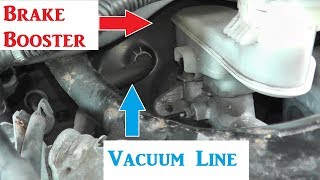
- If no wiring or sensor faults are found, perform a smoke test on the vacuum 🎬 See how to test and replace the vacuum hose assembly. system to check for leaks in the hoses or the booster diaphragm.
- If all other components test correctly, the final step would be to diagnose the Engine Control Module (ECM), though this is an unlikely cause.
Parts You'll Likely Need
- Power Brake Booster Vacuum Hose and Sensor Assembly
(OEM #Varies by VIN, refer to GM Electronic Parts Catalog (EPC))— This is the most common failure part, identified in TSBs #20-NA-071 and #17-NA-314 as the primary component to replace. It contains the updated, more robust sensor.
Trusted brands: ACDelco, GM Genuine
OEM price range: $80-$150
Aftermarket price range: $60-$120 - Brake Booster Pressure Sensor External Wiring Harness
(OEM #Varies by VIN, e.g., Acadia uses 84733328)— Required by TSB #20-NA-071 to fix the root cause of electrical interference (EMI) and prevent the code from returning. This is a separate part from the hose assembly.
Trusted brands: GM Genuine
OEM price range: $25-$75
Aftermarket price range: N/A
Related Codes That Often Appear With This One
- P0558 — This code means "Brake Booster Pressure Sensor Circuit High". TSB #20-NA-071 mentions P0557 and P0558 together, as they both result from the same erratic signal caused by wiring and EMI issues.
- C025E — This code for "Brake Booster Vacuum Sensor Circuit" is mentioned in TSB #17-NA-314 as being related to the same faulty sensor issue that can also trigger P0557.
Technical Service Bulletins (TSBs) & Recalls
- 20-NA-071: The primary TSB for this issue. Addresses a 'Service Power Brake Assist' message with DTC P0557/P0558 caused by EMI or poor terminal tension. The fix is to replace the vacuum hose and install a new external wiring harness.
- 17-NA-314: Addresses an intermittent 'Service Power Brake Assist' message with P0557/C025E, caused by an internal circuit board fault in the sensor. Recommends replacing the sensor and hose assembly.
- 21-NA-107: (Mentioned for platform-mates) Addresses P0557 caused by inconsistent in-rush current during auto start/stop events that the original sensor cannot handle.
Platform-Specific Known Issues
- A known issue documented in TSB #20-NA-071 can cause the 'Service Power Brake Assist' message to appear with DTC P0557. The cause is identified as electrical interference (EMI) or poor terminal tension in the engine harness.
- The official GM repair requires replacing the brake booster vacuum sensor/hose assembly AND installing a new external wiring harness to bypass the faulty original circuit.
Mechanic-Grade Diagnostic Values
- Brake Booster Pressure Sensor (B19B) 5V Reference Voltage — expected: 4.9V - 5.1V. Failure: Voltage outside this range indicates a problem with the ECM or wiring.
- Brake Booster Pressure Sensor Signal Voltage (Key On, Engine Off) — expected: ~4.5V - 5.0V (no vacuum). Failure: A constant low reading (<1V) with the engine off points to a short in the signal wire or a failed sensor.
- Brake Booster Pressure Sensor Signal Voltage (Engine Running at Idle) — expected: ~0.5V - 1.0V (high vacuum). Failure: Voltage does not drop when the engine is started, indicating the sensor is not reading vacuum.
Scan Tool Commands That Help
- GDS2 (or equivalent professional scanner): Live Data - Brake Booster Vacuum Sensor (PSI or Voltage) — To observe the sensor's reported value in real-time. A technician can compare the scan tool data to the actual voltage measured at the sensor with a multimeter. A discrepancy between the two values can help differentiate between a sensor/wiring issue and a module-side problem.
Wiring & Ground Locations
- B19B Brake Booster Vacuum Sensor — Mounted on the power brake booster vacuum hose in the engine bay, near the firewall.. This is the sensor that provides the signal. TSB #20-NA-071 identifies poor terminal tension at its connector as a primary cause of the code.
- ECM Connector X1 (Blue) — On the Engine Control Module (ECM) in the engine bay.. This is the destination for the sensor's wiring. The TSB #20-NA-071 repair involves de-pinning and re-pinning wires at this specific connector.
- ECM X1, Pin 65 — Pin 65 of the blue X1 connector at the ECM.. This is the original location for the sensor's 5-volt reference circuit (#6030). The TSB directs the technician to remove this pin and replace it with the corresponding wire from the new overlay harness.
- ECM X1, Pin 45 — Pin 45 of the blue X1 connector at the ECM.. This is the original location for the sensor's signal circuit (#6031). The TSB directs the technician to remove this pin and replace it with the corresponding wire from the new overlay harness.
- ECM X1, Pin 44 — Pin 44 of the blue X1 connector at the ECM.. This is the original location for the sensor's low reference (ground) circuit (#6032). The TSB directs the technician to remove this pin and splice the new harness's ground wire into the existing vehicle harness ground wire near the connector.
Real Owner Repair Stories
- TraverseForum.com user (2018 Chevrolet Traverse (platform-mate to Blazer)) — Check engine light on, 'Service Brake Assist' message displayed, and code P0557 stored.
❌ Tried (didn't work) Initially replacing only the brake booster vacuum sensor. The code and message returned shortly after.
✅ What actually fixed it The user took the vehicle to a dealer who was aware of TSB 20-NA-071. The dealer performed the full TSB procedure: replacing the vacuum hose/sensor assembly AND installing the separate overlay wiring harness to bypass the original engine harness wiring. This permanently resolved the issue.
Model Year Variations Within This Range
- 2019-2021: TSB #20-NA-071 was originally issued for 2019-2020 models but the issue and repair procedure are known to apply to 2021 models as well, as they share the same architecture and susceptible components. Always confirm TSB applicability with a dealer using the vehicle's VIN.
Helpful Videos
We Have This Part in Stock


The information in this article is provided for general reference and educational purposes only. Vehicle specifications, procedures, and part compatibility can vary by production date, trim level, and region. Always consult your vehicle's factory service manual and verify part numbers before purchasing or performing repairs. Safety-critical components such as airbags, seat belts, and braking systems should be installed by a qualified professional.
- Chevrolet BLAZER:
- 🎬 Helpful Videos
- 🛍️ Shop This Part
- What's Unique About the 2019-2021 Chevrolet BLAZER
- Diagnostic Flowchart
- Symptoms You May Notice
- Most Likely Causes
- Rare But Worth Checking
- Diagnosis Steps
- Parts You'll Likely Need
- Related Codes That Often Appear With This One
- Technical Service Bulletins (TSBs) & Recalls
- Platform-Specific Known Issues
- Mechanic-Grade Diagnostic Values
- Scan Tool Commands That Help
- Wiring & Ground Locations
- Real Owner Repair Stories
- Model Year Variations Within This Range
- 🎟️ Get 5% Off