

P0557 on 2020-2021 Cadillac XT6: Brake Booster Pressure Sensor Circuit Low
On a 2020-2021 Cadillac XT6, P0557 is almost always caused by a faulty engine wiring harness per GM Technical Service Bulletin #20-NA-071. The official fix involves installing a new external wiring harness to bypass the faulty circuit and replacing the power brake booster vacuum hose/sensor assembly. This is a critical safety issue affecting braking performance and should be addressed immediately by a professional.
- P0557 on a 2020-2021 Cadillac XT6 is a critical safety alert indicating a problem with the power brake assist.
- Do not drive the vehicle. A hard pedal and increased stopping distance make it unsafe.
- The most likely cause is a faulty wiring harness, as documented in GM Technical Service Bulletin #20-NA-071.
- The official fix is to have a technician install a new external wiring harness and replace the associated vacuum hose with its integrated sensor.
- Simply replacing the sensor without addressing the wiring issue via the TSB will not fix the problem and the code will likely return.
What's Unique About the 2020-2021 Cadillac XT6
For the 2020-2021 Cadillac XT6 and its platform mates, this code is very specifically addressed by GM Technical Service Bulletin #20-NA-071. The problem is rarely the sensor itself but is a known design or manufacturing flaw in the engine wiring harness. GM identified that either poor terminal tension at the sensor connector or electromagnetic interference (EMI) from other engine components can corrupt the sensor's signal, causing the low voltage reading. The official repair is not to simply replace the sensor, but to perform a more involved wiring modification by installing a new overlay harness that is routed away from the source of the interference.
Diagnostic Flowchart
Tap your situation to follow the diagnostic path that matches what you're seeing on this vehicle.
Symptoms You May Notice
- Service Engine Soon (Check Engine) light is on
- "Service Power Brake Assist" message displayed on the Driver Information Center (DIC)
- Brake pedal is hard to press or requires significantly more effort
- Noticeably longer stopping distances
- Brake warning light may be illuminated
- Replacing only the brake booster pressure sensor without performing the wiring harness overlay specified in TSB #20-NA-071. Because the root cause is often the wiring, the problem will likely return.
- Replacing the entire power brake booster. The booster itself is a mechanical/hydraulic component; this code points specifically to an electrical circuit failure 🎬 Watch: A quick overview of the P0557 code and common fixes. related to the sensor that monitors it.
Most Likely Causes
- Faulty Engine Wiring Harness (EMI or Poor Terminal Tension) 🔴 High Probability This is a well-documented pattern failure. GM TSB #20-NA-071 explicitly states the cause is poor terminal tension at the sensor or that the original harness routing makes the circuit vulnerable to electromagnetic interference (EMI), which corrupts the sensor's signal to the ECM.
How to confirm: A technician should check the vehicle's service history for TSB #20-NA-071. The TSB is the primary diagnostic path. If it has not been performed, this is the presumptive cause.
Typical fix: Follow the procedure in TSB #20-NA-071: Replace the power brake booster vacuum hose assembly (which includes a new sensor) and install a new external 'overlay' wiring harness. This involves cutting the old sensor connector off, de-pinning specific wires from the ECM connector (X1), installing the new harness leads, and splicing the ground wire.
Est. part cost: $70-$180 - Faulty Brake Booster Pressure Sensor 🟡 Medium Probability While the TSB points to wiring, other GM bulletins (like #17-NA-314) note the sensor can fail internally due to a 'circuit board fault'. Another TSB for platform mates (#21-NA-107) mentions that inconsistent in-rush current during engine start/stop cycles can also damage the sensor, prompting improved part designs. Therefore, a standalone sensor failure is possible, though less likely than the wiring issue on this platform.
How to confirm: After confirming TSB #20-NA-071 is not applicable or has already been performed, a technician can test the sensor's voltage output with a scan tool or multimeter. The signal should change predictably as vacuum is applied and released. A stuck low voltage reading points to a failed sensor. 🎬 See how to diagnose and test the brake booster pressure sensor.
Typical fix: Replace the brake booster pressure sensor. On this vehicle, the sensor is integrated with and sold as part of the power brake booster vacuum hose assembly.
Est. part cost: $60-$120 - Vacuum Leak ⚪ Low Probability Vacuum hoses can always crack or become disconnected. However, the prevalence of the wiring TSB for this specific vehicle and code makes a physical vacuum leak a much less likely primary cause.
How to confirm: Visually inspect all vacuum hoses connected to the brake booster for cracks, brittleness, or loose connections. A hissing sound from the engine bay at idle can also indicate a vacuum leak. A technician can also use a smoke machine to find elusive leaks.
Typical fix: Replace the leaking vacuum hose or re-secure the connection.
Est. part cost: $10-$50
Rare But Worth Checking
- Faulty Engine Control Module (ECM): This is extremely rare. The ECM is the last component to suspect. All other possibilities, especially the wiring harness TSB, must be thoroughly exhausted before considering ECM replacement, which is costly and requires programming by the dealer.
Diagnosis Steps
- Read the fault codes with an OBD-II scanner to confirm P0557 is active and check for any other related codes like P0558.
- CRITICAL STEP: Search for and review GM Technical Service Bulletin #20-NA-071 for the vehicle's VIN. This is the most likely cause.
- If the TSB is open for the vehicle, perform the procedure exactly as outlined by GM. This involves installing a new external wiring harness and replacing the power brake booster vacuum hose.
- The TSB repair involves disconnecting the battery, cutting the original sensor connector wires, routing the new overlay harness, de-pinning terminals at the ECM connector, inserting the new harness terminals, and splicing the ground wire. This is a complex procedure.
- If the TSB does not apply or has already been completed, proceed with standard diagnostics.
- Visually inspect the brake booster pressure sensor connector (the new one, if TSB was performed) and wiring for any signs of damage, corrosion, or loose connections.
- Inspect the vacuum hoses connected to the brake booster for any cracks, leaks, or damage. Listen for a hissing sound with the engine running. 🎬 Watch: How to troubleshoot vacuum leaks and booster issues.
- Using a scan tool, monitor the brake booster pressure sensor parameter. Check if the reading is stuck at a low value and does not change when the engine is started or the brake pedal is pumped.
- If wiring and vacuum are confirmed to be good, the sensor itself (as part of the hose assembly) is the likely culprit.
Parts You'll Likely Need
- Brake Booster Vacuum Sensor Wiring Harness Kit (Overlay)
(OEM #Must be sourced from a GM dealer using the vehicle's VIN per TSB #20-NA-071.)— This is the primary component required by GM in TSB #20-NA-071 to correct the signal interference or poor connection issue by bypassing the problematic section of the original engine harness.
Trusted brands: GM Genuine Parts
OEM price range: $50-$100
Aftermarket price range: N/A - Power Brake Booster Vacuum Hose (with integrated sensor)
(OEM #Must be sourced from a GM dealer using the vehicle's VIN per TSB #20-NA-071.)— This part, which includes the pressure sensor, is replaced as part of the TSB #20-NA-071 procedure to ensure the entire circuit is updated. It is also the fix for failures related to TSB #17-NA-314.
Trusted brands: ACDelco, GM Genuine Parts
OEM price range: $60-$120
Aftermarket price range: $40-$80
Related Codes That Often Appear With This One
- P0558 — P0558 is for 'Brake Booster Pressure Sensor Circuit High'. Both codes are explicitly mentioned in TSB #20-NA-071 as resulting from the same underlying cause: an erratic signal from the wiring harness issue.
- C025E — TSB #17-NA-314, which pertains to an internal sensor fault, lists P0557 and C025E occurring together.
Technical Service Bulletins (TSBs) & Recalls
- 20-NA-071: Service Engine Soon Lamp Illuminated and/or Service Power Brake Assist Message Displayed, with DTCs P0557 or P0558 Stored.
- 17-NA-314: Intermittent Service Power Brake Assist Message With a Brake Shudder and Possible DTC P0557 and C025E Set/Stored.
- 21-NA-107: (Referenced for platform mates) Notes that inconsistent in-rush current can cause P0557.
Platform-Specific Known Issues
- A known issue documented in GM TSB #20-NA-071 describes how electromagnetic interference (EMI) or poor terminal tension in the engine harness can cause P0557 or P0558. The fix is to install a new external harness (overlay) and replace the vacuum hose/sensor assembly. The repair requires splicing wires and de-pinning the ECM connector.
Mechanic-Grade Diagnostic Values
- Brake Booster Pressure Sensor 5V Reference Voltage — expected: 4.9V - 5.1V with ignition on, engine off.. Failure: Voltage significantly below 4.9V suggests an issue with the ECM's reference circuit or a short in the harness.
- Brake Booster Pressure Sensor Signal Voltage — expected: Approximately 4.5V - 5.0V with engine off (no vacuum), dropping toward 0.5V - 1.0V with the engine running at idle (high vacuum).. Failure: A signal voltage that is stuck low (e.g., under 0.3V for more than 2 seconds) will trigger the P0557 code. A signal that does not change with engine vacuum indicates a faulty sensor or a vacuum leak.
- Engine Vacuum at Brake Booster — expected: 15 to 20 inHg at idle.. Failure: Low or no vacuum indicates a physical leak in a hose or the booster itself, though this is a less common cause for P0557 on this vehicle.
Scan Tool Commands That Help
- GM GDS2 (or equivalent professional scan tool): Brake Booster Vacuum Sensor Data Display — Used to monitor the live voltage or pressure reading from the sensor to see if it is stuck low or does not respond to changes in engine vacuum (e.g., starting the engine, pumping the brakes).
- GM GDS2 (or equivalent professional scan tool): Vacuum Booster Leak Down Test — This is a guided diagnostic function to test the integrity of the brake booster's ability to hold vacuum, helping to differentiate between a vacuum leak and an electrical fault.
- GM GDS2 (or equivalent professional scan tool): Clear DTCs — This function should be used after the repair is completed to clear the P0557 code and turn off the warning lights.
Wiring & Ground Locations
- K20 Engine Control Module (ECM) — Located in the engine bay.. This module provides the power, ground, and receives the signal from the brake booster sensor. The TSB #20-NA-071 repair requires de-pinning and re-pinning wires directly at this module's X1 connector.
- ECM Connector X1 — This is one of the main connectors on the K20 ECM. On similar GM vehicles, connectors are often color-coded or physically keyed to prevent incorrect installation.. This specific connector contains all three circuits for the brake booster pressure sensor that must be modified per TSB #20-NA-071.
- ECM X1, Pin 65 (Signal) — Pin 65 of the X1 connector at the ECM.. This is the terminal for the original sensor signal wire (Circuit #6030, Yellow/Violet). The new overlay harness signal wire (labeled #6270) is installed into this pin location after the original is removed.
- ECM X1, Pin 45 (5V Reference) — Pin 45 of the X1 connector at the ECM.. This is the terminal for the original 5-volt reference wire (Circuit #6031, Yellow/Red). The new overlay harness 5V reference wire (labeled #6271) is installed here.
- ECM X1, Pin 44 (Ground) — Pin 44 of the X1 connector at the ECM.. This is the terminal for the original sensor ground wire (Circuit #6032, Black/Yellow). The TSB requires cutting the original wire from the main harness and splicing it to the new overlay harness ground wire (labeled #6272) before the new terminal is installed. This ensures the ground path for other components on that circuit remains intact.
- B19B Brake Booster Vacuum Sensor — The sensor is integrated into the power brake booster vacuum hose assembly.. This is the sensor that generates the signal. The entire hose and sensor assembly is replaced as part of the TSB #20-NA-071 repair.
"I Checked Everything" — The Actual Cause
- Because TSB #20-NA-071 identifies the root cause as an electrical issue (EMI or poor terminal tension), a smoke test performed to find a vacuum leak will almost always come back clean. Technicians may waste time searching for a physical leak when the problem is entirely within the wiring harness or sensor circuit's electrical integrity. The definitive diagnostic step is to check for the applicability of the TSB, not to start with a smoke test.
OEM Part Supersession History
Varies by VIN→Varies by VIN— To correct the wiring harness EMI/terminal tension issue and/or improve sensor robustness.
Heads up: Crucially, TSB #20-NA-071 states that the correct part numbers for both the overlay harness and the vacuum hose/sensor assembly must be determined by using the vehicle's VIN in the official GM Electronic Parts Catalog (EPC). Ordering parts without VIN verification may result in receiving incorrect components.
Helpful Videos
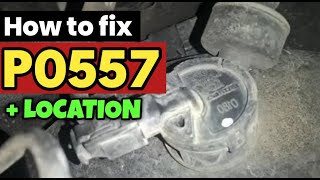
We Have This Part in Stock


The information in this article is provided for general reference and educational purposes only. Vehicle specifications, procedures, and part compatibility can vary by production date, trim level, and region. Always consult your vehicle's factory service manual and verify part numbers before purchasing or performing repairs. Safety-critical components such as airbags, seat belts, and braking systems should be installed by a qualified professional.
- Cadillac XT6:
- 🎬 Helpful Videos
- 🛍️ Shop This Part
- What's Unique About the 2020-2021 Cadillac XT6
- Diagnostic Flowchart
- Symptoms You May Notice
- Most Likely Causes
- Rare But Worth Checking
- Diagnosis Steps
- Parts You'll Likely Need
- Related Codes That Often Appear With This One
- Technical Service Bulletins (TSBs) & Recalls
- Platform-Specific Known Issues
- Mechanic-Grade Diagnostic Values
- Scan Tool Commands That Help
- Wiring & Ground Locations
- "I Checked Everything" — The Actual Cause
- OEM Part Supersession History
- 🎟️ Get 5% Off