

P0557 on 2017-2021 Cadillac XT5: Brake Booster Pressure Sensor Causes and Fixes
On a 2017-2021 Cadillac XT5, code P0557 is almost always caused by a faulty brake booster pressure sensor or its wiring harness, as detailed in GM Technical Service Bulletin #20-NA-071. The fix often involves replacing the sensor and installing an updated wiring harness, not just the sensor itself.
- P0557 on a Cadillac XT5 indicates a serious problem with the power brake assist system that requires immediate attention.
- The most likely cause is a wiring issue, as identified in GM Technical Service Bulletin #20-NA-071.
- The correct repair often involves replacing a section of the wiring harness and the vacuum hose assembly, not just the sensor.
- Driving with this code is unsafe due to the potential for a hard brake pedal and reduced stopping ability.
What's Unique About the 2017-2021 Cadillac XT5
For this specific generation of Cadillac XT5 and its platform mates, GM has identified a known issue with this code. Technical Service Bulletin (TSB) #20-NA-071 points to either poor electrical terminal tension at the sensor or electromagnetic interference (EMI) from the engine harness affecting the sensor's signal. This means that simply replacing the sensor might not fix the problem; the official GM repair involves installing a newly designed external wiring harness to shield the signal and ensure a solid connection, and replacing the vacuum hose assembly.
Diagnostic Flowchart
Tap your situation to follow the diagnostic path that matches what you're seeing on this vehicle.
Symptoms You May Notice
- "Service Power Brake Assist" message on the driver information center (DIC)
- Check Engine Light (Service Engine Soon lamp) is on
- Brake pedal is hard to press or requires more effort than usual
- Increased stopping distance
- Brake warning light may be illuminated or flash when braking
- Unstable engine idle, especially when braking, due to a vacuum leak
- Replacing only the brake booster pressure sensor without addressing the underlying wiring issue identified in TSB #20-NA-071. The code may return if the root cause is EMI or a poor connection.
- Mistaking a weak battery's low-voltage symptoms for a primary sensor or module failure.
Most Likely Causes
- Faulty Wiring Harness or Poor Connection 🔴 High Probability GM issued TSB #20-NA-071 specifically for this issue, citing poor terminal tension and potential for electromagnetic interference (EMI) in the engine harness that affects the sensor's signal. The bulletin applies to the XT5 and numerous platform-mates.
How to confirm: Check for the TSB's applicability to your vehicle's VIN. Inspect the wiring harness and connector at the brake booster pressure sensor for looseness, corrosion, or damage. A technician can also check for EMI or perform a voltage drop test.
Typical fix: Install the updated external wiring harness (GM Part #84868338) and replace the power brake booster vacuum hose as specified in TSB #20-NA-071. This involves cutting the old sensor connector off, abandoning the old wires, and splicing the new harness into the ECM connector.
Est. part cost: $50-$150 for the harness and hose kit. - Failed Brake Booster Pressure Sensor 🟡 Medium Probability The sensor itself can fail internally, sending a low voltage signal to the ECM. This is a common failure point for this type of code across many vehicles. The sensor is part of the vacuum hose assembly replaced under the TSB.
How to confirm: With a multimeter, backprobe the sensor's signal wire. With the ignition on and engine off, voltage should be around 4.9-5.1V. It should drop toward 0.5V when vacuum is applied (engine running). A constant low voltage (under 0.3V) indicates a failed sensor or circuit fault.
Typical fix: Replace the brake booster pressure sensor, which is typically integrated with the vacuum hose. Note that TSB #20-NA-071 recommends replacing the harness at the same time to prevent recurrence.
Est. part cost: $40-$100 - Vacuum Leak ⚪ Low Probability
How to confirm: Visually inspect all vacuum hoses connected to the brake booster for cracks, brittleness, or loose connections. A hissing sound near the booster when the engine is running is a strong indicator of a leak. A smoke test can also be performed to find small leaks.
Typical fix: Replace the cracked or leaking vacuum hose.
Est. part cost: $20-$60 - Weak or Failing Battery ⚪ Low Probability The XT5's electrical system, particularly with the auto start/stop feature, is sensitive to battery voltage. A weak battery can cause intermittent low voltage codes across multiple systems, including the brake assist system.
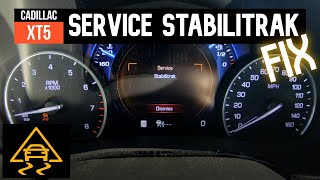
How to confirm: A professional battery test that runs for an extended period may be needed to confirm a weak battery, as a simple voltage check might not reveal the issue. Look for other intermittent electrical gremlins or messages like "Service Stabilitrak."
Typical fix: Replace the vehicle's battery with a high-quality AGM battery that meets or exceeds OEM specifications.
Est. part cost: $200-$400
Rare But Worth Checking
- Failing Brake Booster: If the internal diaphragm of the brake booster leaks, it cannot hold a vacuum, causing the sensor to report low pressure. This is less common than a sensor or wiring fault.
- Faulty Engine Control Module (ECM): In very rare cases, the ECM itself may be unable to correctly interpret the sensor's signal. This should only be considered after all other possibilities have been exhaustively ruled out.
Diagnosis Steps
- Scan the vehicle's computer system to confirm P0557 is the active code and check for any other related codes, like P0558.
- Check if Technical Service Bulletin #20-NA-071 applies to your vehicle's VIN. This is the most likely cause.
- Visually inspect the brake booster pressure sensor's electrical connector and wiring harness for any signs of damage, corrosion, or looseness.
- Inspect the vacuum hoses connected to the brake booster for any cracks, leaks, or disconnections. Listen for a hissing sound with the engine running.
- If no visible issues are found, perform a voltage test on the sensor's signal wire. The voltage should be between 4.9-5.1V with ignition on/engine off and drop towards ~0.5V with the engine running (vacuum applied). A persistently low voltage (below 0.3V) points to a fault in the circuit or sensor.
- If the TSB applies, follow the recommended procedure to install the new external wiring harness and replace the vacuum hose. This involves cutting the old harness and splicing the new one into the ECM terminals.
- If the TSB does not apply and the wiring is confirmed to be good, replace the brake booster pressure sensor (which often comes with the vacuum hose).
- Consider having the battery professionally tested, especially if other intermittent electrical issues are present.
- Clear the trouble code and perform a test drive to ensure the repair was successful and the 'Service Power Brake Assist' message does not return.
Parts You'll Likely Need
- Brake Booster Vacuum Hose with Sensor and Harness Kit
(OEM #84868338)— This is the official fix recommended by GM in TSB #20-NA-071 to resolve underlying wiring and signal interference issues that cause the P0557 code on this vehicle. The kit includes the vacuum hose/sensor assembly and the new external wiring harness.
Trusted brands: ACDelco, GM Genuine Parts
OEM price range: $70-$150
Aftermarket price range: $50-$100 - Brake Booster Pressure Sensor — If the wiring is confirmed to be good, the sensor itself may have failed. It is often included with the vacuum hose assembly. On these vehicles, it is almost always replaced as part of the TSB kit.
Trusted brands: ACDelco, Bosch, Standard Motor Products
OEM price range: $60-$100
Aftermarket price range: $40-$80
Related Codes That Often Appear With This One
- P0558 — P0558 is for 'Brake Booster Pressure Sensor Circuit High'. Both P0557 and P0558 are cited in the same GM TSB (#20-NA-071) and point to the same faulty component or wiring harness, indicating an erratic signal.
- P0556 — P0556 is for 'Brake Booster Pressure Sensor Performance'. Another TSB, 21-NA-045, lists P0556, P0557, and P0558 together as potential codes resulting from vacuum pipe issues on other GM models, showing they are all related to the same system's integrity.
Technical Service Bulletins (TSBs) & Recalls
- 20-NA-071: Addresses a Service Engine Soon lamp and/or Service Power Brake Assist message with DTC P0557 or P0558 stored, caused by wiring issues. The fix is to replace the vacuum hose and install a new external wiring harness.
- 21-NA-045: While for different models, this TSB also lists P0557 as a possible code related to brake booster vacuum pipe issues, highlighting the sensitivity of the vacuum system across GM vehicles.
Platform-Specific Known Issues
- A known issue documented in GM TSB #20-NA-071 describes how electromagnetic interference or poor terminal connections in the engine wiring harness can cause this code, requiring the installation of a revised external harness.
- The official repair procedure involves cutting off the original sensor connector, taping over the now-abandoned wires, and splicing a new, separate harness into the ECM connector pins to bypass the problematic factory wiring.
Mechanic-Grade Diagnostic Values
- Brake Booster Pressure Sensor - 5V Reference Voltage — expected: 4.9V to 5.1V with ignition on, engine off.. Failure: Voltage significantly below 4.9V indicates a problem with the ECM's 5V reference circuit or a short in the harness.
- Brake Booster Pressure Sensor - Signal Voltage — expected: Approximately 4.5V-5.0V with engine off (no vacuum), dropping toward 0.5V-1.0V with engine running at idle (high vacuum).. Failure: A signal voltage that is stuck low (e.g., under 0.3V for 2 seconds) will trigger the P0557 code. A signal that does not change with engine vacuum indicates a faulty sensor or a vacuum leak.
- Engine Vacuum at Brake Booster — expected: 15 to 20 inHg at idle.. Failure: A reading below 16 inHg could indicate a vacuum leak in a hose, a faulty booster diaphragm, or a mechanical engine problem affecting vacuum production.
Scan Tool Commands That Help
- GM GDS2 / Tech2: Brake Booster Pressure Sensor Live Data — Use this to monitor the sensor's voltage or pressure reading in real-time. Observing the live data while starting the engine, letting it idle, and pressing the brake pedal can confirm if the sensor is responding correctly to changes in vacuum.
- GM GDS2 / Tech2: Clear DTCs — After performing the repair, all DTCs must be cleared from the ECM. A test drive should then be performed to confirm the fault does not return.
Wiring & Ground Locations
- ECM Connector X1 — On the Engine Control Module (ECM) in the engine bay.. This is the specific connector where the new wiring harness from TSB #20-NA-071 must be pinned. The old wires are abandoned and the new harness wires are inserted into specific terminals on this connector.
- ECM Pin X1-65 (Signal) — Pin 65 on the X1 connector of the ECM.. This is the terminal for the brake booster vacuum sensor signal (original circuit #6030, Ye/Vt wire). The new harness wire (tagged #6270) is installed here.
- ECM Pin X1-45 (5V Reference) — Pin 45 on the X1 connector of the ECM.. This is the terminal for the 5-volt reference voltage supplied to the sensor (original circuit #6031, Ye/Rd wire). The new harness wire (tagged #6271) is installed here.
- ECM Pin X1-44 (Ground) — Pin 44 on the X1 connector of the ECM.. This is the terminal for the sensor ground (original circuit #2151, Bk/Wh wire). The TSB requires splicing the new harness wire (tagged #6272) into this existing ground circuit, as it is shared with other components.
- Main Engine to Frame Ground Strap — Typically a large, heavy-gauge braided strap running from the engine block to the frame rail, often near the transmission.. While not directly part of the sensor circuit, a poor main engine ground can cause widespread electrical issues, including erratic sensor readings and low voltage faults. It ensures all engine-mounted sensors have a solid ground path back to the battery.
Real Owner Repair Stories
- YouTube video comment section for a related repair (2018 Cadillac XT5) — Service Brake Assist and Service Stabilitrak lights, particularly during auto start/stop events.
❌ Tried (didn't work) Initial dealer visit resulted in a software update which did not solve the problem.
✅ What actually fixed it The dealership performed an extended, 53-minute battery test which confirmed the battery was failing. Replacing the AGM battery resolved the issue under the bumper-to-bumper warranty.
OEM Part Supersession History
Unknown (Original vacuum pipe/sensor assembly)→Varies by engine (TSB #20-NA-071 requires looking up the correct hose in the parts catalog) plus harness kit 84868338.— The original wiring path was susceptible to electromagnetic interference (EMI) and poor terminal connections. The TSB introduces a new, externally routed, and better-shielded harness to provide a cleaner signal to the ECM.
Helpful Videos
We Have This Part in Stock


The information in this article is provided for general reference and educational purposes only. Vehicle specifications, procedures, and part compatibility can vary by production date, trim level, and region. Always consult your vehicle's factory service manual and verify part numbers before purchasing or performing repairs. Safety-critical components such as airbags, seat belts, and braking systems should be installed by a qualified professional.
- Cadillac XT5:
- 🎬 Helpful Videos
- 🛍️ Shop This Part
- What's Unique About the 2017-2021 Cadillac XT5
- Diagnostic Flowchart
- Symptoms You May Notice
- Most Likely Causes
- Rare But Worth Checking
- Diagnosis Steps
- Parts You'll Likely Need
- Related Codes That Often Appear With This One
- Technical Service Bulletins (TSBs) & Recalls
- Platform-Specific Known Issues
- Mechanic-Grade Diagnostic Values
- Scan Tool Commands That Help
- Wiring & Ground Locations
- Real Owner Repair Stories
- OEM Part Supersession History
- 🎟️ Get 5% Off