

P0556 on 2017-2021 Volkswagen Jetta: Brake Booster Pressure Sensor Causes & Fixes
On the 2017-2021 VW Jetta, code P0556 almost always points to a faulty brake booster pressure sensor or a vacuum leak in the hose it's connected to. For 2017 models, an ECM software update (TSB 01-18-09) should be checked first. Otherwise, a new sensor assembly (Part # 1K0612041LG for Mk6 or a 5Q0-prefix part for Mk7) is the common fix, costing $70-$150 for the part.
- P0556 on a 2017-2021 Jetta indicates a problem with the brake booster pressure sensor, which can make your brake pedal hard to press.
- The most common fix is replacing the brake booster pressure sensor, which is often sold as part of a vacuum pipe assembly.
- Before replacing parts, visually inspect all vacuum lines for obvious cracks or damage, especially where they might rub against other components.
- If you have a 2017 model, be aware that a simple software update from a VW dealer might fix the problem without needing any new parts.
- Due to the critical safety nature of the braking system, professional diagnosis is strongly recommended if you are not experienced with automotive repair.
What's Unique About the 2017-2021 Volkswagen JETTA

The 2017-2021 Jetta spans two generations, the A6 (Mark 6, through 2018) and the A7 (Mark 7, starting in 2019 on the MQB platform). While the P0556 code's meaning is the same, the physical parts and diagnostic approach can differ. On the 1.4L engine common in these models, the brake booster pressure sensor is often integrated into a vacuum pipe assembly. For 2016-2017 models specifically, VW issued Technical Service Bulletin 01-18-09 to address a false P0556 with an engine control module software update, indicating it can be a software issue, not a hardware failure. On newer MQB platform models (2019+), the sensor is a 'smart' sensor that sends a complex digital signal, not a simple analog voltage, which can appear normal on basic scan tools even when faulty, requiring an oscilloscope for proper diagnosis.
Diagnostic Flowchart

Tap your situation to follow the diagnostic path that matches what you're seeing on this vehicle.
Generation note: This range covers the end of the Jetta A6 (2017-2018) and the beginning of the A7 (2019-2021). The A7 is built on the newer MQB platform. While the P0556 code relates to the same system on both, part numbers and specific locations of components like fuses or relays may differ. For example, the Mk6 Jetta often uses part #1K0612041LG, while Mk7 models may use a sensor like #5Q0906207A. Always verify parts using your vehicle's VIN.
Symptoms You May Notice

- Check Engine Light is on.
- Stiff or hard brake pedal, requiring more effort to press.
- Increased stopping distance.
- Brake warning light may also illuminate on the dashboard.
- Hissing noise from the brake booster area.
- On Jetta Hybrids, this code can also be associated with the hybrid system and A/C not working.
- Engine may stall when applying the brakes.
- Replacing the entire brake booster when the issue is just the sensor or a vacuum line.
- Ignoring a potential software update (on 2017 models) and proceeding directly to parts replacement.
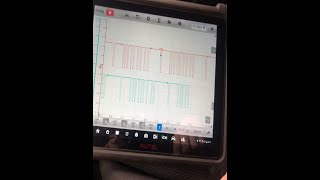
- On 2019+ models, trusting scan tool live data that appears normal and overlooking a faulty 'smart' sensor that requires an oscilloscope to condemn. 🎬 Watch: Diagnosing the smart sensor on a 2019 Jetta.
Most Likely Causes
- Faulty Brake Booster Pressure Sensor 🔴 High Probability The sensor itself can fail internally, providing incorrect readings to the ECU. On many Jettas, this sensor is part of the vacuum hose assembly. On 2019+ models, the sensor is a 'smart' sensor that can fail in a way that is not obvious with basic scan tool data, but will show an incorrect waveform on an oscilloscope.
How to confirm: A technician can monitor the sensor's live data with a scan tool to see if its readings are erratic or illogical. On 2019+ models, the sensor's output signal must be checked with an oscilloscope for confirmation, as live data can appear normal even when the sensor is faulty. A good sensor will show a distinct digital pattern that changes with brake application.
Typical fix: Replace the brake booster pressure sensor. This often involves replacing the entire vacuum pipe assembly it is attached to.
Est. part cost: $70 - $150 - Vacuum Leak 🟡 Medium Probability The rigid plastic vacuum hose assembly connected to the brake booster and sensor can become cracked, brittle, or develop leaks from rubbing against other components in the engine bay.
How to confirm: Visually inspect all vacuum hoses running to and from the brake booster for cracks, chafing, or loose connections. A common failure point is where the hose rubs against another part. A smoke test can be performed to find hard-to-see leaks.
Typical fix: Replace the leaking vacuum hose or the entire vacuum pipe assembly.
Est. part cost: $70 - $150 - Engine Control Module (ECM) Software Issue ⚪ Low Probability For 2016-2017 Jettas with the 1.4L CZTA engine, Volkswagen released TSB 01-18-09 (also TPI 2045383) to address false P0556 faults. The update enhances the ECM's diagnostic logic to prevent misinterpretation of the sensor's signals.
How to confirm: A VW dealer or a qualified shop can check the vehicle's service history and current software version against TSB 01-18-09 to see if the update is needed. This should be the first step for any 2017 Jetta with this code.
Typical fix: Update the Engine Control Module (ECM) software. This must be done by a dealer or a shop with the appropriate VW ODIS diagnostic tools.
Est. part cost: $0 - $200 - Wiring or Connector Issue ⚪ Low Probability
How to confirm: Inspect the wiring and connector at the brake booster pressure sensor for any signs of damage, corrosion, or looseness. Ensure the connector is fully seated.
Typical fix: Repair the damaged wiring or clean/replace the connector.
Est. part cost: $5 - $50
Rare But Worth Checking
- Faulty Brake System Vacuum Pump or Relay: More common on Jetta Hybrid models but possible on others. TSB TT 01-16-04 for the Jetta Hybrid specifically points to the vacuum pump or its relay as a typical cause. For the 1.4L CZTA engine, the Ross-Tech wiki notes to check fuses SB4 and SB16 related to the vacuum pump.
- Faulty Powertrain Control Module (PCM): This is very rare. One owner on a forum reported that an aftermarket brake booster pump damaged the control module, requiring replacement of both. The PCM should only be suspected after all other possibilities have been thoroughly ruled out.
Diagnosis Steps
- Scan the vehicle for all fault codes. Note if P0556 appears with any other codes, like P2279.
- If the vehicle is a 2017 model with the 1.4L CZTA engine, the first step is to check with a dealer if TSB 01-18-09 for an ECM update applies and has been performed.
- Visually inspect the brake booster pressure sensor and its electrical connector for damage or corrosion.
- Carefully inspect the entire vacuum pipe assembly running from the intake to the brake booster. Look for signs of rubbing, chafing, or cracks, which are a common failure point.
- With a capable scan tool, monitor the live data from the brake booster pressure sensor. Observe the readings with the engine on, off, and while applying the brakes. The pressure should change smoothly from high vacuum (e.g., 6 PSI) towards atmospheric pressure (e.g., 14.4 PSI) as the pedal is pressed.
- If a leak is suspected but not visible, perform a smoke test on the vacuum system to pinpoint the source.
- If no vacuum leaks are found and the vehicle is a 2019+ model, test the sensor's signal wire with an oscilloscope. A faulty 'smart' sensor may show a steady or incorrect digital pattern compared to a known-good sensor, even if scan tool data seems plausible.
- If the sensor, wiring, and vacuum system are confirmed to be good, investigate the related vacuum pump and its fuses/relay as a final step before considering a PCM fault.
Parts You'll Likely Need
- Brake Booster Pressure Sensor / Vacuum Pipe
(OEM #1K0612041LG (for Mk6), 5Q0906207A (sensor for Mk7))— This is the most frequent failure point. The sensor fails internally or the integrated pipe cracks, causing a vacuum leak. The part number 1K0612041LG is for the complete pipe assembly on 2017-2018 Mk6 Jettas. For 2019+ Mk7 Jettas, the sensor itself may be part number 5Q0906207A, but it is still often sold with the pipe. Always verify with your VIN.
Trusted brands: Volkswagen (OEM), Bosch, Vemo
OEM price range: $100-$160
Aftermarket price range: $70-$120
Related Codes That Often Appear With This One
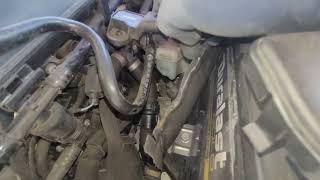
- P2279 — P2279 indicates an 'Intake Air System Leak'. A vacuum leak large enough to cause P0556 can also be detected as a general intake system leak by the ECU. A YouTube video shows a 2017 Jetta with both codes caused by a chafed vacuum pipe. 🎬 See how to fix both P0556 and P2279 codes.
- P2421 — NHTSA TSB VIN4APIN20210114 lists P0556 and P2421 (Evaporative Emission System Vent Valve Stuck Open) together, suggesting they can appear concurrently, possibly due to shared vacuum system issues or complex electrical faults.
Technical Service Bulletins (TSBs) & Recalls
- VIN4APIN20210114: Notes customer complaints of MIL-on with P0556, sometimes acc
Platform-Specific Known Issues
- A software glitch can trigger P0556 on 2016-2017 models with the 1.4L CZTA engine, which is correctable with an ECM update per TSB 01-18-09.
- The pressure sensor is often integrated into a rigid plastic vacuum pipe assembly, which can become brittle and crack from rubbing against other components, causing both a P0556 and a P2279 (Intake Leak) code.
- The code can sometimes be triggered intermittently after a single hard braking event and may clear itself, though it usually returns.
- On 2019+ models, the sensor is a 'smart' sensor that requires an oscilloscope for accurate diagnosis, as it can fail without showing obvious faults in standard scan tool live data.
Mechanic-Grade Diagnostic Values
- Brake Booster Pressure Sensor (Analog Type) Signal Voltage — expected: Typically 0.5V (high vacuum, pedal released) to 4.5V (low vacuum/atmospheric pressure, pedal pressed). Voltage should increase proportionally with pedal pressure.. Failure: Voltage is flat, spikes, or goes outside the 0.5V-4.5V range during pedal operation.
- Brake Booster Pressure Sensor (Smart/Digital Type, 2019+) Oscilloscope Waveform — expected: A complex digital pattern of pulses that varies as the brake pedal is applied. A known-good pattern for a 2019 Jetta shows groupings of two, two, and five pulses after a large space.. Failure: The digital pattern is steady, absent, or differs from a known-good waveform. A faulty sensor on a 2019 Jetta showed a repeating pattern of three, three, one, and two pulses. This occurs even if scan tool live data appears to respond correctly.
Hidden / Shadow Codes Worth Checking
- Active vs. Passive/Stored (VCDS/ODIS): Professional VW-group scan tools distinguish between a fault that is currently happening ('Active') and one that was recorded in the past but is not currently detected ('Passive' or 'Stored'). The Check Engine Light is caused by Active codes. (see via Use a VW-specific scan tool like VCDS by Ross-Tech or the dealer ODIS system.)
- C10A301 / C10A304: On some VAG platforms, these codes may be stored in the brake electronics module, indicating a vacuum sensor short-circuit, malfunction, or implausible signal, pointing directly to the sensor. (see via A full system scan with a tool capable of reading manufacturer-specific codes from the ABS/Brake module.)
Scan Tool Commands That Help
- ODIS (VW Dealer Tool): Functions/Component Selection -> Software Version Management -> Adapting Software — This is the specific path used to perform the ECM software update required by TSB 01-18-09 for 2016-2017 Jettas to fix false P0556 codes.
- VCDS / ODIS: Selective Output Tests and Basic Settings — This is notably NOT supported for the vacuum pump (V192) on the 1.4L CZTA engine. This tells a technician they cannot use the scan tool to command the pump on/off for testing and must diagnose it manually.
Wiring & Ground Locations
- Fuses SB4 and SB16 — In the 'SB' fuse panel located in the engine compartment on Mk7 (2019+) models.. These fuses supply power to the brake system vacuum pump (V192) on the 1.4L CZTA engine. A blown fuse will disable the pump and can contribute to a P0556 code.
- Fuse F26 (15A) — In the interior fuse panel located under the dashboard by the driver's left knee on Mk6 (2017-2018) models.. This fuse is for the brake system vacuum pump on the Mk6 Jetta.
- Ground Point 12 — A common ground connection point in the engine compartment on the left side, often on the bulkhead behind the battery. Wires are typically brown.. The brake booster pressure sensor and its related systems require a solid ground connection. A corroded or loose ground at this primary location can cause erratic sensor readings and trigger the P0556 code.
Real Owner Repair Stories
- Reddit user in r/mechanic (2019 VW Jetta 1.4L Manual) — Persistent P0556 Check Engine Light.
❌ Tried (didn't work) A local mechanic replaced the brake booster vacuum pump with an aftermarket part., The same mechanic then replaced the brake booster sensor.
✅ What actually fixed it Took the car to a VW dealership. They determined the aftermarket brake booster pump had 'fried' the control module. The final repair was replacing BOTH the aftermarket pump with a genuine VW part AND replacing the damaged control module. - YouTube channel 'Jabo The Mechanic' (2017 Volkswagen Jetta Wolfsburg) — Check Engine Light with codes P0556 and P2279 (Intake Air System Leak).
❌ Tried (didn't work) Initial diagnosis pointed towards a faulty sensor or a general vacuum leak.
✅ What actually fixed it A visual inspection revealed the rigid vacuum pipe assembly had rubbed against another component in the engine bay, creating a hole. Replacing the entire vacuum pipe assembly (Part # 1K0612041LG), which includes the sensor, fixed both codes. - Reddit user in r/Volkswagen (2017 Jetta) — Check Engine Light with code P0556, but brakes felt normal.
❌ Tried (didn't work) The owner was considering replacing the sensor himself.
✅ What actually fixed it Another user identified the relevant Technical Service Bulletin (TSB V011618) and advised the owner to go to the dealer for an ECM reprogram instead of replacing parts. This is the correct first diagnostic step for this specific model year.
"I Checked Everything" — The Actual Cause
- On 2019+ Jettas, the brake booster pressure sensor is a 'smart' digital sensor. It can fail in a way that produces an incorrect digital signal pattern, which triggers the P0556 code, even though it still reports plausible pressure changes on a scan tool's live data and there are no vacuum leaks. This failure can only be reliably identified by comparing the sensor's signal to a known-good waveform using an oscilloscope.
When the Usual Fixes Don't Work
- In one documented case on a 2019 Jetta, replacing the brake booster vacuum pump with an aftermarket part did not resolve the P0556 code. The code persisted even after also replacing the sensor. The ultimate cause was determined by a dealership to be the aftermarket pump itself, which had reportedly damaged the control module. The fix required replacing both the aftermarket pump with an OEM unit and replacing the control module, highlighting a significant risk of using non-OEM parts in this system.
OEM Part Supersession History
5Q0906207, 5Q0906207B→5Q0906207A— Standard part revision and improvement by the manufacturer.
Heads up: 5Q0906207A is the current recommended replacement for the earlier versions on applicable Mk7 models.
Model Year Variations Within This Range
- 2017-2018 (Mk6): The primary suspect after a visual inspection should be the ECM software; check if TSB 01-18-09 has been performed before replacing parts. The vacuum pipe/sensor assembly is commonly part number 1K0612041LG. The vacuum pump fuse is F26 in the interior fuse panel.
- 2019-2021 (Mk7): The sensor (5Q0906207A) is a 'smart' digital sensor requiring an oscilloscope for proper diagnosis, as scan tool data can be misleading. The vacuum pump fuses are SB4 and SB16 in the engine bay fuse box. Using aftermarket electronic parts in the brake booster system carries a risk of damaging the control module.
Helpful Videos
We Have This Part in Stock



The information in this article is provided for general reference and educational purposes only. Vehicle specifications, procedures, and part compatibility can vary by production date, trim level, and region. Always consult your vehicle's factory service manual and verify part numbers before purchasing or performing repairs. Safety-critical components such as airbags, seat belts, and braking systems should be installed by a qualified professional.
- Volkswagen JETTA:
- 🎬 Helpful Videos
- 🛍️ Shop This Part
- What's Unique About the 2017-2021 Volkswagen JETTA
- Diagnostic Flowchart
- Symptoms You May Notice
- Most Likely Causes
- Rare But Worth Checking
- Diagnosis Steps
- Parts You'll Likely Need
- Related Codes That Often Appear With This One
- Technical Service Bulletins (TSBs) & Recalls
- Platform-Specific Known Issues
- Mechanic-Grade Diagnostic Values
- Hidden / Shadow Codes Worth Checking
- Scan Tool Commands That Help
- Wiring & Ground Locations
- Real Owner Repair Stories
- "I Checked Everything" — The Actual Cause
- When the Usual Fixes Don't Work
- OEM Part Supersession History
- Model Year Variations Within This Range
- 🎟️ Get 5% Off