

P0556 on 2019 Volkswagen Beetle: Brake Booster Pressure Sensor Causes and Fixes
On a 2019 VW Beetle, code P0556 almost always indicates a faulty brake booster pressure sensor or a leak in the attached vacuum line. This will cause a hard brake pedal and often a dashboard warning like 'ACC and Front Assist not available'. The most common fix is replacing the sensor (OEM Part No. 5Q0906207B), which costs about $50-$120 for the part.
- P0556 indicates a serious fault in the power braking system, making the car harder to stop.
- The most common cause is a failed brake booster pressure sensor, followed by a cracked vacuum line.
- Driving with this code is not recommended due to the increased stopping distance and pedal effort required, which is a safety hazard.
- A visual inspection of vacuum hoses and the sensor connector is a good first step before purchasing parts.
- Due to the safety-critical nature of the brake system, professional diagnosis is strongly recommended if you are not an experienced DIY mechanic.
What's Unique About the 2019-2019 Volkswagen BEETLE CONVERTIBLE
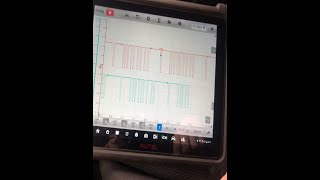
The 2019 Beetle, being the final model year of the A5 generation, shares its 2.0L TSI engine and braking system components with many other contemporary VWs on the MQB platform, like the Golf, Jetta, Tiguan, and GTI. On these modern VW engines, the P0556 code is a well-documented and widespread issue. The brake booster pressure sensor (VW designation G294) is a 'smart' sensor that sends a complex digital signal packet, not just a simple analog voltage. This means a corrupted signal can trigger the code even if basic scan tools show the sensor is responding with changing pressure values, making diagnosis with an oscilloscope the most definitive method.
Diagnostic Flowchart
Tap your situation to follow the diagnostic path that matches what you're seeing on this vehicle.
Symptoms You May Notice
- Check Engine Light is on
- Brake pedal is hard to press or requires significantly more effort
- Increased stopping distances
- On vehicles with driver-assist, a warning like 'ACC and Front Assist not available' may appear
- Brake warning light may be illuminated
- Hissing noise from the brake booster area
- Engine idle may change or run rough if a large vacuum leak is the cause
- Replacing the brake booster when only the sensor or a vacuum line is at fault.
- Assuming the sensor is good because live data shows changing pressure values, without verifying the digital signal with an oscilloscope.
Most Likely Causes
- Faulty Brake Booster Pressure Sensor 🔴 High Probability The sensor is an electronic component that can fail internally over time, sending a corrupted or intermittent digital signal. This is the most frequently reported cause for this code on modern VW MQB platforms, with numerous owner reports on forums like golfmk7.com and vwvortex.com.
How to confirm: A technician can use an oscilloscope to analyze the sensor's digital signal pattern for corruption, as basic scan tool data can be misleading. A YouTube video from 'The Keeney Garage' clearly demonstrates how a faulty sensor can show plausible pressure readings on a scan tool but have a malformed digital signal visible on a scope. 🎬 Watch: How to test the digital signal with an oscilloscope. A simpler, though less scientific, method is to replace the sensor, as it is a very common failure point and relatively inexpensive.
Typical fix: Replace the brake booster pressure sensor.
Est. part cost: $50-$120 - Vacuum Leak 🟡 Medium Probability The rigid plastic vacuum hose assembly connected to the brake booster and sensor can become brittle from engine heat cycles and crack or chafe against other components. A YouTube video by 'Jabo The Mechanic' shows a 2017 Jetta with both P0556 and P2279 codes caused by the vacuum pipe rubbing through. 🎬 See this walkthrough for replacing a cracked vacuum hose.
How to confirm: Visually inspect the vacuum lines running to the brake booster for any obvious cracks, chafing, or loose connections. A smoke test is the most effective way to find small, hard-to-see leaks.
Typical fix: Replace the cracked or leaking vacuum hose assembly. Some owners have successfully repaired small cracks in the hard plastic lines using sections of flexible vacuum hose as a sleeve.
Est. part cost: $70-$150 - Wiring or Connector Issue ⚪ Low Probability
How to confirm: Visually inspect the sensor's 3-pin electrical connector for corrosion, moisture, or damage. Check the wiring harness for any signs of breaks, chafing, or short circuits. Wiggle the harness while monitoring sensor data to check for intermittent connections.
Typical fix: Clean or repair the connector. Repair or replace the damaged section of the wiring harness.
Est. part cost: $5-$50
Rare But Worth Checking
- Faulty Brake Booster: While less common than a sensor or vacuum line failure, the internal diaphragm of the brake booster itself can fail, causing a loss of vacuum and triggering the P0556 code.
- Failed Electric Brake Vacuum Pump: On turbocharged engines, an auxiliary electric vacuum pump is used to ensure consistent brake assist. If this pump fails (often setting code P1429), the sensor will correctly report low vacuum, triggering P0556 as a secondary code. Always check for a blown vacuum pump fuse if P1429 is also present.
- Faulty Powertrain Control Module (PCM): In very rare cases, the PCM's internal circuit that reads the sensor's signal can fail. This should only be considered after all other possibilities have been exhaustively ruled out.
Diagnosis Steps
- Scan the vehicle's computer for all stored trouble codes and freeze frame data. Note if P0556 appears with P2279 (indicating a likely vacuum leak) or P1429 (indicating a likely vacuum pump failure).
- Perform a thorough visual inspection of the brake booster pressure sensor, its electrical connector, and the surrounding wiring for any signs of damage, corrosion, or loose connections.
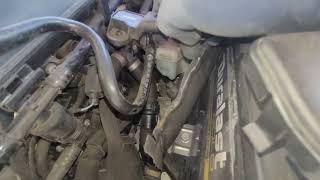
- Carefully inspect the entire vacuum pipe assembly that runs from the engine to the brake booster. Look for cracks, signs of rubbing, or brittleness, especially where the pipe may contact other components.
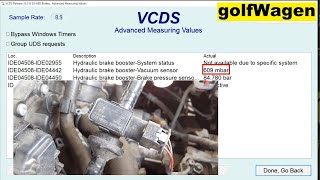
- If a visual inspection reveals no obvious faults, use a scan tool to monitor the live data from the brake booster pressure sensor while the engine is running. Apply and release the brakes and observe if the pressure readings change smoothly.
- For a definitive diagnosis of the sensor, use an oscilloscope to check for a clean, consistent digital signal packet. A corrupted or missing signal pattern, even with plausible scan tool data, indicates a faulty sensor.
- If a vacuum leak is suspected, perform a smoke test on the intake and brake booster vacuum system to check for hidden leaks.
- If P1429 is present, test the electric brake vacuum pump circuit. Check the associated fuse first, then verify power and ground at the pump connector before condemning the pump itself.
Parts You'll Likely Need
- Brake Booster Pressure Sensor
(OEM #5Q0906207B)— This sensor is the most common failure point for the P0556 code on modern VWs. Part number 5Q0906207B is a supersession for the older 5Q0906207A.
Trusted brands: Genuine VW/Audi, Bosch
OEM price range: $80-$120
Aftermarket price range: $50-$90 - Brake Booster Vacuum Pipe Assembly
(OEM #1K0612041LG (example for similar platform))— The plastic vacuum lines can become brittle and crack, causing a vacuum leak that triggers the P0556 code. The sensor is often integrated into this assembly. A common failure mode is chafing against other engine components.
Trusted brands: Genuine VW/Audi
OEM price range: $70-$150
Aftermarket price range: $60-$120
Related Codes That Often Appear With This One
- P2279 — This code for an 'Intake Air System Leak' can be triggered by the same vacuum leak that causes P0556, as the brake booster vacuum system is tied to the engine's intake.
- P1429 — This code for 'Brake Vacuum Pump: Open Circuit' is directly related. A failed electric vacuum pump will cause a lack of vacuum, which the brake booster sensor (P0556) will then correctly report as a performance issue. P0556 is often a symptom of the root cause identified by P1429.
Technical Service Bulletins (TSBs) & Recalls
- VIN4APIN20190628: A VW TSB from June 2019 notes customer complaints of the MIL being on with code P0556, among others, for the 2019 Beetle. 🎬 Watch: A quick diagnostic summary of the P0556 code.
- VIN4APIN20190617: A VW TSB from June 2019 also lists customer complaints of the MIL being on with code P0556 for the 2019 Beetle.
Platform-Specific Known Issues
- Real-World Owner Experience: Sensor Failure on a 2019 GTI: A user on the golfmk7.com forum with a 2019 GTI (sharing the same engine and platform) reported getting the P0556 code, a hard brake pedal, and the 'ACC and Front Assist not available' warning. They purchased the OEM sensor (5Q0906207B) for approximately $90 and replaced it themselves in under an hour, which resolved all symptoms. This is a typical repair story for this platform.
- Diagnostic Insight: Oscilloscope vs. Scan Tool: A detailed diagnostic video on a 2019 Jetta with P0556 showed that live data from a scan tool appeared normal—the pressure values changed as expected when the brake was pressed. However, an oscilloscope revealed a malformed digital signal packet from the sensor. Replacing the sensor fixed the issue. This confirms that a simple scan tool reading can be misleading for this specific 'smart' sensor.
- Repair Story: Cracked Vacuum Line Causes Multiple Codes: A YouTube video documented a 2017 Jetta that had both P0556 and P2279 (Intake Air System Leak). The cause was found to be the hard plastic vacuum pipe assembly, which had rubbed against another component and created a hole. Replacing the entire pipe assembly, which included a new sensor, fixed both codes.
Mechanic-Grade Diagnostic Values
- Brake Booster Pressure Sensor (Smart Sensor) Oscilloscope Waveform — expected: A complex digital pattern of square wave pulses that changes as the brake pedal is applied. A known-good pattern on a similar 2019 VW platform shows distinct groupings of pulses.. Failure: The digital pattern is malformed, has incorrect spacing between pulse groups, or is missing entirely, even if scan tool pressure readings seem to change.
- Sensor Connector Pin Voltages (Key On, Engine Off) — expected: The 3-pin connector should have one pin with a 5V reference, one pin with a near 0V ground, and a third pin carrying the digital signal.. Failure: Missing 5V reference or a bad ground (voltage significantly above 0V) indicates a wiring or PCM issue, not a sensor failure.
- Scan Tool Live Data - Brake Booster Pressure — expected: With the engine running (high vacuum), pressure should be low (e.g., ~6 PSI). When the brake is applied or the engine is off, pressure should rise toward atmospheric (~14.4 PSI).. Failure: While a stuck or non-responsive value indicates a problem, be aware that on these 'smart' sensors, the live data can appear to respond correctly even when the sensor is faulty and setting a P0556 code.
Scan Tool Commands That Help
- VCDS / ODIS: Read Measuring Blocks / Advanced Measuring Values — Used to monitor the live pressure readings from the G294 sensor. However, for a definitive diagnosis on a 2019 model, this data can be misleading and an oscilloscope is preferred.
- VCDS / ODIS: Sensor Adaptation / Basic Settings — No specific adaptation or basic setting procedure is required after replacing the G294 brake booster pressure sensor. It is a plug-and-play component.
Wiring & Ground Locations
- G294 Sensor Connector — The sensor is located on the vacuum pipe assembly connected to the brake booster, typically on the driver's side of the engine bay near the firewall.. This 3-pin connector provides power, ground, and signal path for the sensor. Checking for 5V reference and good ground at this connector is a critical step to rule out a wiring issue before replacing the sensor.
- Fuse for Electric Vacuum Pump (V192) — In the engine compartment fuse box (Fuse Panel B). On a similar 1.4L engine, this corresponds to fuses SB4 and SB16, but this should be verified for the 2.0L engine using a wiring diagram.. If the auxiliary electric vacuum pump loses power due to a blown fuse, it can cause low vacuum in the brake system, leading the G294 sensor to correctly report a performance issue and set code P0556. This is often accompanied by code P1429.
Real Owner Repair Stories
- The Keeney Garage, YouTube (2019 Volkswagen Jetta 1.4L (similar MQB platform and 'smart' sensor)) — Check Engine Light with code P0556 would set every time the brake pedal was pressed.
❌ Tried (didn't work) Observing live data with a scan tool was misleading; the pressure values changed and appeared to be responding correctly.
✅ What actually fixed it An oscilloscope revealed a malformed digital signal pattern from the sensor. Replacing the brake booster pressure sensor resolved the code. - Jabo The Mechanic, YouTube (2017 Volkswagen Jetta) — Check Engine Light with codes P0556 and P2279 (Intake Air System Leak).
✅ What actually fixed it A visual inspection found that the hard plastic vacuum pipe had rubbed through against another component, creating a hole. Replacing the entire vacuum pipe assembly (Part #1K0612041LG), which included a new sensor, fixed both codes.
"I Checked Everything" — The Actual Cause
- In cases involving the newer 'smart' type sensor found on 2019 models, a smoke test may come back clean (no vacuum leaks), and scan tool data may appear normal. The root cause can be an internal electronic failure of the sensor, where it sends a corrupted digital signal to the ECM. This type of failure can only be reliably identified by observing the sensor's output waveform with an oscilloscope.
OEM Part Supersession History
5Q0906207A→5Q0906207B— Likely an internal revision to improve reliability or correct the signal corruption issue that leads to P0556 faults.
Heads up: No known incompatibility. The 'B' version is a direct replacement for the 'A' version. Always confirm the part number with the vehicle's VIN.
Model Year Variations Within This Range
- 2019: No significant mid-year variations related to the brake booster pressure sensor or its associated components are documented for the 2019 model year Beetle.
Helpful Videos
Used OEM Parts in Stock
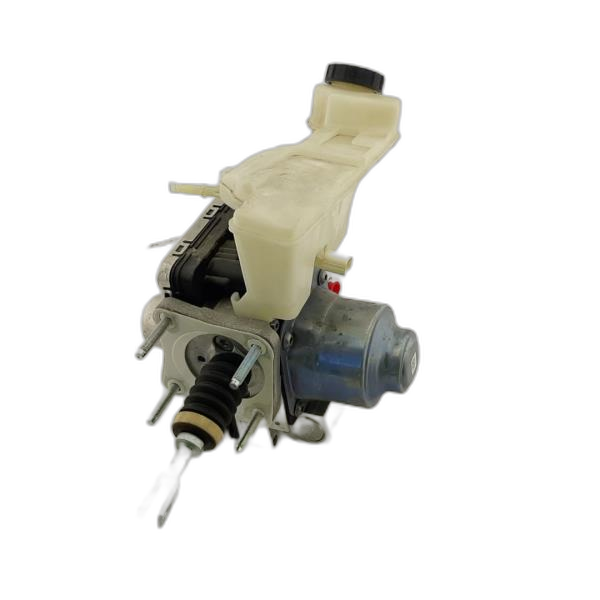
New Aftermarket Parts Available


The information in this article is provided for general reference and educational purposes only. Vehicle specifications, procedures, and part compatibility can vary by production date, trim level, and region. Always consult your vehicle's factory service manual and verify part numbers before purchasing or performing repairs. Safety-critical components such as airbags, seat belts, and braking systems should be installed by a qualified professional.
- Volkswagen BEETLE CONVERTIBLE:
- 🎬 Helpful Videos
- 🛍️ Shop This Part
- What's Unique About the 2019-2019 Volkswagen BEETLE CONVERTIBLE
- Diagnostic Flowchart
- Symptoms You May Notice
- Most Likely Causes
- Rare But Worth Checking
- Diagnosis Steps
- Parts You'll Likely Need
- Related Codes That Often Appear With This One
- Technical Service Bulletins (TSBs) & Recalls
- Platform-Specific Known Issues
- Mechanic-Grade Diagnostic Values
- Scan Tool Commands That Help
- Wiring & Ground Locations
- Real Owner Repair Stories
- "I Checked Everything" — The Actual Cause
- OEM Part Supersession History
- Model Year Variations Within This Range
- 🎟️ Get 5% Off