

OBD-II Code P0550: Power Steering Pressure Sensor Circuit Malfunction
The Ultimate Guide to What P0550 Means, Why It Triggers, and How to Fix It for Good
- Replacing a faulty, leaking power steering pressure sensor resolves code P0550 in the vast majority of cases.
- Engine stalling during low-speed turns is the primary symptom, creating an immediate safety hazard due to the sudden loss of power steering and brakes.
- A healthy power steering pressure sensor outputs approximately 0.5 volts at idle and smoothly scales up to 4.5 volts when the steering wheel is turned lock-to-lock.
- Always inspect the sensor's electrical connector for fluid contamination; oil inside the plug guarantees the sensor has failed internally and requires replacement.
What Does P0550 Mean?
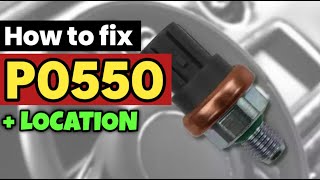
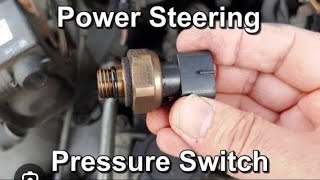
P0550 means your car's Powertrain Control Module (PCM) detects a general electrical fault in the power steering pressure (PSP) sensor's circuit. This sensor is crucial for hydraulic power steering systems. It tells the PCM when the system is under high load (e.g., during parking), allowing the engine's idle speed to increase to prevent stalling. When the PCM loses this signal or deems it irrational, the engine stalls or runs rough during turns, and the Check Engine Light illuminates.
Technical definition: The official SAE/OBD-II definition for code P0550 is "Power Steering Pressure (PSP) Sensor/Switch Circuit Malfunction." 🎬 Watch: A quick overview of the P0550 code and its meaning. This indicates the PCM detects a voltage signal from the PSP sensor that is out of its expected range or has failed completely. The PCM logs this code when the sensor circuit reports an excessively low or high voltage, an open circuit, or a short circuit, preventing it from monitoring the load from the power steering pump. On most vehicles, the code sets when the sensor voltage drops below 0.28V or exceeds 4.9V for more than a few seconds.
Can I Drive With P0550?
Yes, But With Caution. Yes, but it is highly discouraged. The primary risk is the engine stalling unexpectedly during low-speed turns, such as in an intersection or parking lot. Stalling causes an instant loss of power steering and power brake assist, making the vehicle extremely difficult to control. This sudden loss of control easily leads to an accident. Limit driving to getting the vehicle directly to a safe location or a repair shop.
Common Causes
- Faulty Power Steering Pressure (PSP) Sensor (Very Common) — This is the most frequent cause. The sensor fails internally from heat and pressure, or its diaphragm ruptures. They frequently leak power steering fluid directly through the sensor body into the electrical connector, causing a short circuit.
- Damaged Wiring or Corroded Connectors (Common) — The sensor's wiring harness is exposed to engine heat, moisture, and road debris. Wires fray, crack, or short against metal components, and connector pins corrode, leading to a lost or erratic signal.
- Low, Leaking, or Contaminated Power Steering Fluid (Common) — If the fluid level is low due to a leak, air enters the pump. This aerated fluid causes pressure to fluctuate erratically, leading to incorrect sensor readings. Old, sludgy fluid also causes abnormal pressure.
- Failing Power Steering Pump (Less Common) — A weak power steering pump fails to generate enough hydraulic pressure when the steering wheel is turned. If the pressure doesn't rise as expected, the PCM interprets this lack of change as a sensor circuit fault.
- Blown Fuse or Poor Power Supply (Less Common) — The PSP sensor circuit relies on a stable 5-volt reference from the PCM. A blown fuse, a fault in the power distribution module, or a damaged wire in the power or ground circuit causes the sensor to stop sending a signal.
- Clogged Power Steering System Orifices (Rare) — Sludge and debris from old fluid clog small orifices within the steering rack and pinion or the pump itself. This creates abnormal pressure blockages or drops, leading to irrational sensor readings.
- Faulty Powertrain Control Module (PCM) (Very Rare) — The PCM itself can fail due to a burnt circuit board driver or corrupted software, causing it to misinterpret a valid signal. This is the absolute last resort after exhaustively ruling out all other possibilities. 🎬 See this breakdown of common causes and how to fix them.
Symptoms
- Engine Stalls When Turning at Low Speeds — The hallmark symptom. The engine dies while parking, making a U-turn, or turning into a driveway.
- Rough, Fluctuating, or Low Idle When Steering — The engine's RPM drops sharply or bounces erratically when you turn the steering wheel while stationary.
- Check Engine Light (MIL) is On — The PCM detects the circuit malfunction and illuminates the dashboard warning light.
- Power Steering Fluid Leak — Puddles of reddish or brown fluid appear under the front of the car, originating from the sensor, hoses, or pump.
- Whining or Groaning Noise When Steering — A distinct whining sound from the engine bay that gets louder when turning the wheel indicates a failing pump or air in the fluid.
- Heavy or Difficult Steering — The underlying issue (like a failing pump or low fluid) reduces power assist, making the wheel hard to turn.
Diagnostic Flowchart
Tap your situation to follow the diagnostic path that matches what you're seeing on this code.
Common Fixes & Costs
- Replace Power Steering Pressure (PSP) Sensor — Parts: $30-$100, Labor: $80-$150, ~0.8 hr book time (DIY)
- Repair Damaged Wiring or Clean Connector — Parts: $10-$30, Labor: $125-$250, ~1.5 hr book time (Intermediate)
- Top Off or Flush Power Steering Fluid and Repair Leak — Parts: $20-$60, Labor: $150-$400, ~1.2 hr book time (DIY)
- Replace Power Steering Pump — Parts: $150-$450, Labor: $200-$400, ~2.5 hr book time (Professional)
- Reprogram or Replace Powertrain Control Module (PCM) — Parts: $600-$1200, Labor: $150-$300, ~1.2 hr book time (Professional)
DIY vs Professional
- Replace Power Steering Pressure (PSP) Sensor — Beginner: Yes
Tools: Wrench set (flare nut wrench recommended), drain pan, new fluid, rags. - Repair Damaged Wiring — Beginner: No
Tools: Multimeter, wire strippers, soldering iron or quality crimp connectors, heat shrink tubing. - Power Steering Fluid Flush — Beginner: Yes
Tools: Fluid pump or turkey baster, drain pan, new fluid, rags. - Replace Power Steering Pump — Beginner: No
Tools: Socket set, breaker bar, serpentine belt tool, line wrenches, power steering pulley puller/installer tool. - Reprogram or Replace PCM — Beginner: No
Tools: Professional-grade scan tool with manufacturer-specific software for programming.
Used vs. New Parts: Buying Guide
When a used part is worth it: For a simple electronic sensor like a PSP sensor, buying used is never recommended. The savings are minimal ($20-$40) and you risk inheriting a part near the end of its life.
Donor-vehicle mileage cap: roughly under 50000 miles for the part to have meaningful remaining life.
Donor quality checklist:
- Verify the part number is an exact match for your vehicle's VIN.
- Avoid sensors from vehicles in front-end collisions or from high-salt regions.
- Insist on a part with clean, non-corroded electrical pins.
Decision logic:
- If The new OEM or quality aftermarket sensor costs less than $150. → Always buy new. The peace of mind and warranty are worth the cost.
- If The failure is known to be caused by internal wear (like a diaphragm rupture). → Never buy used, as the used part is likely to have similar wear.
Warranty tradeoff: Used parts typically offer a 30-90 day warranty. New aftermarket sensors come with a 1-year to limited lifetime warranty. OEM parts carry a 1-2 year warranty.
Worst-case if a used part fails: $150-$250 if a used sensor fails shortly after installation, requiring repeat labor and a new part.
What Happens If You Wait — Timeline
- 0-1 month: Check Engine Light is on. The engine stalls or idles roughly during low-speed turns. The issue presents an immediate safety risk during parking or U-turns. (MPG impact: 1-3%% · Added cost: $0-$20 in wasted fuel. The primary cost is the safety hazard.)
- 1-4 months: If caused by a leak, fluid loss accelerates. The power steering pump begins to whine due to aeration and fluid starvation. Steering becomes intermittently heavy. (MPG impact: 2-5%% · Added cost: $400-$800 if the power steering pump is damaged from running dry and requires replacement.)
- 4-8 months: Continued operation with contaminated fluid causes widespread system wear. A leaking sensor allows fluid to wick up the wiring harness, causing extensive corrosion. (MPG impact: 4-8%% · Added cost: $500-$1000, combining the cost of a new pump and wiring harness repair.)
- 8+ months: Catastrophic failure. The power steering pump seizes completely, or leaking fluid shorts out the Powertrain Control Module (PCM). (MPG impact: 5-10%% · Added cost: $1000-$2000+ for a new PCM, programming, sensor, and pump.)
Cost of Not Fixing It
- 0-1 month: Dangerous engine stalling during low-speed turns. A slight decrease in fuel economy (1-3%) occurs due to inefficient idle control. (Added cost: Negligible, but the safety risk is immediate and high.)
- 1-6 months: Increased stress on the power steering pump if caused by low or contaminated fluid. If the sensor is leaking, fluid loss accelerates, leading to pump damage from fluid starvation. (Added cost: $400-$800 for a new power steering pump if it fails due to neglect.)
- 6+ months: If the sensor leaks fluid into the wiring harness, the fluid wicks its way up to the Powertrain Control Module (PCM), shorting it out and causing catastrophic electronic failure. (Added cost: $1000-$1500+ for a new PCM and the labor to program and install it.)
Diagnosis Steps
- Check Power Steering Fluid Level and Condition
Locate the power steering reservoir. Verify the fluid level is between the 'MIN' and 'MAX' marks. If low, you have a leak that must be found. Note the fluid's color and smell; if it's dark brown, burnt-smelling, or has metallic particles, the system requires flushing.
Tools: Flashlight, Rag (Beginner) - Visually Inspect the Sensor, Connector, and Wiring
Locate the PSP sensor on the high-pressure line or pump. Unplug its electrical connector. Look for oily fluid inside the connector, which guarantees the sensor is leaking internally and must be replaced. Follow the wiring harness, looking for cracks, melting, or rubbing.
Tools: Flashlight (Beginner) - Scan for Codes and Review Freeze Frame Data
Use an OBD-II scanner to confirm P0550 is active. Check for related codes like P0551, P0552, P0553, or P0554, which pinpoint the exact nature of the electrical fault. Review the freeze-frame data to see the exact vehicle conditions when the code set.
Tools: OBD-II Scanner (Beginner) - Pro Tip: Analyze Live Sensor Data
Navigate to the live data stream for the PCM. Select the PID for the Power Steering Pressure Sensor. With the engine idling, the voltage should be low (~0.5V). As you turn the steering wheel lock-to-lock, the voltage must smoothly increase to a high value (~4.5V). If the voltage is stuck or unresponsive, the circuit has a fault.
Tools: Advanced OBD-II Scanner (Intermediate) - Test the Sensor's Power and Ground Circuits
Disconnect the sensor connector. Turn the ignition 'ON' (engine off). Use a multimeter to test the terminals in the harness-side connector. One pin must have a 5-volt reference signal from the PCM. Another pin must have a good ground (less than 0.1V). If either is missing, the problem is in the wiring or PCM.
Tools: Multimeter (Intermediate) - Perform a 'Wiggle Test'
While monitoring the sensor's live data on a scanner or the signal voltage with a multimeter, carefully wiggle the wiring harness at the sensor connector and along its path. If the voltage reading jumps around or cuts out, you have found an internal wire break or short.
Tools: Advanced OBD-II Scanner or Multimeter (Advanced) - Test the Sensor's Signal Wire (Back-probing)
If power and ground are good, reconnect the sensor. Use a back-probe kit to access the signal wire from the back of the connector. With the engine running, measure the voltage. It should rise toward 5V as you turn the wheel. If the voltage remains static, the sensor has failed.
Tools: Multimeter, Back-probe kit (Advanced) - Advanced: Check System Hydraulic Pressure
Install a power steering pressure gauge kit in the high-pressure line. With the engine running, compare the pressure at idle and at full steering lock to manufacturer specifications. A reading that is too low indicates a failing pump; a reading that doesn't change points to a blockage.
Tools: Power Steering Pressure Gauge Kit, Safety Glasses (Advanced) - Check for TSBs and PCM Software Updates
Check with a dealership or online service to see if the manufacturer issued a Technical Service Bulletin (TSB) for P0550 on your specific vehicle. Sometimes, the issue is overly sensitive software in the PCM, requiring a simple re-flash.
Tools: Internet Access / TSB Database (Professional)
When This Code Triggers (Freeze-Frame Conditions)
- Engine Coolant Temp: 170-210°F (Fully warmed up. The PCM needs to know the engine is at normal operating temperature to accurately assess loads.)
- Engine RPM: 600-1200 RPM (During or immediately after a low-speed steering maneuver. The fault logs when RPMs drop significantly while turning.)
- Vehicle Speed: 0-10 mph (Stationary or at very low speeds. This is when steering input creates the highest hydraulic pressure and engine load.)
- Calculated Engine Load: 20-40% (A spike in engine load occurs as the steering wheel is turned, but the PSP sensor signal does not correlate with this change.)
Related Codes
- P0551 — Stands for 'Circuit Range/Performance'. The PCM receives a signal, but it is not plausible (e.g., reading high pressure when the engine is off). P0550 is a general circuit failure, while P0551 points to an illogical signal.
- P0552 — Indicates 'Circuit Low Input'. The PCM sees a voltage continuously at or near zero. This points to a short to ground in the signal wire or a sensor failed internally as a short.
- P0553 — Indicates 'Circuit High Input'. The PCM sees a voltage continuously at or near the 5V reference. This indicates an open circuit (broken wire or unplugged sensor).
- P0554 — Points to an 'Intermittent' fault. The signal is present but drops out unpredictably. Often caused by a loose connection or a frayed wire making occasional contact.
Climate & Environmental Factors
- High Humidity / Road Salt: Moisture and salt accelerate corrosion on the sensor's electrical connector pins and wiring, causing intermittent signal loss. Applying dielectric grease to the connector during replacement prevents this.
- Extreme Cold: In very cold temperatures, power steering fluid becomes thicker, increasing system pressure and stressing an already failing sensor. Allow the vehicle to warm up before making heavy steering maneuvers.
How to Talk to a Mechanic About This Code
Say this: "I have a Check Engine Light on and my scanner shows code P0550. The main symptom is the engine stalling during low-speed turns. I'd like to schedule a diagnostic appointment. Please start by inspecting the power steering pressure sensor, its connector for fluid leaks, and the wiring harness before recommending a new power steering pump."
This signals to the mechanic that you understand the most common, and cheapest, causes for P0550. It directs them to perform a proper electrical diagnosis first, rather than jumping to an expensive part replacement.
Avoid saying:
- 'My Check Engine Light is on, can you just fix it?' (Too vague, invites expensive guesswork).
- 'Just replace the power steering sensor.' (Always pay for a proper diagnosis to confirm the fault).
- 'Do whatever you think is best.' (Gives up all negotiating power).
Questions to ask before authorizing the repair:
- What were the results of the visual inspection? Did you find any fluid in the sensor's electrical connector?
- Did you test the sensor's voltage with a scanner or multimeter? What were the readings at idle and when turning the wheel?
- Have you confirmed the sensor is receiving the correct 5-volt reference and has a good ground?
- If you are recommending a wiring repair, can you show me the damaged section of the harness?
- What is the warranty on the recommended parts and labor?
Where to Take It: Dealer vs Independent vs Chain
- Dealer:
A safe but expensive option. Recommended if you suspect a PCM issue or your vehicle is known to be finicky with aftermarket parts.
Best for: Vehicles still under warranty, Repairs requiring a PCM software update (re-flash), Known manufacturer-specific quirks, like Chrysler/Dodge vehicles being sensitive to non-OEM sensors
Downsides: Highest labor rates and part costs., More inclined to replace an entire assembly rather than perform a targeted wiring repair. (Typical cost: +50% vs. baseline) - Independent Shop:
Best fit for most drivers. An experienced independent technician diagnoses and repairs a P0550 fault effectively and at a reasonable cost.
Best for: Out-of-warranty vehicles where cost is a factor., Diagnosing common codes like P0550 that have well-documented causes., Building a long-term relationship with a mechanic.
Downsides: Quality and diagnostic skill vary greatly. Vet them through reviews and ASE certifications., May lack access to the latest manufacturer-specific software for PCM flashing. (Typical cost: +0% vs. baseline) - Chain Shop:
Use with caution. Acceptable if the fix is an obvious sensor replacement, but AVOID for diagnosing an intermittent or complex P0550 fault.
Best for: Simple, clear-cut repairs where the diagnosis is already certain (e.g., you confirmed a leaking sensor yourself).
Downsides: Technician skill varies dramatically; may lack expertise for proper electrical diagnosis., Business model creates pressure for upselling unnecessary services., Defaults to replacing parts without confirming the root cause. (Typical cost: -10% vs. baseline)
When to Walk Away From the Repair
If the estimated repair cost exceeds 50% of the car's private-party value, seriously consider selling or trading it in instead of repairing it.
- Car worth $4000, fix is $250: Fix it. This is a low-cost repair well below the threshold that resolves a major safety issue.
- Car worth $5000, fix is $2800: Walk away. The repair cost is over 50% of the car's value. This quote likely includes a PCM and wiring harness replacement, indicating catastrophic failure.
- Car worth $2500, fix is $800: Borderline. The repair cost is about a third of the car's value. Get a second opinion before authorizing.
What Scan Tool You Need for This Code
Minimum: An OBD-II scanner that can read and graph LIVE DATA for the Power Steering Pressure (PSP) sensor.
A basic $20 code reader only gives you the P0550 code. It CANNOT show you the live voltage from the sensor, which is essential for diagnosis. Without live data, you cannot tell if the sensor is responding to steering input or if the wiring is faulty.
Budget: BlueDriver Pro or TOPDON TopScan (~$100) — These Bluetooth dongles connect to your smartphone and provide full system scanning, live data streaming, and graphing for the PSP sensor. This is enough to confirm a bad sensor versus a wiring issue.
Mid-range: Foxwell NT710 or Autel MaxiPRO MP900BT (~$350) — Provides all features of the budget pick but with a dedicated screen, faster processing, and bidirectional controls to test actuators and rule out other system faults.
Professional: Autel MaxiCOM MK808 or Launch X431 Series (~$500-1200) — Offers full bidirectional controls, ECU coding/programming (for potential PCM re-flashes), and detailed topology mapping. This is professional-grade equipment for diagnosing complex electrical faults.
How to Clear the Code After You Fix It
- Use an OBD-II scan tool to clear the P0550 code from the PCM's memory.
- Perform a complete OBD-II drive cycle to allow the system's readiness monitors to run and complete.
- Check for pending codes after the drive cycle to ensure the fix was successful.
Drive cycle (~20 minutes): 1. Cold start (engine temp below 122°F). 2. Idle for 2-3 minutes with A/C and rear defroster on. 3. Drive in stop-and-go city traffic for 5-10 minutes, including at least four 30-second idle periods. 4. Accelerate to highway speeds (55 mph) and hold for at least 5 minutes. 5. Decelerate to 20 mph without braking and then come to a stop.
Readiness monitors affected: Comprehensive Component Monitor (CCM), Misfire Monitor, Fuel System Monitor
Before emissions retest: drive at least 50 miles to fully set monitors.
Watch out for:
- Clearing the code without performing a drive cycle leaves readiness monitors 'incomplete', causing an automatic emissions test failure.
- Not allowing the vehicle to cool down sufficiently for a true 'cold start' prevents certain monitors from running.
Will This Fail Emissions / State Inspection?
Yes — this code typically fails an OBD-II emissions inspection.
- California: A P0550 code causes an automatic failure of the Smog Check. All readiness monitors must be 'complete' to pass.
- New York: An active Check Engine Light with code P0550 is an automatic failure during the OBD-II scan.
- Texas: In the 17 counties requiring emissions testing, a P0550 code results in a failed inspection.
- Ontario, Canada: Even if the Check Engine Light is off, Ontario's OBD-based emissions test detects stored codes like P0550 and causes a failure.
Most Commonly Affected Vehicles
- Ford Focus, Fusion, Taurus, Ranger, Fiesta, Mondeo (2000-2015) — Extremely common. The PSP sensor leaks fluid through its body and 'wicks' up the wiring harness, contaminating the connector and reaching the PCM.
- Chrysler/Dodge/Jeep Grand Caravan, Town & Country, Ram 1500, Dakota (2001-2016) — Widespread on models with hydraulic steering. Newer Jeep Grand Cherokees (2014+) use electric power steering and do not set P0550.
- Hyundai/Kia Sonata, Elantra, Optima, Sorento (2005-2018) — Frequent issue caused by sensor failure. Newer models switched to Electric Power Steering (EPS), which uses different codes.
- Nissan Altima, Maxima, Frontier, Sentra, Xterra (2002-2014) — Commonly affected, with causes including sensor failure, wiring harness damage, and pump issues.
- Subaru Impreza, Outback, Forester, Legacy (2004-2014) — Triggers often relate to the sensor itself or leaks in the high-pressure lines.
- Honda Accord, Odyssey, Pilot, Civic (2003-2013) — Often traced back to a faulty pressure switch (on 2-wire systems) or sensor (on 3-wire systems). The switch is a common leak point.
- Chevrolet/GM Silverado, Sierra, Tahoe, Impala, Cobalt (2003-2012) — Causes are diverse, including the sensor, wiring, or a weak pump.
- Volkswagen Golf, Jetta, Passat, Polo, Touran (2006-2016) — Diagnosis should focus on the sensor, wiring, and checking for correct fluid type, as these systems are sensitive.
Manufacturer-Specific Notes
- Ford: The PSP sensor leaks fluid through its own housing into the electrical connector. This fluid 'wicks' up the wiring harness, causing bad connections and damaging the PCM. If oil is in the connector, replacing the sensor and cleaning the harness is mandatory.
- Chrysler/Dodge/Jeep: These vehicles are notoriously sensitive to aftermarket sensors. To avoid the code returning, use an OEM (Mopar) sensor. Aftermarket sensors lack the precise voltage output range the PCM expects.
- Honda: Older Honda models use a 2-wire pressure 'switch' instead of a 3-wire 'sensor'. The switch closes to ground under normal pressure and opens when pressure is high. It is a very common source of fluid leaks.
- Hyundai: Hyundai recalls for power steering issues primarily concern separate Electronic Power Steering (EPS) systems. P0550 applies only to their hydraulic systems, which were not part of those specific recalls.
- Various: Manufacturers release Technical Service Bulletins (TSBs) addressing overly sensitive PCM logic for triggering P0550. A PCM software update (re-flash) resolves the issue without replacing parts.
Real Owner Stories
2008 Ford Focus at 115K miles
Check Engine Light came on, and the engine started stalling during parallel parking. Steering felt normal otherwise, but there was a faint whining noise.
Outcome: Visual inspection revealed the PSP sensor's electrical connector was soaked in power steering fluid. The sensor failed and leaked through its own body. Replaced the sensor ($45) and cleaned the connector with contact cleaner. The code cleared permanently.
Lesson: On Ford models, always check for fluid inside the sensor's electrical connector first. It is a definitive sign the sensor is bad.
2010 Dodge Grand Caravan at 95K miles
Engine suddenly died without warning when making sharp, low-speed turns into parking spots. No other symptoms were present.
Outcome: An OBD-II scanner revealed code P0550. Replaced the Power Steering Pressure Sensor with an OEM Mopar part, completely resolving the stalling issue.
Lesson: A bad PSP sensor perfectly mimics a faulty idle control system. Always scan for codes first to avoid misdiagnosing the problem.
2006 Nissan Xterra at 140K miles
Intermittent P0550 code. The engine idle occasionally dipped when turning the wheel.
Outcome: Performed a 'wiggle test' on the wiring harness with a multimeter. Moving wires near the sensor connector caused the voltage to drop out. Found a frayed wire making intermittent contact. Repaired the wire with a new pigtail connector.
Lesson: For returning codes, the problem is often in the wiring. A 'wiggle test' is crucial for finding hidden breaks or shorts.
How to Prevent This Code From Triggering
- Flush Power Steering Fluid (Every 30,000-50,000 miles) — Fluid breaks down and accumulates metal shavings. This contaminated fluid acts as an abrasive, wearing out seals in the pump and sensor, and clogs small passages.
- Inspect Fluid Level and Condition Regularly (At every oil change) — Catching a low fluid level early prevents air from entering the system, which causes pump damage and erratic pressure readings.
- Apply Dielectric Grease to the Sensor Connector (When replacing the sensor) — Moisture enters the connector and corrodes the pins, causing a poor signal. Dielectric grease seals the connection from moisture and prevents corrosion.
- Avoid Holding Steering at Full Lock (Daily driving habit) — Holding the steering wheel all the way to one side generates maximum hydraulic pressure and heat, putting excessive strain on the pump and sensor.
Frequently Asked Questions
Can I just unplug the power steering pressure sensor?
No. Unplugging the sensor guarantees the code remains and triggers a P0553 (Circuit High) code. The engine has no way to compensate for steering load, making stalling almost certain during low-speed turns.
Does P0550 apply to cars with electric power steering (EPS)?
No, P0550 is exclusively for vehicles with hydraulic power steering systems. Electric power steering uses torque and position sensors, generating different trouble codes (often starting with 'C' for Chassis).
Will replacing the power steering fluid fix a P0550 code?
Only if the code was triggered by a very low fluid level or severely aerated fluid. If the fluid level is correct, changing it will not fix a failed sensor, wiring fault, or failing pump.
Why does my car only stall when I'm parking?
Parking requires turning the steering wheel at very low engine speeds, putting maximum load on the power steering pump. The P0550 fault prevents the PCM from increasing idle speed to handle this load, causing the engine to stall.
Can a bad power steering pressure sensor cause transmission problems?
It is highly unlikely. The PSP sensor's input is used primarily for idle speed control. If you have shifting problems, investigate transmission-specific codes instead.
My mechanic quoted a very high price. What should I do?
Get a second opinion. A simple sensor replacement costs under $250, but if the sensor leaked and contaminated the wiring harness, costs increase significantly. Always ask for a detailed breakdown of the repair estimate.
What is the difference between a power steering 'sensor' and a 'switch'?
A 3-wire sensor provides a variable voltage signal corresponding to exact pressure. A 2-wire switch is an on/off device that tells the computer if pressure is 'high' or 'low'. Both signal a load increase to the PCM.
Is it dangerous to drive with a P0550 code?
Yes. An engine stall during a turn causes an immediate loss of power steering and brake assist. The physical effort required to steer and stop increases dramatically, potentially leading to a collision.
Key Takeaways
- Replacing a faulty, leaking power steering pressure sensor resolves code P0550 in the vast majority of cases.
- Engine stalling during low-speed turns is the primary symptom, creating an immediate safety hazard due to the sudden loss of power steering and brakes.
- A healthy power steering pressure sensor outputs approximately 0.5 volts at idle and smoothly scales up to 4.5 volts when the steering wheel is turned lock-to-lock.
- Always inspect the sensor's electrical connector for fluid contamination; oil inside the plug guarantees the sensor has failed internally and requires replacement.
Helpful Videos

The information in this article is provided for general reference and educational purposes only. Vehicle specifications, procedures, and part compatibility can vary by production date, trim level, and region. Always consult your vehicle's factory service manual and verify part numbers before purchasing or performing repairs. Safety-critical components such as airbags, seat belts, and braking systems should be installed by a qualified professional.
- 🎬 Helpful Videos
- What Does P0550 Mean?
- Can I Drive With P0550?
- Common Causes
- Symptoms
- Diagnostic Flowchart
- Common Fixes & Costs
- DIY vs Professional
- Used vs. New Parts: Buying Guide
- What Happens If You Wait — Timeline
- Cost of Not Fixing It
- Diagnosis Steps
- When This Code Triggers (Freeze-Frame Conditions)
- Related Codes
- Climate & Environmental Factors
- How to Talk to a Mechanic About This Code
- Where to Take It: Dealer vs Independent vs Chain
- When to Walk Away From the Repair
- What Scan Tool You Need for This Code
- How to Clear the Code After You Fix It
- Will This Fail Emissions / State Inspection?
- Most Commonly Affected Vehicles
- Manufacturer-Specific Notes
- Real Owner Stories
- 2008 Ford Focus at 115K miles
- 2010 Dodge Grand Caravan at 95K miles
- 2006 Nissan Xterra at 140K miles
- How to Prevent This Code From Triggering
- Frequently Asked Questions
- Can I just unplug the power steering pressure sensor?
- Does P0550 apply to cars with electric power steering (EPS)?
- Will replacing the power steering fluid fix a P0550 code?
- Why does my car only stall when I'm parking?
- Can a bad power steering pressure sensor cause transmission problems?
- My mechanic quoted a very high price. What should I do?
- What is the difference between a power steering 'sensor' and a 'switch'?
- Is it dangerous to drive with a P0550 code?
- Key Takeaways
- 🎟️ Get 5% Off