

OBD-II Code P0546: Exhaust Gas Temperature Sensor Circuit High (Bank 1, Sensor 1)
The Ultimate Guide to What P0546 Means, Why It Triggers, and How to Fix It for Good
- Code P0546 triggers when the Powertrain Control Module detects a continuous 4.5V to 5V signal from the Bank 1 Sensor 1 EGT sensor, indicating an electrical short or sensor failure.
- Driving with an active P0546 code for more than a few days risks catastrophic failure of the catalytic converter or DPF, turning a $200 sensor replacement into a $2,000+ repair.
- On diesel engines, P0546 immediately disables the Diesel Particulate Filter (DPF) regeneration cycle, which clogs the filter and forces the vehicle into a 3,000 RPM limp mode.
- Replacing the EGT sensor resolves P0546 in 80% of cases, but you must verify the 5-volt reference signal and ground at the wiring harness before spending $80-$200 on a new OEM part.
What Does P0546 Mean?

P0546 triggers when the Powertrain Control Module (PCM) detects a voltage signal from the Exhaust Gas Temperature (EGT) sensor exceeding the normal operating range. This sensor measures exhaust heat to protect the turbocharger and catalytic converter from melting. 'Bank 1, Sensor 1' identifies the first sensor on the engine side housing cylinder #1, located upstream of the catalytic converter or DPF.
Technical definition: The PCM registers a voltage from the Bank 1 Sensor 1 EGT sensor above the manufacturer's threshold, typically exceeding 4.5 to 4.95 volts for several seconds. The EGT sensor is a two-wire thermistor. The PCM sends a 5-volt reference signal; as exhaust temperature changes, sensor resistance alters the return voltage. A 'Circuit High' fault means the PCM sees a constant, maxed-out voltage, interpreting it as an impossibly high temperature or an open/shorted electrical circuit.
Can I Drive With P0546?
Yes, But With Caution. You can drive short distances, but avoid long trips, heavy towing, or high-performance driving. Ignoring P0546 risks catastrophic failure of the catalytic converter ($800-$2,500) or the diesel particulate filter (DPF) ($1,500-$4,000) due to unregulated exhaust temperatures.
Common Causes

- Failed Exhaust Gas Temperature (EGT) Sensor (Very Common) — The sensor itself is the most frequent culprit. 🎬 Watch: Step-by-step EGT sensor replacement on a Jetta TDI. Internal short circuits or a broken sensing element cause a continuous high voltage signal.
- Damaged Wiring or Connectors (Common) — Extreme exhaust heat melts, chafes, or breaks wires. Connectors loosen, corrode, or suffer moisture contamination, disrupting the signal.
- Aftermarket Exhaust or Turbo Modifications (Common) — Installing an aftermarket exhaust, up-pipe, or turbo without a proper EGT sensor bung triggers this code immediately.
- Soot or Carbon Buildup on Sensor (Common) — Heavy soot or oil deposits coat the sensor probe, insulating it from exhaust gas and causing inaccurate readings or internal failure.
- Clogged DPF or Catalytic Converter (Less Common) — A restricted Diesel Particulate Filter (DPF) pushes exhaust temperatures beyond normal limits, damaging the sensor.
- Exhaust Leaks (Less Common) — Upstream exhaust leaks introduce outside air, skewing temperature readings and triggering the code.
- PCM Fault or Software Glitch (Rare) — Outdated PCM software misinterprets EGT data, or the PCM suffers an internal 5-volt reference circuit fault. Manufacturers occasionally release TSBs to fix overly sensitive triggers.
Symptoms

- Check Engine Light On — This is the primary and often only noticeable symptom.
- Reduced Engine Power (Limp Mode) — The PCM intentionally limits engine RPM (typically to 3,000 RPM) and power to protect the turbo and exhaust components from overheating.
- Increased Fuel Consumption — The engine runs inefficiently as the computer incorrectly adjusts the fuel mixture, dropping MPG by 5-15%.
- Failed Emissions Test — An active P0546 code automatically fails state emissions inspections.
- Rough Idling or Engine Hesitation — Incorrect EGT data forces improper fuel timing adjustments, causing rough idle or hesitation under load.
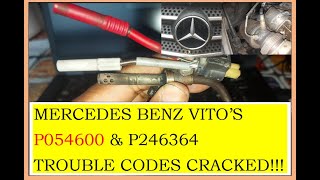
- Failed DPF Regeneration (Diesel Vehicles) (also visible on scanner) — On diesels, a faulty EGT sensor halts the Diesel Particulate Filter (DPF) regeneration process, quickly clogging the filter. 🎬 Watch: Fixing P0546 and DPF issues on a Mercedes Vito.
Diagnostic Flowchart

Tap your situation to follow the diagnostic path that matches what you're seeing on this code.
Common Fixes & Costs
- Replace EGT Sensor (Bank 1, Sensor 1) — Parts: $80-$200, Labor: $100-$200 (0.75-1.5 hours), ~1.2 hr book time (DIY)
- Repair Damaged Wiring or Connector — Parts: $10-$50, Labor: $100-$300, ~1.5 hr book time (Intermediate)
- Clean Soot/Carbon from Sensor — Parts: $5, Labor: $50-$100, ~0.8 hr book time (DIY)
- Repair Exhaust Leak — Parts: $20-$100, Labor: $150-$400, ~2.5 hr book time (Professional)
- Reprogram or Replace Powertrain Control Module (PCM) — Parts: $500-$1500, Labor: $100-$200, ~1.5 hr book time (Professional)
Used vs. New Parts: Buying Guide
When a used part is worth it: It rarely makes sense to buy a used EGT sensor. They are wear-and-tear items exposed to extreme heat. The low cost of a new aftermarket part negates the risk of installing a used part with an unknown history.
Donor-vehicle mileage cap: roughly under 20000 miles for the part to have meaningful remaining life.
Donor quality checklist:
- Only consider from a very low-mileage wrecked vehicle.
- Ensure the part number is an exact match.
- Avoid parts from regions with heavy road salt usage.
Decision logic:
- If The cost of a new OEM sensor is over $200 and a new reputable aftermarket one is not available. → A used sensor from a donor with under 20,000 miles is a last resort.
- If A new aftermarket sensor from a known brand (Bosch, Denso, NTK) is available. → Buy the new aftermarket sensor. Reliability is significantly higher than used.
- If Vehicle is a VW, Audi, Honda, or other make sensitive to sensor calibration. → Buy a new OEM part. Aftermarket versions cause persistent issues on these makes.
Warranty tradeoff: Used parts offer a 30-day warranty. New aftermarket parts include a 1-year to limited lifetime warranty. New OEM parts carry a 1-2 year warranty.
Worst-case if a used part fails: 200-500. If the used sensor fails, you pay for the part and the labor to replace it again.
What Happens If You Wait — Timeline
- 0-2 weeks: Code sets and Check Engine Light is on. DPF regeneration is disabled on diesel vehicles. No other noticeable symptoms. (MPG impact: 0-5%% · Added cost: $0-25 in wasted fuel)
- 2 weeks - 2 months: Soot accumulates in the DPF. A DPF warning light appears on the dash. Fuel economy loss becomes noticeable. (MPG impact: 5-10%% · Added cost: $50-100 in wasted fuel)
- 2-6 months: DPF is significantly clogged, triggering limp mode (reduced engine power). A forced regeneration at a shop is required to clear the blockage. (MPG impact: 10-15%% · Added cost: $150-300 for a forced regeneration)
- 6+ months: DPF is clogged with soot and ash beyond the point of regeneration. The catalytic converter is damaged from unregulated heat. The DPF requires professional off-car cleaning or full replacement. (MPG impact: 15-25%% · Added cost: $1,000-4,000+ for DPF/catalyst replacement)
Cost of Not Fixing It

- 0-1 Month: Reduced fuel economy (5-15% drop) and disabled DPF regeneration on diesel vehicles. The check engine light remains on. (Added cost: 50-150)
- 1-6 Months: For diesel vehicles, the DPF completely clogs from failed regenerations, forcing limp mode and requiring a forced regeneration or professional cleaning. (Added cost: 300-800)
- 6+ Months: Catastrophic failure of the catalytic converter or DPF due to unregulated temperatures. This causes severe engine performance issues and turbocharger damage. (Added cost: 1500-4000)
Diagnosis Steps
- Scan for Codes and Review Freeze Frame Data
Use an OBD-II scanner to confirm P0546. Check for related codes (e.g., P0545, P2080) and review freeze frame data to identify engine conditions when the fault occurred.
Tools: OBD-II Scanner (Beginner) - Analyze Live Sensor Data
View live data for 'EGT Sensor Bank 1 Sensor 1'. A cold engine should read near ambient temperature. A reading stuck at maximum (e.g., 1832°F / 1000°C) or showing a constant 4.5V-5V confirms an electrical fault.
Tools: Advanced OBD-II Scanner (Intermediate) - Perform a Bias Voltage Test
With ignition on (engine off), unplug the EGT sensor. If scanner voltage drops near 0V, the sensor is internally shorted. If voltage stays near 5V, the wiring harness has a short-to-voltage.
Tools: Advanced OBD-II Scanner (Intermediate) - Visual Inspection of Wiring and Sensor
Inspect the Bank 1 EGT sensor and wiring harness. Look for brittle, burnt, or frayed wires near the exhaust manifold. Ensure the connector is secure and corrosion-free.
Tools: Flashlight, Inspection Mirror (Beginner) - Test Sensor Resistance & Heat Response
Measure resistance across the disconnected sensor's pins. A healthy cold sensor reads 150-270 ohms. Infinite (Open Loop) or under 50 ohms means it's dead. For a definitive test, apply heat with a heat gun; resistance must change smoothly.
Tools: Multimeter, Heat Gun (Advanced) - Check Reference Voltage and Ground
With ignition on and sensor disconnected, test the harness connector. One pin must show a 5-volt reference from the PCM; the other must show near 0 ohms to chassis ground. Missing 5V indicates a wiring or PCM fault.
Tools: Multimeter (Advanced) - Inspect for Exhaust System Restrictions
If electrical tests pass, check the catalytic converter and DPF for clogs causing excessive heat. This requires an exhaust backpressure gauge.
Tools: Exhaust Backpressure Gauge (Professional)
When This Code Triggers (Freeze-Frame Conditions)
- Engine Coolant Temp: 180-200°F (82-93°C) (Fully warmed up during steady-state driving.)
- RPM: 1500-2500 (Constant cruise or steady throttle application, not typically during idle or heavy acceleration.)
- Engine Load: 30-60% (The engine is working moderately, such as maintaining speed on a flat highway or slight incline.)
- Vehicle Speed: 40-65 mph (65-105 kph) (Highway or arterial road driving conditions where exhaust temperatures are stable.)
Related Codes
- P0545 — The direct opposite code, indicating 'Exhaust Gas Temperature Sensor Circuit Low.' P0546 triggers from a signal that is too high, while P0545 triggers from a signal that is too low. The diagnostic process is identical.
- P0548 / P0549 — These codes are for the EGT sensor on Bank 2 (P0548 for low, P0549 for high). They point to a problem on the opposite side of a V-style engine.
- P2032 / P2033 — These codes refer to 'Exhaust Gas Temperature Sensor Circuit Low/High Bank 1 Sensor 2'. Sensor 2 is located after the catalytic converter or DPF, whereas P0546 is for Sensor 1 located before.
- P0420 / P0430 — These codes mean 'Catalyst System Efficiency Below Threshold.' A faulty EGT sensor that fails to report overheating permanently damages the catalytic converter, leading to P0420. Fix P0546 first.
- P2080 / P20E2 — These are EGT sensor rationality codes. They often appear with P0546 on Ford trucks and indicate the PCM sees a value that doesn't make sense compared to other sensors, strongly suggesting a sensor or wiring fault.
Climate & Environmental Factors
- Cold Climates / Road Salt: Road salt contaminates the sensor's connector, leading to electrical shorts and high resistance faults. Wiring insulation becomes brittle in extreme cold, increasing susceptibility to cracking.
- High Humidity: Humid environments accelerate corrosion within the sensor connector if the weather seal fails. Moisture intrusion creates a short circuit between the signal and reference wires.
- Short-Trip Driving: Short trips prevent the exhaust system from reaching full operating temperature. This allows soot and moisture to accumulate on the sensor and in the DPF, fouling the sensor and preventing passive DPF regeneration.
How to Talk to a Mechanic About This Code
Say this: "I have an active P0546 code and I'd like to schedule a diagnosis. Please test the EGT Bank 1 Sensor 1 circuit specifically. I'd like you to check the sensor's resistance, verify the 5-volt reference and ground at the harness connector, and inspect the wiring for any heat damage before recommending a part replacement."
This signals you understand the code is for an electrical circuit fault. It directs the technician to perform specific tests, preventing them from simply replacing the sensor without confirming it's the true cause.
Avoid saying:
- 'My check engine light is on, can you just fix it?'
- 'I think I need a new temperature sensor.'
- 'Just do whatever you think is best.'
Questions to ask before authorizing the repair:
- What were the results of the diagnostic tests? Specifically, what was the sensor's resistance reading and did you confirm the 5V reference/ground at the connector?
- Did you find any damage to the wiring harness or connector?
- Can you provide me with the freeze-frame data for the P0546 code?
- If the sensor needs replacement, are you using an OEM part or an aftermarket one?
- What is the warranty on the proposed repair, including both parts and labor?
Where to Take It: Dealer vs Independent vs Chain
- Dealer:
Recommended if your vehicle is under warranty or has a known TSB. Their access to brand-specific software is a key advantage for European makes.
Best for: Vehicles still under powertrain or emissions warranty., Vehicles with known Technical Service Bulletins (TSBs) or warranty extensions for EGT sensors., Complex European brands (VW, Audi, Mercedes) where sensor calibration and software updates are critical.
Downsides: Higher labor rates, often 1.5x to 2x more than independent shops., May recommend replacing an entire assembly when a smaller component repair suffices. (Typical cost: +50% vs. baseline) - Independent Shop:
Best fit for most situations. P0546 is a common code that any competent independent shop diagnoses effectively. They offer the best balance of cost and expertise.
Best for: Out-of-warranty vehicles where cost is a primary concern., Diagnosing and repairing common electrical faults like wiring shorts or bad sensors., Building a long-term relationship with a technician who knows your vehicle's history.
Downsides: Quality and expertise vary widely; vet the shop through reviews and ASE certifications., May lack the latest manufacturer-specific software for very new models. (Typical cost: +0% vs. baseline) - Chain Shop:
Use with caution. Acceptable only if you have already diagnosed the problem and it's a simple sensor replacement. AVOID for initial diagnosis.
Best for: Simple, routine maintenance like oil changes, tires, and brake pads.
Downsides: Technician skill varies dramatically from one location to another., High pressure to meet sales targets leads to upselling unnecessary parts., Lacks the in-depth diagnostic tools and experience for electrical circuit problems. (Typical cost: -10% vs. baseline)
When to Walk Away From the Repair
If the estimated repair cost exceeds 40-50% of the car's private-party value, seriously consider selling or trading in the vehicle instead of repairing it.
- Car worth $5000, fix is $450: Fix it. This is a standard repair cost and is well below the threshold. Fixing it preserves the car's value and functionality.
- Car worth $8000, fix is $2500: Borderline. This cost suggests the initial P0546 was ignored and caused DPF failure. Get a second opinion to confirm the DPF can't be professionally cleaned before authorizing a full replacement.
- Car worth $2500, fix is $2000: Walk away. The repair cost is 80% of the vehicle's value. It is not economically sensible to proceed.
What Scan Tool You Need for This Code
Minimum: A scanner that reads and clears codes, displays live sensor data, and shows freeze-frame data.
A basic $20 code reader only tells you 'P0546' exists. It cannot show the live voltage or temperature reading from the sensor. Seeing a temperature of 1800°F on a cold engine instantly confirms an electrical fault, saving you from guessing.
Budget: BlueDriver Pro Scan Tool (~$100) — Connects to your smartphone via Bluetooth and provides detailed code definitions, freeze-frame data, and live data graphing for the EGT sensor voltage and temperature.
Mid-range: Autel MaxiCheck MX808 / Foxwell NT510 Elite (~$150) — These handheld units offer dedicated screens and faster processing. They provide access to manufacturer-specific codes and data, which is helpful on European vehicles.
Professional: Autel MaxiCOM MK808 / MK906BT (~$500-1200) — Provides full, professional-level diagnostics. Advanced bidirectional controls (e.g., forcing a DPF regeneration) are invaluable for verifying the repair and servicing other vehicle systems.
Rent vs buy: If this is a one-time repair, major auto parts stores have a tool loaner program where you borrow a scanner for free with a refundable deposit. Buy a scanner only if you perform your own diagnostics more than once a year.
How to Clear the Code After You Fix It
- Use an OBD-II scan tool to clear the P0546 fault code.
- Perform a complete drive cycle to allow the ECU to verify the repair.
- Check readiness monitors to ensure they have all run successfully.
Drive cycle (~20 minutes): Start the engine and idle for 3 minutes. Drive for 7 minutes in mixed city conditions with stop-and-go traffic. Drive for 7 minutes at a steady highway speed (55-65 mph). Let the vehicle cool down completely (8 hours) and repeat if monitors are not set.
Readiness monitors affected: Catalyst Monitor, EGR/VVT System Monitor, Oxygen Sensor Monitor
Before emissions retest: drive at least 50 miles to fully set monitors.
Watch out for:
- Clearing the code resets all readiness monitors to 'Not Ready', causing an automatic emissions test failure.
- The code returns immediately if the underlying electrical fault remains unfixed.
Will This Fail Emissions / State Inspection?
Yes — this code typically fails an OBD-II emissions inspection.
- California: An active P0546 code is an automatic failure. All readiness monitors must be 'Ready'. A recently cleared code requires 50-100 miles of driving before a re-test.
- New York: The NYS DMV inspection includes an OBD-II scan. The presence of a P0546 fault code causes an immediate test failure.
- Texas: In counties requiring emissions testing, an illuminated Check Engine Light from code P0546 is an automatic fail. After a repair, most vehicles pass with one readiness monitor 'Not Ready'.
Most Commonly Affected Vehicles
- Volkswagen / Audi Jetta TDI, Passat TDI, Golf GTD, A3, A4 (2009-2016) — Extremely common on TDI diesel models. A failed sensor prevents DPF regeneration. On the 2016 Passat TDI, Bosch 0281004576 is a common replacement.
- Ford F-250/F-350/F-450 Power Stroke (2011-2023) — Very frequent issue. Often appears with a cluster of other EGT codes (P2080, P20E2). Wiring damage near the turbocharger is a primary cause.
- Chevrolet / GMC Silverado/Sierra 2500/3500 Duramax (2010-2020) — Often caused by corroded sensor connectors or requires an ECM software update. On LMM engines, an open circuit fault causes a scanner to read a fixed 1832°F.
- Mercedes-Benz Sprinter, E-Class (Diesel) (2010-2018) — The wiring harness insulation near the turbocharger becomes brittle and melts, causing a short circuit that triggers P0546.
- Subaru WRX, WRX STI, Forester XT (2002-2014) — Frequently triggered after installing a catless up-pipe or aftermarket downpipe that removes the EGT sensor or has a poorly placed bung.
- Hyundai / Kia i30 N, Veloster N, Stonic, Sportage (Diesel) (2011-2024) — Diagnostics point to either a faulty sensor giving a high reading on a cold start or a wiring issue near the turbo.
- Nissan Rogue, Titan XD (2017-2022) — Appears in conjunction with other EGT sensor codes, pointing towards a definitive sensor failure or wiring harness problem.
- Honda Civic (Diesel) (2012-2015) — Appears on the 2.2L diesel models. Using a genuine OEM replacement sensor is critical, as aftermarket sensors are often calibrated incorrectly.
- Toyota Tundra (2014-2022) — On 5.7L V8 models, the code stems from an internally shorted EGT sensor or sensor burnout from high exhaust temperatures during heavy towing.
Manufacturer-Specific Notes
- Subaru: On turbocharged models, installing an aftermarket catless up-pipe guarantees a P0546 if the EGT sensor is deleted. A common fix involves wiring a 2.2k ohm resistor to trick the ECU.
- Volkswagen/Audi: On TDI models, this code frequently appears after long periods of short city driving trips. A failed sensor is the most common cause for DPF regeneration being disabled.
- Mercedes-Benz: On diesel models, especially the Sprinter OM651 engine, EGT sensor wiring near the turbocharger is highly susceptible to heat damage, melting insulation and shorting wires.
- Ford: On Power Stroke diesel trucks, Ford issued Customer Satisfaction Program 15M02 and extended warranty coverage on certain 2011-2015 models for EGT sensor failures. Check your VIN with a dealer.
- General Motors (Chevrolet/GMC): On Duramax engines, a known failure mode for the EGT sensor is an open circuit, causing scan tools to display a fixed default high temperature like 1832°F.
Real Owner Stories
2012 VW Jetta TDI at 110K miles
Check Engine Light and DPF light came on. Car felt slightly sluggish. Owner does mostly short-trip city driving.
What they tried:
- A local shop scanned the code P0546 and recommended immediate EGT sensor replacement.
Outcome: Replaced the Bank 1 Sensor 1 EGT sensor. The mechanic noted the old sensor was heavily coated in soot. After replacement and clearing the code, the DPF light went out and the car successfully performed a DPF regeneration cycle. Total cost was $450.
Lesson: On a TDI, P0546 almost always points to a failed sensor that prevents DPF regeneration. Fixing it quickly prevents a much more expensive DPF replacement.
2004 Subaru WRX at 145K miles
P0546 code appeared immediately after the owner installed an aftermarket catless up-pipe.
What they tried:
- Owner first thought the EGT sensor was faulty from the installation and considered replacing it.
- After researching forums, they learned the code is expected when the sensor is removed for the new pipe.
Outcome: The owner performed the common 'resistor mod' by wiring a 2.2k ohm, 1/2-watt resistor into the sensor's harness connector to mimic a healthy sensor signal for the ECU. This cleared the code. No parts were replaced.
Lesson: On modified turbocharged cars, P0546 is often a direct result of aftermarket parts that delete the EGT sensor. This isn't a true failure but a predictable outcome of the modification.
2015 Mercedes Sprinter 2500 at 85K miles
Check Engine Light on with code P0546. Live data showed the EGT sensor reading was stuck at a maximum value, even with the engine cold.
What they tried:
- The owner purchased a new OEM EGT sensor, but the code returned immediately after installation.
Outcome: A closer inspection of the wiring harness revealed that the sensor wires had melted together near the turbocharger due to failed insulation. The mechanic repaired the shorted wires using high-temperature butt connectors and heat-shrink tubing. The original new sensor then worked correctly. The repair cost $200 in labor.
Lesson: Always inspect the wiring harness for damage, especially in high-heat areas, before assuming the sensor is the problem. A stuck high voltage reading is often a short in the wiring.
How to Prevent This Code From Triggering
- Avoid frequent short trips in diesel vehicles (Daily habit) — Short trips prevent the exhaust from reaching the high temperatures needed for DPF regeneration, leading to soot buildup that fouls the EGT sensor and clogs the filter.
- Use high-quality diesel fuel and consider a fuel additive (Every fill-up) — Better quality fuel and detergents reduce soot and carbon formation during combustion, keeping the EGT sensor probe cleaner and reducing the load on the DPF.
- Allow for a brief cool-down period after heavy loads (After towing or hard driving) — Idling the engine for 3-5 minutes allows circulating oil to carry heat away from the turbocharger, reducing thermal stress on nearby components like the EGT sensor and its wiring.
- Perform regular engine maintenance (air/fuel filters) (Per manufacturer schedule) — Clean air and fuel filters ensure efficient combustion. A clogged filter leads to a rich fuel mixture, producing more soot and raising exhaust temperatures.
Frequently Asked Questions
How much does it cost to fix code P0546?
A DIY sensor replacement costs $80-$200 for the part. A professional repair ranges from $180 to $400, depending on labor rates and sensor accessibility. A simple wiring repair costs $150-$300.
Can I fix P0546 myself?
Yes, replacing a bad sensor is a DIY-friendly job. However, EGT sensors frequently seize in the exhaust pipe and break during removal, complicating the repair.
What are common mistakes when diagnosing P0546?
The biggest mistake is replacing the sensor without testing the wiring first. Always check live data and verify the 5-volt reference circuit.
Should I use a genuine OEM or aftermarket EGT sensor?
OEM is highly recommended. Cheaper aftermarket sensors have different resistance curves, leading to inaccurate readings, persistent codes, and DPF regeneration problems.
Why would P0546 appear on a cold start?
If the code appears when the engine is cold, it confirms an electrical fault. A high voltage signal on a cold start points directly to an internally shorted sensor or a short-to-voltage in the wiring harness.
What is Bank 1, Sensor 1?
Bank 1 is the side of the engine containing cylinder #1. Sensor 1 refers to the first sensor in the exhaust stream, located upstream of the catalytic converter or DPF.
Will a P0546 code clear itself?
No. This code indicates a hard electrical fault. You must repair the underlying cause and clear the code with an OBD-II scanner.
Can a bad oxygen sensor or EGR valve cause P0546?
No. This code is specific to the Exhaust Gas Temperature (EGT) sensor circuit. While other failing components affect exhaust temperatures, they do not cause a 'Circuit High' electrical fault.
Does P0546 affect gasoline vehicles too?
Yes. Many modern turbocharged gasoline engines use EGT sensors to protect the turbocharger from overheating. The causes and diagnostic steps are identical to diesel engines.
Key Takeaways
- Code P0546 triggers when the Powertrain Control Module detects a continuous 4.5V to 5V signal from the Bank 1 Sensor 1 EGT sensor, indicating an electrical short or sensor failure.
- Driving with an active P0546 code for more than a few days risks catastrophic failure of the catalytic converter or DPF, turning a $200 sensor replacement into a $2,000+ repair.
- On diesel engines, P0546 immediately disables the Diesel Particulate Filter (DPF) regeneration cycle, which clogs the filter and forces the vehicle into a 3,000 RPM limp mode.
- Replacing the EGT sensor resolves P0546 in 80% of cases, but you must verify the 5-volt reference signal and ground at the wiring harness before spending $80-$200 on a new OEM part.
Helpful Videos

The information in this article is provided for general reference and educational purposes only. Vehicle specifications, procedures, and part compatibility can vary by production date, trim level, and region. Always consult your vehicle's factory service manual and verify part numbers before purchasing or performing repairs. Safety-critical components such as airbags, seat belts, and braking systems should be installed by a qualified professional.
- 🎬 Helpful Videos
- What Does P0546 Mean?
- Can I Drive With P0546?
- Common Causes
- Symptoms
- Diagnostic Flowchart
- Common Fixes & Costs
- Used vs. New Parts: Buying Guide
- What Happens If You Wait — Timeline
- Cost of Not Fixing It
- Diagnosis Steps
- When This Code Triggers (Freeze-Frame Conditions)
- Related Codes
- Climate & Environmental Factors
- How to Talk to a Mechanic About This Code
- Where to Take It: Dealer vs Independent vs Chain
- When to Walk Away From the Repair
- What Scan Tool You Need for This Code
- How to Clear the Code After You Fix It
- Will This Fail Emissions / State Inspection?
- Most Commonly Affected Vehicles
- Manufacturer-Specific Notes
- Real Owner Stories
- 2012 VW Jetta TDI at 110K miles
- 2004 Subaru WRX at 145K miles
- 2015 Mercedes Sprinter 2500 at 85K miles
- How to Prevent This Code From Triggering
- Frequently Asked Questions
- How much does it cost to fix code P0546?
- Can I fix P0546 myself?
- What are common mistakes when diagnosing P0546?
- Should I use a genuine OEM or aftermarket EGT sensor?
- Why would P0546 appear on a cold start?
- What is Bank 1, Sensor 1?
- Will a P0546 code clear itself?
- Can a bad oxygen sensor or EGR valve cause P0546?
- Does P0546 affect gasoline vehicles too?
- Key Takeaways
- 🎟️ Get 5% Off