

P0544 on 2014 Ram 3500 6.7L Cummins: EGT Sensor Causes & Fixes
P0544 on a 2014 Ram 3500 with the 6.7L Cummins engine indicates a fault in the EGT (Exhaust Gas Temperature) Sensor 1/1 circuit. The most common fix is replacing the sensor itself, which is located in the exhaust downpipe after the turbocharger. However, always check for available PCM software updates first, as multiple TSBs list this code as being resolved by a reflash, often changing it from a one-trip to a two-trip fault to prevent false positives.
- P0544 on your 2014 Ram 3500 points to a problem with the EGT Sensor 1/1 circuit, located right after the turbo.
- Before replacing parts, check for available PCM software updates, as numerous TSBs indicate a reflash can fix this code.
- The most common physical failure is the sensor itself, followed by damaged wiring.
- Ignoring this code can lead to reduced power and potential damage to the expensive DPF system.
- DIY replacement of the sensor is possible, but it can be seized in the exhaust pipe, so use penetrating oil and the correct tools.
What's Unique About the 2014-2014 Ram 3500

On the 6.7L Cummins engine, a series of EGT sensors are used to manage the complex aftertreatment system. What's particularly notable for the 2014 model year is the high number of Technical Service Bulletins (TSBs) issued by the manufacturer that include P0544 as part of a list of codes resolved by a PCM software update. This suggests that the code can often be triggered by a software anomaly rather than a hard part failure, making a trip to the dealer for a potential reflash a crucial first diagnostic step before replacing any parts. Some updates specifically change the fault logic from a one-trip to a two-trip fault to reduce unnecessary MIL illumination.
Diagnostic Flowchart

Tap your situation to follow the diagnostic path that matches what you're seeing on this vehicle.
Generation note: The P0544 code and its common causes (faulty sensor, wiring, software updates) are prevalent across the fourth generation of Ram Heavy Duty trucks (2010-2018) equipped with the 6.7L Cummins engine, as they share the same basic aftertreatment architecture.
Symptoms You May Notice

- Check Engine Light is on
- "Exhaust Service Required" or similar message on the instrument cluster
- Reduced engine power or the truck entering "limp mode"
- Engine may be slow to respond to acceleration
- DPF regeneration process may not initiate or complete properly
- Hot-exhaust or over-temperature alerts on the instrument cluster
- Replacing the wrong EGT sensor. The 6.7L Cummins has up to five EGT sensors; P0544 specifically refers to Sensor 1/1, the first one after the turbo in the downpipe.
- Replacing the sensor when the actual problem is a simple wiring issue or a required software update.
- Confusing the EGT sensor with an Oxygen (O2) sensor. They are different parts with different functions.
Most Likely Causes

- Failed EGT Sensor (Bank 1, Sensor 1) 🔴 High Probability EGT sensors operate in an extremely harsh environment of high heat, vibration, and corrosive exhaust gases, leading to eventual failure of the internal thermistor. They are considered a common wear-and-tear item on modern diesel engines.
How to confirm: Using a scan tool, check the live data for EGT Sensor 1/1. If it shows an illogical temperature (like -40°F or an extremely high fixed value like 5928°F) when the engine is at operating temperature, the sensor is likely bad. You can also test the sensor's internal resistance with a multimeter when disconnected; a common PTC-type sensor might show around 220 Ohms at room temperature. An open circuit (infinite resistance) confirms failure.
Typical fix: Replace the EGT Sensor 1/1. This sensor is located in the exhaust downpipe, just after the turbocharger. 🎬 See this video for an EGT installation on a 6.7L Cummins. Applying anti-seize compound to the threads of the new sensor is recommended, and it should be torqued to specification (e.g., 33 ft-lbs). 🎬 Watch: See this replacement walkthrough for the EGT sensor.
Est. part cost: $50-$150 - Outdated Powertrain Control Module (PCM) Software 🟡 Medium Probability Multiple manufacturer TSBs (e.g., 18-042-20, 18-054-16, 18-053-14) for the 2013-2014 model years specifically list P0544 as a code that can be resolved with a PCM software update. These updates often adjust fault sensitivity to prevent false codes.
How to confirm: A dealership or a properly equipped independent shop can check your vehicle's VIN against available TSBs and determine if a software update is available and has not yet been applied.
Typical fix: Flash the PCM with the latest software version. This is a dealer or specialist-level repair requiring a wiTECH scan tool.
Est. part cost: $100-$250 (Labor cost at a dealership) - Damaged Wiring or Connector 🟡 Medium Probability The wiring harness for the EGT sensor is routed near hot exhaust components and is subject to vibration, which can cause wires to melt, fray, or break over time. Corrosion at the connector pins is also a common point of failure.
How to confirm: Visually inspect the entire length of the sensor's wiring harness for any signs of melting, chafing, or corrosion at the connector. Perform a continuity test with a multimeter to check for breaks in the wire. Check for the correct reference voltage (typically 5V) at the harness connector with the key on, sensor unplugged.
Typical fix: Repair the damaged section of the wiring harness or replace the connector pigtail. Ensure the repaired harness is properly secured away from heat sources.
Est. part cost: $10-$40
Rare But Worth Checking
- Exhaust Leak: A significant exhaust leak upstream of the sensor, such as at the turbo flange or a cracked manifold, can allow cool ambient air to enter the exhaust stream, causing an inaccurate temperature reading and potentially triggering the code.
- Failed Powertrain Control Module (PCM): This is extremely rare. The PCM should only be considered after all other possibilities, including the sensor, wiring, and software, have been thoroughly ruled out. A failed PCM can sometimes cause false codes or fail to communicate with sensors. Repair services exist that can fix a faulty PCM for less than the cost of a new one.
Diagnosis Steps
- Check for Technical Service Bulletins (TSBs): Before buying any parts, contact a Ram dealer or use a professional database to see if your truck's VIN has an open TSB for a PCM reflash that addresses P0544. TSBs like 18-053-14 specifically mention software improvements for this code.
- Scan Tool Live Data: Connect a scan tool and view the live data stream for 'EGT Sensor Bank 1 Sensor 1'. Observe the reading with the key on, engine off (should be near ambient temp) and while the engine is running. An illogical or static reading (e.g., -40°F or a fixed high value) points to a sensor or circuit issue.
- Visual Inspection: Carefully inspect the EGT sensor (located post-turbo in the downpipe) and its wiring harness. Look for any signs of burnt, melted, or frayed wires, and check that the connector is clean, secure, and free of corrosion.
- Test the Sensor: Disconnect the sensor and use a digital multimeter to measure its resistance. Compare this reading to the specifications in a service manual (e.g., around 200-250 ohms at room temp for a PTC sensor). A reading of infinity (open circuit) or zero (short circuit) indicates a failed sensor.
- Test the Circuit: With the sensor unplugged and the key on, check for reference voltage at the connector harness (typically 5 volts). Check the ground wire for continuity to a known good ground. This will confirm if the wiring to the PCM is intact.
- Isolate the Fault: If the circuit and wiring test good, and the live data was faulty, the sensor itself is the most likely culprit. If the sensor tests good but the circuit has issues, repair the wiring. If both are good and a PCM update has been performed, the PCM itself is the last, albeit rare, possibility.
Parts You'll Likely Need
- Exhaust Gas Temperature (EGT) Sensor (Bank 1, Sensor 1)
(OEM #68085774AB)— This is the most common component to fail for this code due to the extreme temperatures it endures. It is a direct-fit replacement for 2013-2018 Ram trucks with the 6.7L engine.
Trusted brands: Mopar, Bosch, NTK, Dorman, Walker Products
OEM price range: $100-$180
Aftermarket price range: $50-$120
Related Codes That Often Appear With This One
- U110E — Lost Ambient Temperature Message. Often included in the same TSBs that address P0544 with a software update. [Bulletin #18-042-20, #18-053-14]
- P0087 — Fuel Rail Pressure Too Low. Also frequently listed alongside P0544 in PCM update TSBs for this vehicle. [Bulletin #18-045-15 REV A, #18-053-14]
- P2281 — Air Leak Between MAF And Throttle Body. Another code commonly resolved by the same software updates that fix P0544. [Bulletin #18-079-15, #18-053-14]
- P0128 — Thermostat Rationality. This code is also frequently bundled in the same software update TSBs as P0544. [Bulletin #18-054-16, #18-053-14]
Technical Service Bulletins (TSBs) & Recalls
- 18-042-20: Addresses P0544 among other codes, likely resolved by a PCM update.
- 18-054-16: Lists P0544 in a group of DTCs that may be corrected by a software reflash.
- 18-045-15 REV A: Includes P0544 as a code that can be set, with a software update being the likely remedy.
- 18-079-15: Mentions P0544 in a list of codes that can be cleared by a PCM software updat
- 18-045-15: Includes P0544 in a list of DTCs potentially fixed by a PCM reflash.
- 18-053-14: Lists P0544 as a code that can be resolved with a software update.
Platform-Specific Known Issues
- A significant number of TSBs from the manufacturer indicate that P0544, often along with other codes, can be triggered by software glitches in the PCM. Checking for a reflash is a critical and cost-effective first step. [Bulletin #18-042-20, #18-054-16, #18-045-15 REV A, #18-079-15, #18-045-15, #18-053-14]
- Owner forums frequently discuss the confusion of locating the correct sensor. For P0544, it is definitively the sensor in the exhaust downpipe after the turbocharger outlet, before the Diesel Oxidation Catalyst (DOC).
Mechanic-Grade Diagnostic Values
- EGT Sensor Internal Resistance — expected: ~220 Ohms at room temperature (70°F / 21°C). Failure: An open circuit (infinite resistance) or a short circuit (near zero resistance) indicates a failed sensor.
- Harness Connector Voltage (Key On, Engine Off, Sensor Unplugged) — expected: Approximately 5.0 volts on the reference wire and good continuity to ground on the other.. Failure: No voltage or low voltage suggests a wiring problem between the connector and the PCM.
- Scan Tool Live Data (Key On, Engine Off, Cold Engine) — expected: The temperature reading for EGT 1/1 should be close to the ambient air temperature and other temperature sensors.. Failure: A reading of -40°F, a fixed high value like 5928°F, or a value that doesn't change indicates a fault.
- Fault-Setting Voltage Threshold — expected: The sensor signal voltage should operate between approximately 0.5V (cold) and 4.5V (hot).. Failure: A code may set if the PCM sees a signal voltage above a specific threshold (e.g., 4.88 Volts) for more than a few seconds, indicating a circuit high/open fault.
Scan Tool Commands That Help
- wiTECH or equivalent professional scan tool: Jumping Connector Pins — As a quick wiring integrity test. Disconnect the sensor and use a fused jumper wire to short the two pins on the vehicle's harness connector. With the key on, the original P0544 (often an open/high circuit code) should change to a short/low circuit code (like P0545). If it does, the wiring to the PCM is good, and the sensor is the problem.
- wiTECH: Forced DPF Regeneration — After replacing the sensor, initiating a forced regeneration is a good way to verify the repair. This allows you to monitor the new EGT sensor's live data through a full heating and cooling cycle to ensure it is reading correctly and allowing the aftertreatment system to function.
Wiring & Ground Locations
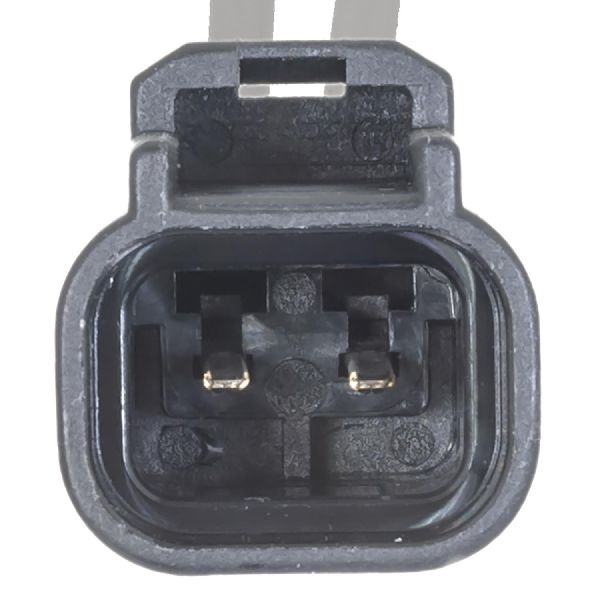
- EGT 1/1 Connector — A black 2-way connector for the first EGT sensor, typically located on the passenger side of the engine bay, clipped to the firewall or a nearby bracket.. This is the primary connection point to test. It is susceptible to corrosion and heat damage, which can cause intermittent or permanent faults for P0544.
- Harness Chafe Point — The wiring harness running down the passenger side of the engine near the firewall and transmission bell housing.. This area is prone to high heat and vibration, which can melt the wire loom and cause the EGT sensor wires to short to ground or break, leading to a P0544 code.
- PCM Ground — Key engine grounds are located on the engine block itself and at the driver's side battery negative terminal (G100).. A poor engine or PCM ground can cause floating voltages and erratic readings from multiple sensors, including the EGT sensor, leading to false codes.
Real Owner Repair Stories
- cumminsforum.com user report (2014 Ram 2500 6.7L Cummins) — P0544 code, Check Engine Light.
❌ Tried (didn't work) Replacing the EGT Sensor (Bank 1, Sensor 1).
✅ What actually fixed it After the new sensor didn't fix the issue, a closer inspection of the wiring harness revealed a section near the firewall had melted and was shorting out against the exhaust manifold. Repairing the damaged wires resolved the code permanently. - turbodieselregister.com user report (2014 Ram 3500 6.7L Cummins) — P0544 code, "Exhaust Service Required" message.
❌ Tried (didn't work) The dealership first performed a PCM reflash per a TSB, but the code returned after a few hundred miles.
✅ What actually fixed it Replacing the EGT Sensor 1/1 after the software update failed to provide a permanent solution. This indicates that while a TSB exists, a hard part failure can still be the root cause.
When the Usual Fixes Don't Work
- While numerous TSBs suggest a PCM software update can resolve P0544, real-world owner experiences show this is not always a permanent fix. In several documented cases, owners had the reflash performed at a dealership only for the code to return, with the ultimate solution being the replacement of the EGT sensor itself. This confirms that while the software update should be investigated first, it does not rule out a genuine hardware failure.
OEM Part Supersession History
68085774AA→68085774AB— Standard part revision, likely for improved durability or a change in manufacturing.
Heads up: None. The 'AA' and 'AB' revisions are interchangeable.
Helpful Videos
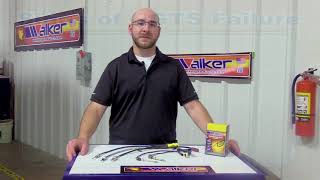
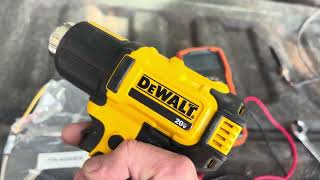
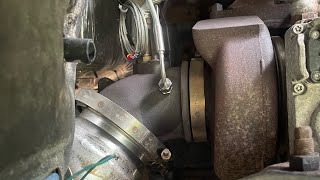
We Have This Part in Stock


The information in this article is provided for general reference and educational purposes only. Vehicle specifications, procedures, and part compatibility can vary by production date, trim level, and region. Always consult your vehicle's factory service manual and verify part numbers before purchasing or performing repairs. Safety-critical components such as airbags, seat belts, and braking systems should be installed by a qualified professional.
- Ram 3500:
- 🎬 Helpful Videos
- 🛍️ Shop This Part
- What's Unique About the 2014-2014 Ram 3500
- Diagnostic Flowchart
- Symptoms You May Notice
- Most Likely Causes
- Rare But Worth Checking
- Diagnosis Steps
- Parts You'll Likely Need
- Related Codes That Often Appear With This One
- Technical Service Bulletins (TSBs) & Recalls
- Platform-Specific Known Issues
- Mechanic-Grade Diagnostic Values
- Scan Tool Commands That Help
- Wiring & Ground Locations
- Real Owner Repair Stories
- When the Usual Fixes Don't Work
- OEM Part Supersession History
- 🎟️ Get 5% Off