

P0544 on 2014 Ram 2500 6.7L Cummins: EGT Sensor 1/1 Circuit Causes and Fixes
This code indicates a fault in the circuit for the Exhaust Gas Temperature (EGT) Sensor 1/1, which is the first sensor in the exhaust stream, located on the downpipe just after the turbocharger. The most common fix is replacing the faulty EGT sensor itself. Expect to pay between $75 and $160 for the part. Before replacing, check for damaged wiring and confirm a PCM software update isn't the actual required fix, as multiple TSBs address this code with a reflash.
- P0544 on a 2014 Ram 2500 6.7L points specifically to a circuit fault with the EGT sensor located on the downpipe, right after the turbocharger.
- The most common fix is replacing the sensor (Mopar P/N 68085774AB), but wiring damage is also a possibility.
- Crucially, multiple TSBs indicate that a PCM software update can resolve this code, so this should be investigated before replacing parts, especially if other codes are present.
- Do not confuse this sensor with the other four EGT sensors located further down the exhaust system in the DPF and SCR.
- Driving with this fault can prevent DPF regeneration, leading to much more expensive repairs down the line.
What's Unique About the 2014-2014 Ram 2500
The 6.7L Cummins engine in the 2014 Ram 2500 uses a complex after-treatment system with up to five EGT sensors to meet emissions standards. P0544 specifically points to the very first sensor in this chain, often called EGT #1, located on the exhaust downpipe immediately after the turbocharger outlet. These sensors and their wiring are exposed to extreme heat cycles and vibration, making them a common failure point. It's critical to identify the correct sensor, as there are multiple sensors in the DPF and SCR systems downstream that are often confused. Replacing the wrong one will not solve the issue.
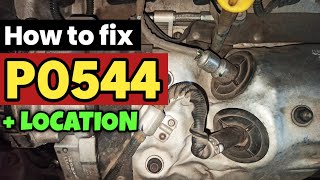
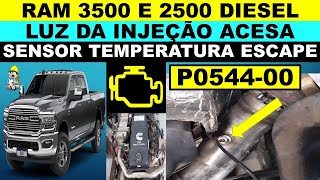
🎬 Watch: A complete overview of the 6.7L Cummins sensor locations.Diagnostic Flowchart
Tap your situation to follow the diagnostic path that matches what you're seeing on this vehicle.
Symptoms You May Notice
- Check Engine Light is on
- "Exhaust Service Required See Dealer Now" or similar message on the instrument cluster
- Vehicle may enter a reduced power or "limp mode" state
- Improper or frequent Diesel Particulate Filter (DPF) regeneration cycles
- Reduced fuel economy
- Audible clicks from relays as the system tries to manage the fault
- Replacing the wrong EGT sensor. The 6.7L Cummins has multiple EGT sensors. Sensor 1/1 is on the downpipe post-turbo. Other sensors are located in the DPF (Sensor #2, #3) and SCR catalyst (Sensor #4, #5).
- Replacing the EGT sensor when a PCM software update is the actual required fix per TSBs.
- Mistaking the EGT sensor for an Oxygen (O2) sensor. They are different components with different functions.
- Replacing the Diesel Particulate Filter (DPF) or other expensive emissions components when only the sensor or its wiring is at fault.
Most Likely Causes
- Failed EGT Sensor (Bank 1, Sensor 1) 🔴 High Probability The sensor operates in a high-temperature, high-vibration environment right after the turbo, leading to internal failure over time. The probe can withstand temperatures up to 2300°F (1260°C), but the constant thermal cycling causes wear.
How to confirm: Disconnect the sensor and test its internal resistance with a multimeter. A healthy PTC-type sensor will have a resistance of around 215-220 Ohms at room temperature, which increases as it heats up. A reading of infinity (open circuit) or near-zero (short circuit) indicates a failed sensor. Compare the reading to the manufacturer's specification.
Typical fix: Replace the EGT Sensor 1/1. This involves unplugging the connector, and using a wrench (often a 14mm or specialized sensor socket) to remove the old sensor from the exhaust downpipe. Apply anti-seize to the threads of the new sensor before installation.
Est. part cost: $75-$160 - Damaged Wiring or Connector 🟡 Medium Probability The wiring harness is routed near hot exhaust and engine components and can become brittle, melted, or chafed. The connector itself can also suffer from corrosion or broken pins.
How to confirm: Visually inspect the entire length of the sensor's wiring harness from the sensor to where it joins the main loom. Look for any signs of melting, chafing, or corrosion. Check the connector pins for corrosion, moisture, or a loose connection. Use a multimeter to test for continuity and check for shorts to ground or power.
Typical fix: Repair the damaged section of wiring using heat-shrink butt connectors or solder. If the connector is damaged, replace it with a new pigtail connector.
Est. part cost: $15-$50 - Soot Buildup on Sensor ⚪ Low Probability While less common for a circuit code, heavy soot can insulate the sensor, causing slow or inaccurate readings that the PCM may interpret as a fault over time.
How to confirm: Remove the sensor and inspect the tip for heavy, caked-on carbon deposits.
Typical fix: Clean the sensor tip carefully with a soft cloth or plastic bristle brush and a mild solvent like isopropyl alcohol. However, if the sensor is heavily fouled, replacement is often the more reliable and long-term solution as the fouling may indicate an internal issue.
Est. part cost: $0-$10
Rare But Worth Checking
- Powertrain Control Module (PCM) Software Calibration Issue: This is a very common scenario for this platform. Multiple Technical Service Bulletins (TSBs) have been issued by Ram/FCA to address this and other codes. The update recalibrates the PCM's sensitivity and logic for the EGT sensor circuit, preventing false positives. If other codes listed in the TSBs are present, a software update at a dealership is the most likely fix.
- Powertrain Control Module (PCM) Failure: This is very rare. Before condemning the PCM, all other possibilities (sensor, wiring, and software updates) must be exhaustively ruled out. A failed PCM might also present other unrelated codes.
- Upstream Exhaust Leak: A significant leak in the exhaust manifold or turbocharger gaskets before the sensor can introduce cooler, ambient air, causing the sensor to report an illogical temperature that the PCM flags as a circuit fault.
Diagnosis Steps
- Verify the code with an OBD-II scanner.
- Using the scanner, monitor the live data for EGT Sensor 1/1. When the engine is cold, its reading should be close to the ambient air temperature. If it reads an extreme high value (e.g., >1500°F) or an extreme low/default value (e.g., -40°F), the sensor or circuit is likely faulty.
- Perform a visual inspection of EGT Sensor 1/1, its connector, and its wiring harness. The sensor is located on the exhaust downpipe just after the turbocharger. Look for any signs of melting, corrosion, or physical damage to the wires.
- Disconnect the sensor and test its resistance with a multimeter. A common resistance for a PTC-type sensor at room temperature is ~215-220 ohms. An open circuit (infinite resistance) or a short circuit (zero resistance) confirms the sensor has failed.
- If the sensor tests good, check the wiring harness. With the key on, check for a 5V reference voltage at the sensor connector. Test for continuity on the signal and ground wires back to the PCM. Check for a short to ground or a short to power on the signal wire.
- If both the sensor and wiring are confirmed to be good, the issue most likely lies with the PCM software. Check for available software updates with a dealership or a qualified shop with a wiTECH tool, as multiple TSBs list this code as part of a group of faults fixed by a reflash.
Parts You'll Likely Need
- Exhaust Gas Temperature (EGT) Sensor (Bank 1, Sensor 1)
(OEM #68085774AB)— This is the most common component to fail for this specific code due to the harsh operating environment immediately post-turbo.
Trusted brands: Mopar, Bosch, Standard Motor Products (SMP), Bostech (BTS030336)
OEM price range: $100-$160
Aftermarket price range: $70-$110
Related Codes That Often Appear With This One
- P0128 — This Thermostat Rationality code is listed alongside P0544 in multiple manufacturer TSBs (e.g., #18-045-15 REV A), suggesting a potential related software issue or a common failure pattern addressed by a PCM update.
- P0087 — Fuel Rail Pressure Too Low is also mentioned in the same TSBs as P0544, indicating a possible link that may be resolved with a software flash.
- P214D — This SCR NOx Catalyst Outlet Temperature code appears with P0544 in TSBs, pointing to a broader issue within the emissions control system that a dealer software update might address.
- P2281 — Air Leak Between MAF And Throttle Body is another code frequently bundled with P0544 in PCM flash updates issued by Ram, such as TSB #18-045-15.
Technical Service Bulletins (TSBs) & Recalls
- 1805416: Lists P0544 among other codes that may be addressed by service.
- 18-045-15 REV A: Details a PCM flash for 2014 models to resolve P0544 and other DTCs like P0087 and P0128.
- 18-045-15: Includes P0544 in a list of diagnostic trouble codes.
- 1805314REVB: Mentions P0544 as a possible present code.
- 18-053-14 REV. B: Includes P0544 in a list of potential fault codes.
- 18-044-18: A TSB for 2013 models that also includes P0544 as a code fixed by a PCM software update, showing the issue spans adjacent model years.
Platform-Specific Known Issues
- Multiple Technical Service Bulletins (#1805416, #18-045-15 REV A, #18-045-15, #1805314REVB, #18-053-14 REV. B, #18-044-18) have been issued by the manufacturer that include code P0544. These bulletins often address a list of multiple fault codes that can be resolved by reprogramming the Powertrain Control Module (PCM) with updated software. The updates adjust the diagnostic thresholds, preventing the code from being set erroneously. If you have P0544 along with other codes mentioned in the TSBs, a dealer visit for a software update may be the correct and only necessary fix.
Mechanic-Grade Diagnostic Values
- EGT Sensor (PTC Type) Resistance at Room Temperature — expected: ~215 - 220 Ohms. Failure: An open circuit (infinite resistance) or a short circuit (near-zero resistance). Resistance should increase with heat.
- EGT Sensor Connector Reference Voltage (Key On, Engine Off) — expected: 5 Volts. Failure: Significantly lower or no voltage, indicating a wiring or PCM issue.
- EGT Sensor Signal Voltage Range — expected: 0.5V (cold) to ~4.5V (hot). Failure: Voltage is stuck high (e.g., above 4.88V), stuck low, or does not change with exhaust temperature.
Scan Tool Commands That Help
- High-end Scan Tool (e.g., wiTECH): Short sensor connector terminals — As a quick wiring check. With the key on, shorting the two terminals in the harness-side connector for the sensor should set a corresponding 'Circuit Low' code (like P2032 for sensor 1/2). If it does, the wiring from the connector to the PCM is likely good, pointing to a failed sensor.
Wiring & Ground Locations
- Grounding Bolt (for aftermarket gauges) — Next to the underhood fuse box.. While this is for an aftermarket gauge installation, it highlights a common and accessible ground point near the fuse box that could be used for testing the sensor's ground circuit continuity. A poor ground is a potential cause for circuit codes.
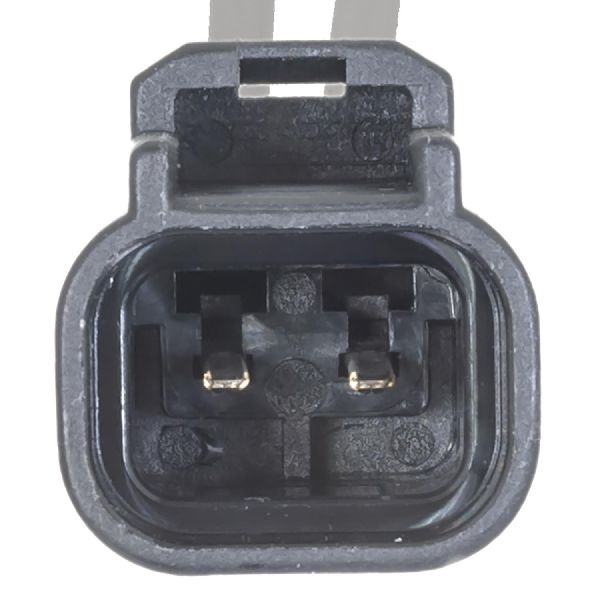
- EGT Sensor 1/1 Connector — On the wiring pigtail coming from the sensor located on the exhaust downpipe, just after the turbocharger.. This is the primary point for testing sensor resistance and checking for voltage from the PCM. Corrosion or damage here is a common cause of the P0544 code.
Real Owner Repair Stories
- Turbo Diesel Register Forum (2014 Ram 2500 6.7L Cummins, 76k miles) — EVIC message "Exhaust System Service Required - See Dealer", codes P2033 (EGT Sensor 1/2 Circuit High) and P24A0. Live data showed bogus readings of 40°F or 5928°F for EGT-2.
❌ Tried (didn't work) Initial dealer suggestion was a clogged DPF, which was incorrect as other EGT sensors read normally.
✅ What actually fixed it The confirmed diagnostic path was to test the sensor and wiring. A forum expert noted that if the signal circuit voltage is above 4.88V, it points to a short to voltage, an open signal wire, or an open ground. The final recommendation was that replacing the faulty EGT sensor itself is the most probable fix, as it's an inexpensive part and a common failure item.
OEM Part Supersession History
68085774AA→68085774AB— Standard part revision by the manufacturer.
Heads up: The new part number (68085774AB) is the correct replacement for the original. No known incompatibility issues.
Helpful Videos

We Have This Part in Stock


The information in this article is provided for general reference and educational purposes only. Vehicle specifications, procedures, and part compatibility can vary by production date, trim level, and region. Always consult your vehicle's factory service manual and verify part numbers before purchasing or performing repairs. Safety-critical components such as airbags, seat belts, and braking systems should be installed by a qualified professional.
- Ram 2500:
- 🎬 Helpful Videos
- 🛍️ Shop This Part
- What's Unique About the 2014-2014 Ram 2500
- Diagnostic Flowchart
- Symptoms You May Notice
- Most Likely Causes
- Rare But Worth Checking
- Diagnosis Steps
- Parts You'll Likely Need
- Related Codes That Often Appear With This One
- Technical Service Bulletins (TSBs) & Recalls
- Platform-Specific Known Issues
- Mechanic-Grade Diagnostic Values
- Scan Tool Commands That Help
- Wiring & Ground Locations
- Real Owner Repair Stories
- OEM Part Supersession History
- 🎟️ Get 5% Off