

OBD-II Code P0542: Intake Air Heater 'A' Circuit High
What P0542 means, why it triggers, and how to fix it
- P0542 indicates the diesel intake air heater is not drawing its typical 200+ amps of power, usually caused by a failed relay, corroded wiring, or a burned-out heater element.
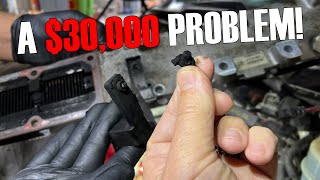
- On 2007-2018 Ram 6.7L Cummins engines, P0542 is a critical warning sign for the 'killer bolt' failure, where a melted heater stud drops into the engine and causes $10,000 to $30,000 in damage.
- Diagnose the circuit in under 5 minutes by listening for a loud 'clunk' from the relay on a cold start and verifying the dashboard voltage gauge drops below 12V when the 'Wait to Start' light is on.
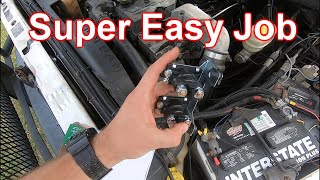
- Replacing a faulty intake air heater relay costs $150 to $280 at a shop and takes under an hour, making it a highly accessible DIY repair using basic sockets.
What Does P0542 Mean?

P0542 means the Powertrain Control Module (PCM) detected an open circuit or high resistance in the intake air heater circuit (common on diesel engines). The PCM commanded the heater ON but did not see the massive voltage drop that occurs when the heater draws its typical 200+ amps, indicating the element is not receiving power.
Technical definition: The SAE definition for P0542 is "Intake Air Heater 'A' Circuit High". This indicates the PCM detected that the voltage in the control circuit remained high when the heater was commanded ON. A 'circuit high' fault means the expected voltage drop did not occur, pointing directly to an open circuit, high-resistance fault, or a failed relay.
Can I Drive With P0542?

Yes, But With Caution. You can drive, but expect hard starting or no-starts in cold weather. On Ram 6.7L Cummins trucks, ignoring this code is extremely risky. A stuck relay or high-resistance connection causes the grid heater stud ('killer bolt') to break and fall into the engine, causing catastrophic failure costing $10,000 to $30,000. Disconnect the heater relay to prevent cycling until repaired.
Common Causes

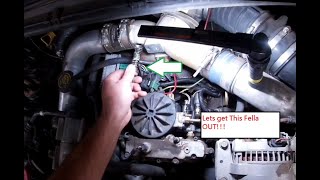
- Faulty Intake Air Heater Relay/Solenoid (Very Common) — The relay is a high-amperage switch controlling power to the heater. These relays handle massive current and frequently fail by getting stuck open (preventing power flow) 🎬 Watch: How to perform an intake air heater delete. or stuck closed (leaving the heater on constantly).
- Damaged Wiring or Corroded Connectors (Very Common) — High-current wires leading to the heater relay and element corrode, loosen, or break. The small push-on signal wires at the relay are a highly common point for corrosion, creating the open circuit.
- Failed Intake Air Heater Element (Common) — The heater element, often called a grid heater, operates like a toaster element. It burns out and fails over time, creating an open circuit that prevents it from drawing power.
- Thermal Runaway at Heater Stud Connection (Common) — On Cummins engines, a loose connection at the heater stud creates resistance. This resistance generates heat, which increases resistance further. This cascading cycle melts the stud and causes it to break (the 'killer bolt' failure). 🎬 Watch: How the grid heater bolt fails on Cummins engines.
- Loose or Corroded Battery/Ground Connections (Less Common) — The heater circuit draws immense power directly from the batteries. A loose main battery terminal, especially the ground, causes unstable voltage readings that the PCM interprets as a circuit fault.
- Faulty or Unplugged Intake Air Temperature (IAT) Sensor (Less Common) — The PCM uses the IAT sensor to decide if it's cold enough to need the heater. If the sensor is faulty or left unplugged during an air filter change, the PCM gets incorrect data and sets a P0542 code.
- Blown Fuse or Fusible Link (Less Common) — A large fuse or fusible link protects the heater circuit. A previous short circuit blows this protective device, creating a permanent open circuit.
- Faulty Powertrain Control Module (PCM) (Rare) — The control module itself fails, but this is highly uncommon. All other causes (wiring, relay, heater element) must be completely ruled out before considering a PCM failure.
Symptoms

- Hard Starting or No Start in Cold Weather — The engine cranks for a longer time before starting, or fails to start entirely, when the ambient temperature drops below 50°F.
- Audible 'Click' is Missing — On a cold start, you should hear a loud 'clunk' from the engine bay as the heater relay activates. The absence of this sound points directly to a relay or control circuit issue.
- Voltage Gauge Does Not Drop — When the 'Wait to Start' light is on, the vehicle's voltmeter should visibly dip as the heater draws a heavy load. If the voltage remains steady, it confirms no current is being drawn.
- Excessive White Smoke from Exhaust on Startup — When the engine is cold, a large amount of white smoke appears from the tailpipe, which is unburned fuel from incomplete combustion.
- Rough Idle After Cold Start — Immediately after starting in cold weather, the engine runs rough, stumbles, or stalls until it builds internal heat.
- Check Engine Light is On (also visible on scanner) — The PCM stores the P0542 code and illuminates the Malfunction Indicator Lamp (MIL).
Diagnostic Flowchart
Tap your situation to follow the diagnostic path that matches what you're seeing on this code.
Common Fixes & Costs
- Replace Intake Air Heater Relay — Parts: $80-$130, Labor: $75-$150, ~0.5 hr book time (DIY)
- Repair Damaged Wiring or Clean Connectors — Parts: $10-$50, Labor: $150-$300, ~1.5 hr book time (Intermediate)
- Replace Intake Air Heater Element (Grid Heater) — Parts: $250-$600, Labor: $200-$400, ~2.2 hr book time (Intermediate)
- Clean or Tighten Battery and Ground Connections — Parts: $5-$20, Labor: $75-$150, ~0.5 hr book time (DIY)
- Replace Blown Fusible Link — Parts: $20-$60, Labor: $75-$150, ~0.6 hr book time (DIY)
DIY vs Professional
- Replace Intake Air Heater Relay — Beginner: Yes
Tools: Basic socket set (typically 8mm or 10mm). - Clean or Tighten Battery and Ground Connections — Beginner: Yes
Tools: Socket set, wire brush. - Replace Blown Fusible Link — Beginner: Yes
Tools: Basic socket set. - Replace Intake Air Heater Element (Grid Heater) — Beginner: No
Tools: Socket set, torque wrench, extensions, fuel line disconnect tool, new gaskets, Allen wrenches, picks. - Repair Damaged Wiring or Clean Connectors — Beginner: No
Tools: Digital multimeter, wire strippers, crimpers, heat shrink tubing, soldering iron, vehicle wiring diagram.
Used vs. New Parts: Buying Guide
When a used part is worth it: For the most common fixes (relay, heater element), buying used is not recommended. These are relatively low-cost wear items where the savings are minimal and the risk of getting a part near the end of its life is high.
Donor-vehicle mileage cap: roughly under 40000 miles for the part to have meaningful remaining life.
Donor quality checklist:
- Match part numbers exactly, especially for relays, as superseded numbers are common.
- For a grid heater element, visually inspect for any signs of overheating, arcing, or physical damage at the electrical stud.
- Avoid parts from vehicles in rust-belt states due to the high likelihood of connector corrosion.
Decision logic:
- If The part is an electrical relay or fusible link → Always buy new. The cost difference is small, and a new part comes with a warranty and known service life.
- If The part is the grid heater element itself → Strongly favor new OEM or reputable aftermarket parts. The labor to replace it is significant, making it risky to install a used part that might fail soon after.
- If Budget is extremely tight and the vehicle is high-mileage → A used relay from a low-mileage wreck is a temporary fix, but it remains a gamble.
Warranty tradeoff: Used parts typically have a 30-90 day warranty at best. New aftermarket parts often carry a 1-year to limited lifetime warranty. New OEM parts offer a 1-2 year warranty.
Worst-case if a used part fails: $250-$500 if a used part fails shortly after installation, primarily due to repeated labor costs for diagnosis and replacement.
What Happens If You Wait — Timeline
- 0-1 month: Code P0542 appears, usually on the first cold snap of the season. The Check Engine Light is on. In cold weather (<50°F), the engine cranks longer before starting. (MPG impact: 0%% · Added cost: $0)
- 1-4 months: Hard starting in cold weather becomes consistent. The driver notices excessive white smoke (unburned fuel) and a rough idle for the first minute after a cold start. High resistance at the heater stud or relay worsens due to heat cycling. (MPG impact: 0-1%% · Added cost: $50-$150 in potential wear on the starter and batteries from prolonged cranking.)
- 4-12 months (Ram 6.7L Cummins Specific): Thermal runaway begins at the loose grid heater stud. The connection rapidly degrades, arcing and melting the stud. The 'wiggle test' fails. The risk of the bolt breaking off becomes critical with every cold start cycle. (MPG impact: 0-1%% · Added cost: $500-$1,200 if caught now (cost to replace heater and relay). If not caught, the risk transitions to Stage 4.)
- Ongoing (Ram 6.7L Cummins): Catastrophic failure. The grid heater stud ('killer bolt') breaks and falls into the intake manifold, typically getting ingested by cylinder #6. This causes severe damage to the piston, cylinder head, valves, and turbo. (MPG impact: N/A (Engine is destroyed)% · Added cost: $10,000-$30,000 for engine repair or a complete replacement.)
Cost of Not Fixing It
- Immediate: Hard starting, no-starts, and rough idle in cold weather (<50°F). Increased white smoke on startup. (Added cost: $0)
- 0-6 months (All Vehicles): Stranded by a no-start in an unexpected cold snap. Potential damage to starter and batteries from prolonged cranking. (Added cost: $300-$800 for a new starter and/or batteries.)
- Ongoing (Ram 6.7L Cummins): CRITICAL RISK: The heater stud ('killer bolt') breaks off due to thermal stress from a faulty connection, falling into the intake and causing catastrophic engine damage. (Added cost: $10,000-$30,000 for engine repair or replacement.)
Diagnosis Steps

- Visual Inspection and 'Wiggle Test'
Inspect the heater, relay, and wiring for melted insulation and corrosion. On Ram trucks, carefully wiggle the power cable on the grid heater stud. ANY movement indicates the 'killer bolt' is loose and failure is imminent. Do not start the engine if it is loose.
Tools: Flashlight, Inspection Mirror (Beginner) - Listen for Relay Operation
Have a helper turn the key to the 'ON' position (without starting) in cold weather. You should hear a loud 'clunk' from the engine bay as the intake air heater relay activates. If you hear nothing, the relay is not getting power or has failed.
Tools: A helper (Beginner) - Check Fuses and Fusible Links
Locate the main fuse or fusible link for the intake air heater circuit in the under-hood fuse box and inspect it. Swap the heater relay with an identical one from a non-critical circuit (like the horn) to quickly test if the relay is the culprit.
Tools: Owner's Manual, Fuse Puller (Beginner) - Test Heater Element Resistance
Disconnect the main power wire from the intake air heater element. Set your multimeter to measure Ohms. Touch one probe to the heater's electrical stud and the other to a clean engine ground. A good heater reads less than 1.0 Ohm. An infinite reading (OL) means the element is burned out.
Tools: Digital Multimeter, Basic Hand Tools (Intermediate) - Test Heater Relay Control Circuit
Disconnect the relay. Measure the resistance across the relay's control circuit terminals (the smaller pins). A typical reading is between 15 and 25 Ohms. A reading outside this range indicates a faulty relay coil.
Tools: Digital Multimeter (Intermediate) - Perform a Voltage Drop Test
Connect the positive lead of your multimeter to the positive battery terminal and the negative lead to the heater element's power stud. Have a helper cycle the key to activate the heater. A reading of more than 0.5 volts indicates excessive resistance in the wiring or relay contacts.
Tools: Digital Multimeter, A helper (Intermediate) - Test Circuit Voltage Under Load
Reconnect everything. Using a scan tool, command the intake air heater ON. Check for battery voltage on the main wire going to the heater element. When the heater is on, system voltage should drop significantly. If voltage remains high and does not drop, there is an open circuit preventing current flow.
Tools: Digital Multimeter, OBD-II Scan Tool with Bidirectional Controls (Advanced) - Check for Voltage at the Control Wire
Using a scan tool, command the intake air heater ON and OFF. With the relay connector unplugged, probe the signal wire terminal coming from the PCM. The voltage should switch between near 0V (OFF) and battery voltage (ON). If the voltage is stuck high, suspect a short to power or a faulty PCM driver.
Tools: Digital Multimeter, OBD-II Scan Tool with Bidirectional Controls (Advanced) - Test IAT Sensor Resistance vs. Temperature
Disconnect the IAT sensor and measure its resistance with a multimeter. Compare the reading to a temperature/resistance chart for your specific vehicle. A significant deviation indicates a faulty sensor causing the PCM to activate the heater at the wrong times.
Tools: Digital Multimeter, Thermometer (Advanced) - Analyze Scan Tool Live Data
Monitor live data PIDs: 'Intake Air Heater Command', 'Intake Air Temperature', and 'System Voltage'. When commanded ON, IAT should rise and system voltage should drop. If the command switches to ON but voltage remains steady and IAT does not rise, it confirms an open circuit fault.
Tools: Professional OBD-II Scan Tool (Advanced)
When This Code Triggers (Freeze-Frame Conditions)
- Engine Coolant Temp: < 50°F (10°C) (During a cold start (key-on, pre-start).)
- Intake Air Temp: < 50°F (10°C) (Matches cold coolant temp, confirming cold soak.)
- RPM: 0 (pre-start) or 600-800 (initial idle) (Code sets when heater is commanded ON, either before cranking or just after startup.)
- Vehicle Speed: 0 mph (Heater activation is a stationary, cold-start event.)
Related Codes
- P0541 — This code means 'Intake Air Heater 'A' Circuit Low'. It is the opposite of P0542. P0542 (High) is set when the PCM sees voltage stay high (open circuit). P0541 (Low) is set when voltage is lower than expected (short to ground).
- P0540 — This is a general fault code for the 'Intake Air Heater 'A' Circuit'. It indicates a problem was detected but isn't specific about high or low voltage. P0542 often follows an initial P0540 to pinpoint the fault.
- P2609 — This code means 'Intake Air Heater System Performance'. The PCM sets P0542 for the electrical fault, then sets P2609 when it sees the intake air temperature is not rising, confirming the heater is broken. Fixing P0542 resolves P2609.
- P0380 — This code relates to the 'Glow Plug/Heater Circuit 'A' Malfunction'. On vehicles without a grid heater, this code is used for the glow plug system. A P0542 fault causes the PCM to flag a performance issue with the broader heating system.
Climate & Environmental Factors
- Cold Climates: The intake air heater system operates only at low ambient and engine temperatures (below 50°F). The fault code and its symptoms (hard starting) exclusively appear during cold weather.
- Humidity and Road Salt: In regions with high humidity or road salt, corrosion is a major contributor to P0542. Salt spray accelerates corrosion of battery terminals, ground straps, relay contacts, and wiring connectors.
- Altitude: Higher altitudes have colder ambient temperatures, causing the intake air heater to cycle more frequently. Increased usage accelerates the wear and failure of the relay and heater element.
How to Talk to a Mechanic About This Code
Say this: "I have a P0542 code on my [Make, Model, Year]. I'd like a diagnostic to test the intake air heater circuit. Please specifically test the relay, the heater element's resistance, and the main power/ground connections for voltage drop. If it's a Ram Cummins, please also perform a 'wiggle test' on the grid heater stud to check for the 'killer bolt' issue."
This signals you are an informed owner. It directs the mechanic to the specific failure points (relay, element, wiring) and demonstrates awareness of the critical 'killer bolt' issue on Cummins engines, preventing them from starting with a vague complaint.
Avoid saying:
- 'My truck won't start when it's cold.'
- 'My check engine light is on, can you just fix it?'
- 'I think I need a new grid heater.' (Don't diagnose for them, let them test first.)
Questions to ask before authorizing the repair:
- What was the resistance reading on the heater element? Was it open (OL)?
- Did the relay click when you commanded it on? Did you test the control and load side of the relay?
- For my Ram Cummins, was there any movement at all in the grid heater stud?
- Can you confirm the failure is not just a corroded wire or a bad ground connection before we replace the whole assembly?
Where to Take It: Dealer vs Independent vs Chain
- Dealer:
A strong, safe choice for Ram Cummins owners due to the high-stakes nature of the 'killer bolt' failure, but will be the most expensive option.
Best for: Vehicles still under powertrain warranty., Ram Cummins owners who want the repair done 'by the book' according to TSBs., Complex diagnostics involving a potential PCM failure.
Downsides: Highest labor rate., Likely to replace both the heater and relay as a set per TSB, even if only one has failed, increasing cost. (Typical cost: +50% vs. baseline) - Independent Shop:
The best overall fit, provided it is a reputable independent DIESEL specialist. They have the expertise to diagnose the issue correctly without the dealer's overhead.
Best for: Out-of-warranty diesel trucks., Owners seeking a more budget-conscious repair (e.g., replacing only the failed component)., Getting a second opinion on a high-dollar dealer quote.
Downsides: You must choose a shop that specializes in diesel repair. A general auto shop may not be familiar with the specific failure patterns or the 'killer bolt' risk. (Typical cost: +0% vs. baseline) - Chain Shop:
AVOID. This is not a simple parts-swap and requires specific diesel expertise that is not typically found at chain repair shops.
Best for: Almost never appropriate for this repair.
Downsides: Technicians lack the specialized diesel or high-current electrical knowledge required., High risk of misdiagnosis, leading to unnecessary replacement of parts., Almost certainly will not be aware of critical, model-specific issues like the Cummins 'killer bolt'. (Typical cost: -10% vs. baseline)
When to Walk Away From the Repair
If the estimated repair cost exceeds 40-50% of the vehicle's private-party value, pause and evaluate your options. For P0542, this calculation is dominated by the 'killer bolt' scenario.
- Car worth $20000, fix is $800: Fix it. This is a standard repair cost and is a tiny fraction of the truck's value.
- Car worth $20000, fix is $12000: Walk away or get a second opinion. This quote implies the 'killer bolt' has already caused catastrophic engine damage. The repair cost is over 50% of the vehicle's value, making a replacement engine a tough financial decision.
- Car worth $5000, fix is $800: Fix it. Even on an older, lower-value truck, this repair is necessary for cold-weather reliability and is well below the walk-away threshold.
What Scan Tool You Need for This Code
Minimum: A code reader that can display live data PIDs, specifically System Voltage and Intake Air Temperature.
A simple code reader just shows 'P0542'. A scanner with live data allows you to watch the system voltage when the heater should be on. If the voltage doesn't dip, it confirms no current is being drawn, which is the core of the P0542 fault.
Budget: BlueDriver Pro (~$100) — Allows you to read the code, view freeze-frame data, and monitor live data (System Voltage, IAT) on your smartphone to confirm the 'no-draw' condition.
Mid-range: Foxwell NT510 Elite (~$200) — Adds bidirectional control. This is a huge advantage for P0542, as it allows you to manually command the heater relay ON and OFF from the scanner to test the relay and circuit without needing the engine to be cold.
Professional: Autel MaxiCOM MK808S (~$500) — Provides full bidirectional control to command the heater circuit, along with advanced live data graphing and access to all vehicle modules. This is professional-level gear for diagnosing complex wiring issues or a potential PCM fault.
Rent vs buy: Rent a basic reader from an auto parts store to confirm the code. However, for diesel owners, buying a mid-range scanner with bidirectional controls (like the Foxwell or a similar Autel/Launch model) is a wise investment, greatly simplifying the diagnosis of this and many other common diesel-specific faults.
How to Clear the Code After You Fix It
- Reconnect battery if disconnected.
- Use an OBD-II scan tool to clear the P0542 and any related codes (like P2609).
- Perform a complete drive cycle to allow readiness monitors to run.
Drive cycle (~30 minutes): Start the engine from a cold soak (sit overnight). Let it idle for 2-3 minutes. Drive for 15-20 minutes with a mix of city (stop-and-go) and highway speeds (steady cruise). Allow the vehicle to cool down completely. The PCM needs to see a successful heater activation on the next cold start.
Readiness monitors affected: Comprehensive Component Monitor (CCM), Diesel-specific monitors (e.g., EGR, DPF, Boost Pressure) may be affected depending on the vehicle.
Before emissions retest: drive at least 50 miles to fully set monitors.
Watch out for:
- Clearing the code with a scanner resets all readiness monitors to 'Not Ready', causing an immediate emissions test failure.
- Simply disconnecting the battery does not clear the code from permanent memory on modern vehicles.
- The code returns on the next cold day if the underlying open circuit (bad relay, wiring, heater) is not fixed.
Will This Fail Emissions / State Inspection?
Yes — this code typically fails an OBD-II emissions inspection.
- California: An illuminated Check Engine Light is an automatic failure. After repair, a full drive cycle must be completed to set readiness monitors before a retest is possible.
- New York: An illuminated Malfunction Indicator Lamp (MIL) during an OBD-II inspection results in an automatic failure. For 2001 and newer vehicles, only one readiness monitor is allowed to be 'Not Ready'.
- Texas: In counties requiring emissions testing, an active Check Engine Light is an automatic failure. After clearing the code, you must drive 50-100 miles to reset the readiness monitors before re-inspection.
Most Commonly Affected Vehicles
- Ram 2500 / 3500 (2007-2018) — Extremely common on the 6.7L Cummins. TSB #9003585 recommends replacing the heater and relay together. This is a critical warning for the 'killer bolt' issue, where the heater stud breaks and falls into the engine.
- Ford F-250 / F-350 Super Duty (1999-2003) — Common on the 7.3L Powerstroke diesel. The intake air heater is less critical for starting than glow plugs, so many owners in warmer climates unplug the heater and install a resistor to eliminate the code.
- Chevrolet Silverado 2500HD / 3500HD (2001-2016) — Duramax diesel engines set this code due to failed relays or corrosion on the wiring harness connectors. The heater is located in the intake pipe just before the EGR valve, making it susceptible to corrosion.
- GMC Sierra 2500HD / 3500HD (2001-2016) — Mechanically identical to the Chevrolet Silverado, Duramax-equipped Sierras experience the same relay and wiring corrosion issues leading to P0542.
- Ford E-Series Van (E-350/E-450) (1999-2003) — These vans used the 7.3L Powerstroke engine and share the same intake air heater system as the Super Duty trucks, making them prone to the same relay and heater faults.
- Hyundai i30 / Elantra (FD) (2008-2012) — On Hyundai diesel models, P0542 is set when excessive current is detected in the air heater relay control circuit, pointing to an internal short in the relay or a short to battery in the control wiring.
- Hyundai Terracan (2001-2007) — For these diesel SUVs, the code is triggered when voltage is unexpectedly detected on the glow relay control circuit when it should be off, indicating a relay failure or a short to power.
- Kia Sportage / Sorento (2005-2010) — Sharing diesel powertrains with Hyundai, Kia vehicles experience the P0542 code for the same reasons, typically related to faults in the air heater relay or its control circuit.
Manufacturer-Specific Notes
- Ram / Cummins: On 6.7L Cummins engines, the stud connecting the power wire to the grid heater loosens, overheats, and breaks off, falling into the intake manifold. This 'killer bolt' causes catastrophic engine damage. P0542 is a major warning sign for this failure. TSB #9003585 recommends replacing both the heater grid and relay together.
- Ford: On 7.3L Powerstroke engines, the intake air heater is redundant because the glow plug system is highly effective. Many owners delete the heater and install a simple resistor in the connector to fool the computer and prevent P0541/P0542 codes.
- Hyundai / Kia: On Hyundai and Kia diesel engines, P0542 is specifically defined as excessive current or unexpected voltage in the *control circuit* of the relay, not the high-amperage load circuit. This points directly to an internal short in the relay itself.
- General Motors (Duramax): For Duramax engines, the intake air heater is located in the intake tube just ahead of the engine. Its relay and wiring connectors are highly susceptible to corrosion due to their location in the engine bay, which is the primary cause for P0542 on these trucks.
Real Owner Stories
2017 Ram 6.7L Cummins with intermittent P0542
Check engine light for P0542 appeared, temporarily vanished after cleaning relay terminals, but always returned.
What they tried:
- Checked the grid heater element resistance.
- Cleaned the relay/solenoid terminals multiple times.
Outcome: The issue was a loose negative battery terminal. Tightening the terminal clamp permanently resolved the P0542 code.
Lesson: An unstable system voltage from a poor ground connection is often misinterpreted by the PCM as a specific circuit fault. Always check battery terminals and grounds before replacing expensive components.
2015 Ram 2500 Cummins with recurring P0542
Owner cleared the P0542 code, but it returned the next day with an illuminated Check Engine Light. No drivability issues were noticed in warm weather.
What they tried:
- Scanned and cleared the code.
- Sought advice on forums for diagnostic starting points.
Outcome: The owner cleaned the small push-on style connectors on the grid heater relay located below the passenger-side battery, applied dielectric grease, and reconnected them. The code did not return.
Lesson: The small, low-voltage signal wires on the relay are a common failure point due to corrosion. Cleaning these specific connectors is a fast, successful first step.
2012 Ram 2500 6.7L with P0542 and dead batteries
Truck was found with completely dead batteries. After charging, P0542 was present, and the owner discovered the grid heater relay was stuck on, even with the key out of the ignition.
What they tried:
- Replaced the grid heater relay/solenoid, but the new one also remained stuck on.
Outcome: The owner found constant power on the positive command wire to the relay, even with the truck off. This pointed to a rare failure of the ECM driver circuit, requiring an ECM replacement.
Lesson: If a relay is stuck on and replacing it fails to solve the problem, test the control circuit. Constant power on the signal wire from the PCM indicates a serious control module fault.
How to Prevent This Code From Triggering
- Perform the 'wiggle test' on the grid heater power stud (Ram 6.7L Cummins) (Every oil change) — This simple physical check is the most effective way to catch a loosening 'killer bolt' before it breaks off and falls into the engine, preventing catastrophic damage.
- Check tightness of all high-current connections (Every oil change) — Vibration and thermal cycles loosen nuts on battery terminals, relay posts, and the grid heater stud. A loose connection creates resistance and heat, the primary cause of 'thermal runaway'.
- Clean battery terminals and relay signal wire connectors (Once per year (before winter)) — Corrosion on battery terminals or small push-on relay connectors creates high resistance, triggering P0542 or preventing relay activation. Cleaning with a wire brush and applying dielectric grease prevents this.
- Install an aftermarket 'Killer Grid Heater Upgrade Kit' (Once, as a permanent upgrade) — For Ram 6.7L Cummins owners, kits from BD Diesel (Part #1041520) or Banks Power redesign the failure-prone power connection, eliminating the risk of the bolt breaking off. This is the most robust long-term prevention strategy.
Frequently Asked Questions
What does an intake air heater do?
It warms the air entering a diesel engine during a cold start. This helps the diesel fuel ignite more easily, leading to smoother startups, stable idling, and less white exhaust smoke.
Can I just ignore code P0542?
Do not ignore it. While the truck runs fine in warm weather, it will struggle to start in the cold. For Ram Cummins owners, ignoring this risks the 'killer bolt' failure, which destroys the engine and costs upwards of $15,000 to fix.
I just changed my air filter and now I have a P0542 code. What happened?
You likely left the Intake Air Temperature (IAT) sensor disconnected. The PCM needs this sensor to determine if the heater is necessary. Reconnect the sensor securely and clear the code.
What is 'thermal runaway' and how does it relate to P0542?
Thermal runaway is a dangerous cycle where a loose electrical connection creates heat, which increases resistance and creates even more heat. In the grid heater circuit, this melts the main power stud until it breaks. P0542 warns that this high resistance exists.
Will this code go away on its own?
The code clears itself after several successful cold-start drive cycles where the fault is not detected. However, since the underlying open circuit rarely fixes itself, the light will return on the next cold day.
Can I fix P0542 myself?
Yes, replacing the relay, cleaning battery terminals, or swapping a fusible link are easy DIY tasks requiring basic hand tools. Replacing the heater element itself requires removing the intake horn and is an intermediate job.
Why does this problem only affect my truck when it's cold?
The computer only activates the intake air heater when ambient and engine temperatures drop below 50°F. In warm weather, the system remains off, masking the physical failure.
What is the 'jiggle test' for a Cummins grid heater?
With the engine off and cold, firmly wiggle the main power cable where it connects to the grid heater stud. Any movement means the retaining nut has failed and the bolt is about to drop into the engine. Do not start the truck if it is loose.
Key Takeaways
- P0542 indicates the diesel intake air heater is not drawing its typical 200+ amps of power, usually caused by a failed relay, corroded wiring, or a burned-out heater element.
- On 2007-2018 Ram 6.7L Cummins engines, P0542 is a critical warning sign for the 'killer bolt' failure, where a melted heater stud drops into the engine and causes $10,000 to $30,000 in damage.
- Diagnose the circuit in under 5 minutes by listening for a loud 'clunk' from the relay on a cold start and verifying the dashboard voltage gauge drops below 12V when the 'Wait to Start' light is on.
- Replacing a faulty intake air heater relay costs $150 to $280 at a shop and takes under an hour, making it a highly accessible DIY repair using basic sockets.
Helpful Videos

The information in this article is provided for general reference and educational purposes only. Vehicle specifications, procedures, and part compatibility can vary by production date, trim level, and region. Always consult your vehicle's factory service manual and verify part numbers before purchasing or performing repairs. Safety-critical components such as airbags, seat belts, and braking systems should be installed by a qualified professional.
- 🎬 Helpful Videos
- What Does P0542 Mean?
- Can I Drive With P0542?
- Common Causes
- Symptoms
- Diagnostic Flowchart
- Common Fixes & Costs
- DIY vs Professional
- Used vs. New Parts: Buying Guide
- What Happens If You Wait — Timeline
- Cost of Not Fixing It
- Diagnosis Steps
- When This Code Triggers (Freeze-Frame Conditions)
- Related Codes
- Climate & Environmental Factors
- How to Talk to a Mechanic About This Code
- Where to Take It: Dealer vs Independent vs Chain
- When to Walk Away From the Repair
- What Scan Tool You Need for This Code
- How to Clear the Code After You Fix It
- Will This Fail Emissions / State Inspection?
- Most Commonly Affected Vehicles
- Manufacturer-Specific Notes
- Real Owner Stories
- 2017 Ram 6.7L Cummins with intermittent P0542
- 2015 Ram 2500 Cummins with recurring P0542
- 2012 Ram 2500 6.7L with P0542 and dead batteries
- How to Prevent This Code From Triggering
- Frequently Asked Questions
- What does an intake air heater do?
- Can I just ignore code P0542?
- I just changed my air filter and now I have a P0542 code. What happened?
- What is 'thermal runaway' and how does it relate to P0542?
- Will this code go away on its own?
- Can I fix P0542 myself?
- Why does this problem only affect my truck when it's cold?
- What is the 'jiggle test' for a Cummins grid heater?
- Key Takeaways
- 🎟️ Get 5% Off