

P0534 on 2011-2014 Chevrolet Volt: A/C Refrigerant Loss and Fixes
P0534 on a Chevy Volt almost always means the A/C refrigerant is low due to a leak. Because the A/C cools the high-voltage battery, this is a critical fault that can impact performance and battery longevity. The fix involves finding the leak (often the condenser), repairing it, and recharging the system with the correct procedure and non-conductive oil, which is best left to a professional.
- P0534 on a Volt means the A/C refrigerant is low, which is a moderate-severity issue because the A/C also cools the main battery.
- The most common cause is a leak, frequently from the front-mounted condenser being damaged by road debris.
- Diagnosis and repair should be done by a professional familiar with EV high-voltage systems and the required non-conductive POE oil.
- Before expensive repairs, check for TSBs related to software updates (PIC5769A) or defective RESS coolers on 2013 models (PIC5903C).
What's Unique About the 2011-2014 Chevrolet VOLT

Unlike conventional cars, the Volt's A/C system is critical for more than just cabin comfort; it actively cools the high-voltage battery pack. A problem like P0534 can disable the battery's active cooling system, potentially impacting performance, charging, and battery longevity, especially in hot weather. The system uses a high-voltage electric compressor, and servicing it requires special non-conductive POE refrigerant oil and specific procedures to avoid severe damage or safety risks. Using the wrong oil or additives can contaminate the system and create a path for high voltage to ground, posing a serious danger.
Diagnostic Flowchart

Tap your situation to follow the diagnostic path that matches what you're seeing on this vehicle.
Symptoms You May Notice
- Check Engine Light or Service Vehicle Soon lamp is on.
- Air conditioning blows warm or not at all.
- In some cases, the A/C may still seem to function normally, especially if the leak is small and the code is intermittent.
- The code may prevent the vehicle from passing a state emissions test.
- Hissing noises from the A/C system, indicating a leak.
- Visible oil stains on A/C components like hoses or the condenser.
- Adding refrigerant from a DIY can without diagnosing the system. This often fails to fix the underlying leak and risks overcharging the system or introducing harmful sealants or incorrect oil, which is especially dangerous in a Volt's high-voltage A/C system.
Most Likely Causes

- Low A/C Refrigerant Level due to Leak 🔴 High Probability The A/C condenser is located at the front of the vehicle and is susceptible to damage from road debris, leading to leaks. Many owners recommend installing a 'VoltScreen' grille protector to prevent this. Other common leak points include A/C lines, connections, and Schrader valves.
How to confirm: A technician must connect an A/C manifold gauge set to check the static and operating pressures. If pressures are zero or very low, a significant leak is present. A leak detection test using UV dye or an electronic 'sniffer' is then performed to pinpoint the source.
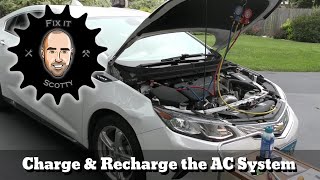
Typical fix: Find the source of the leak (e.g., condenser, hoses, Schrader valves), repair or replace the faulty component, then evacuate the system to remove moisture and recharge it by weight with the specified amount of R-134a and POE oil. 🎬 Watch: A complete walkthrough of charging and recharging the Volt's AC system.
Est. part cost: $20-$350 - HPCM2 Software Calibration Issue 🟡 Medium Probability Early software versions in the Hybrid Powertrain Control Module 2 (HPCM2) were overly sensitive and could set P0534 even with a proper refrigerant charge, especially on 2011-2013 models.
How to confirm: If refrigerant levels are verified to be correct (a minimum of 800g recovered out of a 950g total charge), a GM dealer or qualified shop must check the current software calibration of the HPCM2 against the latest version available.
Typical fix: Update the HPCM2 with the latest software calibration. This is detailed in TSB #PIC5769A. This should be the first step after confirming the system is not low on refrigerant.
Est. part cost: $0 - Faulty A/C Refrigerant Pressure Sensor ⚪ Low Probability
How to confirm: Compare the pressure reading from the sensor (viewed on a scan tool) to the actual pressure measured with a manual gauge set. If the readings do not match, the sensor is likely faulty. One can also test the sensor's voltage signal; it should change as the system operates.
Typical fix: Replace the A/C refrigerant pressure sensor. The system must be evacuated before sensor replacement and recharged afterward.
Est. part cost: $40-$90 - Faulty RESS Cooler (Specific Build Dates) ⚪ Low Probability A specific batch of Rechargeable Energy Storage System (RESS) coolers had a manufacturing defect that could trigger P0534. This applies to vehicles built between January 15, 2013, and September 15, 2013.
How to confirm: This applies to vehicles built between 1/15/2013 and 9/15/2013. Per TSB #PIC5903C, a visual inspection of the cooler is required to check for identifying notches on the cooler plate.
Typical fix: If the cooler has three notches instead of two, it is defective and must be replaced. Coolers with two notches are considered good.
Est. part cost: $200-$400
Rare But Worth Checking
- Wiring or Connector Issue: A damaged wire or loose/corroded connector at the A/C pressure sensor can interrupt the signal to the control module, mimicking a sensor failure. One owner found their sensor was simply unplugged. A bad ground or faulty A/C control module could also be the culprit.
- Leaking Schrader Valve: Similar to a tire valve, the A/C service port Schrader valves can fail and cause a slow leak. One owner on gm-volt.com noted evidence of oil leakage around the valve, suggesting it as the failure point. The factory-installed UV dye may be visible in the ports if they are leaking.
Diagnosis Steps
- Read the DTCs with an OBD-II scanner to confirm P0534 is present. Do not clear the code, as freeze-frame data is valuable.
- Connect a professional A/C manifold gauge set to the high and low-side service ports.
- Check the static pressure. If it's very low or zero, there is a significant leak.
- If pressure seems plausible, start the vehicle and turn on the A/C. Monitor the operating pressures and compare them to the manufacturer's specifications for the ambient temperature.
- If pressures are low, perform a leak detection test using UV dye or an electronic leak detector. Common leak points are the condenser, A/C lines, and Schrader valves.
- If pressures are normal (full charge is 950g, a reading above 800g is considered acceptable), check for applicable TSBs, specifically PIC5769A regarding a software update for the HPCM2 on 2011-2013 models.
- For 2013 models built between 1/15/2013 and 9/15/2013, inspect the RESS cooler per TSB PIC5903C if the code set during active battery cooling.
- If pressures are normal and no TSBs apply, inspect the A/C pressure sensor connector and wiring for damage or corrosion.
- Test the A/C pressure sensor by comparing its output on a scan tool to the reading on the manual gauges. Replace if inaccurate.
Parts You'll Likely Need

- A/C Refrigerant Pressure Sensor
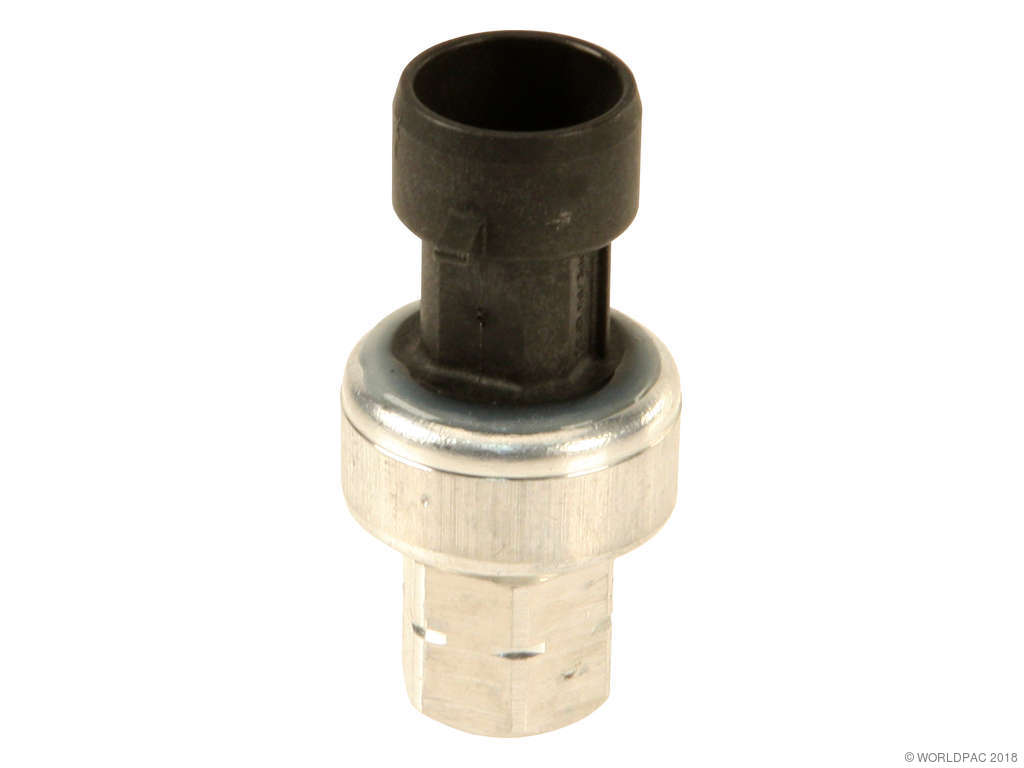
(OEM #13587668)— This sensor can fail and send incorrect pressure readings to the control module, falsely triggering the P0534 code.
Trusted brands: ACDelco, GM Genuine
OEM price range: $60-$90
Aftermarket price range: $40-$70 - A/C Condenser
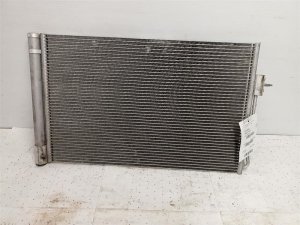
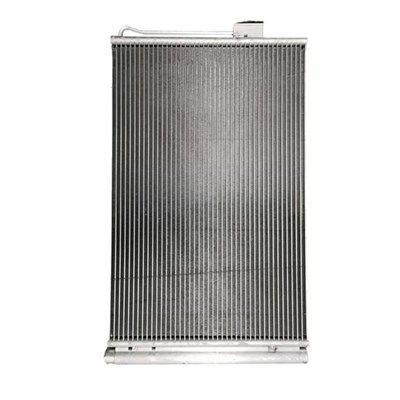
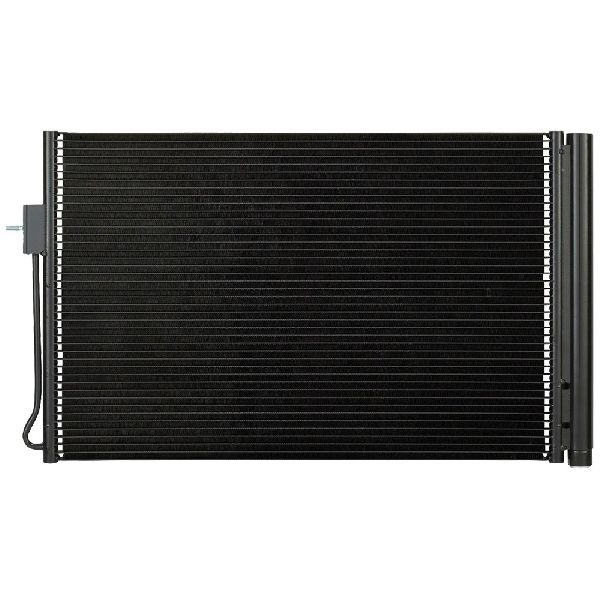
(OEM #20842140 (superseded by 22974029))— Located at the front of the car, the condenser is the most common component to be damaged by road debris, causing refrigerant leaks.
Trusted brands: ACDelco, GM Genuine
OEM price range: $250-$350
Aftermarket price range: $100-$200 - A/C Refrigerant Liquid Hose
(OEM #22834143 (Note: May be discontinued))— A/C lines can corrode or be damaged, causing leaks. One specific line has been noted by owners as a failure point, though the part may be difficult to source.
Trusted brands: GM Genuine
OEM price range: $200-$250
Aftermarket price range: N/A
Related Codes That Often Appear With This One
- P1E00: This code often accompanies others and means the Hybrid Powertrain Control Module 2 has requested the check engine light. It is a general indicator that another code, like P0534, is the root cause.
Technical Service Bulletins (TSBs) & Recalls

- PIC5769A: Advises checking refrigerant charge and, if correct, reprogramming the Hybrid Powertrain Control Module 2 (HPCM2) with an updated calibration to fix false P0534 codes on 2011-2013 models.
- PIC5903C: Instructs technicians to inspect the RESS (battery) cooler on vehicles built between 1/15/2013 and 9/15/2013. If the cooler has three notches, it is defective and should be replaced.
Platform-Specific Known Issues
- A software glitch in the Hybrid Powertrain Control Module 2 (HPCM2) can cause P0534 to set erroneously. TSB PIC5769A advises a software update as the fix after verifying the refrigerant charge.
- Vehicles built between January and September 2013 may have a faulty RESS (battery) cooler that can trigger this code, identified by having three notches instead of two.
- The A/C system may be covered under the 8-year/100,000-mile Voltec warranty or a 10-year/150,000-mile CARB emissions warranty in certain states, though coverage for specific components like hoses can be debated by dealers.
Mechanic-Grade Diagnostic Values
- A/C Refrigerant Pressure Sensor - 5V Reference Circuit — expected: 4.8-5.2 V with key on, sensor connected.. Failure: A reading near 0V indicates an open or short to ground in the reference circuit or a faulty module. A reading significantly lower than 5V (e.g., 0.20V) points to a wiring issue.
- A/C Refrigerant Pressure Sensor - Signal Voltage — expected: Varies between 0V and 5V depending on system pressure. A typical reading on a static, equalized system might be around 1.7V.. Failure: Voltage does not change when the A/C system is operating, or the voltage is stuck at 0V or 5V.
- A/C Refrigerant Pressure Sensor - Low Reference (Ground) Circuit — expected: Less than 60 Ω of resistance to a known good ground.. Failure: High resistance or an open circuit indicates a bad ground connection, which will cause incorrect sensor readings.
- Scan Tool Low Side Pressure Threshold (DTC Trigger) — expected: Pressure must remain above specific thresholds based on ambient temperature.. Failure: Code P0534 sets if the low side pressure is less than 150 kPa (21.75 PSI) when the outside air temperature is above 20°C (68°F). It also sets if pressure is below 100 kPa when the temperature is above 5°C (41°F).
Scan Tool Commands That Help
- GDS2 (GM Global Diagnostic System 2): Module Information -> Display HVAC System Data — Used to monitor live A/C system high and low side refrigerant pressures as seen by the control module. This is critical for comparing module readings to manual gauge readings to identify a faulty sensor.
- GDS2 (GM Global Diagnostic System 2): SPS (Service Programming System) — Used to perform the software update on the Hybrid Powertrain Control Module 2 (HPCM2) as specified in TSB PIC5769A. This is required if the refrigerant charge is correct but the P0534 code persists on 2011-2013 models.
- GDS2 (GM Global Diagnostic System 2): Capture Freeze Frame / Failure Record Data — This should be the first step before clearing any codes. The failure records for P0534 are essential for diagnosis, as they show the conditions under which the code was set (e.g., during active battery cooling), which points towards specific diagnostic paths like inspecting the RESS cooler per TSB PIC5903C.
Wiring & Ground Locations
- A/C Refrigerant Pressure Sensor Connector — On the high-pressure A/C line, typically located near the front of the vehicle by the radiator/condenser assembly.. This 3-wire connector provides the 5V reference, ground, and signal return for the pressure sensor. Corrosion, damage, or a loose connection here will directly cause incorrect readings and can trigger P0534. Pigtail connectors (e.g., Standard Motor Products HP4440, ACDelco PT2319) are available for repair.
Real Owner Repair Stories
- Reddit r/volt user (2017 Chevrolet Volt Premier (Gen 2, but sensor and issue are similar)) — A/C blowing warm air, Check Engine Light on. This occurred after a dealership replaced the A/C compressor.
❌ Tried (didn't work) The dealership replaced the A/C compressor., The dealership claimed the pressure sensor was 'stuck' and needed replacement for $700.
✅ What actually fixed it A second, independent shop found the A/C system was in a vacuum (never recharged after the compressor replacement). More importantly, they discovered the A/C pressure sensor was simply unplugged. After plugging the sensor back in and properly recharging the system, the A/C worked correctly. - Reddit r/volt user schmiggledeeboo (2014 Chevrolet Volt, 95k miles) — P0534 Check Engine Light active, but A/C was still blowing cold.
❌ Tried (didn't work) Initial observation showed no obvious leaks or performance issues.
✅ What actually fixed it The user inspected the A/C lines and noted visible oil residue near the Schrader valve on a specific A/C line, indicating a slow leak from the service port itself. The proposed fix was to have a shop perform a leak test and likely replace the Schrader valve core.
"I Checked Everything" — The Actual Cause
- In cases where a refrigerant leak test (using UV dye or an electronic sniffer) finds no leaks, the cause is often an overly sensitive software calibration in the HPCM2 on 2011-2013 models. TSB PIC5769A directly addresses this scenario, instructing technicians to reprogram the module if the refrigerant charge is verified to be correct (at least 800g).
OEM Part Supersession History
20842140→22974029— Standard part revision by the manufacturer.
Heads up: The new part number (22974029) is the correct service replacement for the original condenser (20842140) on 2011-2015 Volts.
Model Year Variations Within This Range
- 2011-2013: These model years may have an overly sensitive software calibration in the Hybrid Powertrain Control Module 2 (HPCM2) that can falsely trigger P0534. TSB PIC5769A provides a software update to correct this.
- 2013 (Jan 15 - Sep 15 build dates): A specific batch of RESS (battery) coolers installed on vehicles built during this period may be defective and cause P0534 to set during active battery cooling. These coolers are identified by having three notches instead of two.
Helpful Videos
Used OEM Parts in Stock
New Aftermarket Parts Available


The information in this article is provided for general reference and educational purposes only. Vehicle specifications, procedures, and part compatibility can vary by production date, trim level, and region. Always consult your vehicle's factory service manual and verify part numbers before purchasing or performing repairs. Safety-critical components such as airbags, seat belts, and braking systems should be installed by a qualified professional.
- Chevrolet VOLT:
- 🎬 Helpful Videos
- 🛍️ Shop This Part
- What's Unique About the 2011-2014 Chevrolet VOLT
- Diagnostic Flowchart
- Symptoms You May Notice
- Most Likely Causes
- Rare But Worth Checking
- Diagnosis Steps
- Parts You'll Likely Need
- Related Codes That Often Appear With This One
- Technical Service Bulletins (TSBs) & Recalls
- Platform-Specific Known Issues
- Mechanic-Grade Diagnostic Values
- Scan Tool Commands That Help
- Wiring & Ground Locations
- Real Owner Repair Stories
- "I Checked Everything" — The Actual Cause
- OEM Part Supersession History
- Model Year Variations Within This Range
- 🎟️ Get 5% Off