

P0524 on 2009-2017 Audi Q5 2.0T: Engine Oil Pressure Too Low Causes and Fixes
P0524 means your engine's oil pressure is dangerously low. On the Audi Q5 2.0T, this is often caused by a faulty oil pressure switch, but it can also indicate a genuine lack of pressure from a failing oil pump or clogged pickup tube. Stop driving immediately and check your oil level first, as these engines are known for high oil consumption.
- P0524 is a CRITICAL code. Stop driving immediately to avoid destroying your engine.
- First, check your oil level. These engines are known to consume oil, and a low level is a very common cause.
- The most likely faulty parts, if the oil level is okay, are the two inexpensive oil pressure switches (sensors) located near the oil filter.
- Before replacing expensive parts like the oil pump, you MUST confirm a true low-pressure condition using a mechanical oil pressure gauge.
- Be aware of the underlying oil consumption issue with the EA888 Gen 2 engine; simply topping off the oil may be a temporary fix for a recurring problem.
What's Unique About the 2009-2017 Audi Q5

The 2009-2017 Audi Q5 uses the EA888 Gen 2 2.0T engine, which has a sophisticated two-stage oil pressure system. This system uses a low-pressure switch (brown) for idle/low RPM (<3500 RPM) operation at ~1.8 bar, and a high-pressure switch (blue) for high RPM operation at ~3.2 bar. A solenoid valve (N428) controls which stage is active. This complexity adds more potential failure points (two sensors, solenoid) compared to a single-switch system. Crucially, these engines are also widely known for excessive oil consumption due to piston ring design flaws, which was the subject of a class-action lawsuit and TSB #2027731. This means a P0524 code could be a direct result of the oil level simply being too low, a very common problem for this specific platform.
Symptoms You May Notice

- Red oil pressure warning light on the dashboard, often with a "Shut off engine" message.
- Check Engine Light is on.
- Engine knocking, ticking, or rattling noises, especially when warm at idle.
- Reduced engine power or hesitation.
- Engine stalls or shuts down automatically.
- EPC (Electronic Power Control) light may illuminate.
- Replacing the entire engine without first performing a proper mechanical oil pressure test. The issue could be as simple as a $20 sensor, so confirming the nature of the pressure loss is critical.
- Assuming the oil pump is bad when the oil pickup tube is simply clogged with debris from a separate failure (like timing chain guides).
Most Likely Causes

- Low Engine Oil Level 🔴 High Probability The EA888 Gen 2 engine is notorious for high oil consumption due to its piston ring design. Many owners must top off oil between changes. This was acknowledged in TSB 2027731 and was the subject of a class-action lawsuit.
How to confirm: Check the engine oil level using the dipstick or the MMI electronic oil level display. If it is below the minimum mark, this is your likely cause.
Typical fix: Top up the engine oil to the correct level using a full synthetic oil that meets VW 502.00 specification (typically 5W-40). Monitor consumption closely. If consumption exceeds 1 quart per 1,000 miles, piston ring replacement may be necessary.
Est. part cost: $15-$25 - Faulty Oil Pressure Switch (Sensor) 🔴 High Probability The sensors are a common failure point and can send false low-pressure signals, especially intermittently when the engine is warm at idle.
How to confirm: The definitive test is to connect a mechanical oil pressure gauge. If the mechanical gauge shows proper oil pressure (e.g., >1.2 bar or ~17 PSI at hot idle) while the car's warning is on, the sensor is bad. Given their low cost, many owners replace them as a primary diagnostic step.
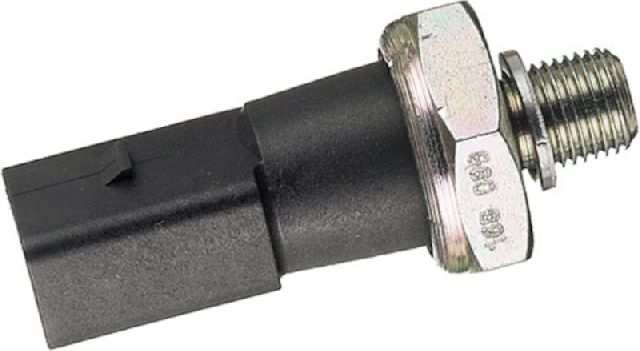
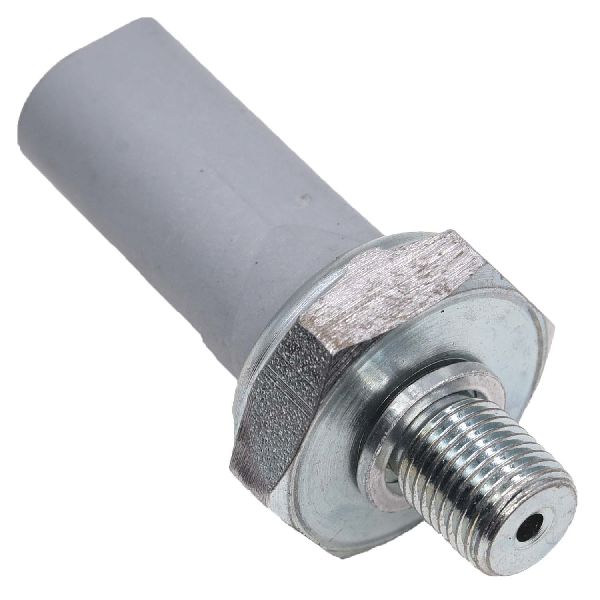
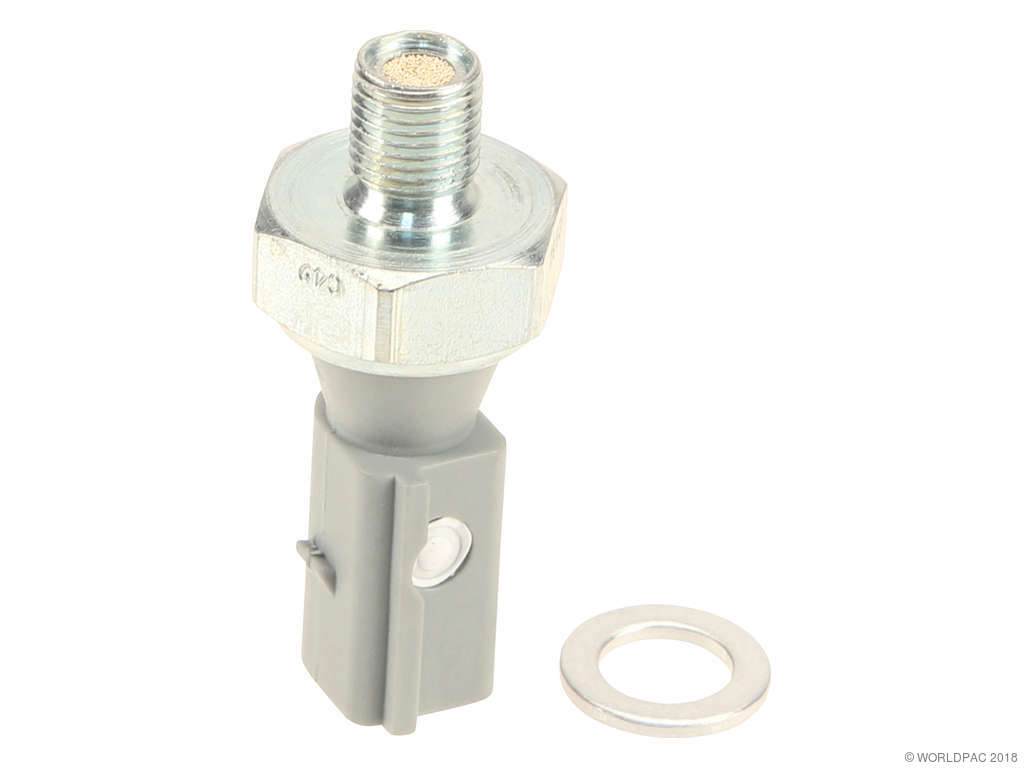
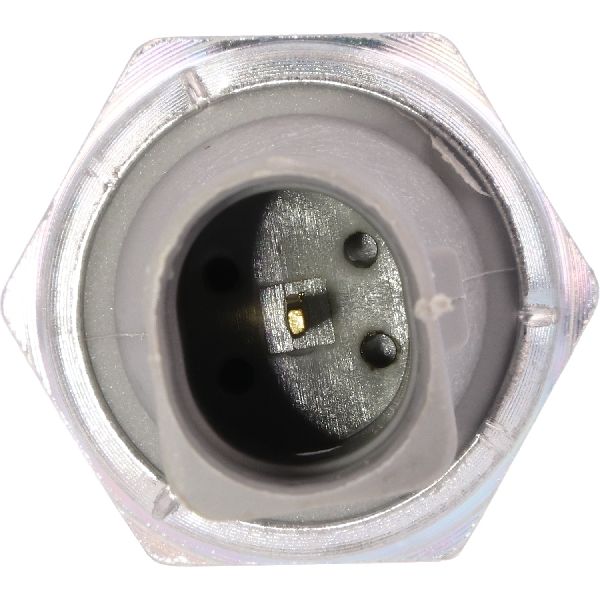
Typical fix: Replace the faulty oil pressure switch. There are two: a low-pressure (brown, 0.55-0.85 bar) and a high-pressure (blue, 2.15-2.95 bar) switch located near the oil filter housing. It is common to replace both at the same time.
Est. part cost: $20-$60 - Faulty Oil Pressure Control Valve (N428) 🟡 Medium Probability This solenoid controls the two-stage pressure system. It can stick or fail, causing the system to be in the wrong pressure mode (e.g., stuck in low pressure mode). Some owners on forums report disconnecting it to force high-pressure mode as a diagnostic step.
How to confirm: This is difficult to confirm without ruling out other causes first. A VCDS/professional scan tool can run an output test on the valve. A failed valve may also store its own specific fault code, like P164E00. It is often replaced preventatively with the pressure switches.
Typical fix: Replace the oil pressure control valve solenoid (Part No. 06H115243F or its revisions), which is located near the pressure switches on the oil filter housing.
Est. part cost: $30-$70 - Clogged Oil Pickup Tube Screen 🟡 Medium Probability Sludge from infrequent oil changes or, more commonly, debris from failing timing chain guides can accumulate on the screen, starving the oil pump. In one documented case, pieces of a shredded serpentine belt entered the engine through a failed front crank seal and clogged the pickup tube.
How to confirm: The oil pan must be removed to visually inspect the pickup tube screen for blockage.
Typical fix: Remove the oil pan, clean or replace the oil pickup tube, and inspect the pan for debris (like black plastic from timing guides) to identify the source of the contamination. Reinstall the pan with new sealant.
Est. part cost: $20-$40 (for sealant), $50-$100 (for new pickup tube) - Failing Oil Pump / Balance Shaft Assembly ⚪ Low Probability This is a more severe mechanical failure. The oil pump is integrated with the balance shafts and can wear out, leading to a genuine loss of pressure. The small hex drive shaft that spins the pump can also round off, causing a loss of drive.
How to confirm: A mechanical oil pressure test showing consistently low pressure across all RPMs after confirming the pickup tube is clear points to a failing pump. Finding significant metal shavings in the oil pan is another strong indicator.
Typical fix: This is a major repair that involves significant labor to replace the entire oil pump and balance shaft assembly.
Est. part cost: $400-$800
Rare But Worth Checking
- Clogged Balance Shaft Oil Screens: The balance shafts themselves have small internal oil screens that can clog with debris, leading to oil starvation and eventual failure of the assembly. In some cases, these screens have been known to break apart and get sucked into the balance shafts, causing extensive damage.
- Leaking Oil Filter Housing O-Rings: A TSB for other Audi models points to a rubber plug in the oil filter housing that can become dislodged, causing a pressure drop. While not specifically documented for the Q5, it's a possible cause of a pressure leak in this area.
- Failed Serpentine Belt Debris Ingress: In a documented case on an Audi forum, a serpentine belt failure caused the belt to take out the front main crankshaft seal. Pieces of the belt were then pulled into the engine, circulated in the oil, and clogged the oil pickup tube, causing a P0524 code.
Diagnosis Steps

- IMMEDIATELY turn off the engine to prevent damage.
- Check the engine oil level via the MMI or dipstick. If low, top off with VW 502.00 spec oil and see if the warning disappears. If it does, you have a severe oil consumption issue that needs to be addressed.
- If the oil level is correct, do not start the engine again. Have the vehicle towed to a repair shop or your home.
- The next step is to perform a mechanical oil pressure test. This involves removing one of the oil pressure switches (usually the brown one on top) and connecting a manual pressure gauge.
- Start the engine briefly and read the pressure at hot idle. It should be above 1.2 bar (~17 PSI). If pressure is good, the problem is electrical (likely a bad sensor or wiring).
- If mechanical pressure is confirmed to be low, the problem is mechanical. The next step is to drop the oil pan to inspect the oil pickup tube for clogs and the pan for debris.
- If the pickup tube is clogged, clean it and investigate the source of the debris (e.g., black plastic from timing chain guides, rubber from a failed belt).
- If the pickup tube is clear but pressure is still low, the oil pump/balance shaft assembly is the most likely culprit and will require replacement.
Parts You'll Likely Need

- Low-Pressure Oil Pressure Switch (Brown)
(OEM #038919081K / 038919081H)— This sensor monitors the low-RPM pressure stage (~0.55-0.85 bar) and is a very common failure point, causing false warnings at idle.
Trusted brands: Bosch, Hella, Genuine VW/Audi
Related Codes That Often Appear With This One
- P164D — This code specifically means 'Oil Pressure Switch for reduced Oil Pressure - Malfunction' and often appears with P0524, pointing directly towards an issue with the low-pressure (brown) sensor or its circuit. It frequently triggers the warning light at idle when the engine is warm.
- P0341 — Camshaft Position Sensor 'A' Circuit Range/Performance. Oil pressure issues can affect the performance of the variable valve timing system, which relies on oil pressure to adjust the camshafts, potentially triggering timing-related codes.
- P164B — This code means 'Oil Pressure Switch - Malfunction' and often points to the high-pressure (blue) switch or its circuit, sometimes appearing alongside P0524 and P164D.
Technical Service Bulletins (TSBs) & Recalls
- TSB 2027731 / A171554: Titled 'Engine oil consumption too high,' this TSB acknowledges the oil consumption issue in 2009-2011 2.0T engines and initially prescribed replacing the PCV valve and front crank seal. Later revisions and a class action lawsuit led to piston/ring replacement as the ultimate fix for many vehicles.
Platform-Specific Known Issues
- Excessive Oil Consumption: The EA888 Gen 2 engine in this Q5 is subject to a class-action lawsuit for high oil consumption caused by faulty piston rings. This is a primary contributor to low oil levels that can trigger a P0524 code.
- Timing Chain Debris: Failing timing chain guides can break apart, and the plastic debris can fall into the oil pan and clog the oil pickup screen, leading to oil starvation.
Mechanic-Grade Diagnostic Values
- Mechanical Oil Pressure at Hot Idle (Oil temp > 80°C) — expected: > 1.2 bar (~17.4 PSI). Failure: Pressure below 1.2 bar indicates a mechanical issue (clog, pump, etc.). A Reddit user reported seeing 8-9 PSI at idle when their light came on.
- Mechanical Oil Pressure at 2000 RPM (Hot) — expected: 1.6 - 2.2 bar. Failure: Significantly lower pressure suggests a flow or pump issue. One user reported a reading of 1.6 bar at 2000 RPM while still having issues.
- N428 Oil Pressure Control Valve Solenoid Resistance — expected: ~5 - 10 Ohms. Failure: An open circuit (infinite resistance) or a short (zero resistance) indicates a failed solenoid winding.
Hidden / Shadow Codes Worth Checking
- P164D00: A more specific version of P164D, 'Oil pressure switch for reduced oil pressure malfunction'. The '00' suffix often points to a general malfunction rather than a specific electrical fault like a short to ground. This is frequently seen with VCDS or other advanced scanners and is the primary code for a faulty low-pressure (brown) switch. (see via VCDS (VAG-COM), OBDeleven, or other professional-grade VW/Audi diagnostic tools.)
- P055F: 'Engine Oil Pressure Out of Range'. This code is often logged alongside P0524 in VCDS scans, indicating the pressure reading is not plausible according to the ECU's expected values for the current engine state. (see via VCDS (VAG-COM), OBDeleven, or other professional-grade VW/Audi diagnostic tools.)
Scan Tool Commands That Help
- VCDS / OBDeleven: Output Test for N428 - Oil Pressure Control Valve — Use this to manually command the N428 solenoid on and off. You should hear an audible click from the valve, located on the lower oil filter housing. A lack of clicking suggests a failed solenoid or wiring issue. This helps verify if the solenoid is mechanically stuck or electrically dead.
- VCDS / OBDeleven: Read Measuring Blocks for Oil Pressure Switches — In the Engine (01) module, you can view the live status of the low and high-pressure switches. This allows you to see if the ECU is registering the switch changing state as RPMs increase or decrease, which is useful for diagnosing intermittent sensor faults without a mechanical gauge connected.
Wiring & Ground Locations
- Engine Ground Strap — There is a primary ground strap from the chassis frame rail to the engine mount bracket on the passenger side of the engine bay.. A corroded or loose main engine ground can cause a host of floating voltage issues and erratic sensor readings. While not a direct cause, an unstable ground reference for the ECU can lead to misinterpretation of sensor signals, including the oil pressure switches.
- Ground Point 12 — Located in the engine compartment on the left side.. This is a common grounding point for multiple engine sensors. Corrosion or looseness here can affect the oil pressure switch circuits, which rely on a solid ground reference to provide an accurate signal to the ECU.
- T17q Connector — This is a 17-pin connector, often red, that is part of the engine wiring harness. The wire for the reduced oil pressure switch (F22) runs through it.. Damage or corrosion at this multi-pin connector can interrupt the signal from the oil pressure switch to the ECU, causing a false P0524 or P164D code. It's a key place to check for wiring integrity if a new sensor doesn't solve the problem.
Real Owner Repair Stories
- Reddit user on r/MechanicAdvice (2010 Audi A4 2.0T EA888 (mechanically identical for this issue)) — Low oil pressure light comes on at idle only when the engine is at full operating temperature. Pressure is fine when cold.
❌ Tried (didn't work) The user was asking for advice before starting repairs.
✅ What actually fixed it Multiple experienced users advised that the most common causes for this exact symptom are a clogged oil pickup tube screen or, if that is clear, a failing balance shaft/oil pump module where the internal hex drive wears out, causing pressure loss when the oil thins out at temperature. - AudiWorld Forums user (2009 Audi Q5 3.0 TDI (Different engine, but demonstrates a failure pattern)) — Red oil can warning "shut down engine immediately" after a frayed auxiliary (serpentine) belt.
❌ Tried (didn't work) Initial loom repair and new pressure switch did not clear the P164D code.
✅ What actually fixed it The frayed belt had damaged the wiring loom going to the oil pressure switch. A more extensive loom repair was required to fix the damaged wires that were not obvious on first inspection. This highlights that external events (like a belt failure) can be the root cause of this electrical code.
OEM Part Supersession History
06H115243C→06H115243F, 06H115243L— Component revision and improvement for the N428 Oil Pressure Control Valve Solenoid.
Heads up: The newer revisions (F, L) are generally considered more reliable and are backward compatible. When replacing, it is advisable to use the latest available part number.
Model Year Variations Within This Range
- 2009-2012 vs 2013-2017: While the core EA888 Gen 2 engine is used throughout, there were minor revisions. Some early models may have different locations for the two oil pressure switches compared to later models. One technician noted that on some generations, both switches are stacked, while on others, one is on top of the filter housing and the other is lower down. Always visually confirm sensor locations before ordering parts.
Diagnostic Flowchart
Other Known Issues on This Vehicle
Issues unrelated to this code that are worth knowing about as an owner of this generation:
- Timing Chain Tensioner Failure 🔴 High — Common on pre-2013 models with the original tensioner design. Failure can occur without warning, typically from 60,000 to 100,000 miles. (Ref: An extended warranty was offered for this issue (e.g., TSB AWA 18-15-201902).)
- Excessive Oil Consumption 🔴 High — Extremely common on 2009-2012 models due to piston ring design. Can start as early as 30,000-50,000 miles. Less common but still possible on later 2013-2017 models. (Ref: TSB 2027731 addressed this, and a class-action lawsuit resulted in an extended warranty and repair program for many owners.)
- Water Pump Failure 🟠 Medium — Common failure item. The original pumps have plastic housings that crack and leak over time, often between 60,000 and 90,000 miles. (Ref: A class-action lawsuit led to an extended warranty (typically 8 years/80,000 miles) for some vehicles.)
- PCV Valve Failure 🟠 Medium — The diaphragm inside the PCV (Positive Crankcase Ventilation) valve can tear, causing a large vacuum leak, rough idle, lean codes, and sometimes a loud whistling noise. It's a common failure across all model years.
- Carbon Buildup on Intake Valves 🟠 Medium — As a direct-injection engine, fuel doesn't wash over the intake valves. Carbon deposits build up over time, typically requiring cleaning every 60,000-80,000 miles to prevent misfires and loss of performance. (Ref: TSB A011893 2033001 provides instructions for cleaning secondary air ports, which is related to carbon buildup.)
Used vs. New Parts: Buying Guide for This Vehicle
When a used part is the smart pick: For this specific repair, used parts are generally not recommended for the core components causing the fault. The only exception might be a complete used engine if the original is catastrophically damaged, or cosmetic/external parts like the oil pan if it's merely dented or cracked.
Donor-vehicle mileage cap: roughly under 60000 miles for the part to have meaningful remaining life.
What to inspect on the donor part:
- For a used engine, demand service records showing frequent oil changes with correct spec oil.
- Inspect for external oil leaks or heavy sludge deposits under the oil cap.
- If possible, check for shaft play on the turbocharger, as this can indicate the overall lubrication health of the donor engine.
OEM-only on this vehicle (don't cheap out):
- Oil Pressure Switches (Sensors)
- N428 Oil Pressure Control Valve
- Oil Pump / Balance Shaft Assembly
Aftermarket brands forum-validated for this vehicle:
- Bosch (for sensors)
- Hella (for sensors)
- INA (often the OEM supplier for timing components which can be related)
- Mahle (for filters and gaskets)
Brands owners have reported issues with on this vehicle:
- Unnamed, no-brand 'white box' sensors from online marketplaces. Forum users consistently report that cheap aftermarket sensors for critical systems like oil pressure are prone to premature failure or inaccurate readings, leading to a repeat of the original problem.
Related OBD-II Codes
Frequently Asked Questions
My 2011 Q5 2.0T burns a lot of oil. Is this related to the P0524 code?
The red oil pressure light only comes on when I'm stopped at a light and the engine is warm. What does this usually mean?
Is it safe to keep driving my Q5 if the red oil pressure warning light is on?
What is the correct type of oil to use for topping up my 2.0T engine?
Could a failing timing chain cause this P0524 low oil pressure code?
What does TSB 2027731 cover for my Audi Q5?
We Have This Part in Stock


The information in this article is provided for general reference and educational purposes only. Vehicle specifications, procedures, and part compatibility can vary by production date, trim level, and region. Always consult your vehicle's factory service manual and verify part numbers before purchasing or performing repairs. Safety-critical components such as airbags, seat belts, and braking systems should be installed by a qualified professional.
- Audi Q5:
- 🛍️ Shop This Part
- What's Unique About the 2009-2017 Audi Q5
- Symptoms You May Notice
- Most Likely Causes
- Rare But Worth Checking
- Diagnosis Steps
- Parts You'll Likely Need
- Related Codes That Often Appear With This One
- Technical Service Bulletins (TSBs) & Recalls
- Platform-Specific Known Issues
- Mechanic-Grade Diagnostic Values
- Hidden / Shadow Codes Worth Checking
- Scan Tool Commands That Help
- Wiring & Ground Locations
- Real Owner Repair Stories
- OEM Part Supersession History
- Model Year Variations Within This Range
- Diagnostic Flowchart
- Other Known Issues on This Vehicle
- Used vs. New Parts: Buying Guide for This Vehicle
- Related OBD-II Codes
- Frequently Asked Questions
- 🎟️ Get 5% Off