

P0522 on 2015-2023 Ford Mustang: Engine Oil Pressure Sensor Circuit Low Fixes
P0522 on a Ford Mustang usually means the engine oil pressure sensor has failed or its connector is contaminated. First, check your oil level. If it's normal, the most likely fix is replacing the sensor, which is located near the oil filter. An OEM Motorcraft sensor (Part No. CM5Z-9D290-B) costs about $55-$60, while aftermarket options are around $25-$35. Driving is not recommended until the issue is resolved.
- P0522 on a 2015-2023 Mustang is a critical code that requires immediate attention.
- Before anything else, check the engine oil level and condition.
- The most likely cause is a faulty engine oil pressure sensor or a contaminated electrical connector.
- Using an OEM Motorcraft replacement sensor is strongly recommended to ensure a lasting repair.
- If a mechanical gauge confirms actual low oil pressure, the engine has a serious internal problem and must be inspected by a professional.
What's Unique About the 2015-2023 Ford Mustang
For Ford engines of this era, including the 5.0L V8 and EcoBoost variants, P0522 is often linked to specific component issues rather than actual low oil pressure. A Ford Technical Service Bulletin (TSB SSM 46526) for similar engines points to liquid contamination inside the sensor's electrical connector as a known problem. Another TSB (SSM 46253) also notes that some 2015-2017 Mustangs may exhibit oil leaks from the engine oil pressure sensor threads, which can lead to sensor failure and related codes. Forum discussions on Mustang6g.com confirm that the sensor failing or leaking is a common issue, making inspection and replacement a primary diagnostic step.
Generation note: The 2015-2023 year range covers the entire S550 generation of the Ford Mustang. The causes and fixes are generally consistent across all engine options within this generation as they share similar sensor designs and locations.
Symptoms You May Notice
- Check Engine Light is on
- Low oil pressure warning light illuminated on the dashboard
- Oil pressure gauge reads zero or very low
- Engine running rough or stalling
- Ticking or knocking noises from the engine
- Replacing the oil pump without first verifying actual oil pressure with a mechanical gauge.
- Replacing the PCM when the actual fault is in the wiring or the sensor itself.
Most Likely Causes
- Failed Engine Oil Pressure Sensor 🔴 High Probability Ford TSB SSM 46526 points to liquid contamination in the sensor connector on 5.0L and GTDI (EcoBoost) engines, leading to failure. TSB SSM 46253 also notes oil leaks from the sensor threads on 2015-2017 models, which can damage the sensor. Owners on forums frequently report sensor failure as the direct cause.
How to confirm: Inspect the sensor and its electrical connector for signs of oil or other liquid contamination. The sensor is located near the oil filter. Test the sensor's output with a multimeter; if the signal is out of spec or non-existent while the engine has proper oil pressure, the sensor is bad.
Typical fix: Replace the engine oil pressure sensor. It is highly recommended to use an OEM Motorcraft part (CM5Z-9D290-B) to avoid compatibility issues seen with some aftermarket sensors. The replacement is a simple, 5-minute job according to one owner's experience.
Est. part cost: $25-$60 - Wiring or Connector Issue 🟡 Medium Probability The sensor's location near the bottom of the engine exposes it to heat, vibration, and road debris, which can degrade wiring or loosen connections over time. Ford TSBs for other models (SSM 50245, SSM 50116) highlight a pattern of harness-related electrical faults causing various DTCs, including P0522, suggesting it's a known failure pattern for the manufacturer.
How to confirm: Perform a visual inspection of the wiring harness leading to the oil pressure sensor for any signs of damage, melting, or corrosion. Check for a secure connection at the sensor and at the PCM. Use a multimeter to check for continuity, shorts to ground, and proper reference voltage (typically 5V) at the connector.
Typical fix: Repair or replace the damaged section of the wiring harness. A replacement pigtail connector is available (Part #LRS-S940 or similar).
Est. part cost: $15-$50 for a pigtail connector - Low Engine Oil Level or Incorrect Oil ⚪ Low Probability While not specific to the platform, the Gen 3 5.0L Coyote engine (2018+) has a 10-quart oil capacity, which some technicians were initially unaware of, leading to under-fills during oil changes.
How to confirm: This should be the very first check. Turn the engine off, wait a few minutes, and check the oil level using the dipstick. Verify that the oil used meets Ford's specifications for your specific engine.
Typical fix: Top off the oil to the correct level or perform an oil change with the manufacturer-recommended oil viscosity.
Est. part cost: $40-$100 for oil and filter
Rare But Worth Checking
- Failing Oil Pump or Internal Engine Wear: This is the worst-case scenario. If a mechanical oil pressure gauge confirms that the actual pressure is low, it points to a serious internal engine problem that requires immediate attention to prevent engine seizure.
- Powertrain Control Module (PCM) Failure: A faulty PCM is very rare but can cause a P0522 code by misinterpreting the sensor's signal. This should only be considered after all other possibilities have been exhaustively ruled out.
Diagnosis Steps
- Check the engine oil level and condition immediately. If the level is low, top it off and see if the code clears.
- If the oil level is correct, connect an OBD-II scanner to view live data. Observe the oil pressure reading from the sensor. A constant zero or erratic reading suggests a sensor or circuit fault.
- Visually inspect the oil pressure sensor and its electrical connector, located near the oil filter. Look for oil leaks, corrosion, or any liquid contamination as noted in Ford TSBs.
- If the connector is contaminated with oil, clean it thoroughly with electrical contact cleaner and check if the code returns. If the connector or its seal is damaged, it may need to be replaced.
- Test the electrical circuit. Disconnect the sensor and check for the correct reference voltage (typically 5V) and a good ground at the connector using a multimeter.
- If the circuit checks out, the sensor is the most likely culprit. For definitive proof, you can test the actual engine oil pressure using a mechanical gauge. If mechanical pressure is good but the sensor's reading is low, replace the sensor.
- If the mechanical gauge shows low oil pressure, the vehicle has a serious internal engine problem (e.g., a failing oil pump or worn engine bearings) and should not be started until repaired by a professional.
Parts You'll Likely Need
- Engine Oil Pressure Sensor / Switch
(OEM #CM5Z-9D290-B (replaces CM5Z-9278-A))— This is the most common failure point for this code on this platform, often due to internal failure or liquid contamination as documented in Ford TSBs and owner forums.
Trusted brands: Motorcraft, Dorman, Standard Motor Products
OEM price range: $50-$60
Aftermarket price range: $25-$40
Related Codes That Often Appear With This One
- P0521 — This code indicates an 'Engine Oil Pressure Sensor/Switch Range/Performance' issue. It often appears alongside P0522 as they both relate to implausible signals from the same sensor.
- P0523 — This code for 'Engine Oil Pressure Sensor/Switch Circuit High' can appear if the wiring issue is intermittent, causing the voltage to fluctuate between too high and too low.
- P0524 — This code for 'Engine Oil Pressure Too Low' is a critical companion code. If you see P0522 and P0524 together, it significantly increases the chance of a real, mechanical low oil pressure problem.
Technical Service Bulletins (TSBs) & Recalls
- SSM 46526: Mentions low oil pressure indication with DTCs including P0522 on 5.0L and GTDI engines due to liquid contamination in the sensor connector.
- SSM 46253: Points to oil leaks at the Engine Oil Pressure (EOP) sensor threads on 2015-2017 Mustangs with 2.3L and 5.0L engines.
- SSM 50245 & SSM 50116: While for a different model (Ford Escape), these TSBs show a pattern of harness/electrical issues causing a wide range of DTCs, including P0522, which is relevant context for diagnosis.
Platform-Specific Known Issues
- TSB SSM 46526 notes that on 5.0L and GTDI (EcoBoost) engines, this code can be caused by liquid contamination inside the sensor connector, requiring sensor replacement.
- TSB SSM 46253 indicates that some 2015-2017 Mustangs with 2.3L and 5.0L engines may develop oil leaks from the sensor threads, which can foul the sensor and trigger fault codes.
- A thread on Mustang6g.com from November 2023 shows a user with a 2020 Bullitt (5.0L) getting a P0522 code, with other users confirming the sensor itself is the most likely culprit and that an OEM part is the best fix.
Mechanic-Grade Diagnostic Values
- Sensor Reference Voltage — expected: 5 Volts DC at the sensor connector with key on, engine off.. Failure: Voltage significantly lower than 5V or 0V indicates a wiring or PCM issue.
- Sensor Signal Voltage — expected: A variable voltage signal that changes with engine RPM. The P0522 code is set when this voltage is below the PCM's expected threshold (e.g., below ~0.5V).. Failure: A constant low or 0V reading even when a mechanical gauge shows good oil pressure points to a failed sensor or shorted signal wire.
- Sensor Ground Circuit — expected: Near 0 Ohms of resistance between the ground pin on the connector and the chassis ground.. Failure: High resistance (OL) indicates a broken ground wire, which can cause incorrect sensor readings.
Scan Tool Commands That Help
- Ford IDS (or high-level scanner like FORScan): Live Data Monitoring (Datalogger) — Monitor the PIDs for 'EOP' (Engine Oil Pressure) and 'EOP_V' (Engine Oil Pressure Voltage) while the engine is running. This allows you to see the exact value the PCM is receiving from the sensor in real-time to confirm if it's reading low or erratically.
- FORScan: Module Configuration — This is critical if converting a non-Performance Pack car from an oil pressure 'switch' to a 'sensor'. The PCM must be reconfigured to recognize the new sensor type; otherwise, it will not read correctly.
Wiring & Ground Locations
- C1657 — The electrical connector for the engine oil pressure sensor, located on the sensor itself near the oil filter housing.. This is the primary connection to inspect for oil contamination, corrosion, or damage as noted in TSBs.
- PCM Connector Pin 48 or 57 — At the Powertrain Control Module (PCM). The specific pin for the oil pressure signal wire can vary by harness.. This is the termination point for the signal wire. A technician would test for continuity from C1657 to this pin to rule out a broken wire in the harness. A forum member noted their non-PP harness used pin 48, while the PP harness used pin 57.
- G105 — A chassis ground point located on the lower part of the engine, near the starter motor.. While not the dedicated sensor ground, a poor engine block ground can cause floating voltages and erratic readings on multiple engine sensors, including the oil pressure sensor. Ensuring this ground is clean and tight is a good practice during diagnosis.
- Secondary Power Ground — A ground strap between the back of the intake manifold and the driver's side firewall.. This is a critical computer system ground. If it is loose or missing, it can cause various sensor errors and drivability issues.
Real Owner Repair Stories
- YouTube channel 'What Will Dad Do?' (2015-2020 Mustang GT (5.0L)) — Check Engine Light with code P0521 (related range/performance code).
❌ Tried (didn't work) Replacing the oil pressure sensor with an aftermarket part., Cutting and replacing the sensor's pigtail connector.
✅ What actually fixed it The code returned almost immediately after the initial attempts. The final fix was taking the car to a Ford dealership, where they replaced the sensor with a genuine OEM Ford Motorcraft part. The issue was resolved, suggesting the aftermarket sensor was not reading correctly.
When the Usual Fixes Don't Work
- While a wiring issue is a common cause, one owner documented replacing the pigtail connector did not solve their P0521/P0522 issue. The problem persisted until an aftermarket sensor was replaced with a genuine OEM Ford sensor, highlighting that even with good wiring, the quality and compatibility of the sensor itself is critical.
OEM Part Supersession History
CM5Z-9278-A→CM5Z-9D290-B— Standard part revision/update by Ford.CM5Z-9D290-B→GN1Z-9D290-B (for 2018+ GT)— Different part for the updated Gen 3 Coyote 5.0L engine introduced in 2018.
Heads up: The CM5Z-9D290-B sensor is for the Gen 2 Coyote (2015-2017) and EcoBoost engines, while the GN1Z-9D290-B is for the Gen 3 Coyote (2018+). They are not interchangeable.
Model Year Variations Within This Range
- 2015-2017: Base/Non-Performance Pack models were equipped with a simple oil pressure 'switch', while Performance Pack models came with a variable pressure 'sensor'. This requires different wiring, PCM calibration, and gauge clusters.
- 2018-2023: All 5.0L GT models moved to a standard oil pressure sensor, eliminating the switch/sensor variation of earlier years. The part number for the 5.0L GT sensor also changed to GN1Z-9D290-B for the Gen 3 Coyote engine.
Diagnostic Flowchart
Other Known Issues on This Vehicle
Issues unrelated to this code that are worth knowing about as an owner of this generation:
- 5.0L Coyote "BBQ Tick" 🟡 Low — Common on Gen 2 and especially Gen 3 (2018+) Coyote engines, often appearing after the first oil change. It's an intermittent ticking noise at idle. (Ref: Ford has a TSB stating that no repair should be attempted as it does not harm the engine.)
- MT-82 Manual Transmission Problems 🟠 Medium — Common across the S550 generation. Issues include high-RPM gear lockout, rough/clunky shifting, and premature failure of shift forks or clutches.
- A/C Evaporator Leak 🔴 High — A well-documented issue, particularly on 2015-2017 models, leading to loss of A/C performance. Repair is labor-intensive as it requires dashboard removal. (Ref: TSB 18-2256 (supersedes 18-2166) was issued, providing a procedure to replace only the evaporator core instead of the entire HVAC assembly.)
- 2.3L EcoBoost "Ecoboom" 🔴 High — Less common than other issues but catastrophic when it occurs. Refers to engine failure, sometimes due to head gasket issues between cylinders or other internal problems, particularly on modified vehicles.
- Oil Cooler Failure (2015-2017) 🟠 Medium — The stock water-to-oil cooler on early S550 GTs is prone to failure, which can mix oil and coolant, requiring a flush and replacement. (Ref: An updated OEM part was released to mitigate the issue.)
Used vs. New Parts: Buying Guide for This Vehicle
When a used part is the smart pick: A used part is only recommended for the wiring pigtail connector. If the plastic housing or locking tab on your original connector is broken, a used pigtail from a salvage yard is a cost-effective and reliable repair.
Donor-vehicle mileage cap: roughly under 150000 miles for the part to have meaningful remaining life.
What to inspect on the donor part:
- For a pigtail connector: ensure the plastic is not brittle or cracked.
- Check that the locking tab is intact and functional.
- Inspect the pins inside the connector to ensure they are not corroded, bent, or pushed out.
- Ensure there is at least 4-6 inches of wire attached to make splicing easy.
OEM-only on this vehicle (don't cheap out):
- Engine Oil Pressure Sensor
Brands owners have reported issues with on this vehicle:
- Generic/unbranded aftermarket sensors. A documented repair case showed that an aftermarket sensor failed to resolve the code, while an OEM Motorcraft part fixed it immediately.
Real Owner Stories
Aggregated from forums and TSBs cited above. Mileages and costs reflect what owners reported in those sources.
2020 Ford Mustang Bullitt 5.0L
Symptoms: The owner experienced a P0522 code and sought advice on whether it was a common failure.
What fixed it: Replacement of the oil pressure sensor with an OEM unit.
Source hint: Mustang6g.com Thread 'Oil pressure sensor' (Nov 2023)
2015-2017 Ford Mustang 5.0L/2.3L
Symptoms: Oil leaks originating from the Engine Oil Pressure (EOP) sensor threads.
What fixed it: Addressing the leak at the sensor threads as described in the manufacturer service message.
Source hint: TSB SSM 46253
2015-2023 Ford Mustang 5.0L/2.3L GTDI
Symptoms: Low oil pressure indication on the dashboard accompanied by DTC P0522.
What fixed it: Replacement of the sensor due to liquid contamination found inside the sensor connector.
Source hint: TSB SSM 46526
Related OBD-II Codes
Frequently Asked Questions
My 2016 Mustang GT is leaking oil from the sensor area. Is there a known issue for this?
Which specific replacement part should I use for my Mustang's oil pressure sensor?
Does Ford have any documentation regarding P0522 on the 5.0L Coyote or EcoBoost engines?
I have a 2018+ Mustang 5.0L; could a recent oil change cause this code?
If my sensor connector is damaged, do I have to replace the whole engine harness?
Is the P0522 code related to the 'BBQ Tick' noise on my 2019 Mustang?
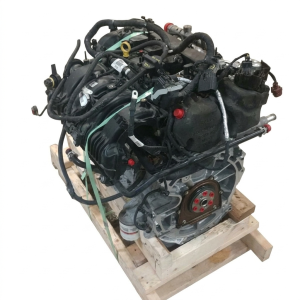
Used OEM Parts in Stock
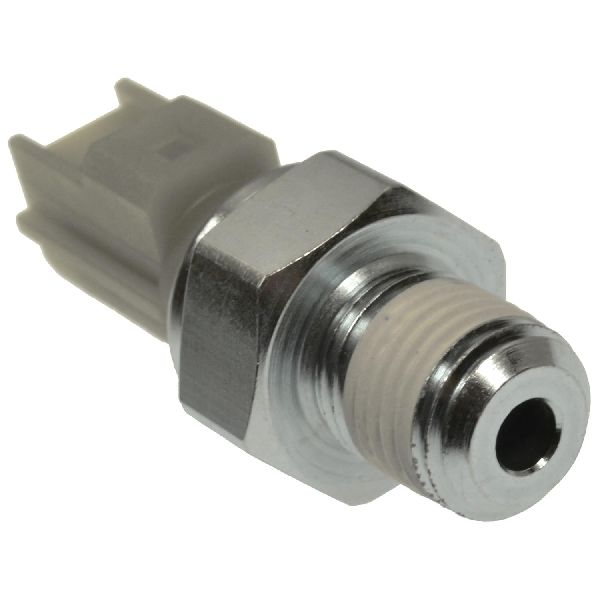
New Aftermarket Parts Available
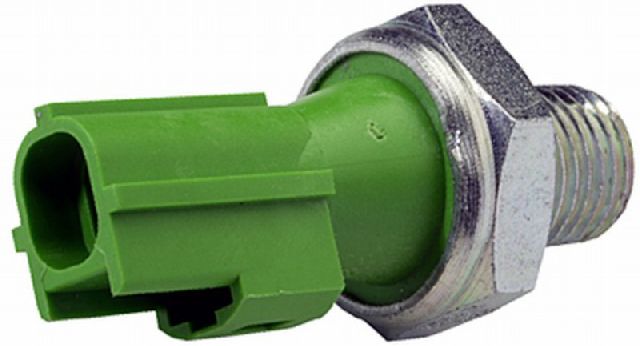


The information in this article is provided for general reference and educational purposes only. Vehicle specifications, procedures, and part compatibility can vary by production date, trim level, and region. Always consult your vehicle's factory service manual and verify part numbers before purchasing or performing repairs. Safety-critical components such as airbags, seat belts, and braking systems should be installed by a qualified professional.
- Ford Mustang:
- 🛍️ Shop This Part
- What's Unique About the 2015-2023 Ford Mustang
- Symptoms You May Notice
- Most Likely Causes
- Rare But Worth Checking
- Diagnosis Steps
- Parts You'll Likely Need
- Related Codes That Often Appear With This One
- Technical Service Bulletins (TSBs) & Recalls
- Platform-Specific Known Issues
- Mechanic-Grade Diagnostic Values
- Scan Tool Commands That Help
- Wiring & Ground Locations
- Real Owner Repair Stories
- When the Usual Fixes Don't Work
- OEM Part Supersession History
- Model Year Variations Within This Range
- Diagnostic Flowchart
- Other Known Issues on This Vehicle
- Used vs. New Parts: Buying Guide for This Vehicle
- Real Owner Stories
- 2020 Ford Mustang Bullitt 5.0L
- 2015-2017 Ford Mustang 5.0L/2.3L
- 2015-2023 Ford Mustang 5.0L/2.3L GTDI
- Related OBD-II Codes
- Frequently Asked Questions
- 🎟️ Get 5% Off