

P0521 on 2009-2016 Chevrolet Traverse: Oil Pressure Sensor Causes and Fixes
On a 2009-2016 Traverse, P0521 is most often caused by a faulty engine oil pressure sensor, a clogged filter screen beneath it, or an incorrect oil filter. Replacing the sensor and screen usually resolves the issue. Expect to pay $40-$80 for the OEM sensor, but labor can be 2-3 hours due to its location, which requires accessing it through the passenger side wheel well.
- Do not ignore P0521; stop driving until it is diagnosed to avoid potential catastrophic engine damage.
- The most likely cause is a combination of a faulty oil pressure sensor and its clogged filter screen. Always replace both at the same time.
- Always check the simple things first: verify the oil level and condition, and ensure you are using a high-quality, OEM-spec oil filter.
- Use a genuine ACDelco or GM Genuine sensor and screen for the highest chance of a lasting repair; aftermarket sensors are known to cause repeat failures for this code.
What's Unique About the 2009-2016 Chevrolet TRAVERSE
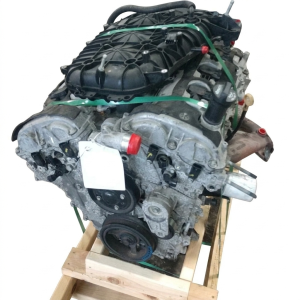
The 3.6L V6 engine in the first-generation Traverse has a trifecta of common issues that trigger P0521. The oil pressure sensor itself is a frequent failure item. Unlike many other GM 3.6L applications where the sensor is at the rear of the engine, the Traverse has it located on the front, accessible via the passenger wheel well. A tiny, often-overlooked filter screen (GM #12585328) located in the block underneath the sensor is notorious for clogging with sludge, causing a false reading. The engine is also sensitive to oil filter choice, with non-OEM filters known to cause pressure-related codes.
Diagnostic Flowchart
Tap your situation to follow the diagnostic path that matches what you're seeing on this vehicle.
Symptoms You May Notice
- Check Engine Light is on
- Oil pressure warning light on the dashboard or 'Low Oil Pressure' message in the driver information center
- Oil pressure gauge reading erratically (jumping around), stuck at zero, or stuck at a high reading (e.g., 80 PSI) even with the engine off.
- Engine may run rough or stall in some cases.
- Audible engine ticking or rattling if true low oil pressure exists.
- Replacing the oil pump before verifying actual oil pressure with a mechanical gauge.
- Replacing the oil pressure sensor but failing to also replace the small, clogged filter screen underneath it, leading to the code returning.
- Assuming the engine is failing without first replacing the highly-prone oil pressure sensor and screen, and checking for wiring issues.
Most Likely Causes
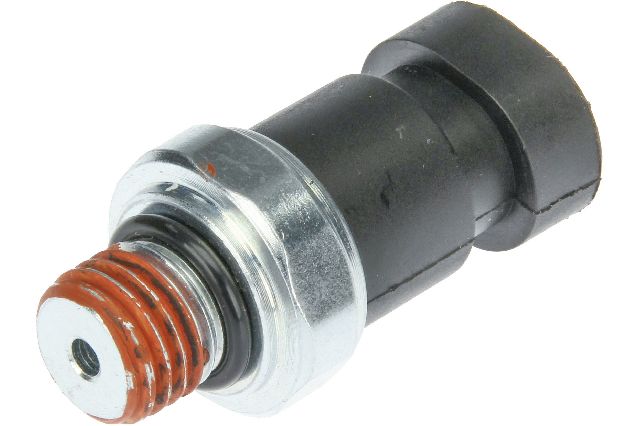
- Faulty Engine Oil Pressure Sensor (Sending Unit) 🔴 High Probability The sensor is a known high-failure part on this platform. Internal electronics can fail, leading to incorrect voltage signals. A tell-tale sign of failure is oil leaking through the sensor body and into the electrical connector.
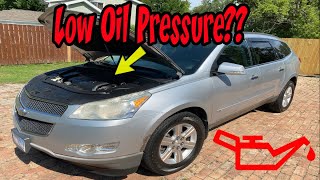
How to confirm: With a scan tool, check the oil pressure reading with the Key On, Engine Off (KOEO). It should read 0 PSI. If it shows significant pressure, or if you disconnect the sensor and the reading drops to 0, the sensor is bad. 🎬 See this walkthrough on diagnosing a failed oil pressure sender. The ultimate confirmation is to compare the sensor's reading to a mechanical oil pressure gauge; if they differ significantly, the sensor is faulty.
Typical fix: Replace the engine oil pressure sensor. On the 3.6L V6 in the Traverse, it is located on the front of the engine, near the A/C compressor, and is typically accessed by removing the passenger side front wheel and fender liner.
Est. part cost: $40-$80 - Clogged Oil Pressure Sensor Screen 🔴 High Probability A small, thimble-shaped filter screen (GM Part #12585328) sits in the oil passage directly below the sensor. It is extremely common for this screen to become clogged with engine sludge and debris, which starves the sensor of oil pressure and causes a false low reading, triggering P0521.
How to confirm: This can only be confirmed upon removal of the oil pressure sensor. The screen will be visibly blocked with dark, sludgy deposits. It can be carefully extracted using a pick or by threading a coarse screw into it.
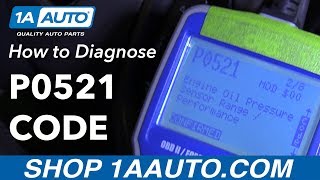
Typical fix: Remove and replace the screen. It is highly recommended to replace this screen anytime the oil pressure sensor is replaced, as it is a primary point of failure. 🎬 Watch: A breakdown of common P0521 causes and fixes. Cleaning is possible, but replacement is inexpensive and ensures no debris remains.
Est. part cost: $5-$15 - Low Engine Oil Level or Poor Oil Condition 🟡 Medium Probability These engines can consume oil between changes. If the level drops too low, the oil pump can't maintain pressure, triggering the code. Using incorrect oil viscosity or going too long between oil changes contributes to sludge that can clog passages and the sensor screen.
How to confirm: Physically check the engine oil dipstick for level and inspect the oil's color and consistency. If the level is low, top it off. If the oil is very dark, sludgy, or overdue for a change, service it.
Typical fix: Perform an oil and filter change using a full synthetic 5W-30 oil that meets GM's dexos1 specification and a quality oil filter. Reset the code and monitor.
Est. part cost: $50-$120 - Incorrect or Defective Oil Filter 🟡 Medium Probability GM engines are sensitive to oil filter design. Using a low-quality filter or one with an incorrect internal bypass valve pressure can cause oil pressure fluctuations that trigger P0521, especially right after an oil change. Some owners have reported that using only OEM ACDelco or specific high-quality aftermarket filters (like Mobil 1 M1-113A) resolved recurring issues.
How to confirm: Check the brand and part number of the installed oil filter. If it is not an OEM ACDelco filter (PF48E/PF63E depending on year) or a reputable equivalent, it could be the cause.
Typical fix: Replace the oil filter with a high-quality ACDelco or equivalent filter known to work well with this engine. Clear codes and see if the issue returns.
Est. part cost: $10-$20
Rare But Worth Checking
- Wiring or Connector Issue: The wiring harness leading to the oil pressure sensor can become damaged or corroded. Oil leaking from a failed sensor can also saturate the connector, causing a poor signal. Check the 3-wire connector and wiring for breaks, chafing, or oil contamination before replacing the sensor.
- Failing Oil Pump or Internal Engine Wear: In high-mileage vehicles or those with poor maintenance history, the cause could be a worn oil pump or excessive clearances in engine bearings, leading to genuinely low oil pressure. This is a worst-case scenario and must be confirmed with a mechanical gauge before attempting major repairs.
- Stretched Timing Chains: The 3.6L V6 is known for timing chain issues. The chain tensioners are hydraulically operated by engine oil pressure. While a stretched chain doesn't directly cause P0521, a legitimate low oil pressure condition can accelerate chain wear, and related codes (like P0017) may appear.
Diagnosis Steps
- Check the engine oil level and condition. Top up or change if necessary.
- Use an OBD-II scanner to confirm the P0521 code and check for any other related codes.
- Observe the oil pressure reading on the scanner's live data. With the key on and engine off, it should be zero. If it reads high, the sensor is likely faulty.
- Inspect the oil pressure sensor's wiring and connector for any visible damage, corrosion, or oil saturation.
- If the sensor and wiring appear okay, the next step is to verify the actual oil pressure. Remove the sensor and connect a mechanical oil pressure gauge.
- While the sensor is out, inspect the port for the small filter screen. Use a pick or screw to carefully extract it and check if it's clogged with sludge.
- Start the engine and compare the mechanical gauge reading to the vehicle's gauge or the scanner's reading. If the mechanical gauge shows good pressure but the vehicle's reading is incorrect, the sensor and/or screen are the culprits.
- If the mechanical gauge confirms low oil pressure, the problem is more serious and could involve the oil pump, pickup tube, or internal engine wear. Professional diagnosis is recommended at this point.
Parts You'll Likely Need
- Engine Oil Pressure Sensor
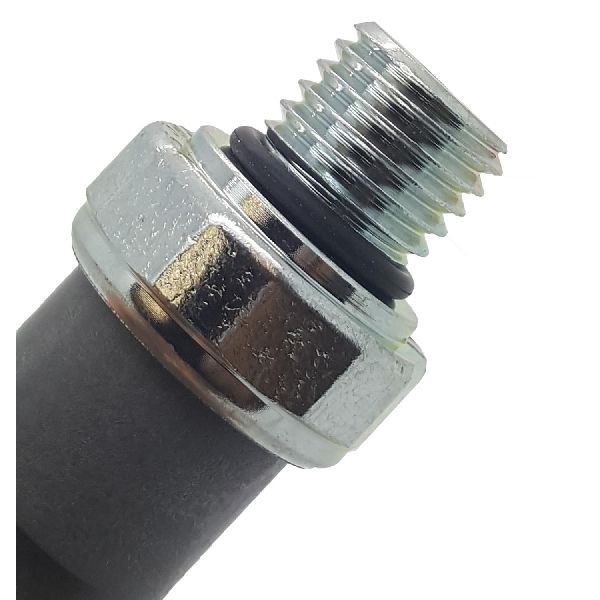
(OEM #12673134 (supersedes 12596951, 12621234))— This is the most common cause of code P0521 on the Traverse. The sensor's internal components fail over time, leading to incorrect readings or leaks.
Trusted brands: ACDelco (GM Genuine), Standard Motor Products (SMP), Delphi
OEM price range: $50-$90
Aftermarket price range: $30-$60 - Oil Pressure Sensor Screen / Filter
(OEM #12585328)— This small screen, located under the sensor, frequently clogs with sludge and is a primary cause of false low-pressure readings. It should always be replaced when the sensor is changed.
Trusted brands: ACDelco (GM Genuine)
OEM price range: $5-$15
Aftermarket price range: $3-$10
Related Codes That Often Appear With This One
- P0522 (Engine Oil Pressure Sensor/Switch Circuit Low)
- P0523 (Engine Oil Pressure Sensor/Switch Circuit High)
- P0017 (Crankshaft/Camshaft Correlation - if timing chain is affected by low pressure)
Technical Service Bulletins (TSBs) & Recalls
- PIP4786C: While this TSB officially lists V8 models, it details the diagnostic process for a P0521 code caused by a clogged 'Valve Lifter Oil Filter' (the same screen under the pressure sensor), confirming the diagnostic principle applies across GM platforms.
Platform-Specific Known Issues
- The oil pressure sensor on the Traverse 3.6L V6 is located on the front of the engine, but access requires removing the passenger-side wheel and fender liner, making it a moderately difficult job.
- Failure to replace the small filter screen (Part #12585328) located underneath the sensor is a very common reason for the P0521 code to return after a sensor replacement.
Mechanic-Grade Diagnostic Values
- 5V Reference Circuit Voltage — expected: 4.8 - 5.2 Volts DC (Key On, Engine Off). Failure: Voltage outside this range suggests a wiring short/open or an ECM fault.
- Signal Wire Voltage — expected: ~0.5V at idle, increasing with RPM.. Failure: Voltage that is stuck, does not correspond to RPM changes, or is at 0V or 5V constantly.
- Minimum Hot Oil Pressure (Mechanical Gauge) — expected: Greater than 6 psi at 1,000 RPM; 18 psi at 2,000 RPM; 24 psi at 4,000 RPM.. Failure: Pressure below these minimums confirms a mechanical lubrication issue, not a sensor fault.
Wiring & Ground Locations
- Oil Pressure Switch Signal Pin — On the Engine Control Module (ECM), connector X1.. This is the specific pin where the ECM receives the oil pressure signal. A technician can test for voltage and continuity at this pin to isolate a wiring problem between the sensor and the ECM.
- G101 — On the left (driver's) side of the engine compartment, on the left frame rail.. This is a primary ground point for the Engine Control Module (ECM). A corroded or loose G101 ground can cause erratic behavior from multiple engine sensors, including the oil pressure sensor.
- G113 — Located on the left side of the engine, at an engine-to-transmission stud.. This serves as a direct engine block ground. A poor connection here can affect the ground reference for sensors mounted directly to the engine, potentially causing incorrect readings.
- G302 — Near the base of the right (passenger) 'B' pillar.. This ground point is tied to the Data Link Connector (DLC). While not a direct cause of P0521, a bad ground here can cause bizarre electrical issues and communication problems when trying to diagnose the code with a scan tool.
Real Owner Repair Stories
- Reddit user in r/ChevyTrucks (Chevrolet Truck (model not specified)) — Recurring P0521 code after replacing the oil pressure switch once. The screen had already been removed by a previous owner.
❌ Tried (didn't work) Replacing the sensor with an aftermarket part from a local auto parts store.
✅ What actually fixed it Replacing the aftermarket sensor with a genuine OEM sensor resolved the issue. - Reddit user in r/ChevyTrucks (Chevrolet Truck (model not specified)) — Recurring P0521 code.
❌ Tried (didn't work) Replacing the oil pressure sensor.
✅ What actually fixed it The owner switched to using a Mobil 1 M1-113A oil filter, and the code did not return.
OEM Part Supersession History
12596951, 12621234→12673134— Standard part evolution for improved reliability or manufacturing changes.
Heads up: The newest part number, 12673134, is the correct service replacement for all previous versions on this vehicle.
Model Year Variations Within This Range
- 2009-2011: These model years use the 3.6L LLT V6 engine.
- 2012-2016: These model years use the updated 3.6L LFX V6 engine. The LFX features changes like a composite intake manifold and integrated exhaust manifolds, but the location and common failures for the P0521 code remain consistent with the LLT.
- 2009-2012 (approx.): These earlier models originally specified the ACDelco PF48 or PF48E oil filter.
- 2013-2016 (approx.): GM began specifying the longer ACDelco PF63E oil filter for these models. The PF63E is backward compatible and often recommended as an upgrade for earlier models that used the PF48, as it provides more filter media.
Helpful Videos

Used OEM Parts in Stock
New Aftermarket Parts Available


The information in this article is provided for general reference and educational purposes only. Vehicle specifications, procedures, and part compatibility can vary by production date, trim level, and region. Always consult your vehicle's factory service manual and verify part numbers before purchasing or performing repairs. Safety-critical components such as airbags, seat belts, and braking systems should be installed by a qualified professional.
- Chevrolet TRAVERSE:
- 🎬 Helpful Videos
- 🛍️ Shop This Part
- What's Unique About the 2009-2016 Chevrolet TRAVERSE
- Diagnostic Flowchart
- Symptoms You May Notice
- Most Likely Causes
- Rare But Worth Checking
- Diagnosis Steps
- Parts You'll Likely Need
- Related Codes That Often Appear With This One
- Technical Service Bulletins (TSBs) & Recalls
- Platform-Specific Known Issues
- Mechanic-Grade Diagnostic Values
- Wiring & Ground Locations
- Real Owner Repair Stories
- OEM Part Supersession History
- Model Year Variations Within This Range
- 🎟️ Get 5% Off