

P0521 on 2005-2012 Chevrolet Silverado 1500: Oil Pressure Sensor Fixes
On 2005-2012 Silverados, P0521 is most often caused by a faulty oil pressure sensor or its clogged filter screen, located at the back of the engine. Replacing the sensor and screen is the typical fix, costing around $40-$60 for parts. Using the wrong oil filter (an ACDelco PF48E instead of a PF48, especially in cold weather) is another common cause cited in GM Technical Service Bulletins. Always verify true oil pressure with a mechanical gauge before replacing parts.
- Do not ignore P0521. Immediately check your oil level and stop driving until the issue is diagnosed.
- The most critical diagnostic step is to verify the true engine oil pressure with a mechanical gauge to rule out a serious mechanical problem.
- The most common fix is replacing both the oil pressure sensor and the small filter screen underneath it.
- Pay close attention to your oil filter. Use an ACDelco PF48 or a high-quality equivalent; avoid the PF48E model as specified in service bulletins.
What's Unique About the 2005-2012 Chevrolet SILVERADO 1500

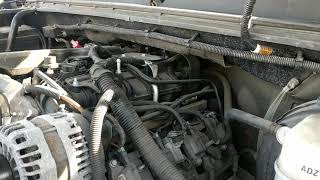
On these specific Silverado models and their platform mates with Gen IV V8 engines, the P0521 code is notoriously common and has several well-documented quirks. A frequent cause is a small, removable filter screen located directly beneath the oil pressure sensor, which is prone to clogging with sludge and debris. Additionally, General Motors issued multiple technical service bulletins (TSBs) warning technicians that using a specific oil filter model, the ACDelco PF48E, could trigger this code under certain conditions (especially cold weather), recommending the PF48 model instead. The sensor's location at the very back of the engine block, tucked behind the intake manifold against the firewall, also makes what should be a simple replacement a more labor-intensive job that often requires special tools like a specific 1-1/16" or 27mm deep socket and swivel extensions.
Diagnostic Flowchart

Tap your situation to follow the diagnostic path that matches what you're seeing on this vehicle.
Generation note: The 2005-2012 year range covers the end of the first generation (GMT800, 2005-2007 'Classic') and the majority of the second generation (GMT900, 2007-2013). The causes, particularly the oil pressure sensor, its screen, and oil filter issues, are common to the Gen IV V8 engines (RPOs LMG, LY5, LC9, etc.) used across both generations within this timeframe. TSBs like PIP5276G confirm the issue affects a wide range of GM V8s from 2007-2013.
Symptoms You May Notice

- Check Engine Light is on.
- Low Oil Pressure warning message on the instrument panel.
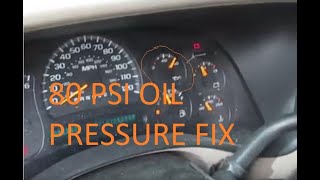
- Oil pressure gauge reads zero, excessively high (e.g., pegged at 80 PSI), or fluctuates erratically. 🎬 Watch: How to fix a gauge pegged at 80 PSI.
- In some cases, the gauge may get stuck at a specific pressure regardless of engine RPM.
- Engine may run rough or stall in some cases.
- With Active Fuel Management (AFM) engines, P0521 can sometimes appear alongside cylinder misfire codes (e.g., P0301) and "Service Stabilitrak" messages.
- Replacing the oil pump without first verifying low pressure with a mechanical gauge.
- Replacing the instrument cluster because the gauge is reading incorrectly.
- Replacing the ECM. While a possibility, it is extremely rare for the ECM to be the cause.
- Replacing only the sensor but not the clogged screen underneath it, causing the code to return quickly.
Most Likely Causes

- Faulty Engine Oil Pressure Sensor (Switch) 🔴 High Probability The sensor is a very common failure item on these GM V8 engines, with thousands of confirmed repairs. Aftermarket sensors are also reported to fail prematurely or not work correctly, making an OEM part the recommended fix.
How to confirm: After verifying actual oil pressure is good with a mechanical gauge, if the scan tool reading is still erratic, incorrect, or stuck, the sensor is the primary suspect.
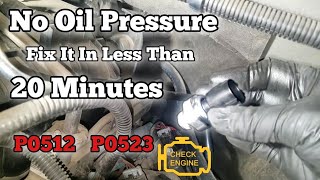
Typical fix: Replace the oil pressure sensor. It is located at the top rear of the engine block, behind the intake manifold, against the firewall. 🎬 See this walkthrough for replacing the sensor in tight spaces. A special 1-1/16" or 27mm deep oil pressure sensor socket is highly recommended for removal and installation due to the tight space.
Est. part cost: $40-$65 - Clogged Oil Pressure Sensor Filter Screen 🔴 High Probability A small mesh screen sits in the oil passage directly below the sensor and is designed to protect it. This screen frequently becomes clogged with engine sludge and debris, restricting oil flow to the sensor and causing false readings.
How to confirm: When the oil pressure sensor is removed, the screen is visible in the threaded port. It will be visibly dirty or clogged. In some cases, a previous owner may have removed it entirely.
Typical fix: Remove the old screen and install a new one. This is almost always done at the same time as sensor replacement. A common DIY trick to remove the stubborn screen is to thread a coarse bolt (like a 5/16" lag bolt) or a drywall screw into the plastic center of the screen and pull it straight out.
Est. part cost: $5-$10 - Incorrect Engine Oil Filter 🟡 Medium Probability GM TSBs #PIP5276B and #PIP5276C specifically call out this issue. Using an ACDelco PF48E filter instead of the recommended PF48 or UPF48R can cause the P0521 code, especially in cold weather (below 0°F). The difference is believed to be in the bypass valve design or pressure rating.
How to confirm: Check the part number on the installed oil filter. If it is a PF48E and you are experiencing P0521, this is a likely contributor.
Typical fix: Perform an oil change using the correct viscosity oil and an ACDelco PF48 or UPF48R oil filter, or a high-quality aftermarket equivalent.
Est. part cost: $20-$30 (for oil and filter) - Low or Incorrect Viscosity Engine Oil 🟡 Medium Probability
How to confirm: Check the engine oil level on the dipstick and review service records to see what viscosity oil was last used. These engines, especially with Active Fuel Management (AFM), are sensitive to correct oil type (e.g., 5W-30 meeting Dexos spec).
Typical fix: Top off or change the engine oil and filter, ensuring the correct level and viscosity is used per the owner's manual.
Est. part cost: $20-$30 (for oil and filter) - Damaged Wiring or Poor Connection ⚪ Low Probability
How to confirm: Visually inspect the oil pressure sensor connector and its wiring harness for signs of corrosion, damage, or loose pins. The wiring is in a high-heat area at the back of the engine and can become brittle. The connector lock tab is also fragile and can break during service.
Typical fix: Repair the damaged section of wiring or replace the connector pigtail.
Est. part cost: $15-$35
Rare But Worth Checking
- Sticking Oil Pump Pressure Relief Valve: A GM TSB mentions that if diagnostics confirm a true low oil pressure reading (e.g., below 20 psi at hot idle), the cause may be a sticking relief valve inside the oil pump, requiring pump replacement. This can be an intermittent issue.
- Worn Internal Engine Components: If a mechanical gauge confirms that oil pressure is genuinely low across all RPMs and the oil pump is functioning correctly, it may indicate excessive wear on internal components like crankshaft bearings or camshaft bearings, leading to larger clearances and a loss of pressure. This is more likely on very high mileage engines.
- Failing Oil Pickup Tube O-Ring: The O-ring that seals the oil pump pickup tube to the oil pump can become hard and brittle with age, allowing the pump to suck in air. This typically results in low pressure at idle that may improve with RPM. This requires removal of the oil pan to replace.
- Excessive Sludge from PCV/AFM Issues: TSB 10-06-01-008H addresses excessive oil consumption on AFM engines, which can be caused by a faulty PCV system or oil spray from the AFM pressure relief valve. This condition can lead to carbon buildup and sludge, which in turn clogs the sensor screen and contributes to P0521.
Diagnosis Steps
- Check the engine oil level and condition. Top up if low. Ensure the correct Dexos-approved 5W-30 oil is being used.
- Verify the correct oil filter is installed (e.g., ACDelco PF48 or UPF48R, not PF48E). If incorrect or suspect, replace it.
- Connect a scan tool and read the freeze frame data to see the engine conditions when the code was set. Observe the live oil pressure reading from the sensor.
- CRITICAL STEP: Connect a mechanical oil pressure gauge to the engine. The GM minimum spec when hot is 6 psi at 1,000 RPM and 18 psi at 2,000 RPM. This is the only way to know if you have a sensor problem or a real, engine-threatening oil pressure problem.
- Compare the mechanical gauge reading to the reading from the sensor on your scan tool. If the mechanical gauge shows good pressure but the scan tool shows erratic or incorrect readings, the problem is in the sensor's circuit.
- If the circuit is at fault, inspect the sensor's electrical connector and wiring for damage, corrosion, or loose connections.
- If wiring is okay, the next step is to replace the oil pressure sensor and the small filter screen located underneath it. Using an OEM sensor is highly recommended.
- If the mechanical gauge confirms that actual oil pressure is low, further internal engine diagnosis is required. This may include inspecting the oil pickup tube O-ring or the oil pump pressure relief valve.
Parts You'll Likely Need
- Engine Oil Pressure Sensor / Switch
(OEM #12673134)— This sensor is the most common point of failure for the P0521 code on these trucks. Using a genuine GM/ACDelco part is strongly recommended as aftermarket versions are known to cause repeat issues.
Trusted brands: ACDelco (GM Genuine), Delphi, Standard Motor Products
OEM price range: $45-$65
Aftermarket price range: $35-$50 - Engine Oil Pressure Sensor Filter Screen
(OEM #12585328)— This small screen below the sensor is a known failure point, getting clogged with sludge and causing incorrect sensor readings. It should always be replaced with the sensor.
Trusted brands: ACDelco, Dorman (917-143)
OEM price range: $5-$10
Aftermarket price range: $3-$8 - Engine Oil Filter
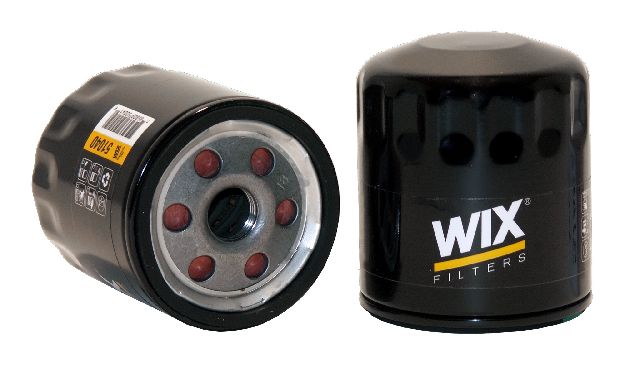
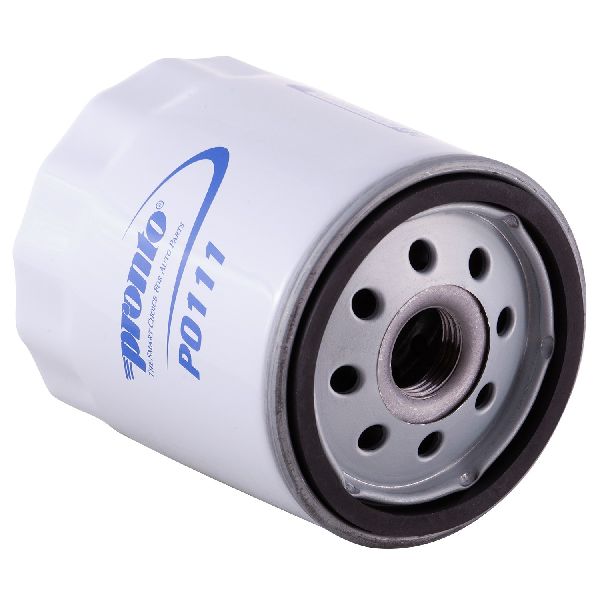
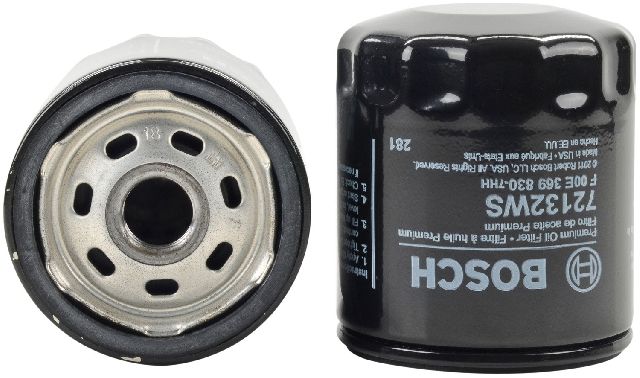
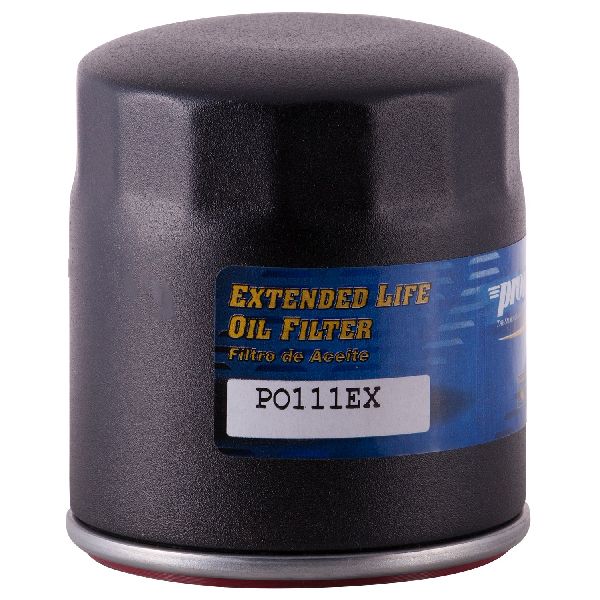
(OEM #PF48)— Using the incorrect filter, specifically the PF48E, is cited in TSBs as a direct cause for this code, especially in cold climates. Using the correct PF48 or UPF48R is a key diagnostic and repair step.
Trusted brands: ACDelco
OEM price range: $8-$12
Aftermarket price range: $5-$10 - Oil Pressure Sensor Socket
(OEM #N/A (Tool))— A special 1-1/16" deep socket is required to access and remove the sensor without damaging it or surrounding components. The Lisle 13250 is a commonly cited example.
Trusted brands: Lisle, OEM Tools
OEM price range: $10-$20
Aftermarket price range: $10-$20
Related Codes That Often Appear With This One
- P0522 (Engine Oil Pressure Sensor/Switch Circuit Low Voltage)
- P0523 (Engine Oil Pressure Sensor/Switch Circuit High Voltage)
- P0300-P0308 (Random or specific cylinder misfire codes, sometimes related to AFM lifter issues)
Technical Service Bulletins (TSBs) & Recalls
- PIP5276G: Mentions P0521 and low oil pressure messages, referencing a previous bulletin for repair procedures.
- PIP5276B: Directly links DTC P0521 in cold weather to the use of a PF48E oil filter, instructing technicians to replace it with a PF48.
- PIP5276E: Notes P0521 after an oil change and advises replacing the oil filter with a PF48E type (Note: this seems to conflict with other TSBs, but highlights the focus on filters).
- PIP4786C: General bulletin about low oil pressure messages and DTC P0521, advising technicians to follow standard diagnostic procedures.
Platform-Specific Known Issues
- TSB #PIP5276G: The latest TSB, which supersedes previous versions. It instructs technicians to check if repairs from TSB 10-06-01-008 (related to oil consumption and PCV fixes) have been performed. If so, it advises inspecting the left valve cover baffle for leaks and then performing an oil change with either a PF48 or PF48E filter.
- TSB #PIP5276B/C: Specifically warns against using the PF48E oil filter in very cold temperatures (below 0°F to -5°F) as it can trigger P0521 on a cold start, recommending a switch to the PF48 or UPF48R filter.
- TSB #10-06-01-008H: This bulletin details a complex issue of high oil consumption in Active Fuel Management (AFM) engines, which can be a root cause of the sludge that clogs the sensor screen. The fix involves installing an updated valve cover, an AFM oil deflector, and potentially cleaning or replacing pistons and rings.
Mechanic-Grade Diagnostic Values
- Engine Oil Pressure (EOP) Sensor Signal Circuit Voltage — expected: The sensor is a three-wire sensor with a 5-volt reference, a low reference (ground), and a signal wire. The signal voltage should vary with engine oil pressure.. Failure: If 12 volts (battery voltage) is found on the signal wire with the sensor unplugged, it indicates a short to voltage in the engine harness.
- Scan Tool PID vs. Jumpered Connector — expected: With the sensor unplugged, the scan tool's oil pressure PID should read a default high value (e.g., ~129 PSI). If you then jump the 5V reference wire to the signal wire on the connector, the PID should read 0 PSI.. Failure: If the PID does not respond as expected, it points to a wiring or ECM issue rather than a sensor failure.
Scan Tool Commands That Help
- Tech2 / GDS2: Engine Data Display (Oil Pressure PID) — A professional scan tool like the Tech2 (for pre-2014 models) is essential for viewing live oil pressure data as seen by the ECM. This allows a technician to compare the sensor's electronic reading directly against a mechanical gauge to confirm if the fault is with the sensor/wiring or if it's a true mechanical pressure issue.
Wiring & Ground Locations
- Engine Oil Pressure Sensor Signal Pin — On many LS-based V8s, the oil pressure signal wire runs to Pin 58 of the C1 (Blue or Red) ECM connector.. If you suspect a wiring issue between the sensor and the ECM, you can perform a continuity test from the sensor connector to this specific pin to find a break in the wire.
- G103 — On GMT900 trucks, G103 is a critical ground located on the front of the passenger side cylinder head. On older GMT800 models, it can be on the cowl above the brake booster.. While not directly for the oil pressure sensor, poor engine and chassis grounds can cause floating voltages and erratic behavior in multiple sensor circuits, including the EOP sensor. Cleaning all major engine and body grounds is a common step when diagnosing persistent, hard-to-trace electrical codes.
- G102 — Located at the left rear of the engine, grounding the ignition coils.. A poor ground here can cause Radio Frequency Interference (RFI) which may affect nearby sensor signals, as the EOP sensor is also at the rear of the engine.
Real Owner Repair Stories
- Reddit user in r/ChevyTrucks (2013 Chevrolet Tahoe, 159k miles) — P0521 code would return every 1000-1500 miles after being cleared.
❌ Tried (didn't work) Replacing the oil pressure sensor., Performing 3 oil changes in 4 months.
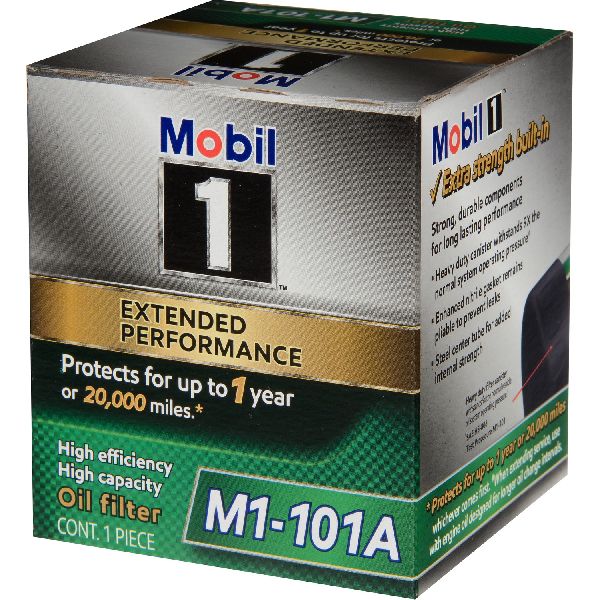
✅ What actually fixed it The user reported that switching to a Mobil 1 M1-113A oil filter resolved the issue, and the code had not returned after 5,000 miles, reinforcing the TSBs about filter sensitivity. - Chevrolet Forum user (2013 Silverado 1500 LTZ, 93k miles) — P0521 code, engine runs fine.
❌ Tried (didn't work) Took to a dealer who performed a mechanical pressure test and found a 10 PSI difference between upper and lower tests.
✅ What actually fixed it The dealer recommended a full engine replacement. The forum community overwhelmingly advised the owner that this was an extreme and likely unnecessary diagnosis, and that the actual cause was almost certainly the common oil pressure sensor and/or screen, not an internal engine failure requiring replacement. - Chevrolet Forum user (2008 Silverado with 5.3L AFM engine) — Blinking CEL with P0301 (Cylinder 1 Misfire) and P0521 (Oil Pressure Sensor Performance).
❌ Tried (didn't work) A previous repair had already replaced the lifter for cylinder 1.
✅ What actually fixed it The user's post highlights the strong correlation between P0521 and internal AFM (Active Fuel Management) system failures. The oil pressure issues are often a symptom or contributing cause of AFM lifter collapse, which then triggers misfire codes. The ultimate fix in these cases is often a full AFM delete kit or replacement of all lifters, guides, and sometimes the camshaft.
OEM Part Supersession History
12573107, 12616646→12677836 (ACDelco D1846A)— GM updated the part to improve reliability and performance. The newer sensors are the standard replacement.
Heads up: Using aftermarket sensors is a common cause for the code to return. It is highly recommended to use the genuine GM/ACDelco part (12677836 or D1846A).
Model Year Variations Within This Range
- 2005-2007 ('Classic' GMT800): Some owners of the 'Classic' body style report that the oil pressure sensor is oriented horizontally (pointing towards the driver's side) instead of vertically. This can change the tool access and approach slightly compared to the more common vertical orientation on GMT900 trucks.
Helpful Videos
We Have This Part in Stock


The information in this article is provided for general reference and educational purposes only. Vehicle specifications, procedures, and part compatibility can vary by production date, trim level, and region. Always consult your vehicle's factory service manual and verify part numbers before purchasing or performing repairs. Safety-critical components such as airbags, seat belts, and braking systems should be installed by a qualified professional.
- Chevrolet SILVERADO 1500:
- 🎬 Helpful Videos
- 🛍️ Shop This Part
- What's Unique About the 2005-2012 Chevrolet SILVERADO 1500
- Diagnostic Flowchart
- Symptoms You May Notice
- Most Likely Causes
- Rare But Worth Checking
- Diagnosis Steps
- Parts You'll Likely Need
- Related Codes That Often Appear With This One
- Technical Service Bulletins (TSBs) & Recalls
- Platform-Specific Known Issues
- Mechanic-Grade Diagnostic Values
- Scan Tool Commands That Help
- Wiring & Ground Locations
- Real Owner Repair Stories
- OEM Part Supersession History
- Model Year Variations Within This Range
- 🎟️ Get 5% Off