

P0521 on 2020-2024 Chevrolet Corvette: Oil Pressure Sensor and Pump Control Valve Guide
On a 2020 Corvette, P0521 is often caused by an oil pump control valve issue covered by TSB #20-NA-179, a major repair. On all 2020-2024 models, it can also mean a faulty oil pressure sensor. Do not drive; verify actual oil pressure with a mechanical gauge immediately to prevent engine damage.
- P0521 is a critical code for the LT2 engine. Do not drive the vehicle until the actual oil pressure has been verified with a mechanical gauge.
- For 2020 models, the most likely cause is a specific oil pump control valve issue detailed in TSB #20-NA-179, often appearing with code P06DD.
- If a mechanical gauge shows good pressure, the most probable cause is a faulty oil pressure sensor or its small filter screen.
- Diagnosis and repair, especially for the TSB-related issue, are complex and should be performed by a qualified professional.
What's Unique About the 2020-2024 Chevrolet Corvette
For the 2020 C8 Corvette specifically, code P0521 is frequently linked to a known manufacturing issue. Technical Service Bulletin (TSB) #20-NA-179 was issued for 2020 models built before September 10, 2020, due to an unseated oil pressure control valve on the oil pump. This issue often triggers code P06DD alongside P0521 and requires a significant 10.7-hour repair involving the removal of the oil pan to install a redesigned clip. While a faulty sensor is still a possibility on all C8s, the 2020 model year has this very distinct and well-documented potential cause.
Symptoms You May Notice
- Check Engine Light illuminated.
- Oil pressure warning light on the dashboard.
- Oil pressure gauge reading erratically, too low, or pegged high (e.g., stuck at 60+ PSI).
- In severe cases of low oil pressure, the engine may run rough or make unusual noises.
- Prematurely replacing the oil pressure sensor without first verifying the actual oil pressure with a mechanical gauge. The true problem could be a dangerous low-pressure condition, and a new sensor will not fix it.
Most Likely Causes
- Unseated Engine Oil Pressure Control Valve 🔴 High Probability Affects 2020 models built before Sept. 10, 2020, as documented in TSB #20-NA-179. A clip securing the valve can back out, causing the valve to become dislodged.
How to confirm: After ruling out electrical faults, a technician must remove the engine oil pan to visually inspect the oil pressure control valve on the oil pump. This code is almost always accompanied by P06DD when this is the cause.
Typical fix: Install a redesigned oil control valve retainer clip on the oil pump assembly. This requires removing the oil pan for access and is a 10.7-hour labor job per the TSB.
Est. part cost: $5-$20 for the clip (typically part of a dealer kit for the TSB) - Faulty Engine Oil Pressure Sensor 🟡 Medium Probability Oil pressure sensors are a common failure point on many GM V8 engines. They operate in a high-heat, high-vibration environment which can lead to failure over time.
How to confirm: After confirming the actual oil pressure is normal with a mechanical gauge, the sensor is the prime suspect. If the mechanical gauge reads correctly while the car's gauge is faulty, the sensor or its circuit is the problem.
Typical fix: Replace the engine oil pressure sensor and the small filter screen located beneath it. This is a labor-intensive job as the sensor is located at the back of the engine, under the intake manifold.
Est. part cost: $30-$75 - Incorrect Oil Filter ⚪ Low Probability Multiple GM TSBs (like PIP5276G) cite issues with certain 'E-core' design filters, like the ACDelco PF48E, causing erratic pressure readings and P0521, especially in cold weather or after an oil change.
How to confirm: Visually inspect the installed oil filter. If it is a standard PF48E or a low-quality aftermarket equivalent, it is a likely suspect.
Typical fix: Replace the incorrect oil filter with the higher-specification ACDelco UPF48R 'Ultraguard Gold' filter or an equivalent premium filter.
Est. part cost: $12-$25 - Low or Incorrect Engine Oil ⚪ Low Probability
How to confirm: Check the engine oil level using the dipstick and verify its condition. The LT2 has a specific, multi-step procedure for checking oil in its dry-sump system, which must be followed precisely to get an accurate reading. 🎬 Watch: How to correctly perform a C8 dry-sump oil change.
Typical fix: Top off or change the engine oil using the correct type (Mobil 1 ESP Formula 0W-40) and ensure it is at the proper level.
Est. part cost: $80-$150 for oil and filter
Rare But Worth Checking
- Failing Oil Pump: This is a major mechanical failure. If a mechanical gauge confirms consistently low oil pressure across all RPMs and other causes are ruled out, the pump itself may be at fault.
- Worn Internal Engine Components: In higher mileage engines, worn crankshaft or camshaft bearings can cause a genuine loss of oil pressure. This is a worst-case scenario confirmed by a low reading on a mechanical pressure gauge.
- Wiring Harness or Connector Corrosion: A user on CorvetteForum reported that a P0521 code with a high PSI reading was ultimately traced to corrosion in an electrical connector on the driver's side cylinder head, not the sensor itself. This highlights the need to check the full circuit.
Diagnosis Steps
- Check the engine oil level and condition, ensuring the correct procedure for the LT2 dry-sump system is followed.
- Connect a scan tool to confirm P0521 and check for other codes, especially P06DD.
- CRITICAL: Connect a mechanical oil pressure gauge to the engine. Start the engine and compare the mechanical gauge reading to the vehicle's dashboard gauge or scan tool data.
- If the mechanical gauge shows normal, stable oil pressure (e.g., ~25-35 PSI at hot idle, rising with RPM), the problem is likely the oil pressure sensor, its connector/wiring, or the small filter screen beneath it. Proceed with testing and replacing the sensor. 🎬 See this walkthrough on how to install a new sensor.
- If the mechanical gauge confirms low, high, or erratic oil pressure, DO NOT continue to run the engine. The problem is mechanical.
- For 2020 models, if pressure is confirmed to be faulty and P06DD is present, the next step is to inspect the oil pump control valve per TSB #20-NA-179.
- For other mechanical pressure issues, further diagnosis of the oil pump, internal passages, and engine bearings is required.
Parts You'll Likely Need
- Oil Control Valve Retainer Clip
(OEM #Part of TSB #20-NA-179 repair kit)— This is the specific fix for the common issue on 2020 models described in TSB #20-NA-179.
Trusted brands: ACDelco (GM Genuine Part)
OEM price range: $5-$20 - Engine Oil Pressure Sensor
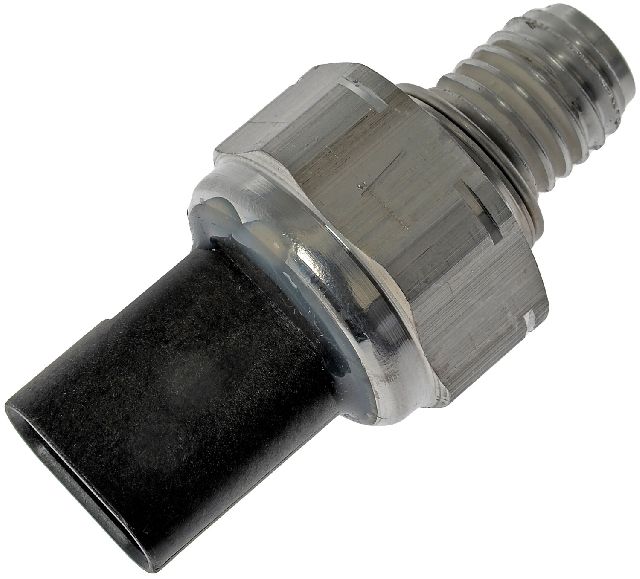
(OEM #12677838 or 25202591 (Verify by VIN))— This is the most common cause if a mechanical gauge confirms good oil pressure but the car's gauge reads incorrectly.
Trusted brands: ACDelco, Delphi
OEM price range: $45-$75
Aftermarket price range: $25-$50 - Oil Pressure Sensor Filter Screen
(OEM #12585328)— This small screen under the sensor can get clogged with sludge, causing incorrect readings. It should always be replaced or cleaned when the sensor is replaced.
Trusted brands: ACDelco
OEM price range: $5-$15
Aftermarket price range: $3-$10 - Engine Oil Filter (Upgrade)
(OEM #ACDelco UPF48R)— Recommended upgrade to resolve potential pressure reading issues caused by the standard 'E-Core' PF48E filter, as noted in several GM service bulletins.
Trusted brands: ACDelco, Mobil 1, Wix
OEM price range: $12-$18
Aftermarket price range: $8-$15
Related Codes That Often Appear With This One
- P06DD — On 2020 models, this code for 'Engine Oil Pressure Control Valve Performance' is commonly seen with P0521 and strongly points to the oil pump control valve issue described in TSB #20-NA-179.
- P06DE — This code for 'Engine Oil Pressure Control Circuit Stuck On' may also be set along with P0521 and P06DD, further indicating a problem within the oil pressure regulation system, potentially related to the oil pump or its control solenoid.
Technical Service Bulletins (TSBs) & Recalls
- 20-NA-179: Addresses P0521 and/or P06DD on 2020 Corvettes due to an unseated oil pressure control valve on the oil pump.
- PIP5276G: One of a series of bulletins addressing P0521 caused by certain oil filters (PF48E) and recommending an upgrade.
Platform-Specific Known Issues
- TSB #20-NA-179: Unseated Oil Pump Control Valve: On 2020 Corvettes built before September 10, 2020, codes P0521 and P06DD can be caused by an unseated oil pressure control valve on the oil pump. The fix requires dropping the oil pan and installing a redesigned retainer clip. GM allocates 10.7 labor hours for this warranty repair.
Mechanic-Grade Diagnostic Values
- Engine Oil Pressure Control Solenoid Valve Resistance — expected: 10 - 30 Ω. Failure: A reading outside this range indicates a faulty solenoid valve.
- Oil Pressure Sensor Low Reference Circuit Resistance — expected: < 10 Ω. Failure: Resistance greater than 10 Ω indicates excessive resistance in the ground circuit between the sensor and the ECM.
- Engine Oil Pressure at Hot Idle (Normal Operation) — expected: ~28-35 PSI. Failure: Significantly lower pressure may be normal under some conditions due to the variable pump, but should rise with RPM. A mechanical gauge is needed for confirmation.
- Engine Oil Pressure Sensor Signal Voltage — expected: ~0.5V (low pressure) to ~4.5V (high pressure). Failure: Voltage stuck at a specific value, or not correlating with engine RPM changes.
Scan Tool Commands That Help
- GDS2 (GM Dealer Scan Tool): Engine Oil Pump Screening Test — Used to diagnose intermittent P0521, P06DD, or P06DE codes when the fault is not present at idle. The tech runs the engine for 15+ minutes, then cycles between 2,000 RPM (30s), 4,000 RPM (15s), and idle (15s) ten times. If the code sets during this stress test, GM documentation points towards a mechanical oil pump issue.
Wiring & Ground Locations
- Engine Oil Pressure Sensor Connector — At the rear of the engine, under the intake manifold.. This is the primary connection point for the sensor. The terminals and wiring here are the first place to check for damage or corrosion.
- X125 Connector — Part of the engine wiring harness, between the oil pressure sensor and the ECM.. GM diagnostic procedures specifically mention manipulating the harness near this connector to check for intermittent opens or shorts that can cause P0521.
- ECM Connector X1, Pin 23 — At the Engine Control Module (ECM).. This is the specific pin for the oil pressure sensor's low reference (ground) circuit. It is a critical test point for checking continuity back from the sensor.
Real Owner Repair Stories
- Reddit user No_Marionberry3751, cited in third-party article (2020 Chevrolet Corvette Stingray (C8)) — Check Engine Light with codes P0521 and P06DD.
❌ Tried (didn't work) Full electrical diagnosis per GM flow charts, which found no issues.
✅ What actually fixed it The oil pan was removed, revealing the oil pressure control valve clip on the oil pump had backed out. The clip was replaced with the updated part per TSB #20-NA-179, which resolved both codes. - Reddit user discussion (Chevrolet Truck (General GM V8)) — Recurring P0521 code after replacing the sensor.
❌ Tried (didn't work) Replacing the oil pressure sensor with a part from a local auto parts store (aftermarket).
✅ What actually fixed it After the aftermarket sensor failed to resolve the code, replacing it a second time with a genuine OEM sensor finally fixed the issue. This highlights a common pitfall with non-OEM electronic sensors on GM vehicles.
OEM Part Supersession History
Multiple older PNs (e.g., 12562858, 12569322)→12677838— Part consolidation and updates over various GM engine families.
Heads up: While 12677838 is a common replacement, always verify the correct part number for the C8 Corvette by VIN, as 25202591 is also listed for this application.Original Oil Control Valve Retainer Clip (2020 models)→Redesigned Oil Control Valve Retainer Clip— The original design was prone to becoming unseated, causing oil pressure regulation faults.
Heads up: The redesigned clip is the specific fix for TSB #20-NA-179. Per the TSB, this part must be specially requested from GM's Warranty Parts Center (WPC) and is not a standard inventory item.
Model Year Variations Within This Range
- 2020 models built before September 10, 2020: These models are susceptible to the unseated oil pump control valve issue addressed by TSB #20-NA-179. Models built after this date, and all 2021-2024 models, have the redesigned retainer clip from the factory.
- 2022-2024: For the 2022 model year, the LT2 engine received an upgraded fuel management system, including a new higher-pressure fuel pump and new injectors, along with revised engine calibration. This does not directly affect the P0521 code but is a notable change within the generation.
Diagnostic Flowchart
Other Known Issues on This Vehicle
Issues unrelated to this code that are worth knowing about as an owner of this generation:
- Dual-Clutch Transmission (DCT) Failures 🔴 High — Common across 2020-2024 models. Issues range from leaks and error messages to complete failure requiring replacement. Some 2023-2024 models have a specific Customer Satisfaction Program for replacement. (Ref: Multiple TSBs issued; Customer Satisfaction Bulletin #N232427051 for 2023-2024 models.)
- Broken Engine Valve Springs 🔴 High — Affects a specific batch of 2020 models built between June 1 and October 7, 2020. Can cause misfires or catastrophic engine failure if a valve drops. (Ref: TSB #PIP5752A)
- Porous/Cracked Wheels 🟠 Medium — Affects some 2020-2021 models with 'Open Spoke' and 'Trident' wheel designs, causing slow air leaks. This follows a similar, more widespread issue on the previous C7 generation. (Ref: TSB #N202315730 / #N202315731)
- Front Lift System Leaks & Malfunctions 🟡 Low — Common complaint on cars equipped with the option. A leaking reservoir cap was a frequent cause on 2020 models, and electrical faults or module programming can cause 'Service Front Lift System' messages on all years. (Ref: TSB #N202321570 (for leaking cap), TSB #PIC6434 (for module reprogramming).)
Used vs. New Parts: Buying Guide for This Vehicle
When a used part is the smart pick: For this specific code, using used parts is generally not recommended due to the critical nature of the oiling system. The only potential exception would be a complete engine wiring harness from a low-mileage donor vehicle if a complex, hard-to-find wiring fault is diagnosed.
Donor-vehicle mileage cap: roughly under 20000 miles for the part to have meaningful remaining life.
What to inspect on the donor part:
- For a wiring harness, inspect for any signs of abrasion, melting, or previous repairs.
- Ensure all connector locking tabs are intact and not brittle.
- Verify the donor vehicle was not involved in a fire or flood.
OEM-only on this vehicle (don't cheap out):
- Engine Oil Pressure Sensor: Due to the high labor cost to access it and forum reports of issues with aftermarket units, an OEM sensor is a must.
- Oil Pump / Oil Pump Control Valve: The oil pump is the heart of the engine's lubrication system; using a new OEM part is critical for reliability.
- Oil Control Valve Retainer Clip: This is a TSB-specific, redesigned part available only through GM's dealer network.
Aftermarket brands forum-validated for this vehicle:
- For the oil filter, premium brands like Mobil 1, Wix, or the OEM ACDelco UPF48R 'Ultraguard' are considered good choices.
Brands owners have reported issues with on this vehicle:
- Generic, unbranded, or 'white-box' oil pressure sensors should be avoided, as they are a common cause of repeat failures on GM vehicles.
Real Owner Stories
Aggregated from forums and TSBs cited above. Mileages and costs reflect what owners reported in those sources.
2020 Chevrolet Corvette Stingray LT2
Symptoms: Encountered two codes: P0521 and P06DD. The owner had already performed electrical diagnostics to verify the issue wasn't a wiring fault.
What fixed it: The owner pulled the oil pan and found that the oil pressure control valve clip had backed out, causing low oil pressure. This was resolved by addressing the clip on the oil pump.
Source hint: r/C8Corvette reddit thread
Chevrolet Corvette C7 (referenced for sensor behavior)
Symptoms: P0521 code with a high 60 PSI reading. Replacing the oil pressure sensor did not resolve the issue.
What fixed it: Cleaning corrosion in an electrical connector located on the driver's side cylinder head.
Source hint: CorvetteForum.com - Thread 'P0521 oil pressure code????'
2020 Chevrolet Corvette Stingray
Symptoms: Check engine light with P0521 and P06DD; owners in forum discussions confirmed these symptoms matched the TSB for the oil pump valve.
What fixed it: Oil pan removal to replace the pump valve retainer clip per TSB #20-NA-179.
Source hint: MidEngineCorvetteForum.com & CorvetteForum.com
Related OBD-II Codes
Frequently Asked Questions
Does TSB #20-NA-179 apply to my 2020 Corvette Stingray?
What is the recommended oil filter to prevent P0521 on the LT2 engine?
How long does the repair for the unseated oil pump control valve take?
Is there a specific way to check the oil level on my C8 Corvette to rule out a P0521?
What oil should I use for my 2020-2024 Corvette to ensure proper pressure?
If I see P0521 and P06DD together on my 2020 model, what is the likely cause?
Helpful Videos
We Have This Part in Stock

The information in this article is provided for general reference and educational purposes only. Vehicle specifications, procedures, and part compatibility can vary by production date, trim level, and region. Always consult your vehicle's factory service manual and verify part numbers before purchasing or performing repairs. Safety-critical components such as airbags, seat belts, and braking systems should be installed by a qualified professional.
- Chevrolet Corvette:
- 🎬 Helpful Videos
- 🛍️ Shop This Part
- What's Unique About the 2020-2024 Chevrolet Corvette
- Symptoms You May Notice
- Most Likely Causes
- Rare But Worth Checking
- Diagnosis Steps
- Parts You'll Likely Need
- Related Codes That Often Appear With This One
- Technical Service Bulletins (TSBs) & Recalls
- Platform-Specific Known Issues
- Mechanic-Grade Diagnostic Values
- Scan Tool Commands That Help
- Wiring & Ground Locations
- Real Owner Repair Stories
- OEM Part Supersession History
- Model Year Variations Within This Range
- Diagnostic Flowchart
- Other Known Issues on This Vehicle
- Used vs. New Parts: Buying Guide for This Vehicle
- Real Owner Stories
- 2020 Chevrolet Corvette Stingray LT2
- Chevrolet Corvette C7 (referenced for sensor behavior)
- 2020 Chevrolet Corvette Stingray
- Related OBD-II Codes
- Frequently Asked Questions
- 🎟️ Get 5% Off