

P0521 on 2007-2013 Chevrolet Avalanche: Oil Pressure Sensor Causes & Fixes
On a 2007-2013 Avalanche, code P0521 is most often caused by a faulty oil pressure sensor or its small, clog-prone filter screen located at the back of the engine. Using the wrong type of oil filter (non-ACDelco PF48E) is also a very common cause, especially after an oil change. The repair involves replacing the sensor and screen, which is difficult due to its location but typically costs $30-$100 in parts.
- Do not drive the vehicle with a P0521 code until the oil pressure has been verified with a mechanical gauge.
- The most likely cause is a failed oil pressure sensor and/or its clogged filter screen, located at the back of the engine.
- Always use the GM-specified ACDelco PF48E oil filter, as other filters are a known cause of this code.
- When replacing the sensor, it is critical to also replace the small filter screen located underneath it.
- The repair is considered difficult for DIYers due to the sensor's location, which requires patience and special tools like wobble sockets and extensions.
What's Unique About the 2007-2013 Chevrolet AVALANCHE

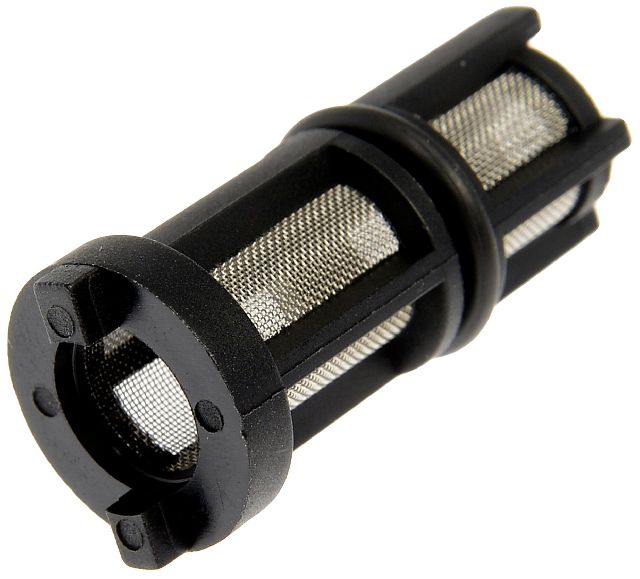
On these GM V8 engines, the P0521 code is notoriously linked to a few specific issues. The oil pressure sensor is located in a difficult-to-reach spot at the back of the engine block against the firewall, making replacement a challenge. It has a small, thimble-sized filter screen underneath it that is prone to clogging with sludge, which starves the sensor of an accurate reading. Furthermore, as highlighted in multiple GM Technical Service Bulletins (TSBs), using an incorrect or poor-quality oil filter can directly cause this code to appear, making the choice of filter unusually critical on this platform.
🎬 Watch this step-by-step sensor replacement on a 2013 Avalanche.Diagnostic Flowchart

Tap your situation to follow the diagnostic path that matches what you're seeing on this vehicle.
Symptoms You May Notice
- Check Engine Light is on.
- Low Oil Pressure warning light or message on the instrument cluster, sometimes saying "Stop Engine".
- Oil pressure gauge reads abnormally low (near zero) or abnormally high (pegged at 80+ psi).
- Engine may run rough or make unusual noises.
- Engine may stall in some cases.
- Replacing the oil pump before verifying actual oil pressure with a mechanical gauge.
- Replacing the entire instrument cluster for a faulty gauge reading when the issue is the sensor.
- Replacing the engine, as one dealer shockingly recommended to an owner, before ruling out the simple sensor, screen, and oil filter causes.
Most Likely Causes

- Faulty Oil Pressure Sensor 🔴 High Probability The sensor is a known high-failure item on this generation of GM V8 engines. It is exposed to significant heat at the back of the engine, which can lead to premature failure. Many owners in forums report having to replace it multiple times, especially when using aftermarket parts.
How to confirm: With the engine off and key on, the gauge should read zero. If it reads high (e.g., 60-80 psi), the sensor is likely faulty. A scan tool can monitor the sensor's voltage output for erratic readings. The ultimate confirmation is to test actual oil pressure with a mechanical gauge and compare it to the sensor's reading.
Typical fix: Replace the oil pressure sensor. This is a difficult-to-reach part, located behind the intake manifold at the top rear of the engine block. Using a high-quality OEM ACDelco part is strongly recommended, as some owners report aftermarket sensors failing quickly.
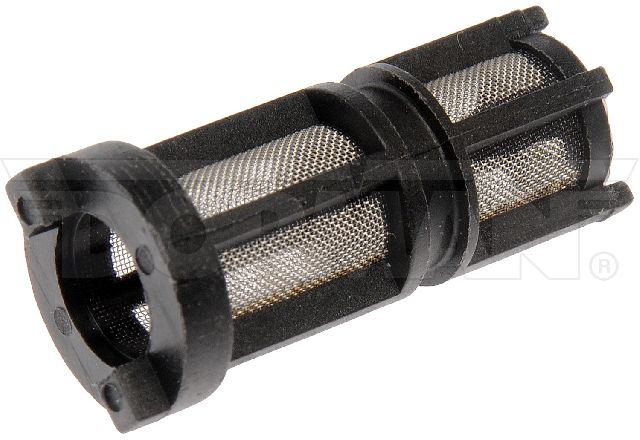
Est. part cost: $40-$90 - Clogged Oil Pressure Sensor Filter Screen 🔴 High Probability A small, thimble-like screen sits in the oil passage directly below the sensor. It is designed to protect the sensor but often becomes clogged with sludge or debris, restricting oil flow to the sensor and causing false low-pressure readings. GM issued TSB PIP4786B about this specific issue.
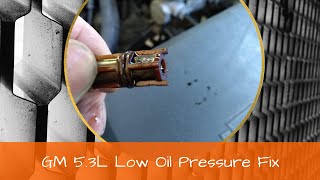
How to confirm: The screen can only be inspected upon removal of the oil pressure sensor. If it is clogged with dark, sludgy deposits, it is a likely cause. Often, a pick or even a coarse-threaded bolt (like a 5/16" lag bolt) can be used to gently thread into and extract the old screen. 🎬 See how to properly remove and replace the filter screen.
Typical fix: Remove the old screen with a pick or small screwdriver and install a new one. This should always be done when replacing the oil pressure sensor.
Est. part cost: $5-$15 - Incorrect or Faulty Engine Oil Filter 🟡 Medium Probability GM issued TSBs (like PIP5276E) specifically warning that using oil filters other than the recommended ACDelco PF48E can cause P0521, especially after an oil change. In some cases of persistent P0521, another TSB recommends switching to the higher-performance UPF48R filter.
How to confirm: Check the part number of the installed oil filter. If it is not an ACDelco PF48 or PF48E (or a high-quality equivalent with the correct specs), it is suspect. The issue often appears shortly after an oil change. Forum users have confirmed that switching to the correct filter resolved their issue.
Typical fix: Perform an oil change using the correct viscosity oil and install a new ACDelco PF48E or UPF48R oil filter.
Est. part cost: $8-$15 - Low or Incorrect Engine Oil 🟡 Medium Probability Some of these engines, particularly those with Active Fuel Management (AFM), can consume oil. GM TSB 10-06-01-008G addresses this oil consumption, which can lead to low oil levels and trigger P0521 if not monitored. A clogged PCV system or issues with the valve cover baffle can contribute to this.
How to confirm: Check the engine oil level using the dipstick. Also, verify that the oil viscosity (e.g., 5W-30) is correct for the engine. If the oil is very dark or sludgy, it can also cause issues.
Typical fix: Top off or change the engine oil to the correct level and viscosity as specified in the owner's manual. Address any underlying oil consumption issues.
Est. part cost: $40-$80
Rare But Worth Checking
- Failing Oil Pump or Pickup Tube O-Ring: While less common, a worn oil pump or a hardened/cracked O-ring on the oil pickup tube in the pan can cause genuine low oil pressure by sucking in air. This is a much more serious mechanical issue that should be confirmed with a mechanical oil pressure test before condemning the pump. One user on a forum diagnosed a bad pickup tube O-ring after experiencing gradually dropping pressure.
- Engine Sludge Buildup: Poor maintenance history can lead to sludge that clogs the oil pickup tube in the oil pan, starving the engine of oil. This would be indicated by a confirmed low reading on a mechanical pressure gauge.
- Wiring/Connector Issue: The wiring harness to the sensor is in a hot, tight location. It can become brittle and damaged, causing a short or open circuit. Inspect the connector and wiring for damage, especially when replacing the sensor. Some owners have found oil leaking into the connector itself.
- Worn Camshaft Bearings: In high-mileage engines, worn internal components like camshaft bearings can cause a loss of oil pressure. This is a severe internal engine problem. One owner on a forum reported this as the ultimate cause after finding metal shavings in the oil.
Diagnosis Steps
- Check the engine oil level and condition. Top off or change if necessary.
- Verify the correct oil filter is installed (ACDelco PF48E is specified). If an incorrect filter is present, replace it.
- Scan the vehicle for other DTCs. Address those first if they are present.
- With the key on, engine off, observe the oil pressure gauge. If it reads anything other than zero (e.g., pegged at 80 psi), the sensor is highly suspect.
- Connect a scan tool and monitor the oil pressure sensor reading while the engine is running. Look for readings that are stuck, erratic, or clearly incorrect for the engine's RPM (e.g., should be ~25-30 PSI at hot idle).
- If the sensor reading is suspect, the next step is to verify the actual engine oil pressure. Remove the oil pressure sensor and connect a mechanical oil pressure gauge.
- Start the engine and compare the mechanical gauge reading to the manufacturer's specifications (e.g., minimum 24 psi @ 1000 RPM). If pressure is good, the problem is the sensor, its filter, or wiring. If pressure is low, there is a serious mechanical issue (e.g., oil pump, pickup tube O-ring, worn bearings).
Parts You'll Likely Need

- Engine Oil Pressure Sensor
(OEM #12673134 (supersedes 12621234, 12596951))— This is the most common part to fail, causing incorrect readings that trigger the P0521 code. Using a genuine OEM part is highly recommended as aftermarket versions are known to fail prematurely.
Trusted brands: ACDelco (OEM), Standard Motor Products, Dorman
OEM price range: $45-$90
Aftermarket price range: $25-$60 - Engine Oil Pressure Sensor Filter
(OEM #12585328)— This small screen below the sensor frequently clogs with sludge, blocking oil from reaching the sensor and causing a false low-pressure reading. It should always be replaced
Related Codes That Often Appear With This One
- P0523 — This code indicates 'Engine Oil Pressure Sensor/Switch High Voltage,' which points more specifically to an electrical fault or a sensor that has failed by reading pegged high. It often appears for the same root causes as P0521.
- P0522 — This code for 'Engine Oil Pressure Sensor/Switch Low Voltage' points to a circuit issue or a sensor that has failed by reading zero. It shares the same common causes.
- P0300-P0308 — If oil pressure is genuinely low, it can affect the performance of components like hydraulic lifters or timing chain tensioners, potentially leading to misfires.
Technical Service Bulletins (TSBs) & Recalls
- PIP5276E / PIP5276G: SES Lamp P0521 Setting After An Oil Change
- PIP4786B / PIP4786C: Low Oil Pressure Message/Light
- 10-06-01-008G: Engine Oil Consumption on Active Fuel Management (AFM) Engines
- PIP5276: SES Lamp P0521 Setting In Cold Ambient Temperature
Platform-Specific Known Issues
- A GM Technical Service Bulletin (PIP5276E) directly links code P0521 to the use of incorrect oil filters and recommends using a PF48E type filter, especially after an oil change.
- Another TSB (PIP5276) notes that in very cold weather (below 0°F), a PF48E filter might cause P0521 on a cold start, and suggests temporarily using a PF48 filter in those conditions.
- For persistent P0521 issues even with the correct filter, other TSBs recommend upgrading to the ACDelco UPF48R 'Ultra Guard Gold' filter, which has different internal characteristics.
- TSB 10-06-01-008G addresses excessive oil consumption in Active Fuel Management (AFM) engines, which can lead to low oil levels and trigger P0521. The fix can involve a new valve cover and cleaning the PCV system.
Mechanic-Grade Diagnostic Values
- Engine Oil Pressure (Mechanical Gauge) - VIN '3' Engine — expected: Minimum 24 psi @ 1,000 RPM, 35 psi @ 2,000 RPM, 38 psi @ 3,000 RPM (engine at operating temp). Failure: Pressure below these minimums indicates a mechanical lubrication problem (pump, o-ring, bearings).
- Engine Oil Pressure (Mechanical Gauge) - VIN '0' Engine — expected: Minimum 22 psi @ 1,000 RPM, 30 psi @ 2,000 RPM, 33 psi @ 3,000 RPM (engine at operating temp). Failure: Pressure below these minimums indicates a mechanical lubrication problem.
- EOP Sensor 5-Volt Reference Circuit — expected: 4.8-5.2 volts between terminal 2 of the sensor connector and ground (Ignition ON). Failure: Voltage outside this range indicates a problem with the wiring or the ECM.
- EOP Sensor Low Reference Circuit — expected: Less than 1.0 ohm between terminal 1 of the sensor connector and ground (Ignition OFF). Failure: Resistance greater than 1.0 ohm indicates an open or high resistance in the ground circuit.
Wiring & Ground Locations
- G103 — Location varies by specific year and model. Commonly cited locations include the front of the right cylinder head, the passenger side fender near the coolant reservoir, or on the cowl above the brake booster.. This is a critical ground point for the Engine Control Module (ECM). A poor connection at G103 can cause erratic sensor readings and various engine control issues, including P0521.
- EOP Sensor Connector — Top rear of the engine block, below the back of the intake manifold.. This 3-wire connector provides the sensor with a 5V reference (Terminal 2), a low reference/ground (Terminal 1), and sends the signal back to the ECM. The connector and its wiring are prone to heat damage, and oil can leak into it, causing faulty readings.
Real Owner Repair Stories
- Reddit user on r/ChevyAvalanche (2013 Chevrolet Avalanche) — P0521 code returned a few hundred miles after repair.
❌ Tried (didn't work) Replacing the oil pressure sensor and filter screen with an aftermarket part from AutoZone.
✅ What actually fixed it The discussion pointed towards the aftermarket sensor being the likely cause of the recurring code, with another user recommending using only an OEM sensor. - User on Chevrolet Forum (2009 Chevrolet Avalanche 5.3L LY5) — Low oil pressure warning and P0521 code returned 26 miles after the latest repair.
❌ Tried (didn't work) Replacing the oil pressure sensor (first time)., Replacing the oil pump., Replacing the oil pressure sensor again with a new part, thinking the first replacement was faulty.
✅ What actually fixed it The user's final post indicated they were about to install a mechanical gauge to diagnose further, as multiple part replacements did not solve the issue. This highlights a scenario where the cause is likely wiring or a more complex mechanical fault, not the common components. - User on Tahoe Yukon Forum (2007 GMC Yukon) — Check Engine Light with codes P0521, P0522, and P0523. Oil pressure gauge needle was erratic, pegging at 80 and dropping to 0.
❌ Tried (didn't work) Initial diagnosis and research.
✅ What actually fixed it Replacing the oil pressure sensor (ACDelco D1846A) and the underlying screen resolved all codes and the erratic gauge behavior. The pressure returned to a steady ~40 PSI.
"I Checked Everything" — The Actual Cause
- A common diagnostic dead-end occurs when a technician replaces the sensor and screen, yet the code returns. If a mechanical gauge is then connected and shows proper oil pressure (e.g., 38 PSI at idle), it confirms the lubrication system is healthy. In this scenario, the actual cause is not a mechanical oil pressure problem but rather an electrical fault between the sensor and the ECM, such as a damaged wire, a corroded pin in a connector, or a poor ground connection at a point like G103.
When the Usual Fixes Don't Work
- While the most common fixes are the sensor, screen, and correct oil/filter, a significant number of owners report the P0521 code returning even after these items are addressed. In these cases, the root cause is often more elusive. Several owners have gone through multiple aftermarket sensors before an OEM part finally provided a stable reading. In other instances where even an OEM sensor doesn't fix it, the problem has been traced to intermittent wiring issues or, in rarer cases, a mechanical problem like a sticking oil pressure relief valve inside the oil pump. This demonstrates that if the code persists after the top 3 causes are addressed, a deeper electrical and mechanical diagnosis is required before replacing the same parts again.
OEM Part Supersession History
12596951→12621234, which was then superseded by 12673134— Standard part evolution for improved reliability or manufacturing changes.
Heads up: While no direct incompatibilities are noted, owners and technicians strongly advise using the latest genuine GM/ACDelco part (12673134 or ACDelco D1846A). Aftermarket sensors are widely reported to fail prematurely or be inaccurate out of the box, causing the P0521 code to return.
Model Year Variations Within This Range
- 2007-2010: The early Active Fuel Management (AFM) systems in these years are known to be more susceptible to high oil consumption. This increases the likelihood that P0521 could be triggered by a genuinely low oil level if not checked frequently. GM made revisions starting around 2011 to help mitigate this issue.
Helpful Videos
We Have This Part in Stock

The information in this article is provided for general reference and educational purposes only. Vehicle specifications, procedures, and part compatibility can vary by production date, trim level, and region. Always consult your vehicle's factory service manual and verify part numbers before purchasing or performing repairs. Safety-critical components such as airbags, seat belts, and braking systems should be installed by a qualified professional.
- Chevrolet AVALANCHE:
- 🎬 Helpful Videos
- 🛍️ Shop This Part
- What's Unique About the 2007-2013 Chevrolet AVALANCHE
- Diagnostic Flowchart
- Symptoms You May Notice
- Most Likely Causes
- Rare But Worth Checking
- Diagnosis Steps
- Parts You'll Likely Need
- Related Codes That Often Appear With This One
- Technical Service Bulletins (TSBs) & Recalls
- Platform-Specific Known Issues
- Mechanic-Grade Diagnostic Values
- Wiring & Ground Locations
- Real Owner Repair Stories
- "I Checked Everything" — The Actual Cause
- When the Usual Fixes Don't Work
- OEM Part Supersession History
- Model Year Variations Within This Range
- 🎟️ Get 5% Off