

P0521 on 2013-2018 Cadillac ATS: Engine Oil Pressure Sensor Performance Guide
For a 2013-2018 Cadillac ATS, code P0521 is most often caused by a faulty engine oil pressure sensor or using the wrong type of oil filter. Always check that a PF48 or equivalent filter is used, not a PF48E, especially in cold weather, as this is a known issue cited in GM service bulletins. Replacing the sensor is a common fix, costing around $25-$60 for the part, but labor can be significant on the 3.6L V6 as the sensor is located in a difficult-to-access position at the back of the engine.
- Before any other repairs, verify the correct ACDelco PF48 (or equivalent) oil filter is installed, not a PF48E.
- The most likely part to fail is the engine oil pressure sensor itself.
- Always confirm the engine's actual oil pressure with a mechanical gauge before assuming a major mechanical problem like a bad oil pump.
- Immediately check your oil level if this code appears to prevent potential engine damage.
What's Unique About the 2013-2018 Cadillac ATS

On the Cadillac ATS and related GM platforms, code P0521 is notably sensitive to the type of oil filter used. Technical Service Bulletins (TSBs) specifically warn that using a PF48E filter instead of the recommended PF48 can trigger this code, particularly during cold starts at temperatures below 20°F (-6°C). Additionally, some ATS engines, specifically the 2.0L LTG, can suffer from issues with piston oil cooler nozzles, which can break 🎬 See this walkthrough for replacing the sensor on 2.0L engines. and lead to genuine oil pressure problems, sometimes presenting with codes P0521 and P06DE.
Diagnostic Flowchart
Tap your situation to follow the diagnostic path that matches what you're seeing on this vehicle.
Symptoms You May Notice
- Check Engine Light is on.
- Low Oil Pressure warning message on the instrument cluster.
- Oil pressure gauge reading abnormally high (e.g., pegged at 80 PSI) or low.
- Oil pressure gauge reading fluctuates erratically.
- Engine running rough or making unusual noises (if actual oil pressure is low).
- Engine may enter a reduced power mode.
- Replacing the oil pump before verifying the actual oil pressure with a mechanical gauge.
- Replacing the Engine Control Module (ECM) when the issue is a simple wiring fault or incorrect sensor reading.
- Replacing the oil pressure sensor without also replacing the small filter screen underneath it.
Most Likely Causes

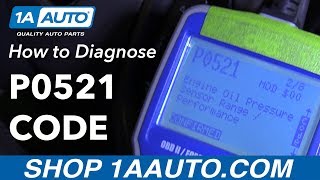
- Incorrect Engine Oil Filter 🔴 High Probability A manufacturer TSB (#PIP5276B/E/G) explicitly states that using a PF48E oil filter can cause P0521 during cold starts. The recommended filter is the PF48. The PF48E has a different internal construction and bypass valve design that can cause incorrect pressure readings on these engines 🎬 Watch: A breakdown of common P0521 causes and fixes., especially in temperatures below 20°F.
How to confirm: Visually inspect the part number on the installed oil filter. If it is a PF48E, it is the likely cause, especially if the code appeared after an oil change or in cold weather.
Typical fix: Change the engine oil and replace the filter with the correct ACDelco PF48 or a high-quality equivalent like the UPF48R. Do not use a PF48E.
Est. part cost: $5-$15 - Faulty Engine Oil Pressure Sensor 🔴 High Probability The sensor operates in a high-heat, high-vibration environment and is a common failure point on many GM engines. Over time, its internal electronics can fail or oil can contaminate the connector, leading to incorrect readings. A common failure mode is the gauge reading maximum pressure (e.g., 80 PSI) even with the engine off.
How to confirm: After verifying actual oil pressure with a mechanical gauge, if the gauge shows good pressure but the scan tool shows an erratic or incorrect reading, the sensor is faulty. A small filter screen is located beneath the sensor and should be replaced at the same time, as it can become clogged.
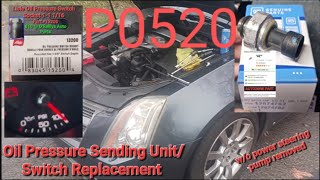
Typical fix: Replace the engine oil pressure sensor and the filter screen beneath it. This is a difficult job on the 3.6L V6 due to the sensor's location behind the intake manifold against the firewall. 🎬 Watch: How to replace the 3.6L sensor without removing power steering.
Est. part cost: $25-$70 - Low or Dirty Engine Oil 🟡 Medium Probability
How to confirm: Check the engine oil level using the dipstick and inspect the oil's condition. Low levels or sludgy, fuel-contaminated oil can cause pressure fluctuations. TSB 18-NA-246 notes that short-trip driving can cause fuel to enrich the oil, leading to P0521.
Typical fix: Top off the oil to the correct level or perform a complete oil and filter change with the correct viscosity oil.
Est. part cost: $40-$80 - Wiring or Connector Issue ⚪ Low Probability
How to confirm: Visually inspect the wiring harness and connector going to the oil pressure sensor for damage, corrosion, or looseness. On some GM platforms, engine harness chafing against brackets or the shock tower is a known issue that can cause shorts and various DTCs, including P0521.
Typical fix: Repair the damaged wiring or clean/replace the connector pigtail. Secure the harness away from any sharp edges.
Est. part cost: $15-$50
Rare But Worth Checking
- Broken Piston Oil Cooler Nozzle/Squirter: A known issue on some GM engines, including the 2.0L Turbo (LTG) in the ATS. A TSB (PIP5247A) notes that broken parts from these nozzles can be found in the oil pan and cause genuine low oil pressure, often setting codes P06DE and P0521.
- Failing Oil Pump / Sticking Relief Valve: While uncommon, a worn or failing oil pump will cause true low oil pressure. TSB 20-NA-161 mentions that a sticking oil pressure relief valve within the pump can also cause P0521. This should only be suspected after a mechanical gauge confirms low pressure and other causes are ruled out.
- Clogged Oil Pressure Sensor Screen: A small, thimble-shaped filter screen sits in the block underneath the oil pressure sensor. This screen can become clogged with sludge or debris, restricting oil flow to the sensor and causing false low readings. It should always be replaced when the sensor is replaced.
Diagnosis Steps
- Check the engine oil level and condition. Top up or change if necessary, ensuring the correct viscosity oil is used.
- Verify the correct oil filter is installed. Per TSB #PIP5276B, it should be a PF48 or equivalent, not a PF48E, especially in cold climates.
- Connect a scan tool to monitor the oil pressure reading from the sensor. Note if it is erratic, stuck, or clearly incorrect (e.g., reading 80 PSI with the engine off).
- Crucially, connect a mechanical oil pressure gauge to the engine to measure the *actual* oil pressure. The port is where the sensor is located, at the rear of the engine.
- Compare the mechanical gauge reading to the manufacturer's specifications. A general GM spec is a minimum of ~20-25 PSI at hot idle and ~35-40 PSI at 2,000 RPM. If mechanical pressure is good but the scan tool data is faulty, the problem lies with the sensor or its circuit.
- Inspect the oil pressure sensor's electrical connector and wiring for any signs of damage, oil contamination, corrosion, or looseness. Check for known harness chafing points.
- If the wiring is intact and actual pressure is good, replace the engine oil pressure sensor and the small filter screen located in the block underneath it.
- If the mechanical gauge confirms low oil pressure, further investigation into the oil pump, pickup tube, oil pump relief valve, or internal engine components (like piston oil squirters on the LTG) is required.
Parts You'll Likely Need

- Engine Oil Pressure Sensor
(OEM #12674782 (supersedes 12621649))— This sensor is the most common point of failure for a P0521 code when oil level and filter type are correct. Using a genuine OEM (ACDelco) part is highly recommended as aftermarket sensors are known to cause issues.
Trusted brands: ACDelco (GM Genuine), Standard Motor Products (SMP), Dorman
OEM price range: $40-$60
Aftermarket price range: $25-$45 - Engine Oil Pressure Sensor Filter Screen
(OEM #12585328)— This small screen sits below the sensor and can get clogged with sludge, causing incorrect readings. It is critical to replace this part whenever the sensor is replaced.
Trusted brands: ACDelco (GM Genuine), Dorman
OEM price range: $5-$10
Aftermarket price range: $3-$8 - Engine Oil Filter
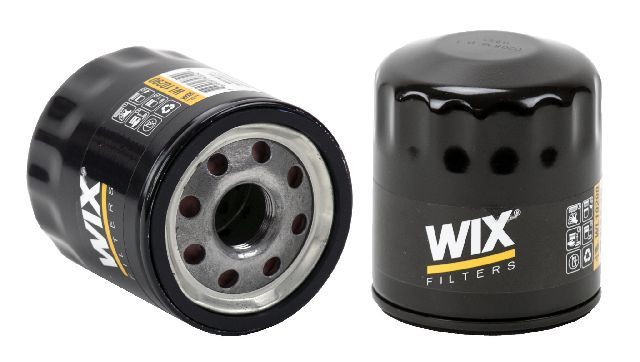
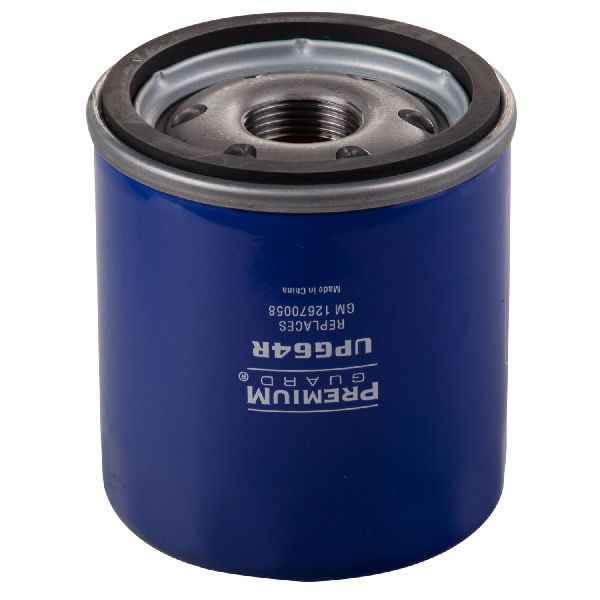
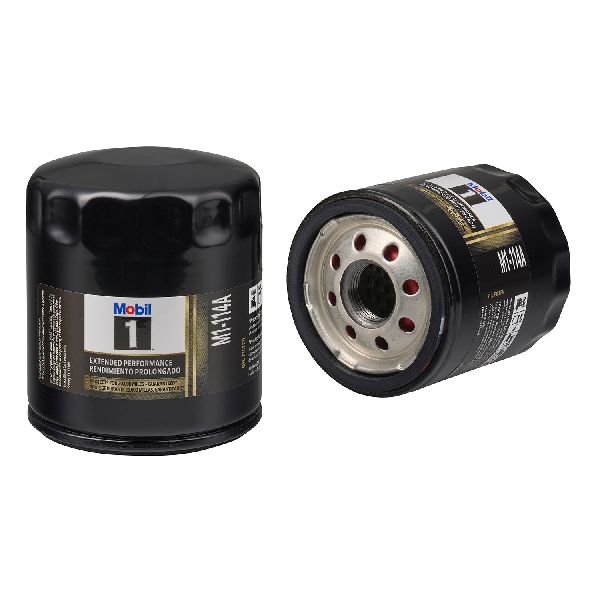
(OEM #PF48 (or UPF48R as an upgrade))— Using the incorrect filter (PF48E) is a documented cause of P0521 on this platform, especially in cold weather, as noted in TSB #PIP5276B.
Trusted brands: ACDelco
OEM price range: $5-$12
Aftermarket price range: $5-$10
Related Codes That Often Appear With This One
- P06DE — This code for 'Engine Oil Pressure Control Solenoid Valve Stuck On' is mentioned alongside P0521 in TSB #18-NA-246 and can be related to internal issues like broken piston oil squirters or fuel-contaminated oil.
- P0520 — This code for 'Engine Oil Pressure Sensor/Switch Circuit' points more directly to an electrical fault (open or short) in the sensor's circuit, while P0521 indicates a performance/range problem. They can appear together.
- P0522 — Indicates the sensor circuit voltage is low, which could be a faulty sensor or a wiring issue.
- P0523 — Indicates the sensor circuit voltage is high, often caused by a shorted sensor, which can result in the gauge being pegged at its maximum reading.
Technical Service Bulletins (TSBs) & Recalls

- 18-NA-246: Mentions P0521 in conjunction with P06DE and P0172, often caused by fuel-enriched engine oil from short-trip driving.
- PIP5276B/E/G: Specifically calls out the use of a PF48E oil filter as a cause for P0521 in cold weather and recommends using a PF48 filter instead.
- PIP4786C: Addresses low oil pressure messages and DTC P0521, guiding technicians through standard diagnosis.
- PIP5247A: Links P0521 and P06DE to potentially broken piston oil nozzles on 2.0L LTG and other engines.
- 20-NA-161: Discusses P0521 being caused by a sticking oil pressure relief valve inside the oil pump assembly.
Platform-Specific Known Issues
- TSB #PIP5276B/E/G: Warns that using a PF48E oil filter can trigger a P0521 code during cold starts (below 20°F). The fix is to replace the filter with a PF48 model or the superior UPF48R.
- TSB #PIP4786C: Acknowledges customer concerns of a low oil pressure message and P0521, directing technicians to follow standard diagnostic procedures, implying it's a known complaint.
- TSB #PIP5247A: On models with the 2.0L LTG engine, P0521 can be associated with broken piston oil cooler nozzles, which requires inspecting the oil pan for debris.
- TSB #18-NA-246: Links P0521 and P06DE to fuel-contaminated engine oil, often from frequent short-trip driving, and recommends more frequent oil changes.
- Sensor Location on 3.6L V6: The oil pressure sensor on the LFX and LGX V6 engines is notoriously difficult to access, located on the back of the block behind the intake manifold. Replacement is labor-intensive.
Mechanic-Grade Diagnostic Values
- Normal Oil Pressure (3.6L LFX Engine) — expected: Up to 60 PSI (413 kPa) during various operating conditions. Can reach 70 PSI (482 kPa) on a cold start.. Failure: Pressure significantly below 20-25 PSI at hot idle, or not rising with RPM.
- Oil Pressure Sensor Connector Voltage — expected: A 5-volt reference signal from the ECM with the ignition on.. Failure: Absence of the 5V reference signal points to a wiring or ECM issue, not a sensor failure.
- Oil Pressure Sensor Signal Voltage — expected: Varies with pressure, e.g., low voltage (~0.5V) for low pressure and high voltage (~4.5V) for normal operating pressure.. Failure: Voltage is erratic, does not change with RPM, or is stuck high/low.
Scan Tool Commands That Help
- GDS2 (GM Techline): Engine Oil Pressure Control Valve Actuator Test — This bidirectional control is used when P0521 is accompanied by P06DE to command the oil pressure control solenoid on and off, verifying its mechanical and electrical function.
Wiring & Ground Locations
- B37B Engine Oil Pressure Sensor Connector — On the sensor body, located at the rear of the engine block, often behind/under the intake manifold.. This 3-pin connector is the primary interface. Check for oil contamination, corrosion, or loose pins. The circuit includes a 5V reference, a low reference (ground), and the signal wire.
- G103 / G107 — For the 3.6L engine, G107 is on the front of the right cylinder head. G103 is on the cowl, above the brake booster.. These are key engine and chassis grounds. A poor ground at these locations can cause erratic sensor readings and various DTCs. The ECM and BCM rely on these grounds.
- J2-24 (ECM Connector) — At the Engine Control Module (ECM).. This pin is the Low Reference (ground) for the engine oil pressure sensor. A fault at this specific pin or in its wiring can cause P0521.
Real Owner Repair Stories
- Carly Community Forum (2015 Cadillac ATS (Gasoline Engine)) — Intermittent error message, warning light, and oil pressure lamp illumination. Error memory pointed to the oil level sensor.
❌ Tried (didn't work) Owner was unsure how to proceed with diagnosis.
✅ What actually fixed it A workshop identified and replaced a corroded connector on the oil level/pressure sensor, which resolved all symptoms for a cost of 95€.
OEM Part Supersession History
12621649, 12570798, 12621659→12674782— Standard part evolution for improved reliability and manufacturing consistency.
Heads up: The new part number 12674782 is the correct replacement for the older numbers and should be used for service.
Model Year Variations Within This Range
- 2013: On 2013 4-cylinder (LCV, LTG) models with automatic transmissions, the engine ground G104 was at the front of the engine until mid-December 2012, after which it was moved to the rear. A poor connection at this ground was noted in a TSB for other electrical issues (C0544) but is relevant for overall sensor stability.
- 2016-2018: Starting in 2016, the 3.6L V6 LFX engine was replaced by the updated LGX engine. While the P0521 issue is common to both, the oil level sensor location and service procedure may differ slightly. On the LGX, the oil level sensor is confirmed to be inside the oil pan.
Helpful Videos

Used OEM Parts in Stock

New Aftermarket Parts Available


The information in this article is provided for general reference and educational purposes only. Vehicle specifications, procedures, and part compatibility can vary by production date, trim level, and region. Always consult your vehicle's factory service manual and verify part numbers before purchasing or performing repairs. Safety-critical components such as airbags, seat belts, and braking systems should be installed by a qualified professional.
- Cadillac ATS:
- 🎬 Helpful Videos
- 🛍️ Shop This Part
- What's Unique About the 2013-2018 Cadillac ATS
- Diagnostic Flowchart
- Symptoms You May Notice
- Most Likely Causes
- Rare But Worth Checking
- Diagnosis Steps
- Parts You'll Likely Need
- Related Codes That Often Appear With This One
- Technical Service Bulletins (TSBs) & Recalls
- Platform-Specific Known Issues
- Mechanic-Grade Diagnostic Values
- Scan Tool Commands That Help
- Wiring & Ground Locations
- Real Owner Repair Stories
- OEM Part Supersession History
- Model Year Variations Within This Range
- 🎟️ Get 5% Off