

P0520 on 2013-2014 Chrysler 200: Engine Oil Pressure Sensor Circuit Causes and Fixes
For the 2013-2014 Chrysler 200, code P0520 almost always points to a faulty engine oil pressure sensor. Chrysler issued a Technical Service Bulletin (18-034-14 REV. A) for this exact problem, recommending replacement with a revised part. The sensor itself is inexpensive, but replacement difficulty varies significantly by engine. On the 3.6L V6, the sensor is part of the oil filter/cooler housing in the engine valley, a known failure point, making replacement a much larger job.
- P0520 on a 2013-2014 Chrysler 200 is a known issue, officially recognized by Chrysler TSB 18-034-14 REV. A.
- The most probable cause is a faulty engine oil pressure sensor, which should be replaced with the revised part.
- For the 3.6L V6, the sensor is part of the oil filter/cooler housing. Inspect this housing for leaks and consider replacing the entire assembly to prevent future problems.
- Always verify the engine oil level is correct before assuming a sensor fault.
- While you can drive with this code, it's risky because you lose reliable monitoring of your engine's oil pressure.
What's Unique About the 2013-2014 Chrysler 200
Chrysler acknowledged a widespread issue with the original oil pressure sensors on these vehicles by releasing Technical Service Bulletin #18-034-14 REV. A. This TSB confirms that a faulty sensor is the most common cause for P0520 and that a revised part is available. On models with the 3.6L Pentastar V6, the sensor is integrated into the oil filter/cooler housing assembly, which sits in the engine valley between the cylinder heads. This entire plastic assembly is a well-documented failure point, prone to cracking and leaking oil and/or coolant, often making it wise to replace the whole unit rather than just the sensor due to the intensive labor involved.
Diagnostic Flowchart
Tap your situation to follow the diagnostic path that matches what you're seeing on this vehicle.
Symptoms You May Notice
- Check Engine Light is on.
- Oil pressure warning light on the dashboard is on or flickering.
- Oil pressure gauge reads zero, is maxed out, or fluctuates erratically.
- In some cases, the vehicle may enter 'limp mode' to protect the engine.
- Car may act like it wants to stall or have difficulty reversing.
- Audible engine knocking or ticking, especially if there is a true low oil pressure condition.
- Replacing the oil pump when the issue is just the sensor circuit.
- Performing an engine oil flush, assuming clogged passages, without first testing the sensor and its circuit.
- On the 3.6L V6, replacing only the sensor when the housing itself is cracked and leaking, leading to a repeat repair.
Most Likely Causes
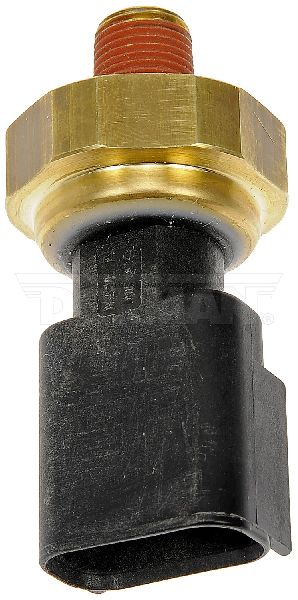
- Failed Engine Oil Pressure Sensor 🔴 High Probability Chrysler issued TSB 18-034-14 REV. A specifically for this failure, indicating a high rate of occurrence and the release of a revised part (Part No. 5149062AB supersedes 5149062AA).
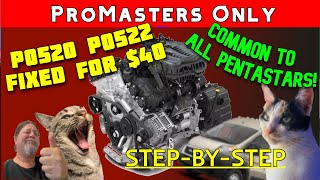
How to confirm: Scan tool data may show an erratic or fixed oil pressure reading (e.g., 99 or 103 PSI 🎬 Watch a mechanic diagnose and fix these common P0520 error codes. with the engine off). Unplugging the sensor should cause the value on the scan tool to change (e.g., to 0 PSI), pointing to a bad sensor. A definitive test is to check the actual oil pressure with a mechanical gauge and compare it to the sensor's reading.
Typical fix: Replace the faulty oil pressure sensor with the revised OEM part (5149062AB) or a quality aftermarket equivalent.
Est. part cost: $20-$60 - Cracked or Leaking Oil Filter/Cooler Housing (3.6L V6) 🟡 Medium Probability The plastic oil filter housing on the 3.6L Pentastar engine is a well-documented failure point across many Chrysler, Dodge, and Jeep models. It becomes brittle with heat cycles and can crack, causing oil and/or coolant leaks. The oil pressure sensor is integrated into this housing, and a failure of the housing often necessitates its replacement.
How to confirm: Visually inspect the engine valley (under the intake manifold) for pooled oil or coolant. A strong smell of burning oil is also an indicator. Use a dye test if the leak source is unclear.
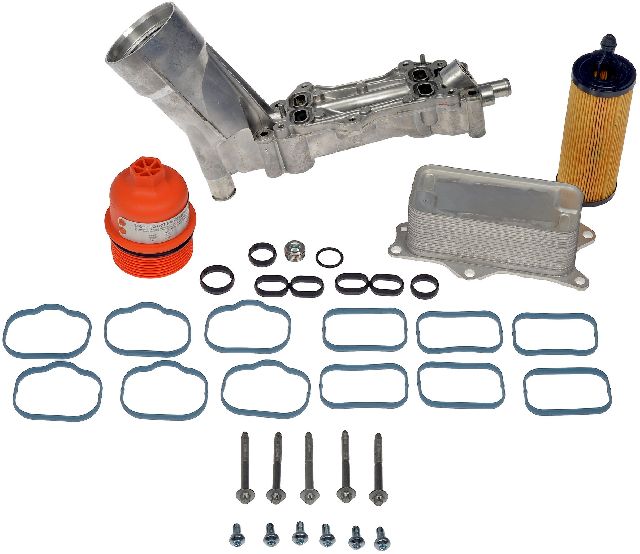
Typical fix: Replace the entire oil filter/cooler housing assembly. This is a more involved repair that requires removing the upper and lower intake manifolds. Many owners opt for an upgraded aluminum replacement (e.g., Dorman 926-876) instead of another OEM plastic unit.
Est. part cost: $100-$250 - Damaged Wiring or Connector ⚪ Low Probability Wiring in the engine bay is exposed to heat and vibration, which can lead to damage over time. The connector's locking tab can become brittle and break, leading to a poor connection.
How to confirm: Visually inspect the wiring harness and connector leading to the oil pressure sensor for any signs of fraying, melting, corrosion, or loose pins. Use a multimeter to check for continuity, ground, and reference voltage at the connector according to the vehicle's wiring diagram.
Typical fix: Repair the damaged section of wire or replace the connector pigtail.
Est. part cost: $10-$30
Rare But Worth Checking
- Low Engine Oil Level or Pressure: While P0520 is a circuit code, it's crucial to first rule out a real mechanical issue. Always check the oil level and condition on the dipstick before proceeding with electrical diagnosis. Using the wrong type of oil or a clogged oil filter can also trigger pressure-related codes.
- Faulty Powertrain Control Module (PCM): This is extremely rare and should only be considered after all other possibilities (sensor, wiring, mechanical issues) have been exhaustively ruled out.
Diagnosis Steps
- Check the engine oil level and condition. Ensure it is full, clean, and of the correct viscosity.
- Use an OBD-II scanner to confirm P0520 is the active code and check for any other related codes like P0522 or P0523.
- Observe the live data for the oil pressure sensor on the scan tool. Look for readings that are stuck (e.g., 99 or 103 PSI with engine off), erratic, or clearly incorrect.
- Visually inspect the oil pressure sensor and its electrical connector for damage, corrosion, or oil contamination. For the 2.4L, this is on the back of the engine block, often accessed from the passenger side wheel well. 🎬 See how to access and replace the sensor on 2.4L models. For the 3.6L, this requires inspecting the engine valley under the intake manifold.
- Test the sensor circuit. Unplug the sensor; the reading on the scanner should change significantly (e.g., drop to 0 PSI). If it does, the wiring is likely okay and the sensor is bad.
- If a real pressure problem is suspected, test the actual engine oil pressure using a mechanical gauge to confirm the engine's health and verify the sensor is reading incorrectly.
- If the sensor is the confirmed cause, replace it. For the 3.6L V6, carefully inspect the entire oil filter housing for cracks or leaks and strongly consider replacing the complete assembly to prevent future failures.
- Clear the trouble codes and perform a test drive to ensure the repair was successful.
Parts You'll Likely Need
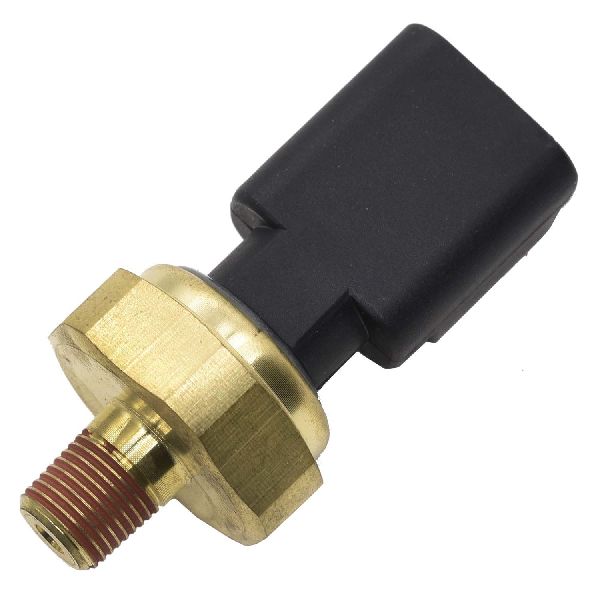
- Engine Oil Pressure Sensor
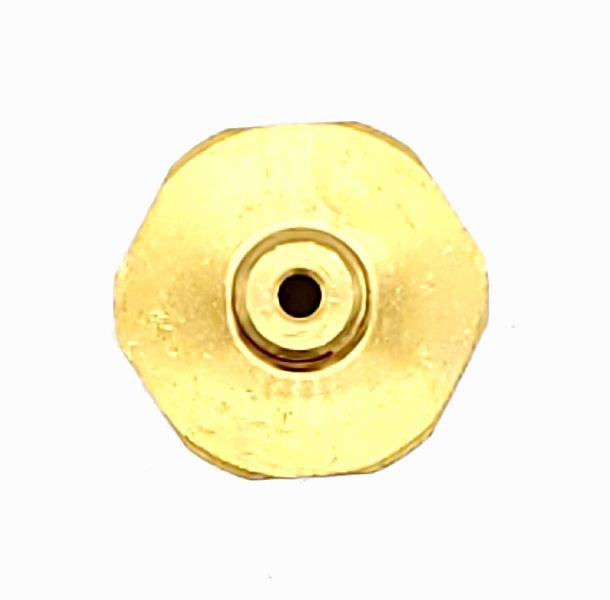
(OEM #5149062AB (supersedes 5149062AA))— This is the most common failure part for code P0520, as documented by Chrysler's own service bulletin. The original part was prone to failure.
Trusted brands: Mopar, Standard Motor Products (SMP), NTK
OEM price range: $40-$60
Aftermarket price range: $15-$35 - Oil Filter and Cooler Housing Assembly (3.6L V6)
(OEM #68105583AF, 68105583AG (verify by VIN))— On the 3.6L V6, the entire plastic housing is prone to cracking. Since replacing the integrated sensor requires significant labor to access the housing, it is often more cost-effective in the long run to replace the entire assembly to prevent future leaks. Upgraded aluminum versions are a popular, more durable alternative.
Trusted brands: Mopar (OEM Plastic), Dorman OE FIX (Aluminum, P/N 926-876), URO Parts
OEM price range: $180-$250
Aftermarket price range: $90-$160
Related Codes That Often Appear With This One
- P0522 — This code indicates 'Engine Oil Pressure Sensor/Switch Circuit Low Voltage' and often appears with P0520, pointing more specifically to a short in the circuit or a failed sensor that is reading too low.
- P0523 — This code for 'Engine Oil Pressure Sensor/Switch Circuit High' can also accompany P0520, often seen when a faulty sensor is stuck reporting a very high pressure.
Technical Service Bulletins (TSBs) & Recalls
- 18-034-14 REV. A: Addresses P0520 by instructing technicians to replace the original oil pressure sensor with a revised part due to a high number of failures across a wide range of Chrysler/Dodge/Jeep/Ram vehicles, including the 2013-2014 JS-body (200/Avenger).
Platform-Specific Known Issues
- A known high failure rate of the original oil pressure sensor prompted Chrysler to issue TSB 18-034-14 REV. A, which applies to both the 2.4L and 3.6L engines and recommends replacement with an updated part (5149062AB).
- On the 3.6L V6 engine, the sensor is located in the engine valley on the oil cooler/filter housing, requiring removal of the upper and lower intake manifolds for access, making the repair significantly more labor-intensive (3-5 hours) than on the 2.4L engine.
- The plastic oil cooler/filter housing on the 3.6L V6 is a common source of oil and coolant leaks, and its failure can trigger the P0520 code if the integrated sensor is affected. Many owners and shops recommend replacing the entire unit as a preventative measure during this repair.
- For the 2.4L engine, the sensor is located on the rear of the engine block, below the water pump. Access can be tight, but it is often achievable from the top or through the passenger side wheel well without major disassembly.
Mechanic-Grade Diagnostic Values
- Sensor 5V Reference Voltage — expected: ~5.0 Volts. Failure: Voltage significantly lower or higher than 5.0V indicates a problem with the PCM or wiring.
- Sensor Signal Voltage (Key On, Engine Off) — expected: ~0.5 Volts. Failure: A reading near 4.5V or 5.0V with the engine off points to a shorted sensor or circuit, often causing a maxed-out PSI reading on the scan tool.
- Sensor Signal Voltage (Engine Idling) — expected: 0.5V - 4.5V (proportional to pressure). Failure: Voltage that is stuck, does not change with RPM, or is outside the expected range indicates a faulty sensor or mechanical pressure issue.
- Sensor Circuit Resistance to Ground — expected: High resistance (OL). Failure: Low resistance or continuity (less than 5.0 Ohms) on the signal wire indicates a short to ground.
Scan Tool Commands That Help
- Professional Scan Tool (e.g., wiTECH): Live Data Monitoring & Circuit Integrity Test — This is a fundamental diagnostic step. A shop-level scan tool can be used to prove out the entire circuit. A technician reported a common procedure: with the key on and engine off, the data shows 4.5 volts/99 psi. When the sensor is disconnected, the reading goes to 5.0 volts. When the signal pin is jumpered to the sensor ground pin, the reading drops to 0.0 volts. This sequence proves the wiring and PCM are functioning correctly, isolating the fault to the sensor itself.
Wiring & Ground Locations
- Oil Pressure Sensor Connector (3.6L V6) — On the oil filter/cooler housing in the engine valley, under the intake manifolds.. This 3-pin connector provides power, ground, and signal for the sensor. Pin 1 is the 5V reference (Brown/Orange), Pin 2 is the signal return (Violet/Grey), and Pin 3 is the sensor ground (Dark Blue/Dark Green). Testing at this connector is critical for diagnosis.
- G902a / G1a — Located in the left rear of the engine compartment.. These are primary engine compartment ground points. A poor connection at these locations can cause erratic behavior or fault codes for various engine sensors, including the oil pressure sensor.
- Harness Splice S196 — In the engine harness at the right rear of the engine (2.4L).. This is a splice point within the engine harness. While not a common failure point, corrosion or damage at a splice can cause intermittent circuit issues that are difficult to trace.
Real Owner Repair Stories
- Reddit r/MechanicAdvice (2014 Dodge Charger R/T (shares 3.6L/5.7L platform and sensor)) — Check engine light on, oil pressure gauge reading a constant 99 PSI. Codes P0520 and P0524 present.
❌ Tried (didn't work) The owner had the sensor replaced by a backyard mechanic, but the problem returned a month later.
✅ What actually fixed it The owner took the car to a professional shop. The shop performed a circuit integrity test: with the key on and engine off, they confirmed the scan tool read 4.5 volts/99 psi. They then disconnected the sensor, and the reading went to 5.0 volts. Finally, they jumpered the signal pin to the ground pin at the connector, and the reading dropped to 0.0 volts. This test proved the wiring and PCM were good, confirming the replacement sensor had also failed. Replacing the sensor a second time with a quality part resolved the issue.
OEM Part Supersession History
5149062AA→5149062AB— The original sensor had a high failure rate, prompting the TSB and the release of a revised part. The new part is intended to be more durable and reliable.
Heads up: Part number 5149062AC is also listed as an alternate for 5149062AB. While physically similar, it is crucial to use the specific part number recommended by the TSB (5149062AB) to ensure compatibility and resolve the code issue.
Helpful Videos

We Have This Part in Stock


The information in this article is provided for general reference and educational purposes only. Vehicle specifications, procedures, and part compatibility can vary by production date, trim level, and region. Always consult your vehicle's factory service manual and verify part numbers before purchasing or performing repairs. Safety-critical components such as airbags, seat belts, and braking systems should be installed by a qualified professional.
- Chrysler 200:
- 🎬 Helpful Videos
- 🛍️ Shop This Part
- What's Unique About the 2013-2014 Chrysler 200
- Diagnostic Flowchart
- Symptoms You May Notice
- Most Likely Causes
- Rare But Worth Checking
- Diagnosis Steps
- Parts You'll Likely Need
- Related Codes That Often Appear With This One
- Technical Service Bulletins (TSBs) & Recalls
- Platform-Specific Known Issues
- Mechanic-Grade Diagnostic Values
- Scan Tool Commands That Help
- Wiring & Ground Locations
- Real Owner Repair Stories
- OEM Part Supersession History
- 🎟️ Get 5% Off